PART 1
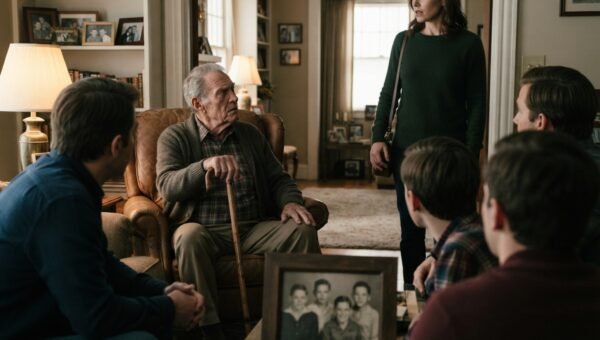
When my grandfather’s lawyer read the will, I expected the usual arguments over property and savings. My uncle Greg had spent the last two years asking about the deed, and my aunt Brenda had already walked through the living room tagging antique side tables with blue tape. Instead, everyone became silent when the lawyer, Mr. Vance, pushed his glasses up his nose and announced that I had inherited $250,000 and the old family house outright.
There was only one condition.
I could not sell the house for thirty days.
That seemed strange, but not impossible. The house sat on four acres out past Miller’s Creek, and it had been empty for fourteen months after my grandfather, Arthur, moved into assisted living. My mother whispered that it was just Arthur being stubborn from beyond the grave, wanting me to walk the floorboards and remember Sunday dinners before I called an agent. Uncle Greg did not take it so lightly. He stood up in the small conference room, pointed a finger at Mr. Vance, and said Arthur had lost his mind long before he signed that paper. Mr. Vance simply folded his hands over the file and said the probate court had already certified Arthur’s competence.
I took the brass key ring that afternoon. My plan was simple enough. I worked as an intake clerk at the county records office, and my rent was due to go up in November.
Two hundred and fifty thousand dollars meant I could pay off my car, clear my credit card balance, and put the rest into a safe certificate of deposit for retirement. The house itself was too big for one woman, drafty, and full of forty years of dust. I figured I would spend the thirty days cleaning the gutters, boxing up old wool blankets, and listing the place the minute the calendar cleared.
I moved a cot into the downstairs spare room so I would not have to drive forty minutes back and forth from my apartment after work. The first three days were quiet. Uncle Greg drove past the end of the gravel driveway twice without turning in, his truck kicking up gray dust, but he never got out.
On the fourth night, the wind picked up and rattled an upstairs window frame. I took a flashlight upstairs around nine to see which sash was loose.
While checking the back hallway past the linen press, I noticed a recessed door in the wall board that I had never paid attention to as a girl. We had always been told that narrow door led to the attic crawl space where hornets nested.
When I turned the brass knob, it stopped with a solid metal click. It was locked from the outside with a heavy deadbolt that looked newer than the door trim.
I remembered my grandfather’s desk in the downstairs den. He was a creature of exact habits. If he locked a toolbox, the key hung behind the oil cans. If he locked his tax drawer, the key stayed behind the mantel clock. I went down to the den, pulled out the drawers one by one, and ran my hand underneath the oak frame. Taped flat beneath the bottom drawer on the right side was a single brass key.
The key turned smoothly in the deadbolt upstairs.
Inside the small room, there were no hornets, no dust sheets, and no storage boxes. The single window was covered by a thick blackout roller shade pulled all the way to the sill. In the center of the bare pine floor sat an ordinary folding metal chair. On a small laminate side table sat a twelve-inch portable television with a coaxial cable running through a drilled hole in the floorboard.
Next to the television, tacked straight into the wall at eye level, was a large wall calendar.
It was not one calendar. It was a thick, oversized spiral book spanning fourteen full years, the kind county dispatch offices keep on metal counters. Every single date box from the previous fourteen years had been crossed through with a red felt-tip pen.
The very last date on the page was October 14th of the previous autumn, the exact day Uncle Greg and Aunt Brenda had moved my grandfather out of this house and into Shady Pines Assisted Living.
That final date had not been crossed out with a single line. It had been circled and marked twice with a thick red cross.
Beside the television was a small plastic remote with a piece of blue masking tape across the top. Written in my grandfather’s shaky pencil was a single number: Channel 3.
PART 2
I picked up the remote and pushed the red power button. The little tube television hummed, and the gray screen flickered to life with static. I pressed the channel up button until the screen displayed Channel 3.
The static dropped away. The screen showed a silent, clear black-and-white picture of a room.
It took me five seconds to understand what I was looking at. The camera was mounted high near the ceiling molding, looking down into a corner of the ground-floor living room directly below me. It pointed straight at the floor safe behind the grandfather clock.
I sat down on the cold metal folding chair.
My grandfather had spent his career working twenty-eight years for the state highway department as a bridge inspector. He kept strict logs of every bolt and weld, and he never spent a dollar without writing the date in his pocket notebook. Fourteen years ago was the winter my grandmother Martha passed away from pneumonia. We all thought Arthur had closed off that end of the upstairs because looking at Martha’s sewing things made him sad.
He had not closed it off out of grief. He had built an observation post.
I stood up and approached the laminate table. Under the television sat a black hardbound binder labeled with an office label-maker: PROPERTY RECEIPTS & ENTRY DATES.
I opened the front cover under the light of my flashlight.
The first page was dated twelve years ago. In my grandfather’s neat, sloping hand, it listed an entry:
“March 3. Greg came through cellar bulkhead. Took Martha’s gold brooch and $600 from desk jar. Said he needed tractor parts. No tractor parts purchased. Paid bar bill at Miller’s Creek Tavern.”
I turned the page.
“August 19. Brenda arrived at 10 AM while I was at tractor supply. Removed mother’s sterling silver service for twelve. Left note saying silver was being cleaned. Silver never returned. Pawn slip found in Brenda’s glove box during oil check: $450.”
Entry after entry filled sixty pages. Every single visit by my uncle and aunt had been logged with the exact hour, what they took, what excuse they gave, and where the money actually went.
Then came the entries from two years ago, right around the time my grandfather’s knees gave out and he stopped driving his pickup.
“May 11. Greg brought a notary to the kitchen. Asked me to sign a quitclaim deed for the house and four acres to pay for my future care. Refused. Greg told Brenda on front porch that old man is losing his grip and won’t last the winter.”
“October 2. Brenda brought forms from Shady Pines. Said care would cost $4,200 a month and state would take the farm if I did not transfer title to Greg before admission. Refused.”
“October 14. Greg and Brenda arrived with two men. Carried out my clothes and footlocker. Greg took house keys from hook. Locked me out of my home. Final entry. TV left running on direct loop to hidden drive recorder under eaves.”
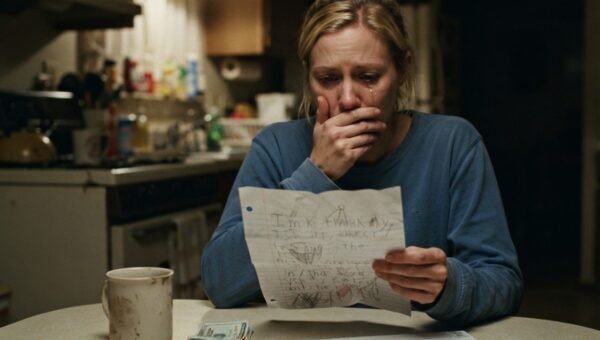
My hands shook as I turned the last page of the binder. Tucked inside a plastic sleeve at the very back was a folded letter addressed to me, written on yellow legal paper.
“Cora, if you are reading this, you found the key where I always kept the keys that mattered. You are the only person who came here on Sunday afternoons and brought soup without asking what was in the bank. You sat on the porch with me and listened when everyone else talked over me like I was already dead. The $250,000 in the estate account came from the state pension buyout I never touched. Greg and Brenda think that money was spent on home nurses. It was not. It was sitting in the bank in town waiting for someone who respects this ground. Do not sell for thirty days because Greg has a key to the cellar bulkhead. He thinks the original deed and the cash savings are hidden under the floorboards in the fruit cellar. Let him come. The recorder in the closet ceiling saves twenty-four hours to the digital hard drive inside the vent.”
Just then, down on the ground floor, a dry floorboard groaned.
PART 3
I turned off the small television with one click. The green indicator light vanished, and the little upstairs room went pitch black except for the pale beam of my flashlight, which I shut off immediately.
I stood frozen in the dark, listening through the floorboards.
The cellar door down in the mudroom squeaked on its rusty iron hinges. Footsteps followed, heavy and deliberate, scraping dirt off work boots onto the kitchen linoleum. It was not a stranger checking open doors. Whoever it was had a key, knew which boards near the sink did not squeak, and moved straight across the kitchen toward the den.
I pulled my cell phone from my pocket and dialed Sheriff Danvers’ direct dispatch line. My grandfather had known Danvers since the man was a boy playing Little League with my cousin.
“Sheriff Danvers,” I whispered into the receiver, pressing the phone tight against my cheek so my voice would not carry down the heat duct. “This is Cora Miller. Arthur’s granddaughter. I am inside Arthur’s house. Someone just unlocked the back cellar entrance and is searching the den.”
“Stay put, Cora,” Danvers said, his voice flat and calm. “Do not go down those stairs. I am two miles out on County Line Road.”
Through the floor vent in the dark hallway, I heard the sound of wood splintering.
Someone was using a small crowbar on the baseboards in the den. A man’s voice grunted in frustration.
“Nothing here either,” Uncle Greg said, his voice rough and loud in the quiet house.
“Keep looking,” Aunt Brenda answered from the hallway doorway. I had not even heard her slip inside. “The lawyer said Arthur had two hundred and fifty grand somewhere. That money didn’t come out of thin air. He had an old metal lockbox behind the chimney pipe. Check the paneling.”
“The girl got the money, Brenda. Vance handed her the account papers.”
“She hasn’t cleared probate yet,” Brenda snapped. “If the original deed from nineteen-eighty-two is gone, or if we find the handwritten agreement Arthur made with dad about the north parcel, we can tie up the title in probate for two years. She can’t afford a two-year court fight on an intake clerk salary. She’ll settle and split the parcel.”
I stood behind the door at the top of the stairs, listening to my own family talk about my life like it was a cheap bargaining chip.
Ten minutes later, twin headlights swept across the downstairs living room windows. Tires crunched over the gravel driveway.
A car door slammed shut, followed by the heavy rap of Danvers’ flashlight against the front door frame.
“Sheriff’s department,” Danvers called out. “Door’s unlocked. Greg, Brenda, step out onto the porch with your hands out of your pockets.”
I waited until I heard Danvers’ boots on the porch planks before I walked down the narrow stairs.
The living room lights were on. Uncle Greg was standing near the fireplace holding a rusty pry bar, his face red with sweat and dust. Aunt Brenda had a canvas tote bag on the floor next to her feet, already packed with my grandfather’s brass mantel clock and three boxes of old silver dollars he kept in his sock drawer.
Danvers stood in the doorway with his hand resting near his duty belt. A younger deputy stood behind him on the porch steps.
“What are you two doing in here at ten-thirty at night?” Danvers asked.
“This is family property, Dan,” Greg said, trying to force a laugh that died in his throat. “Arthur just passed three weeks ago. We came by to secure some heirlooms before Cora lists the place. We have a right to our father’s personal effects.”
“No, you don’t,” I said, stepping into the living room.
I set Arthur’s black hardbound binder right on the dining room table between us. Next to it, I set my phone, which had been recording audio from the heat vent for the last twelve minutes.
“The house belongs to me,” I said, looking Greg straight in the eyes. “The probate court issued the letters of testamentary yesterday morning. You used an unauthorized cellar key. You broke the baseboards in the den, and Brenda has Arthur’s silver in that canvas bag. Arthur also left fourteen years of dates, receipts, and camera logs right here on this table.”
Greg stared at the black binder. His face lost its anger and went gray at the edges. He looked at Brenda, then down at the pry bar in his hand.
“Arthur was crazy,” Greg muttered, but his voice was thin. “He was paranoid.”
“He wasn’t paranoid, Greg,” Danvers said, stepping forward and taking the pry bar out of Greg’s hand. “He was bridge inspector for thirty years. He kept records. Put the tote bag on the table, Brenda.”
ENDING
Sheriff Danvers did not lock them up in a cell that night, but he made them sign a formal criminal trespass warning right at Arthur’s kitchen table. He informed them that if either of their trucks turned off County Line Road onto my driveway before the thirty days were up, or ever again, he would file third-degree burglary charges with the county prosecutor based on the pry bar and the audio recording.
Brenda left the canvas bag on the linoleum without saying another word. She walked down the driveway into the cold night air, her heels clicking on the gravel until Greg’s truck started up and carried them away.
Two days later, Mr. Vance met me at the county courthouse. I brought the black binder with me. He read through Arthur’s notes for nearly an hour, his fountain pen clicking against his teeth. When he finished, he told me that Arthur had created the thirty-day condition specifically under legal counsel. Arthur knew Greg would try to force an entry while the house was nominally unsettled. The thirty-day buffer gave the probate transfer time to record officially with the county clerk, closing off every legal loophole Greg might have used to contest my ownership.
The money arrived in my account on the twenty-eighth day.
I paid off the remaining $8,400 on my sedan. I cleared my single credit card. I did not buy new furniture, and I did not list the house for sale.
When the thirty days expired on a chilly Tuesday morning, I drove out to Miller’s Creek with a toolbox from my apartment. I walked down the cellar stairs, removed the old rusted slide bolt, and installed a heavy deadbolt with a keypad lock that only I know the code to.
Then I walked upstairs to the small, hidden room.
I took the large dispatch calendar down from the wall pins. The paper was yellowed at the edges, stiff from years of dry summer heat and winter drafts. I did not throw it away. I folded the heavy spiral pages neatly and placed them in the bottom drawer of Arthur’s oak desk, right above the spot where he had taped the key.
The house is quiet now. The wind still rattles the upstairs window sash when the autumn storms blow in from the creek, but the floorboards below stay completely still. Arthur spent fourteen years keeping watch over what he built with his own two hands. Now the doors are locked, the deed is in my name, and the watching is finished.