PART 1
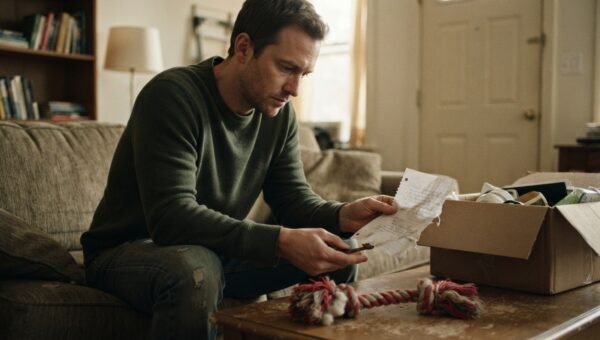
The envelope from the title company sat on my kitchen island for three days before I finally slit the corner open with a butter knife. I thought it was just a routine follow-up regarding the final county recording fees for the split-level ranch I had closed on three months earlier. Instead, it was a certified notice from a regional mortgage lender in Columbus, Ohio, addressed directly to me, stating that my first-position deed of trust was currently thirty days delinquent and facing an immediate notice of default.
My heart hammered against my ribs so hard I felt dizzy. I stared at the paper, reading the loan account number three times. It did not match my mortgage. My actual mortgage was with a national credit union where my auto-pay deduction came out every single first of the month like clockwork. This notice referenced a line of credit for seventy-four thousand dollars, originated just twenty-one days after my closing, using my exact street address as collateral.
Panic didn’t immediately turn to anger; it turned to absolute confusion. I called the lender’s customer service line from my cell phone, my hands shaking so badly I dropped the phone twice on the linoleum floor before managing to punch in the automated menu options. When a human representative finally came on the line, she asked for the loan number and my Social Security suffix. I gave them, my voice tight and thin.
“Ma’am, according to our records, this is an equity line drawn against the property located at 4412 Meadowbrook Lane,” the woman said, her tone professional, detached, and chillingly indifferent to the terror in my voice. “The application was processed digitally with verified bank login credentials, a color scan of your valid driver’s license, and a signed promissory note notarized by a mobile notary service on November fourteenth.”
November fourteenth. That was the Tuesday after my housewarming party. The Tuesday my father had come over with a heavy-duty drill to hang my heavy antique mirrors in the hallway, while my sister Chloe sat at my kitchen counter scrolling through her phone.
Four years before that afternoon, I had sat in my parents’ living room watching my mother write out a cashier’s check for twenty thousand dollars to hand to Chloe. It was for the earnest money deposit and closing costs on Chloe’s starter townhouse across town.
When I had asked, with a quiet tightness in my throat, if they might be able to offer me even a fraction of that support when my lease ended and rent spiked by three hundred dollars, my father had leaned back in his leather recliner, shook his head with heavy, theatrical disappointment, and said that a man has to teach his children self-reliance. He told me that helping Chloe was charity because she had a weaker constitution and a volatile administrative job, whereas I was a corporate compliance analyst with a steady salary and no excuse not to pull my own weight.
I had swallowed the bitter lump in my throat, worked seventy-hour weeks for three straight years, picked up weekend freelance auditing gigs, and saved every stray dollar until my knuckles bled with exhaustion, finally scraping together my own down payment without a single dime of familial assistance. I had been so proud of that key turning in my own front door.
Now, staring at the kitchen island, I looked closer at the delinquency notice details the representative was reading aloud to me. The emergency contact listed on the fraudulent loan application was not my emergency contact. It was Chloe. And the banking routing number where the seventy-four thousand dollars had been instantly disbursed matched the personal checking account my parents shared.
PART 2
I didn’t call the police right away. My first instinct, born of thirty-four years of conditioning in a household where family unity was treated like a fragile religious relic, was to drive straight to my parents’ house and demand an explanation face-to-face.
The drive took twenty-four minutes. The entire way, my mind raced through impossible rationalizations. Maybe it was an administrative clerical error by the bank. Maybe my identity had been stolen by a stranger online, and Chloe’s name appearing on the paperwork was some bizarre statistical coincidence. But deep down, beneath the frantic mental gymnastics, I knew better. I knew the precise weight of my father’s methodical control, and I knew how easily Chloe surrendered her personal information whenever my parents needed a proxy for one of their revolving real estate speculations.
When I pulled into their gravel driveway, my father’s aging Ford pickup was parked crookedly by the side of the garage. I walked up the front steps without knocking, turning the brass handle. It was unlocked, just as it had been every day of my childhood.
The house smelled faintly of lemon furniture polish and stale drip coffee. My mother was sitting at the dining room table sorting through a stack of coupon mailers, while my father stood by the kitchen pass-through window reading the morning paper. They both looked up as I slammed the front door shut behind me, the heavy wood frame rattling in its casing.
“Well, look who decided to grace us with her presence,” my father said, lowering the sports section with a slight, patronizing smirk. “You look like you’ve seen a ghost, Clara. Sit down before you trip over your own feet.”
I pulled the certified notice from my leather tote bag and tossed it across the polished oak dining table. It slid past my mother’s coupon stack and came to a stop against my father’s coffee mug.
“Explain this,” I said. My voice didn’t shake anymore; it was flat, cold, and stripped of all the daughterly warmth I had forced myself to maintain for decades.
My father glanced down at the letter. He didn’t flinch. He didn’t drop his jaw in shock. He simply picked up the paper, adjusted his reading glasses, scanned the first two lines, and laid it back down with an irritatingly slow deliberation.
“You always did have a flair for dramatics,” he said, exhaling a heavy sigh through his nose. “It’s just a temporary bridge loan, Clara. Settle down.”
“A temporary bridge loan?” I stepped forward, gripping the back of an empty dining chair. “That is a seventy-four-thousand-dollar lien against my house. My house. My name is on the deed, not yours.”
My mother finally spoke, her voice thin and defensive, laced with the martyrdom she deployed whenever her children questioned authority. “Your father only did it because the tax lien on our rental property downtown was coming due, and the bank wouldn’t clear our credit rating in time. We needed a clean asset to secure the commercial refinancing. Your property had clear title and no primary encumbrance other than your mortgage. It was sitting right there, doing nothing for us.”
“Doing nothing for you?” I laughed, a sharp, humorless sound that felt like glass grinding in my throat. “It’s my home. I bought it with my own money. You told me you couldn’t help me with a single dollar for my down payment, yet you felt entitled to steal my equity the second I closed?”
My father stood up then, his tall frame suddenly looming over the table, his face flushing a mottled dark red. The easygoing paternal mask dropped away, replaced by the cold, authoritarian glare I knew from every childhood punishment.
“We raised you,” he said, stepping around the table until he was standing just two feet away from me. “We put food in your mouth and clothes on your back for twenty-two years. Chloe needed that twenty thousand because her landlord was evicting her, and now we needed this line to save the family commercial lot from foreclosure. Families don’t keep ledgers against each other, Clara. You have a good corporate job; you can absorb a little credit adjustment while we restructure our assets.”
“I am not absorbing anything,” I said, backing away slightly toward the door. “I am calling the fraud department back, and I am filing a police report for identity theft and mortgage fraud by the end of this hour.”
My father didn’t flinch. He reached out, grabbed my wrist with fingers like iron bands, and squeezed just hard enough to make me gasp.
“You will do no such thing,” he whispered, his voice dropping into a harsh, venomous register. “If you drag the police into this, our lending records get subpoenaed, Chloe’s townhouse gets tied up in the crossfire, and the whole family collapses publicly over a little paperwork. You are going to sign a quitclaim deed adding your mother and me to your property title by Friday afternoon. If you want this family to survive intact, you will do what you’re told.”
PART 3
I wrenched my wrist out of his grip, staring at him with a mixture of revulsion and terrifying clarity. The illusion of family loyalty that had bound me for decades snapped in that exact second, clean and permanent like a dry twig. I didn’t yell, and I didn’t cry. I simply turned around, walked out the front door without looking back, and drove straight to the local police precinct instead of going home.
The desk sergeant listened to my story with a tired, expressionless face, took my driver’s license, and handed me an intake packet for financial exploitation and identity theft. Because my signature had been forged digitally using a compromised mobile notary service and my personal documents had been accessed without my consent by family members living at a separate address, the detective assigned to my case classified it as a felony-level domestic white-collar crime.
For the next four days, my phone buzzed constantly with blocked numbers, frantic voicemails from my mother crying about how I was destroying our reputation, and aggressive text messages from Chloe demanding to know why I was “being a vindictive psychopath over a loan.” I blocked every single one of them. I changed the locks on my front and back doors, installed a smart video doorbell, and forwarded every piece of communication from the regional lender straight to the detective handling the file.
I thought that was the worst of it. I thought the nightmare was confined to the first seventy-four-thousand-dollar equity line my parents had secretly siphoned against my name.
Then, on Thursday morning, a second certified letter arrived.
This one was from a completely different institution: a predatory online subprime lender based out of Delaware. I opened it with trembling fingers, half-expecting another fraudulent equity line. Instead, it was a default notice for an unsecured personal consolidation loan in the amount of forty-two thousand dollars, taken out twelve days after the first one, using my employment verification and my corporate direct deposit routing numbers to secure the funds.
The total debt registered under my name without my knowledge had now climbed to one hundred and sixteen thousand dollars.
I called the detective immediately. Within two hours, two uniformed officers and an investigator from the county financial crimes unit were standing in my living room, looking over the second stack of fraudulent documents. The investigator pointed to the IP address logs attached to the second loan application.
“This wasn’t just your parents,” the investigator said, tapping his pen against the printed data sheet. “The MAC address for this submission originates from a mobile device registered to an address on Elm Street. That’s your sister Chloe’s apartment complex.”
The realization hit me with physical nausea. My parents hadn’t just used my house as collateral for their commercial mess; Chloe had actively participated in using my identity to bail out her own mounting credit card debts and car payments under the cover of the family crisis. They had treated my financial stability as an open-access community piggy bank.
ENDING
The formal arrests came on a rainy Tuesday morning two weeks later.
The local prosecutor didn’t hesitate once the detective submitted the bank transfer logs, IP tracking data, and the signed mobile notary affidavits showing my signature had been digitally traced and falsified. Because it involved multiple financial institutions and crossed municipal county lines, the charges included felony identity theft, grand larceny by false pretenses, and mortgage fraud.
I was at my desk at the corporate office when my phone rang around eleven o’clock. It was the detective, calling to inform me that warrants had been executed at both my parents’ house and Chloe’s townhouse.
“They’re being booked at the county detention center right now, Ms. Miller,” the detective said gently. “The fraudulent lines of credit are being formally flagged as identity theft victims’ liabilities, which means the lenders will be forced to nullify the balances once the court filings are processed. Your title will be cleared of the liens.”
I closed my laptop lid, staring out the high-rise office window at the gray skyline of the city. A profound, heavy silence settled over my chest. There was no triumphant surge of vindication, no cinematic rush of satisfaction. There was only an immense, hollow exhaustion, mixed with the quiet, permanent peace of knowing the ledger was finally burned to ash.
My phone buzzed one last time on the mahogany desk. It was a text message from an unknown number, but I didn’t need caller ID to know it was my mother, desperate, pleading, and still incapable of grasping accountability. I didn’t open the message. I simply pressed my thumb against the screen, blocked the number, and dragged the entire conversation thread straight into the trash. For the first time in my life, the quiet house at Meadowbrook Lane belonged entirely to me.