PART 1
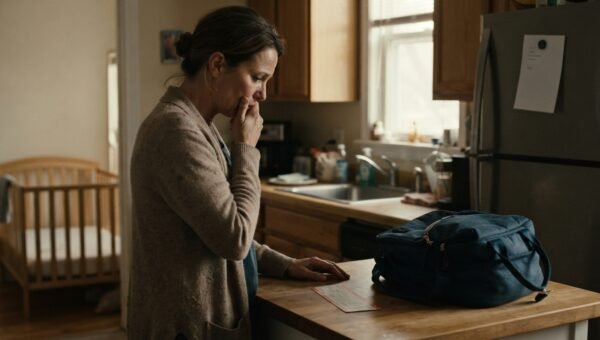
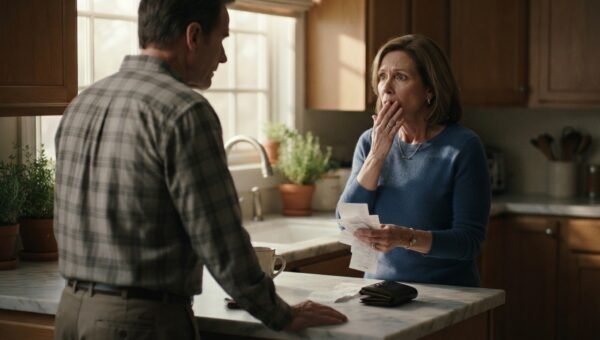
At sixty-eight, you think you know the boundaries of your own life, especially the walls you built and painted with your own two hands. My son, David, stood in my kitchen on a Tuesday afternoon holding a cup of instant coffee I had boiled water for, telling me I was sitting on dead equity. He had married Chloe six months prior, a woman with expensive tastes and a constant look on her face like she was smelling something unpleasant whenever she visited my modest home.
David leaned against the counter, his tie loosened, looking every bit the corporate climber his father never wanted him to be. He told me the neighborhood was shifting, that property values had peaked, and that Chloe had her heart set on a colonial four-bedroom in a gated subdivision twenty miles north. They needed a larger down payment to secure the interest rate they wanted before the market tightened further. He suggested I sell the house he grew up in, downsize into a sterile senior apartment complex with linoleum floors and shared laundry rooms, and hand over the surplus cash to fund their new beginning.
I looked right at him, feeling a cold weight settle in my chest. I refused. I reminded him, clearly and without raising my voice, that I had promised his father on his deathbed that I would never let this house go out of our hands. Arthur worked thirty-two years at the assembly plant, coughing up grey dust every winter evening, just so we could burn the mortgage papers the year David turned ten.
After Arthur passed away from his lungs, I didn’t curl up and wait for the end. I stayed. I patched the roof shingles after the big hail storm of 2014. I replaced every rotted cedar board on the front porch using a rented circular saw and sheer stubbornness, because hiring a contractor would have meant dipping into the money set aside for property taxes.
David’s face darkened, the polite family mask slipping away to reveal the spoiled boy he had secretly remained underneath. He slammed his coffee mug down on the formica counter, hard enough to slop brown liquid over the rim. He called me ungrateful, selfish, and utterly blind to what modern families needed. He said I was holding him back out of pure sentimentality, clinging to a pile of old lumber just to spite his future. Then, he turned on his heel, slammed the front screen door so hard the glass rattled in its frame, and walked out to his silver sedan.
That was the last time he spoke to me directly. For the next month, my phone remained silent. No Sunday afternoon check-ins, no polite texts asking how my arthritis was holding up in the damp weather. I felt the familiar ache of maternal grief, but also a strange, quiet dignity. I had survived worse than a sulking adult child. I kept tending to my tomato plants in the backyard, swept the front porch boards, and enjoyed the peaceful silence of my own rooms.
Then came the morning that turned my quiet retirement upside down. I was sitting at the kitchen table drinking my morning tea when I heard the low, heavy rumble of a diesel engine idling in my driveway. I pushed the sheer curtains aside and saw a large white moving van blocking my car in the garage. Three burly men in blue uniforms climbed out of the cab, stretching their backs and unlatching the rear roll-up door.
My heart hammered against my ribs as I wiped my hands on my apron and walked out onto the porch. The lead mover, a man with a weathered face and a clipboard tucked under his arm, met me at the foot of the steps. He didn’t look angry, just weary, like a man doing a job he knew was going to get complicated.
He handed me a stiff plastic folder containing a notarized legal document. He told me they had a contract to clear out the primary living areas and begin packing the furniture for transport to a storage facility in the northern county. I unfolded the papers with trembling fingers. At the top, bold black letters declared a durable power of attorney, granting full administrative and property control to David Arthur Miller.
I scanned down to the signature block at the bottom of the third page. There, scrawled in blue ink, was my name. It looked remarkably like my signature, the sweeping loops of the capital letters mimicking the way I had signed checks at the local credit union for decades. But as I stared closer, the blood drained from my face. The date listed next to the notarization stamp was October twelfth of the previous year.
On October twelfth, I wasn’t at a lawyer’s office downtown. I was lying in a sterile room at St. Jude’s Memorial Hospital, hooked up to an intravenous drip and an oxygen monitor, recovering from emergency gallbladder surgery. I had spent four days in that bed, barely able to sit up to drink a cup of broth, let alone travel to a notary public to hand over my home and my life to my son.
PART 2
I invited the lead mover inside, not with panic, but with the cold, steady resolve of a woman who realized she was fighting for her survival. I offered him a glass of iced tap water from the pitcher in the fridge, and while he drank it standing by the kitchen sink, I showed him my discharge papers from St. Jude’s, stamped with the hospital’s official seal and dated precisely during the week of the alleged notarization. I also showed him my driver’s license and a stack of utility bills bearing my current address.
The mover whistled softly, running a calloused hand over the back of his neck. He looked at the legal document again, then at my hospital paperwork. He told me he hauled furniture for a living, not for law enforcement, and that he wasn’t about to load a single dresser into his truck if there was active fraud attached to the paperwork. He pulled out his radio, spoke briefly to his dispatcher, and within twenty minutes, the big white van backed out of my driveway, its tires crunching softly on the gravel.
Once the dust settled and the street grew quiet again, I called the local police department. A young officer named Deputy Miller arrived forty minutes later, took my statement, listened to my account of the hospital stay, and examined the fake power of attorney. He was polite, but his words were sobering. He told me that civil matters involving family members and contested signatures often took months to sort through formal probate or civil court filings. He advised me to secure a good attorney immediately, because if David had gone to the trouble of fabricating a notarized document, he likely had legal backing or a compliant lawyer helping him push the matter forward.
I didn’t wait. I called Marcus Vance, an old-school real estate and estate lawyer whose office smelled of old leather and floor wax, a man who had handled my husband’s small union pension settlement years ago. Marcus peered over his half-moon reading glasses when I laid the documents on his mahogany desk. He ran a finger down the notarization stamp, frowned, and shook his head.
He told me we needed to move fast to file an emergency injunction to freeze any property transfers at the county courthouse before David could execute a quick-claim deed to a third party or a shell corporation. But before we did that, Marcus looked at me over his glasses and asked a very strange question. He asked if Arthur had ever anticipated anything like this happening.
I told him Arthur was a simple man who believed his son would honor his mother, but Marcus pressed further. He reminded me that Arthur had spent forty years dealing with corporate contractors and union disputes, and that he rarely left a loose end untied when it came to the property he had fought so hard to secure. Marcus asked if I had ever thoroughly searched the old cedar storage chests and dark corners of the attic since Arthur passed away. I told him I hadn’t touched my husband’s old work coats in ten years. Marcus leaned forward, his expression grave, and told me to go home, climb the pull-down ladder to the attic, and look under the eaves for a heavy blue canvas suitcase that Arthur used to carry his travel tools in.
PART 3
The attic was stifling, smelling of dry pine needles, old insulation, and the faint, sweet scent of cedar chips that I had scattered around the floorboards years ago to keep out the moths. A single bare bulb hung from a frayed cord in the center of the low ceiling, casting long, jittery shadows across the wooden rafters. I clicked the pull chain, and the yellow light hummed to life, illuminating rows of cardboard boxes filled with Christmas decorations, old photo albums, and baby clothes that David had long outgrown.
I walked past the stacked bins, ducking beneath a low crossbeam until I reached the far corner near the brick chimney stack. Pushed deep into the shadowy alcove beneath the eaves sat a heavy, dust-covered blue canvas suitcase with brass latches. It was so heavy that I had to drag it across the rough floorboards rather than lift it.
I sat down right there in the dust, coughing slightly as the dry air caught in my throat. I popped the two brass latches, and the lid sprang open with a faint metallic snap. Inside, neatly folded on top, lay three of Arthur’s heavy wool work jackets, smelling faintly of machine oil and pipe tobacco. I lifted the jackets out one by one and laid them on the floor beside me.
Beneath the coats lay a collection of old bank passbooks, a few yellowed newspaper clippings from the factory strike of 1988, and a large manila envelope sealed with red wax tape. Across the front of the envelope, written in Arthur’s firm, careful mechanical lettering, were the words: For Clara Only. Open Only If the Foundation Moves.
My fingers trembled as I picked up a small kitchen paring knife from my apron pocket and sliced through the waxy seal. Inside was a heavy reel-to-reel cassette tape, a modern digital voice recorder in a small plastic case, and a three-page letter written on lined yellow legal paper.
I set the tape player down, flipped the power switch, and pressed play.
Arthur’s voice filled the quiet attic, sounding deep, steady, and entirely real, as if he were sitting right across from me in the dark. He spoke of his worries about David’s ambition, his expensive tastes, and the way he looked at money as something to be spent rather than earned. He said he had added a secret protective clause to the original property deed when we converted the title in 2004, a legal failsafe filed with a trusted notary downtown that stated no transfer of ownership could ever be executed without a second, independent witness signature from his brother Thomas, who lived out of state in Ohio, or a specific verbal verification code known only to me and him.
Then I unfolded the yellow legal pad and read the letter. The second paragraph hit me like a physical blow. It began: “If our son ever says he owns this home, or tries to push you out using paper he bought or borrowed, remember that he never learned the weight of a single shingle. Do not let him intimidate you, Clara. The law is on the side of the person who dug the foundation.”
ENDING
I took Arthur’s letter and the digital recorder down to Marcus Vance’s office the very next morning. When Marcus played the audio file and read the text of the legal failsafe, a slow, grim smile spread across his face. He made two phone calls: one to the county registrar to freeze the fraudulent deed transfer immediately under the grandfathered protection clause, and another to the district attorney’s office to report a fraudulent notarization involving a hospital-bound senior citizen.
Two weeks later, David showed up at my front door unannounced. He didn’t look like a successful corporate climber anymore. His shoulders were hunched, his tie was gone, and his eyes darted nervously toward the empty driveway as if he expected a sheriff’s cruiser to pull up behind him at any second. He tried to speak in his old commanding tone, talking about family unity and how misunderstandings could be smoothed over without involving the courts, but his voice cracked on the second sentence.
I didn’t yell at him, and I didn’t invite him inside. I stood firmly in the doorway, resting my hand against the clean white cedar frame that I had sanded and painted myself. I told him that the paperwork had been nullified, that the authorities were looking into the notary who stamped a signature from a hospital bed, and that my house would remain exactly where it was.
David stared at me for a long, silent moment, realizing for the first time in his life that his mother was not a piece of furniture to be rearranged to suit his comfort. He turned around without another word, walked down the porch steps, and got into his car. As I watched him drive away down the quiet street, I closed the front door, locked the deadbolt with a solid, satisfying click, and walked back to the kitchen to finish my tea.