PART 1
The hospital pamphlet called it a routine total knee replacement, something thousands of women my age go through every single Tuesday and Thursday, walking the halls with a wheeled walker within twenty-four hours like proud soldiers. At sixty-six, I tried to tell myself it was minor. But my house is an old two-story colonial with twelve steep wooden steps leading up to the bedrooms and the bathroom, and my husband passed away three winters ago, leaving me with creaking floorboards, too many memories, and a hip that had started complaining almost as loudly as my knee.
When we talked on the phone two weeks before the operation, my daughter Chloe sounded thin and distracted, her voice tinny through the speaker of her phone while a blender whirred in the background at her suburban kitchen island.
“Mom, you know I’d love to take off work, but Leo’s travel soccer league is heading into district finals, and the twins have their school musical dress rehearsals every single afternoon,” she said, letting out a long, heavy sigh that sounded practiced. “If I try to drive forty minutes out to your place twice a day to manage your physical therapy icing schedules, I’m going to lose my mind, and honestly, the kids would fall apart. You know how sensitive Chloe Junior is when I’m stretched thin.”
I swallowed the lump in my throat, blinking against the afternoon glare coming through my kitchen window. “I understand, sweetie. I know you have your hands full with the children.
I’ve arranged for the home health physical therapist to come by twice a week, and I stocked the freezer with casseroles.”
“Good, good,” she rushed out, her tone brightening with relief as if she had just passed a difficult test. “I knew you were resourceful. You’ve always been tough, Mom. I’ll call you the night before you go into surgery to check in.”
She didn’t call the night before, but she sent a brief text message with a heart emoji saying she was thinking of me. By then, my nerves were already frayed into raw wire. My suitcase was packed with loose cotton nightgowns and non-slip socks, and my house was quiet in that heavy, oppressive way that only a home lived in by a single widow can be.
The morning before I was scheduled to check into Mercy General at five-thirty a.m., the front doorbell rang. It was a sharp, aggressive sound that made my chest tighten.
I shuffled slowly to the foyer, leaning heavily on my four-pronged metal cane, my right knee throbbing with a dull, familiar ache that made every step feel like walking on broken glass.
When I swung the heavy oak door open, a woman I had never laid eyes on in my life was standing on my welcome mat. She was in her late thirties, wearing a faded blue windbreaker and carrying a heavy glass baking dish wrapped in a checkered dishtowel. Her hair was pulled back into a practical ponytail, and she looked uncomfortable, shifting her weight from sneaker to sneaker.
“Are you Eleanor Vance?” she asked, her voice tight and hurried.
“Yes, I am,” I said, gripping the handle of my cane so hard my knuckles turned white. “Can I help you?”
“Chloe sent me,” the woman said, offering a faint, apologetic grimace. “Well, Chloe paid me. I run a neighborhood errand service over in Oak Creek.
She booked a basic post-op check-in package for you—three visits a week to bring meals and make sure you’re taking your blood thinners. I’m Brenda.”
“Oh,” I said, a strange mix of gratitude and hollow disappointment washing over me. “That’s… that was thoughtful of her. She didn’t mention hiring an service.”
Brenda handed me the warm baking dish. As I took it, feeling the heat radiate through the cloth, Brenda looked past me into the dark hallway, her eyes darting toward the narrow staircase and the closed door at the end of the upstairs landing.
“She was very specific about the schedule,” Brenda said, her voice dropping lower, taking on a strange, conspiratorial edge. “And she wanted to make sure I checked the guest room upstairs. You know, the little back room at the end of the hall? The one with the heavy brass latch?”
My blood ran cold. The warmth of the casserole dish suddenly felt like a heavy stone in my hands.
“Which room?” I asked, my voice barely audible above the hum of the refrigerator.
“The small office room,” Brenda said, blinking rapidly, suddenly looking eager to leave. “The one she said nobody was supposed to enter. She made me promise I’d go up there during my first visit tomorrow to make sure the window latch was locked from the inside. Weird thing to worry about before a knee surgery, if you ask me, but hey, a client’s a client. I’ll see you tomorrow afternoon, Eleanor.”
She turned on her heel and hurried down the brick walkway, getting into a silver sedan that idled at the curb. I stood frozen in the open doorway, the cool morning air washing over my face, wondering why my daughter was paying a stranger to check the lock on a room that I kept locked every single day of the year.
PART 2
The surgery went as well as the orthopedic surgeon hoped, though waking up from general anesthesia felt like trying to pull myself out of a deep, dark well of wet cement. My knee throbbed with a burning, surgical heat, encased in a thick cocoon of gauze and elastic bandages. They discharged me forty-eight hours later with a walker, a heavy plastic bag full of heavy-duty pain relievers, and strict instructions not to bend the joint past ninety degrees.
My home felt different when I came back. It smelled of stale air and faint lemon cleaner because Brenda had come by while I was still at the hospital to drop off groceries. Walking through my own front door with a metal walker was an exercise in pure humiliation; every metal leg clattered against the hardwood floors, and lifting my right leg over the threshold required a surge of effort that brought tears to my eyes.
On the third night home, the pain medication wore off around three in the morning, shooting white-hot stabs of agony down my shin. I knew I needed my prescription anti-inflammatory pills from the small wooden roll-top desk in my study downstairs. I didn’t want to wait for morning or bother Brenda. Setting my jaw, I began the agonizing, slow descent down the twelve wooden stairs, backing down one step at a time, sitting on my good hip when my leg refused to hold my weight.
It took me twenty minutes to reach the bottom. By the time I made it into the study, my hospital gown was soaked in cold sweat, and my breathing came in ragged gasps.
I flipped on the brass desk lamp. The warm glow spilled across the mahogany surface, immediately revealing something that made my stomach drop into a bottomless pit.
The central drawer of the roll-top desk—the one I kept secured with a small brass padlock—was hanging slightly open. The brass lock itself wasn’t picked; it lay broken on the rug like a discarded tooth, the wooden tongue splintered clean off where someone had forced a heavy flathead screwdriver into the seam.
My heart hammered against my ribs like a trapped bird. I dropped my cane, caught myself against the edge of a bookshelf, and pulled the drawer all the way open with trembling fingers.
Inside, tax receipts, bank statements, and old medical bills were scattered in disarray. But the blue leather binder—the one I had tucked away in the very back beneath a stack of my late husband’s service medals—was completely gone.
It wasn’t a jewelry box. There were no diamonds or gold chains in that drawer. That blue binder held my past, sealed away thirty-four years ago: the original closed-adoption paperwork from the agency in Chicago, complete with the sealed birth mother’s release, the original hospital footprints, and a single, handwritten surrender letter bearing a signature that Chloe had never, in all her thirty-eight years, known existed.
PART 3
The next morning, sunlight streamed into the living room, doing nothing to warm the chill that had settled deep into my bones. I sat propped up on the sofa with three pillows supporting my freshly operated leg, staring at the shattered wooden fragment of the lock resting on the coffee table.
Brenda arrived promptly at noon, carrying a paper bag from the local diner. When she saw me sitting there with the broken lock in my palm, her professional cheerfulness vanished instantly. She set the bag on the coffee table, her eyes wide and regretful.
“I didn’t do it, Eleanor,” she said immediately, holding up her hands. “I swear to God, I didn’t touch your desk. But… when I came by to drop off the groceries yesterday morning while you were still at the hospital, Chloe was here.”
“Chloe was here?” I repeated, my voice hollow. “How did she get in? I had the only spare key with me in my hospital bag.”
“She used a brass key from her own key ring,” Brenda admitted, swallowing hard. “She told me she was your daughter and had a right to grab some important family insurance papers before the home health aides started tracking mud through the house. She went straight up the stairs, and she was up there for nearly twenty minutes. When she came down, she had a blue folder tucked inside her canvas tote bag. She looked… I don’t know, pale. Like she had just seen a ghost.”
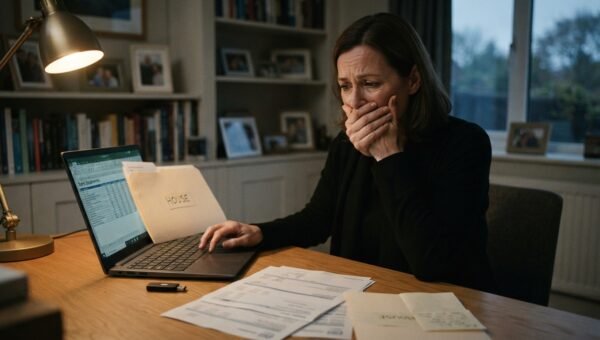
I closed my eyes, the pieces of the puzzle falling into place with sickening clarity. Chloe hadn’t stayed away during my surgery because of soccer games or school musicals. She stayed away because she needed an empty house, a locked room, and a stranger to act as an unwitting scout to confirm the exact layout of the house while she planned her heist.
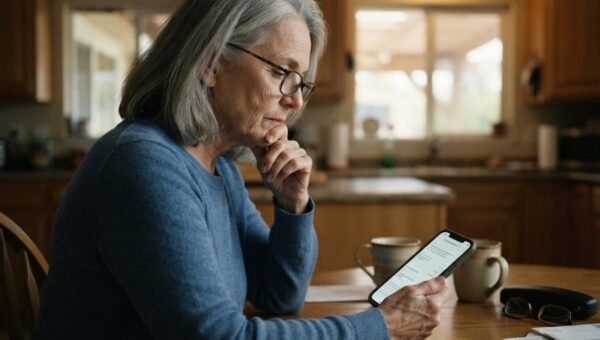
I picked up my phone with fingers that felt stiff and clumsy, dialing her number on speaker. It rang four times before her bright, breezy voicemail recording picked up. I didn’t leave a message. Instead, I sent a single text message: *I know about the blue folder from the desk. Bring it back today, or I call the police and report the break-in.*
Within twenty minutes, tires crunched down my gravel driveway. A car door slammed with enough force to rattle the windowpanes.
ENDING
The front door swung open without a knock, and Chloe stood in the foyer, her chest heaving, her face flushed with a mixture of panic and furious indignation. She was holding the blue leather binder in her right hand, clutching it against her chest like a shield.
“Are you completely out of your mind?” she demanded, marching into the living room and tossing the binder onto the coffee table so hard it skidded across the glass. “Calling the police? Threatening your own daughter over a bunch of dusty old papers from the nineteen-eighties? Do you have any idea how insane you sound?”
I didn’t move. I kept my hands resting calmly on the arms of the sofa, looking at my daughter—the child I had raised, protected, and loved through every heartbreak of her life.
“You broke my lock, Chloe,” I said, my voice remarkably steady despite the pain radiating through my knee. “You lied about why you couldn’t help me after my surgery. You used a hired stranger to case my house, and you stole documents that belong to me.”
“They don’t belong to just you!” Chloe shouted, her voice cracking, tears of sheer frustration finally spilling over her eyelids. “I found out three weeks ago when I was looking for birth certificates for the kids’ passport renewals. I saw the agency name. I called them pretending to be doing family medical history research, and I pieced it together. You lied to me my entire life, Mom.”
She pointed a shaking finger at the blue binder on the table.
“I’m not your biological child, am I?” she whispered, the anger suddenly collapsing into a raw, broken plea. “That signature… that woman in Chicago who signed away her rights… she’s why you moved us across the country when I was two, isn’t she? Who am I, Mom? Tell me the truth right now, or I swear to God you’ll never see your grandchildren again.”
The silence in the room grew heavy and suffocating, broken only by the hum of the refrigerator in the kitchen. I looked down at my bandaged knee, feeling the immense weight of decades of secrets finally collapsing around us, realizing that some doors, once forced open, can never be shut again.