PART 1
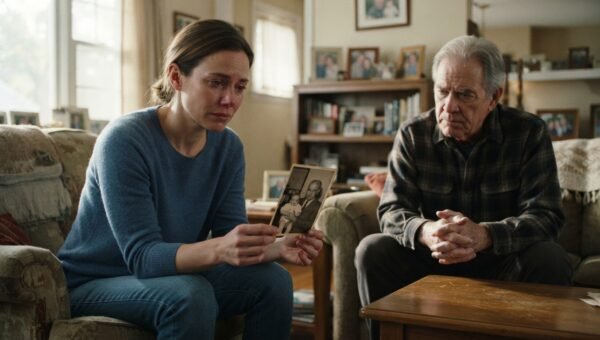
When Arthur had his stroke two Novembers ago, it broke something steady in our house. He was seventy-eight, sharp-minded until the vessel popped, and fiercely proud of living independently in the small split-level down the road from us. After two weeks in rehabilitation, the physical therapist said he could come home if he had daily support with meals, medication management, and light housekeeping.
My husband, Mark, sat at our kitchen table that Sunday evening looking exhausted, rubbing the bridge of his nose where his glasses always left red dents.
He looked up and said his sister Brenda was between administrative jobs and had experience working front desk at a medical clinic. He suggested we hire her to look after Arthur for nine hundred dollars a week, paid directly from Arthur’s modest pension account. Mark reasoned it would keep family money circulating inside the family, give Brenda a steady income while she looked for permanent work, and guarantee that Arthur had someone who actually cared about him rather than a stranger from an agency.
I agreed instantly because it made sense on paper. Brenda came over that Tuesday, her car smelling faintly of mint gum and cheap laundry detergent, carrying a large canvas tote bag. She sat with Arthur for two hours, and when Mark and I stopped by that evening, she had her phone out, showing us pictures of a turkey wrap she had prepared for him and a snapshot of the two of them smiling by the front porch railing.
Arthur looked quiet, sitting in his armchair with a fleece blanket over his knees, but he nodded when Mark asked if Brenda was treating him right.
For the first month, the routine seemed to run itself. Brenda sent photos every single afternoon around two o’clock. There was Brenda holding a bowl of steaming chicken soup. There was Brenda and Arthur sitting on the sun porch with matching mugs of tea. There was Brenda standing beside the refrigerator, smiling with her thumb up, with the door open to show neat rows of Tupperware. Mark beamed every time a photo popped up on our shared family album. He would turn his phone toward me across the kitchen island and say, “Look at that. See? I told you family takes care of family. Brenda’s a godsend.”
I paid the weekly nine hundred dollars every Friday via direct transfer into Brenda’s checking account, just like Mark asked me to handle.
Brenda always sent a polite text within an hour saying, “Funds received, thanks Kath, love what you did with Arthur’s room.”
The friction started small, the kind of things you brush off because you want peace. Arthur began losing weight. His face looked hollower every time I went over to drop off mail, and his sweaters hung off his shoulders like he was wearing someone else’s clothes. When I asked Brenda about it during her Friday afternoon update, she sighed and gave me that patient, martyrdom look she was so good at wearing. She told me Arthur was losing his appetite because of the stroke medication, that elderly men were notoriously stubborn about eating, and that forcing food down his throat would only cause him distress. She reminded me that she had taken care of our grandmother during her final months, as if that credential shielded her from questioning.
Mark backed her up without hesitation. He told me I was worrying too much, that I liked having something to fix, and that Brenda had more hands-on caregiving experience than I did.
I let it drop because arguing with Mark when he got that defensive tilt in his jaw wasn’t worth the evening fallout. But the knot in my stomach stayed tight.
The turning point came on a Tuesday in late December. Mark had driven down to the regional hardware supplier two towns over for a three-hour inventory meeting, and my afternoon client appointment canceled at the last minute. I was driving home along Elm Street, three blocks from Arthur’s house, when the sun broke through the heavy gray cloud cover. Without planning it, I turned my signal on and pulled into Arthur’s driveway.
There was no text from Brenda saying she was leaving early, and her blue sedan was parked right out by the detached garage. I walked up the flagstone path, noticing the front storm door was unlatched. I let myself inside, calling out softly so I wouldn’t startle Arthur.
The house smelled cold and stale, like stale coffee and closed windows. I walked down the short hallway toward the living room. It was three-fifteen in the afternoon. Arthur was sitting in his motorized armchair, but he was still wearing his flannel pajama bottoms and a faded gray undershirt. His hair was sticking up on one side, and his eyes had a dull, glazed look that made my chest tighten.
Brenda wasn’t in the living room. I heard the refrigerator door open and close in the kitchen, followed by the sharp rattle of plastic containers. I stepped around the corner, expecting to see her prepping a late snack.
Instead, Brenda was standing by the counter with her phone in her hand, typing rapidly. I looked past her toward the open refrigerator. Inside, the shelves were almost bare. There was a single tub of generic strawberry yogurt with a spoon stuck in it, a half-empty jar of yellow mustard, and a shriveled lemon sitting in the door bin.
Brenda spun around, dropping her phone onto the laminate counter with a loud clatter. Her face flushed a mottled red, and her eyes went wide before she pasted on a strained, cheerful smile.
“Kathryn! You scared ten years off my life,” she said, her voice pitched an octave higher than normal. “We weren’t expecting visitors today. Arthur didn’t want to get dressed this morning, you know how difficult he gets when his mood dips. I was just cleaning up after his light lunch.”
“Brenda, where is the food?” I asked, keeping my voice flat. “The shelves are completely empty except for a yogurt.”
“He ate a massive breakfast,” she shot back immediately, her defense reflexes kicking in with practiced speed. “He had oatmeal, two eggs, whole wheat toast, and orange juice. By three o’clock, he’s never hungry. Besides, you know how picky he gets with groceries right now. I don’t want to waste good family money buying things he refuses to touch.”
Arthur didn’t say a word from the other room. He just sat there, staring straight ahead at the blank television screen. I looked at Brenda, at her manicured nails, at the clean designer handbag sitting on the kitchen table with its zipper half-open, and I knew she was lying. Not exaggerating. Lying.
Brenda left twenty minutes later, claiming she had to pick up her dry cleaning before the shop closed. She gathered her canvas tote, gave Arthur a breezy pat on the shoulder, and told him she would be back bright and early at eight o’clock the next morning.
After her car backed out of the driveway, I spent an hour cleaning out the expired milk and wiping down the counters. Before I left, I placed a small, wireless security camera on the bookshelf in the corner of the living room, angled toward Arthur’s chair and the kitchen entrance. It was a model I used for monitoring my workshop equipment, small enough to blend in with a row of paperback books. I synced it to my phone, kissed the top of Arthur’s head—his skin felt paper-thin and ice cold—and told him I would see him tomorrow.
PART 2
The notification pinged on my phone at 8:14 the next morning while I was sitting at my kitchen desk going over quarterly invoices.
Motion detected in the living room.
I tapped the app icon, and the live feed opened instantly. The video quality was crisp, glowing in the soft morning light filtering through Arthur’s sheer curtains. Brenda walked through the front door carrying two heavy plastic grocery bags from the local discount supermarket. She looked around the empty room, set the bags down on the coffee table right in front of the sofa, and then froze.
From my phone screen, I watched her expression shift from professional mildness to something calculating. She reached into one of the bags, pulled out a bunch of bananas and a box of cereal, and arranged them carefully on top. Then, she pulled her smartphone from her coat pocket, angled herself so the grocery bags and Arthur’s chair were in the background, and snapped three quick photos with her flash on.
She lowered her phone, shoved the bananas and cereal back into the plastic bags, and hoisted both bags back into her arms. Without saying a word to Arthur—who was sitting ten feet away in the same pajamas he had worn yesterday—she turned around, walked out the front door, and locked it behind her.
My hands started to shake so hard I dropped my coffee mug onto the rug, leaving a dark brown stain near the baseboard. She wasn’t caring for him. She was staging photos for Mark, collecting nine hundred dollars a week of Arthur’s pension money, and walking out the door with the food she bought so she didn’t have to spend a dime on him.
I grabbed my car keys, my coat, and my phone, my heart hammering against my ribs like a trapped bird.
When I burst through Arthur’s front door fifteen minutes later, he was alone in the quiet house, staring toward the doorway as if he had been waiting for the exact sound of my tires on the gravel. He didn’t look angry; he looked exhausted, defeated, and terrified in a way I had never seen an old man look before.
“Kathryn,” he rasped, his voice cracked and dry. He pointed a trembling, spotted finger toward the corner of the room near his recliner. “Look… look behind the armchair. In the green cooler.”
I hurried across the room. Tucked into the small space between the heavy wooden bookshelf and the side of his motorized chair was an old plastic camping cooler, olive-drab with a faded white latch. The lid was resting slightly off-center.
“What is this, Arthur?” I asked, dropping to my knees on the worn carpet.
“She brings it in every few days,” Arthur whispered, glancing toward the front window as if Brenda might materialize through the glass. “She doesn’t leave food. She leaves boxes. She told me if I told Mark or you, she would put me in a state nursing home where they tie you to the bed. Open it, girl. Just look.”
PART 3
I reached out with trembling fingers and lifted the lid of the green cooler.
The interior wasn’t cold. It was packed tight with rows and rows of prescription medication bottles, stacked four deep like canned goods in a storm cellar. I picked up the nearest bottle, a large amber cylinder with a white pharmacy label wrapped around the plastic.
The name printed on the label in bold black type was not Arthur Vance. It was Eleanor Vance. And below that, a different address across town, and a series of heavy-duty narcotic and antipsychotic medications that neither Arthur nor anyone in our family had ever been prescribed.
I pulled out a second bottle. Same name. Eleanor Vance. Different medication. A third bottle. A fourth. Dozens of them, all bearing Eleanor Vance’s name, expiration dates from six months ago, and refill counts that showed they had been picked up regularly from the local medical center pharmacy.
“Who is Eleanor Vance?” I whispered, looking up at Arthur.
“Brenda’s other client,” Arthur said, his chest heaving as he tried to catch his breath. “Some old lady living in an apartment over by the park. Brenda’s been using my address, or maybe she’s using Eleanor’s insurance through some scheme. She keeps the stash here because her landlord searches her apartment building. She told me if I touched them, the police would think I was selling them on the street.”
The pieces clicked together in my head with sickening clarity. Brenda wasn’t just neglecting my father for nine hundred dollars a week. She was running a prescription fraud operation, using Arthur’s quiet, isolated house as a stash house to hoard medication bottles under a dead or exploited patient’s name, keeping them out of her own home while she collected caregiving paychecks from us and likely insurance payouts from elsewhere.
I reached into my coat pocket, pulled out my phone, and opened the camera app. I needed evidence. If I didn’t photograph the labels right now, Mark would walk in, Brenda would spin another lie, and the cooler would vanish before I could prove a word of it.
I angled my phone screen down, framed the open cooler with the cluster of amber bottles showing Eleanor Vance’s name, and tapped the shutter button.
The flash on my phone went off with a sharp, blinding pop.
Before the white light had even faded from the dim living room, the front door rattled and swung wide open.
Mark stepped into the hallway, carrying a brown paper bag from the hardware store and a travel mug of coffee. He stopped dead in his tracks when he saw me kneeling on the carpet with the open cooler, the amber bottles spilling out onto the rug, and Arthur sitting pale and rigid in his chair.
Mark’s face went gray. He dropped the paper bag on the floor, the metal contents clattering against the hardwood.
“Put those back,” Mark said, his voice dropping into a harsh, unnatural whisper that wasn’t his normal speaking tone at all. “You were never supposed to know…”
ENDING
I stood up slowly, the phone still clutched in my right hand, the digital screen glowing with the photo I had just captured.
“Never supposed to know what, Mark?” I asked, my voice dangerously steady. “That your sister is starving my father-in-law, staging fake lunch photos for your benefit, and running a drug storage ring out of his living room?”
Mark didn’t rush to defend Brenda. He didn’t look surprised in the way an innocent man looks when he discovers a crime. Instead, he rubbed his face with both hands, let out a long, ragged breath, and looked down at the floor between us.
“She owes money, Kathryn,” Mark said, his voice breaking into a bitter, defeated rasp. “Bad money. Credit cards, loan sharks from her last boyfriend in the city. She came to me six months ago crying, saying they were going to break her windows. I told her I couldn’t give her cash from our savings. That’s when she… she came up with this arrangement.”
“This arrangement?” I repeated, the word tasting like ash in my mouth. “You knew about this?”
“Not the pills,” Mark said, looking up, his eyes bloodshot and desperate. “I swear to God, I didn’t know about the prescriptions. I knew she was pocketing the care money and not buying the groceries we paid for. She promised she would pay it back once she got her administrative settlement. I just wanted to keep the peace between us. I didn’t want my family falling apart.”
“Your family is already falling apart, Mark,” I said, looking from my husband to the frail, shivering old man sitting in the armchair. “Except it’s because you protected a thief instead of your own father.”
I turned around, dialed emergency services on my phone, and walked out to the front porch to give the dispatcher Arthur’s exact address while Mark stood frozen in the hallway, staring down at the green cooler as if he were seeing his whole life cracking right down the middle.
The police arrived twenty minutes later, followed by an adult protective services unit. Brenda’s scheme unraveled completely over the next forty-eight hours, uncovering an insurance fraud network spanning three different care facilities in the county. Mark moved out of our house that same night, staying at a roadside motel while I packed Arthur’s bags, brought him home to our spare bedroom where he finally had warm soup and clean sheets, and began the long, quiet work of rebuilding a life that didn’t depend on family secrets.