PART 1
The carpet around my father’s armchair was ankle-deep in silver foil and green ribbon before I realized what was actually happening.
It was seven o’clock on Christmas Eve. The living room smelled like the spiced cider my mother had kept simmering on the stove all afternoon, mixed with pine needles from the seven-foot spruce in the bay window. Christmas at my parents’ house had followed the exact same routine for thirty years, ever since my sister Karen and I were girls.
But this year, something felt off the moment we walked through the door.
My father, Arthur, sat in his high-backed leather chair near the hearth. Beside him on the floor was a massive stack of wrapped packages, all labeled in my mother’s neat, looping cursive. My boys, Travis, who was fourteen, and Owen, who had just turned eleven, sat cross-legged on the floor near the sofa. They were quiet, polite, and wearing the clean button-down shirts I had pressed for them before we drove over.
Across from them, my sister Karen sat with her husband, Greg, and their two kids: Madison, who was fifteen, and Kyle, who was twelve.
My mother, Evelyn, stood beside my father with a small brass handbell she used every year to call everyone to attention. She rang it once, a sharp chime that cut through the chatter.
“All right, everyone,” my mother announced, her smile tight and deliberate. “Before we hand out the gifts this year, Arthur and I want to say something.
We have decided that rewards should reflect character, effort, and pride. We want our grandchildren to understand that privileges are earned through achievement, dedication, and honoring family expectations.”
I glanced over at Karen. She didn’t look surprised at all. She was smiling, leaning back with a glass of white wine, watching my mother with complete satisfaction.
My father cleared his throat, picked up the first heavy box, and looked directly at Madison. “For Madison. First chair flute, straight A’s, and representing this family with grace.”
Madison beamed, hopping up to take the box. She tore off the paper to reveal the latest iPad Pro with the pencil and keyboard case.
“And for Kyle,” my father continued, handing over another large box. “Starting pitcher for his travel league, honor roll, and true discipline.”
Kyle opened a brand-new game console, the exact one my son Owen had spent all fall saving his lawn-mowing money trying to buy.
Then my father handed Madison a designer winter coat she had been asking for.
He handed Kyle a pair of top-tier basketball shoes. Then came envelope after envelope containing gift cards and cash. The pile beside my father’s chair began to dwindle rapidly.
Owen kept glancing at the remaining boxes, his fingers fidgeting with the seam of his jeans. Travis sat completely still, watching the floor between his sneakers.
My father handed the final small box to Madison. It was a silver pendant.
Then my father brushed his hands against his trousers, leaned back, and took a sip of his coffee. The space beside his chair was completely empty.
Owen looked up, his voice small and hesitating. “Grandpa? Did… did you forget ours in the other room?”
Before my father could speak, Madison let out a sharp, amused laugh. She hugged her new tablet to her chest, kicked her feet back against the armchair, and looked down at my boys.
“Looks like you didn’t earn one,” Madison said. “Grandpa said gifts are for people who make them proud. You guys didn’t earn anything.”
The room went dead silent.
Torn silver wrapping paper covered the carpet. The smell of cinnamon and pine hung heavy in the air. Greg took a sip of his drink and looked away at the television. Karen just smirked, casually adjusting Madison’s collar. Not a single adult in that room opened their mouth to correct her. Nobody defended my sons.
Travis stared down at his hands, his knuckles white against his knees. Owen bit his lower lip so hard I could see the blood drain from it, tears pooling in his eyes that he was fighting desperately not to let fall.
A hot, suffocating wave of anger rose in my chest. My sons were good kids. Travis worked fifteen hours a week after school helping at a local animal rescue while keeping his grades solid, and Owen had spent months struggling through severe reading comprehension delays, working with a tutor three afternoons a week until he finally pulled his reading grade up to a solid C-plus just last week. They were kind. They were respectful. They had never caused a day of trouble in their lives.
I looked directly at my father.
“What exactly did my sons do to deserve being excluded?” I asked, my voice shaking with an anger I could barely hold back.
My father couldn’t look me in the eye. He stared down at his coffee mug, shifting uncomfortably in his leather chair. “Now, Sarah, don’t make a scene. We just believe in setting standards. Your boys need motivation. They need to understand what real achievement looks like instead of just getting by.”
“So you invited two children to Christmas Eve to publicly humiliate them in front of their cousins?” I said.
My mother frowned, her voice turning icy. “Sarah, watch your tone in this house. If your boys applied themselves like Karen’s children do, they would be rewarded. We are trying to teach them a lesson about life.”
I didn’t yell. I didn’t argue. I didn’t give them the satisfaction of a screaming match.
I stood up straight, stepped between my boys and the rest of the room, and looked down at my sons.
“Boys,” I said quietly. “Get your coats.”
Travis stood immediately, keeping his eyes on the floor. Owen scrambled to his feet, grabbing his jacket from the hall tree. Outside on the porch, a light snow caught in Travis’s dark hair while Owen’s hands shook so badly he couldn’t pull up his zipper. I had to bend down in the freezing wind and pull it up for him.
Nobody followed us to the porch. Nobody called out after us. Through the sheer curtains of the bay window, I could see Karen refilling her wine glass while Kyle tested the controls on his new game console.
The forty-minute drive back to our small suburban house was completely silent except for the rhythmic sweep of the windshield wipers. When we got home, I made a double batch of hot chocolate on the stove, piled it with mini marshmallows, and sat on the living room rug with my boys. We watched an old holiday movie, and I held Owen against my side until his breathing leveled out.
Around ten o’clock, I tucked both of them into bed. I kissed Travis on the forehead, and he looked up at me in the dark.
“Mom,” he whispered. “Did we really do something wrong?”
“No,” I told him, holding his face in my hands. “You didn’t do anything wrong. Not a single thing. What happened tonight was about their cruelty, not your worth. Don’t you ever forget that.”
After they were both asleep, I went down to the kitchen. My phone was sitting on the granite counter, buzzing and vibrating every few minutes against the stone.
I picked it up. There were four texts from Karen and two missed calls from my mother.
Karen: *You completely ruined Christmas Eve for Mom and Dad with that dramatic exit.*
Karen: *Madison was just repeating what Dad said. Don’t be so sensitive.*
Karen: *You’re punishing your kids by teaching them they’re entitled to rewards they didn’t work for.*
Mother: *You owe your father an apology before dinner tomorrow at two.*
I looked at the screen, my heart beating with cold, absolute clarity. They thought I was going to swallow this. They thought tomorrow afternoon we would show up for Christmas dinner, apologize for being offended, and let my boys sit at the table like second-class citizens while Karen’s children showed off their gifts.
I set the phone flat on the counter. I didn’t reply to Karen, and I didn’t call my mother back.
Instead, I sat down at the kitchen table, opened my family group chat, and drafted a single, final message to be sent at daybreak. But as I opened my laptop to check our account paperwork before hitting send, an old piece of mail caught my eye, and the real reason behind my parents’ cruelty began to pull into sharp focus.
PART 2
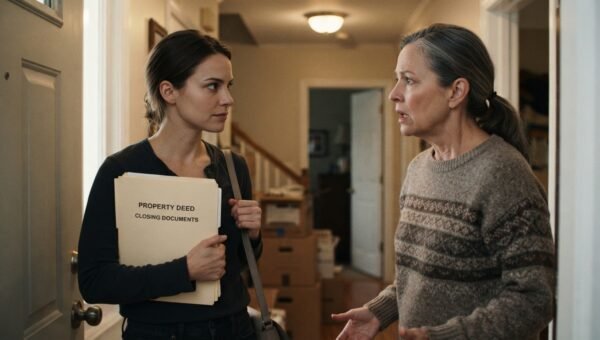
The document sitting under the stack of utility bills on my desk was a property tax reassessment notice for my parents’ four-bedroom colonial on Elm Street.
It had been mailed to my address three weeks earlier by mistake because five years ago, after my father suffered a mild stroke, he had insisted on adding my name to the secondary contact file with the county tax assessor. At the time, he wanted me handling the paperwork because Karen had a history of letting bills slide.
I pulled the notice out from under the pile. Attached to the county statement was a carbon copy of a bank receipt from October.
My father had retired seven years ago with what everyone assumed was a secure pension from the state water authority. But four years back, when my late husband Mark passed away after an eighteen-month battle with leukemia, my parents had offered to hold Mark’s life insurance payout in a joint trust account managed through my father’s broker.
“You’re grieving, Sarah,” my father had told me at my kitchen table, squeezing my hand while I cried into a paper napkin. “You have two young boys to raise alone. Let me hold the seventy-five thousand from Mark’s policy in our family investment account. It will earn five percent interest, safe and untouched, until Travis turns eighteen and needs it for college.”
I had trusted him completely. He was my father. I signed the transfer papers without a second thought. For four years, whenever I asked about the account balance, my father would wave his hand dismissively and say, “It’s growing nicely, sweetheart. Don’t worry your head about the numbers. The boys are protected.”
Now, sitting alone in my quiet kitchen at midnight on Christmas Eve, I stared at the bank receipt attached to the tax document.
The account number printed at the top was the exact joint investment account my father had set up for Mark’s insurance money.
The transaction date was October 14. It showed a wire withdrawal of sixty-two thousand dollars.
The recipient line was not blank. It was routed directly to an auto-finance clearinghouse and a private secondary school tuition fund in Karen’s name.
My hands began to tremble as I sat back in the chair.
Six months ago, Karen’s husband Greg had lost his regional sales job, though they had gone to great lengths to hide it from their neighbors. They had continued to drive their matching late-model luxury SUVs, Madison had stayed enrolled in her private preparatory academy, and Kyle had remained on his elite travel ball circuit that cost thousands of dollars a season.
I had always wondered how Karen and Greg were maintaining that lifestyle with Greg working irregular consulting contracts from home.
Now the truth was staring me in the face in plain black ink.
My father hadn’t saved Mark’s life insurance money for Travis and Owen. He had quietly drained it to keep Karen’s household afloat and preserve the illusion of the wealthy, accomplished golden branch of the family.
The humiliating spectacle by the Christmas tree had never been about teaching my sons a lesson in hard work. It was a manufactured excuse. My parents knew that within ten months, Travis would turn fifteen and start looking at vocational programs and prep courses that required a deposit. They knew the money was supposed to be there.
By labeling my sons as lazy, unmotivated, and undeserving of family pride, my parents were laying the groundwork to explain why there was no money left for them. If Travis and Owen were failures who didn’t earn their keep, my father would never have to confess that he had given their dead father’s money to their cousins.
I felt the blood rush in my ears. The grief I had carried since Mark died turned into iron.
I didn’t sleep that night. I sat at the table with my laptop, pulling every bank statement, probate record, and transfer receipt from the binder I kept in the filing cabinet. Because the original seventy-five thousand had been a direct insurance settlement from Mark’s employer, the policy had listed Travis and Owen as irrevocable beneficiaries, with me as their sole legal guardian. My father had set up the holding account using my signed authorization, but he had never legally altered the beneficiary status of the underlying funds.
He had simply assumed I would never look. He assumed I was too quiet, too dependent on family approval, and too broken by grief to ever demand an accounting.
At six in the morning, the sun broke over the snow-covered lawn outside my kitchen window.
I picked up my phone. I went to the family group text that included my parents, Karen, and Greg.
I typed out the message I had promised myself I would send:
*We will not be attending Christmas dinner today, or any other family gathering moving forward. You humiliated two children who have done nothing but love and respect you, simply to feed your own cruelty. Do not call my boys. Do not send cards. Do not ever invite us again, because my sons will never be your joke.*
I hit send.
Within ninety seconds, my phone began ringing. It was my mother. I declined the call. Then Karen called twice. I declined both.
Then came a text from my father: *Sarah, you are blowing an innocent family moment completely out of proportion. You are tearing this family apart on Christmas morning over bruised feelings. Call your mother immediately.*
I didn’t answer him. Instead, I opened a new email, attached the scanned copy of the October wire transfer and the original insurance beneficiary designation, and addressed it to my father’s personal email, with a copy to our family’s estate attorney.
I wrote four sentences:
*The sixty-two thousand dollars withdrawn from the boys’ trust account on October 14 was stolen from Mark’s children to fund Karen’s lifestyle. You have until Friday at five o’clock to replace every penny into an account solely under my name, or the probate court and the district attorney will receive the complete file on Monday morning. Enjoy your dinner.*
PART 3
The silence from their end lasted for exactly twenty minutes.
Then my front doorbell rang.
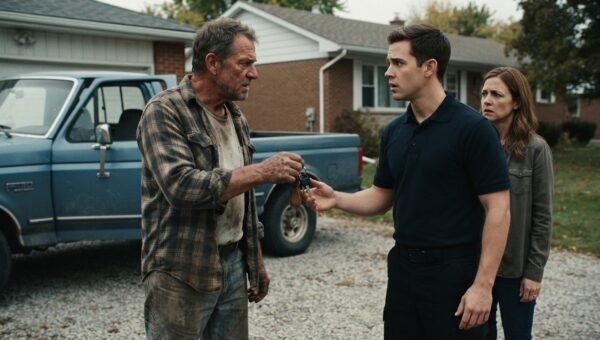
I walked to the foyer, checked the side glass, and saw my father standing on the porch. He was wearing his heavy wool overcoat, his breath pluming in the crisp morning air. His face was pale, his shoulders hunched against the cold. The arrogant patriarch who had sat in his leather armchair twelve hours earlier, lecturing eleven-year-olds on character, looked completely hollowed out.
I opened the door, but I kept the glass storm door locked between us.
“Sarah,” he said, his voice raspy. “Please. Unlock the door. Let’s talk inside. It’s fifteen degrees out here.”
“You can say whatever you came to say right through the glass, Dad,” I replied, keeping my voice entirely flat. “The boys are upstairs eating breakfast, and I won’t have you near them.”
My father swallowed hard, his eyes darting toward the street where his sedan sat idling at the curb.
“Sarah, you don’t understand the pressure we were under,” he whispered, leaning closer to the glass. “Greg lost his firm. They were going to lose the house. Madison was going to be pulled out of school in her sophomore year. Think of how humiliating that would have been for them! We were going to pay it back. I have a certificate of deposit maturing in March. It was just a temporary bridge.”
“You used Mark’s life insurance,” I said. “Money meant for his children’s education. And then last night, you let Karen’s daughter mock my boys for being poor and unworthy while you sat there and said nothing.”
“That was Evelyn’s idea,” he stammered, his defense pathetic and desperate. “Your mother thought… she thought if we made it about discipline, about grades, the boys wouldn’t question why there weren’t large checks or gifts for them this year. We didn’t have the cash on hand after helping Karen. We were trying to avoid the conversation until the CD matured.”
“You didn’t want to avoid a conversation,” I said, looking him dead in the eye. “You wanted to break my boys’ spirits so they would believe they didn’t deserve anything. You wanted them to feel defective so you wouldn’t look like a thief.”
My father flinched. He looked down at the snow on the porch steps.
“If you go to the authorities, Sarah, it will destroy this family,” he choked out. “Karen could face charges. Greg’s career will never recover. Your mother will never survive the shame of this getting out in town.”
“You should have thought about your family before you robbed my sons,” I said. “Friday at five o’clock. If the certified cashier’s check is not in my attorney’s hands by then, I file the paperwork. Now get off my porch.”
I closed the heavy oak door and locked the deadbolt.
Through the peephole, I watched my father walk slowly back down the salt-stained driveway, his head down, getting into his car and driving away without looking back.
I turned around to find Travis standing at the top of the stairs, holding a mug of tea. He had heard enough.
“Is everything going to be okay, Mom?” he asked quietly.
I walked up the stairs, wrapped my arms around him, and pulled him in tight. “Everything is going to be better than okay,” I told him. “We are going to be just fine.”
Over the next four days, my phone received dozens of frantic messages. Karen sent voice memos crying, accusing me of wanting to put her children on the street, begging me to give them three years to repay the money in small installments. My mother left a voicemail saying that family forgives, that blood is thicker than money, and that Mark would never have wanted me to be so hard-hearted.
I didn’t answer a single one. Every message and voicemail was forwarded directly to my lawyer’s office.
On Thursday afternoon at three o’clock, twenty-six hours before my deadline, my attorney called me.
“Sarah,” he said over the speakerphone. “Your father just left my office. He brought a cashier’s check for sixty-eight thousand two hundred dollars. That covers the full sixty-two thousand principal plus the statutory interest rate calculated from October 14 to today. He signed the complete release of trustee rights. The funds are cleared and deposited into a secure, single-signatory trust under your name alone.”
My father had cashed out his personal retirement annuity early, taking a massive tax penalty and liquidation fee, to prevent the police report from being filed.
The money was safe. Mark’s gift to his sons was completely restored.
ENDING
We spent that New Year’s Eve alone at home, just the three of us.
I took the boys out to an early dinner at a local Italian restaurant, and on the way home, we stopped at the bookstore so Owen could pick out three graphic novels he had been wanting for months. We made homemade pizza, played board games on the rug, and when the clock struck midnight, we banged pots and pans on the back deck into the cold night air.
Neither of my boys asked about their grandparents. They didn’t ask about Karen, Madison, or Kyle.
Children are far more perceptive than adults give them credit for. They had felt the quiet cruelty in that house long before the gifts were handed out. They had felt the way my mother looked over their thrift-store jackets, the way my father praised Karen’s children while offering Travis and Owen only perfunctory nods, and the way every conversation had always been a quiet contest my sons were never meant to win.
Two months later, in late February, Karen’s husband Greg took a job with a logistics firm in northern Ohio. They put their house up for sale and moved three states away before spring. The private school tuition was gone, Madison finished her sophomore year at a local public high school, and the matching luxury SUVs were traded in for two sensible commuter sedans.
My parents still live in the big colonial on Elm Street, but the house is quiet now.
A neighbor told me at the grocery store a few weeks ago that my mother rarely attends the garden club meetings anymore, and my father spends most of his days sitting on the back patio alone. They tried sending birthday cards to Travis and Owen in the spring, with short, generic notes inside pretending that nothing had ever happened.
I didn’t tear the cards up in anger. I simply placed them in a box in the back of my closet. When the boys are older, if they ever choose to read them, they can. But I will never force them to accept affection from people who treated their dignity as conditional.
Last week, Owen brought home his final fifth-grade report card. He had pulled his reading grade up to a solid B, and his teacher had written a long note on the bottom praising his persistence, his kindness to other students, and his work ethic.
Owen held the paper out to me in the kitchen, his eyes searching my face, half-smiling but still carrying that tiny, lingering flicker of hesitation from Christmas Eve.
“Did I do good, Mom?” he asked. “Did I earn something?”
I pulled him into my arms, holding him until he rested his head against my shoulder.
“You don’t have to earn my love, Owen,” I told him, looking straight into his eyes so he would never doubt it. “You don’t ever have to earn a place at my table. You are my son, and you make me proud just by being who you are.”
For the first time in months, the tension completely melted from his shoulders. He smiled, grabbed his backpack, and ran upstairs to show his brother.
Standing in my sunny kitchen, listening to the sound of my boys laughing together in the room above me, I knew I had made the right choice. Family isn’t the people who demand you perform for their approval. Family is the people who protect you when everyone else is looking away.