PART 1
When Mom packed up her life and moved into my younger brother Dale’s split level across town, we all told ourselves it was the most sensible thing to do. Her old colonial had too many steep steps for her bad knees, and Dale had a main floor bedroom already set up. I helped wrap her china in old newspapers and loaded her cedar chest into the back of my SUV.
For the first few weeks, everything seemed fine. Dale posted pictures on Facebook of her sitting on his back patio with a cup of tea, looking settled and peaceful.
Then the pattern shifted. At first, it was just missed Sunday phone calls. I would dial her landline or her cell phone, and it would ring out straight to voicemail. When I called Dale, he would tell me she was resting or watching her favorite game show in her room. He always sounded a little hurried, as if I had interrupted something important. I figured she was just adjusting to the change of routine. After all, losing a longtime home is hard on a seventy-four-year-old woman, even when it is her own choice.
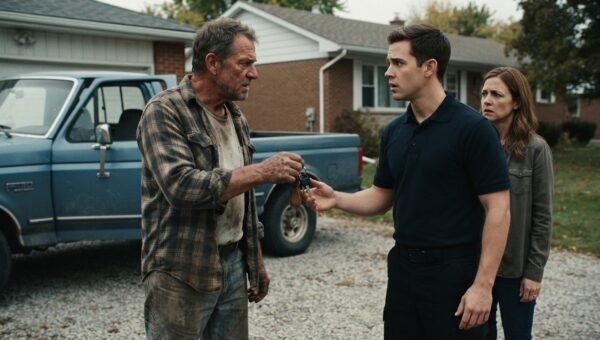
By November, the silence felt heavier. I tried dropping by unannounced on a Tuesday afternoon, but Dale answered the door wearing work clothes and looked visibly annoyed. He stepped halfway out onto the porch, pulling the front door nearly shut behind him.
He told me Mom was having a bad day with her arthritis and did not feel up for company. I asked if I could just pop in for five minutes to say hello through her bedroom door, but he shook his head firmly and said it would just upset her more to be seen looking worn out. I stood there on the porch feeling a strange, cold prickle at the back of my neck, but I trusted my brother. Dale had always been the dependable one, the son who stayed close to home while I built my life thirty miles away.
The real crack in the facade appeared on Christmas Day. We gathered at Dale’s house for dinner, and the atmosphere around the dining room table was strained and quiet. Mom looked thinner than she had in August, her favorite wool sweater hanging loosely around her shoulders. Every time I tried to steer the conversation toward her health or how she was liking the room, Dale jumped in with a loud anecdote about his job or the neighborhood HOA.
Toward the end of the evening, everyone else had drifted into the living room to watch the grandchildren unwrap a final board game. I stayed behind in the kitchen to help clear the dessert plates. Mom walked in slowly, leaning on her wooden cane, and reached into the pantry for a box of tea. As I stepped over to help her, she caught my wrist with fingers that felt startlingly frail. She looked around the kitchen with wide, terrified eyes, leaned in close, and whispered four words that turned my blood to ice water.
I can’t leave.
Before I could ask what she meant, Dale’s heavy footsteps echoed on the linoleum. Mom dropped my arm instantly, her face instantly flattening into a blank, guarded mask, and shuffled back out toward the hallway without her tea.
PART 2
The whisper haunted me for three days straight. I replayed the way her hand gripped my wrist, the sudden panic in her eyes, and the way Dale materialized the second we were alone.
I started digging through old family paperwork in my home office, trying to make sense of her financial arrangements. A week after New Year’s, my phone buzzed while I was at my kitchen counter paying bills. It was an unfamiliar local number.
The woman on the other end identified herself as an investigator with Adult Protective Services. She asked if I was the primary daughter of Margaret Vance, and when I confirmed that I was, she requested an immediate in-person meeting at a diner halfway between our towns. My heart hammered against my ribs the entire drive over.
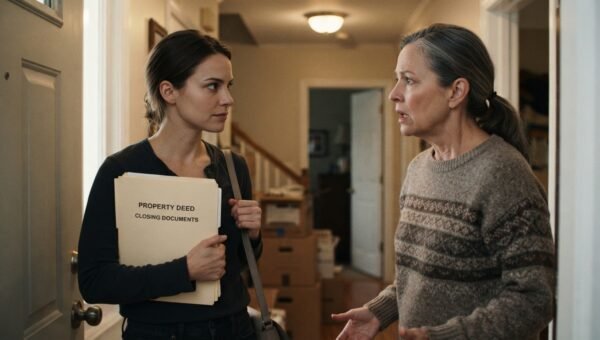
Sitting in a vinyl booth with a lukewarm cup of coffee between us, the investigator laid out a reality that completely unmoored me. She told me that four months earlier, right around the time Mom moved into Dale’s house, her colonial home had been sold. The deed had been transferred, and the closing had taken place without my knowledge or consent. Nearly $280,000 from the sale had not gone into Mom’s personal savings or an estate trust. Instead, the entire sum had been deposited into a joint checking account bearing both Dale’s name and Mom’s name, which Dale had quickly converted into an account he controlled entirely.
The investigator explained that a neighbor had finally called their office out of concern after noticing strange movers and realizing Mom had vanished from the neighborhood without saying goodbye. When APS agents visited Dale’s house to check on her welfare, Dale had refused them entry twice before a court order forced the issue. They found Mom restricted to a small back room, her cell phone confiscated under the guise of protecting her from spam calls, and her access to her own funds completely cut off.
I sat frozen in that diner booth, staring at the laminate tabletop as the words washed over me. The missed calls, Dale blocking the front door on Tuesday, the frail look in her eyes at Christmas, and that desperate whisper in the kitchen all slammed together into a hideous picture. My own brother had engineered a silent takeover of her entire life savings.
PART 3
I did not wait another hour. I drove straight from the diner to Dale’s house, my hands shaking so violently on the steering wheel that I had to pull over twice to catch my breath. I pulled into his driveway, threw my SUV into park, and marched up to the front door, pounding my fists against the wood until the glass panes rattled in their frames.
Dale yanked the door open, his face flushed and angry, ready to chew me out for the noise. But the look on my face stopped him cold. Before he could utter a single word, I let loose with everything I had accumulated over the past week, screaming accusations about the house, the $280,000, the APS investigator, and the sheer cruelty of what he had done to our mother. I called him a thief and a monster, my voice cracking with rage as I demanded to know how he could look himself in the mirror after bleeding Mom dry.
Dale didn’t flinch or look away with guilt like I expected. Instead, a cold, hard sneer spread across his face. He crossed his arms over his chest, leaning against the doorframe as if he were enjoying my breakdown.
You think you’re so righteous, don’t you? Dale snapped back, his voice dripping with venom. You want to point your finger at me and play the good daughter. Go ahead and ask her. Ask Mom who handed over the deed. Ask her who signed the papers at the title office. I didn’t steal a damn dime. She gave it to me willingly because she was terrified of you taking it all for yourself.
The words hit me like a physical blow, knocking the wind straight out of my lungs. I stumbled back off the porch step, staring at him in utter disbelief. I spun around, expecting to see Mom standing at the window or hiding in the hallway. But the house behind him remained dark and silent.
ENDING
I left Dale’s porch with my head spinning, unable to process the poison he had just injected into the air. I drove straight back to my own house, locked the front door, and sat on the living room sofa in the dark for hours. I wanted to believe Dale was lying, that it was just another manipulation tactic to deflect blame from his own criminal greed. But the doubt had already taken root in my mind, a poisonous seed that refused to die.
Two days later, ignoring Dale’s warnings and legal threats, I managed to arrange a supervised visit with Mom through the APS case worker at a neutral location downtown. We sat in a sterile, brightly lit consultation room at the agency office. Mom looked smaller than ever, her hands trembling as she smoothed the fabric of her skirt over and over again.
I knelt down beside her chair, took her frail hands in mine, and asked her the hardest question of my life. I asked her why she let Dale take the house money, and whether she understood what he had done.
Mom looked down at her lap, a single tear cutting a slow path down her wrinkled cheek. She pulled her hands away gently and whispered words that shattered the last remaining pieces of my heart.
Please don’t blame him yet, she said, her voice barely audible over the hum of the fluorescent lights. I signed it because of what your father left behind.
She explained, through halting breaths and mounting tears, how she had carried a secret burden for years about financial choices my late father had made, fearing the tax authorities or legal battles would strip everything away if anyone else found out. Dale had discovered the old paperwork, convinced her that I would judge her or demand an audit, and used her deep-seated fear to manipulate her into signing away her home and her security for a false promise of protection. She hadn’t wanted to cut me off, but Dale had isolated her, convincing her that my calls were proof I only wanted her money.
As I sat there holding her, the anger toward my brother transformed into a profound, aching sorrow. Dale hadn’t just stolen her savings; he had weaponized her deepest fears to build a fortress of control around her. The legal battle to recover her funds and restore her independence would take months of grueling court dates and endless paperwork. But as I helped her gather her coat to leave with the caseworker, I knew I would fight every single day until my mother was finally safe under my own roof.