PART 1
The day of my dad’s funeral, the house smelled like damp wool coats and cold potato salad people had dropped off on paper plates. I was fourteen years old. My dad, Mark, had died suddenly from an aneurysm in his sleep on a Tuesday night. By Friday, our front walkway was lined with neighbors whispering polite condolences, and by Sunday evening, the front door clicked shut, leaving just me and my stepmother, Brenda.
Brenda had been married to my dad for four years. She was a neat, quiet woman who worked as an intake clerk at the county records office. She kept her nails short and her receipts filed in shoe boxes. We were never particularly close, but we had always been civil. My real mother had died when I was just a toddler, so for as long as I could truly remember, it had just been Dad and me, until Brenda moved in with her matching floral luggage.
On Sunday night, Brenda didn’t make dinner. She sat at the kitchen table with a stack of manila folders, a cup of black tea, and Dad’s leather wallet lying open beside her saucer. I walked into the kitchen wearing an old hoodie that still smelled like Dad’s woodshop, looking for a piece of leftover bread.
“Sit down, Tyler,” Brenda said. Her voice didn’t shake. There were no red rings around her eyes.
I pulled out the oak chair across from her.
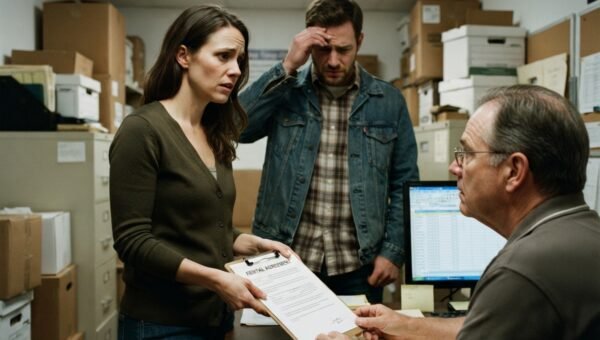
“Your father’s affairs are very messy,” she said, tapping a yellow legal pad with a blue ballpoint pen. “He owed more on this property than anyone realized. The deed transferred entirely to me under the survivorship clause on the title. The house belongs to me now. Not the bank, not an estate, and not you.”
I stared at the wood grain of the table. “What does that mean?”
“It means childhood is over,” she said flatly. “I cannot afford to carry dead weight on a single income. You are fourteen. That is old enough to bag groceries or wash dishes down at Miller’s diner after school. You have two choices. You pay me four hundred dollars a month for your bedroom and groceries, or I ship you to St. Jude’s boarding academy upstate tomorrow morning.”
I felt the air leave my lungs. “Four hundred dollars? Brenda, I don’t have four hundred dollars. I’m a freshman in high school. Dad’s life insurance…”
“There is no life insurance payout for you,” she cut in, her voice dropping into a hard, metallic register. “He left everything to his lawful wife. That is how the law works. Four hundred dollars on the first of the month, cash, or the bus to St. Jude’s. Do you have the money right now?”
“No,” I whispered. My hands started to tremble against my knees. “School started three weeks ago. I don’t have a job.”
Brenda closed the manila folder with a crisp, dry snap. She didn’t raise her voice. She didn’t look angry. She looked like a woman returning a pair of shoes that didn’t fit.
“Then pack one duffel bag,” she said. “The late bus leaves the station at nine tonight. The intake paperwork for St. Jude’s ward program is already signed. If you aren’t out the door by eight-thirty, I am calling social services to pick you up as an unmanageable dependent.”
I begged her. I stood in the kitchen and cried until my ribs ached. I asked her why she was doing this to Dad’s son, why she couldn’t give me time to figure something out, why she wouldn’t let me finish my school semester in my own bedroom. Brenda didn’t even look up from her tea. She just pointed toward the stairs.
I went up to my room. I packed three pairs of jeans, my school books, my father’s pocket watch that I had hidden inside an old baseball mitt, and a framed photograph of Dad holding me at the lake when I caught my first perch. By eight-thirty, Brenda had placed a one-way bus ticket on the hall table beside my duffel. She didn’t drive me. A local taxi pulled up to the curb, paid for out of my dad’s pocket cash, and took me to the regional transit depot.
The boarding school wasn’t a private school for wealthy kids. It was a strict, bare-bones charity boarding facility funded through state stipends and church endowments for displaced minors. The dormitories had bunk beds made of gray painted iron and linoleum floors that smelled like bleach and industrial floor wax. For two years, my world shrank to a six-foot cot, supervised study halls, and shifts in the campus cafeteria scrubbing grease traps to earn ten dollars a week for soap and pencils.
I never heard from Brenda. Not a postcard, not a birthday card, not a phone call. When I tried calling the home landline six months in, the operator said the number had been disconnected and reassigned. As far as the town was concerned, I had vanished into the state care system, an orphan whose father died broke.
Two years dragged by. By sixteen, I was taller, gaunter, and used to keeping my head down. It was a rainy Tuesday afternoon in late October when our dorm supervisor tapped on the glass window of the cafeteria dish room and pointed toward the front visitor lobby.
A middle-aged woman in hospital scrubs was waiting for me on the stiff vinyl bench by the coat rack. Her jacket was soaked through from the rain, and she was clutching a plastic zip-top bag against her chest with both hands.
“Are you Tyler Vance?” she asked as soon as I stepped onto the lobby tiles.
“Yes ma’am,” I said, wiping my wet hands on my kitchen apron.
She stood up immediately. Her eyes were tired and red-rimmed. “My name is Evelyn Miller. I’m a night-shift charge nurse at St. Joseph’s hospice wing over in Pine Valley.”
My stomach tightened. Pine Valley was the county seat, thirty miles from my dad’s house.
“Did something happen to someone?” I asked.
The nurse looked down at the plastic bag in her hands. “Brenda Vance passed away six hours ago. Pancreatic cancer. It moved very fast. She was admitted under hospice care less than three weeks ago.”
I stood frozen. I felt no surge of grief, but no sudden joy either, just a strange, hollow numbness in my chest. “Why are you here?”
“Because for the last three days, she refused her full pain meds until she could finish something,” Evelyn said, her voice shaking slightly. “She made me swear on my own children’s lives that I wouldn’t leave it with a lawyer and I wouldn’t leave it with the county executor. She said you were the only person who could ever see it. A dying woman’s last wish was to give you this directly.”
Nurse Evelyn unzipped the plastic bag. Inside was an ordinary, silver-and-black USB flash drive.
She pressed it into my palm. Her skin was freezing cold. “She said she was sorry, Tyler. She kept repeating that the devil was sitting in her front room, and she had to keep you away from him until she was dead.”
Before I could ask what that meant, the nurse turned, pulled her wet jacket tight around her shoulders, and pushed through the heavy double doors into the rain.
I stood in the drafty dormitory lobby, looking down at the cold metal thumb drive in my hand. I walked up the stairwell to the common computer lab at the end of the third-floor hall. It was empty. The rain rattled against the high metal-framed windows.
I sat down at the corner workstation, booted the desktop, and plugged the drive into the side of the tower.
The drive mounted on the screen with a single folder name:
*TO TYLER — READ EVERYTHING BEFORE YOU CALL ANYONE*
I clicked it open, and my blood ran cold.
PART 2
The folder on the flash drive held three items: a twelve-minute audio file labeled *CONFESSION_BRENDA.mp3*, a scanned PDF titled *DEED_OF_TRUST_AMENDMENT.pdf*, and a folder containing bank receipts and police dispatch numbers from the month my dad died.
I clicked the audio file first. My dorm room headphones were cracked around the foam, but when the audio started, Brenda’s voice was unmistakable, though raspy, interrupted by the rhythmic wheeze of an oxygen machine in the background.
“Tyler,” she began, her breath catching on a wet cough. “If you are hearing this, I am already gone, and you are finally safe to know the truth. You spent two years hating me, and you had every right to. But if I hadn’t thrown you out of that house the week your father died, you wouldn’t have lived to turn fifteen.”
I pressed the headphones hard against my ears, leaning into the glow of the monitor.
Brenda’s recorded voice took a ragged breath. She explained that two days before my dad collapsed, his younger brother, my Uncle Craig, had shown up at our home with two men Brenda didn’t recognize. Craig had spent fifteen years bouncing between drug rehabilitation facilities, probation violations, and prison sentences for grand larceny. My father had quietly bailed Craig out of financial ruins for a decade, always keeping it hidden from me.
What Dad didn’t know was that Craig had gotten mixed up with a regional theft ring in the neighboring county. Craig owed forty-two thousand dollars to a group of men who had put a lien against his garage and threatened his life. Craig knew Dad owned our house free and clear, inherited originally from my paternal grandfather. Craig had demanded that Dad take out a home equity loan to pay off his enforcers.
Dad had refused outright. They had screamed at each other on the back porch. Two nights later, Dad collapsed from a brain aneurysm.
“Craig came to the house four hours after the ambulance took Mark away,” Brenda said on the tape, her voice shaking with quiet terror. “He didn’t care that his brother was dead. He tore the desk drawers out in Mark’s office looking for the deed. He shoved me into the hallway wall. He told me that if Mark didn’t have a will leaving the property to me, it would pass equally to you through intestate succession. And he said that since you were a minor, he would file for emergency custody of you through probate court, become your legal guardian, and sign the deed over to pay his debts.”
Brenda paused on the recording, struggling for breath.
“I knew what Craig was capable of, Tyler. If he got legal custody of you, you would have been trapped under his roof, subject to whatever thugs were banging on his front door. And if you refused to sign anything once you turned of age, you would have ended up in a ditch. I had no family to take you. I had no money to fight Craig in probate court with high-priced lawyers. Craig was watching the house from a rental sedan parked down the street every night.”
She explained the cold, deliberate performance she put on that Sunday evening. She knew Craig was listening through the old basement bulkhead window he had jimmied open. She made a public show of cruelty. She claimed the house was hers under joint tenancy, demanded rent she knew I couldn’t pay, and pushed me onto the bus to St. Jude’s. St. Jude’s was outside the county jurisdiction, run under a state protective charter where court-appointed guardians could not remove a child without the direct written authorization of the surviving spouse on record.
She had made herself the monster so Craig would focus his rage entirely on her.
“The four hundred dollars was a cover story,” she whispered. “I needed you out of county reach within seventy-two hours. Once you were registered at St. Jude’s, Craig couldn’t touch you without going through the state board, and they don’t grant custody to felons. But Craig didn’t leave. He moved into the house next door with one of his associates. For two years, he harassed me, threatened me, slashed my tires, waiting for me to sell or break. I stayed in that house as a shield. If I sold it, Craig would steal the proceeds. If I abandoned it, the county would auction it. I stayed until my body gave out.”
I sat back in the plastic chair in the lab, staring at the screen. Tears were burning behind my eyelids. All the rage, the abandonment, the cold nights in the dorm cafeteria thinking my dad’s wife had thrown me away like garbage, collapsed into dust.
I clicked open the PDF file.
It wasn’t a standard title. It was an irrevocable transfer on death deed, drawn up six months earlier by a legal aid clinic in Pine Valley, alongside a probate affidavit. Because Dad’s original will had indeed left the house to Brenda, the title had been legally hers. But Brenda had never taken out a mortgage. She had lived on rice and canned soup, working her intake job until her diagnosis, paying every single property tax bill on time.
The transfer document clearly stated that upon Brenda Vance’s death, the entire parcel, the house, the four acres of timber, and the remaining balance of my dad’s frozen pension account were to be transferred exclusively to Tyler Vance, free of all liens.
Underneath the deed was a scanned certified letter addressed to the county prosecutor’s office, containing dates, license plate numbers, and audio recordings of Uncle Craig threatening to burn the house down if she didn’t sign the property over to his shell company.
The final file in the folder was a scanned receipt from the First National Bank of Pine Valley. It showed a restricted custodial escrow account in my name.
The balance was $14,600.
Attached was a handwritten note Brenda had scanned before handing the drive to Nurse Evelyn:
*Tyler, this is your father’s pension money and every dollar of overtime I made at the records office. It is locked until you turn eighteen, but the interest covers your tuition for any community college you choose. Don’t go back to the house alone. Take this drive to Officer Dan Kowalski at the Pine Valley precinct. He was your dad’s friend. He has the warrant ready. I am sorry I had to be cruel to keep you alive. Forgive me.*
PART 3
I didn’t sleep that night. The next morning, I took my duffel bag, walked to the boarding school headmaster’s office, and showed him the letter from the nurse and the legal documents. By noon, the headmaster had driven me thirty miles west into Pine Valley, pulling up directly outside the county police precinct.
Officer Dan Kowalski was sitting at a scarred wooden desk in the back of the patrol room. When he looked up and saw me standing there, wearing the same winter coat my dad had bought me two years prior, his jaw set hard.
“Tyler,” he said, getting up from his chair. “Nurse Miller called me from the hospice ward last night. She told me she found you.”
I laid the silver USB drive on his desk. “Brenda said you had a warrant.”
Kowalski picked up the drive, weighed it in his hand, and sighed. “Your stepmother came to me fourteen months ago, Tyler. She had two black eyes and a sprained wrist. Craig had cornered her at the grocery store parking lot. She wouldn’t let me arrest him then because she didn’t have enough physical evidence to hold him without bail, and she knew if he made bail, he’d go hunting for where she stashed your school records.”
Kowalski plugged the drive into his station terminal. He scrolled through Brenda’s meticulous logs: timestamps of every time Craig’s pickup truck had idled outside our house, recorded voicemails of Craig demanding fifty thousand dollars or threatening to burn the roof off, and photographic scans of the damage Craig had done to the porch door.
“She kept this log every single night while she was throwing up from chemo,” Kowalski muttered, shaking his head. “She wouldn’t even let the hospital admit her until she knew Craig was indicted on an unrelated federal drug sweep.”
“Where is Craig now?” I asked, my voice cracking.
“He’s sitting in the county jail over in Greenview,” Kowalski said. “He got picked up Friday night during a raid on an auto salvage yard. With this drive, Tyler, he isn’t getting out on bail. Extortion, witness intimidation, and felony coercion. He will be behind bars until you’re a grown man with children of your own.”
Kowalski stood up, grabbed his jacket from the back of his chair, and took his keys off the hook. “Come on, kid. Let’s go home.”
We drove out along the county two-lane blacktop that I hadn’t seen in over seven hundred days. When Kowalski turned down our gravel driveway, the sight hit me like a blow to the stomach.
The house looked tired. The white clapboard siding had weathered gray around the gutters, and the front yard was overgrown with tall rye grass and fallen oak leaves. But on the front porch, Dad’s wind chimes were still hanging from the cedar beam. Brenda’s flower pots were dry and cracked along the steps, but the front deadbolt was intact.
Kowalski used Brenda’s key, which the hospital had surrendered to the department, to unlock the heavy oak door.
The house was cold, smelling of stale dust and wood smoke. Nothing had been sold. Dad’s recliner was still sitting by the window, his reading glasses folded neatly on the side table right where he had left them the night his heart stopped.
I walked slowly down the short hallway toward Brenda’s bedroom.
The bed was made with military precision. On the nightstand, beside an empty water glass and a bottle of rubbing alcohol, sat two framed photographs. One was of Brenda and my dad on their wedding day at the county courthouse, both of them smiling shyly under the brick archway.
The second photograph was of me.
It was my eighth-grade school portrait, taken just two months before Dad died. She had kept it right beside her lamp, where she could see it every time she turned off the light. Tucked into the corner of the wooden frame was my old bus ticket stub from the night she threw me out, with five words written across the back in her tight, neat clerk’s handwriting:
*Keep him safe at all costs.*
ENDING
I stood in that silent bedroom for a long time, holding that small plastic frame against my chest, and I wept for the woman I had hated for two straight years.
She had lived in terror so I could live in peace. She had accepted my tears, my screams, my bitter accusations of greed, and she had swallowed all of it without flinching just to keep my uncle’s hands off my life. She had died in a hospice bed alone, with the entire town whispering that she was a cold-hearted stepmother who cast out her late husband’s child, all to ensure the lie held until the very end.
Officer Kowalski helped me coordinate with the probate court over the following month. Because Brenda’s legal paperwork was flawless, the deed of trust transferred directly to me on my seventeenth birthday under court supervision. The state allowed me to live in the house under an emancipated minor status, with Officer Kowalski and his wife serving as my legal sponsors until I turned eighteen.
Uncle Craig took a plea deal nine months later. Faced with the mountain of audio evidence and bank trail Brenda had preserved on that drive, he pleaded guilty to conspiracy to commit extortion and grand theft. He was sentenced to eleven years at the state penitentiary in Marquette without the possibility of early parole. He never looked at me once during the sentencing hearing.
With the escrow funds Brenda saved, I kept the property taxes paid, fixed the leaking roof on the house, and enrolled in the regional community college to study agricultural mechanics.
Every Saturday morning, before I start work on the lawn or Dad’s old tractor, I drive out to the Pine Valley Cemetery.
My father is buried under the big sugar maple on the eastern slope. Right beside him, under a gray granite headstone that I bought with the first paycheck from my apprenticeship, lies Brenda.
I planted white hydrangeas along the edge of her plot, the same flowers she used to keep on our kitchen windowsill. I keep the grass trimmed, and I make sure the stone is wiped clean of leaves and dirt.
People around town still sometimes talk about the cruel stepmother who sent Mark Vance’s boy away to boarding school the week after his funeral. When they do, I don’t argue with them, and I don’t raise my voice. I just tell them they didn’t know the woman who lived in that house.
She didn’t give me a warm childhood, and she never gave me soft words. But when the wolves were standing on our front porch, she put herself between their teeth and shoved me out the back door into the safety of the dark. She gave me my life, she gave me my father’s home, and she bore the weight of my hatred to make sure I survived to claim it.