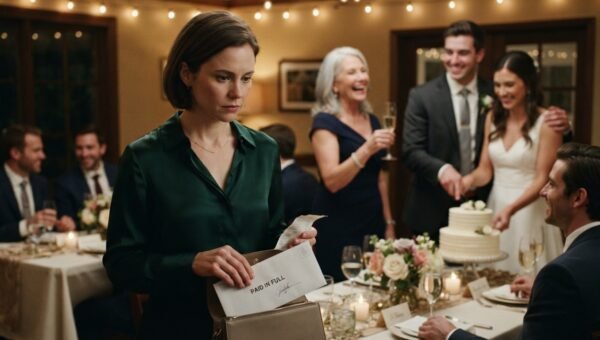
The linoleum in the county clerk office on a rainy Tuesday morning smells faintly of stale lemon wax and damp wool coats. I remember staring at the scuff mark near the metal leg of the folding chair while Judge Miller asked us if we took each other to be lawfully wedded. We said yes, signed the blue carbon-copy form with a ballpoint pen that skipped on the third letter of my new last name, and walked back out to the parking lot by 9:14.
My father didn’t come because he said a ten-minute visit with a municipal magistrate wasn’t worth putting on a clean shirt for. “That is not a wedding, Clara,” he told me on the phone the night before, his voice flat with that familiar dismissiveness that always felt like a boot heel on my instep. “That is just filling out paperwork. When your brother does it, we are doing it right.”
By “right,” he meant a five-hundred-person guest list, a rented stretch Lincoln, and a ballroom with crystal chandeliers that cost more than my first sedan. For six months after that Tuesday morning, I kept my head down. I worked my shifts at the district tax office, packed my husband’s lunches in grease-proof paper, and tried to pretend that not having a father who cared enough to show up didn’t leave a hollow ache behind my ribs.
Then came the phone call at 4:14 in the afternoon while I was standing in the kitchen wiping down the laminate counter with a damp sponge.
My father didn’t ask how I was doing or whether I liked my new job title down at the annex. He got straight to the numbers.
“Clara, we need twelve thousand to secure the deposit on the grand ballroom before the end of the month,” he said, as if he were reading an invoice for farm equipment. “Your brother wants the October date, and the venue requires cashiers checks. Your part will be twelve thousand, and I expect it by Friday.”
I stopped wiping the counter. The sponge was dripping grey water onto the linoleum. “Twelve thousand dollars, Dad?” I asked. “I don’t have twelve thousand dollars just sitting in a drawer. My husband and I are still paying off the dental work he had last fall.”
There was a long, heavy silence on the line, the kind that always preceded a lecture about how I was holding back the family. “You managed to pay for your little paper-signing ceremony downtown,” he snapped. “If you stopped being so selfish, you could help your brother start his life the right way. But you always were difficult.”
“I paid four hundred and twenty dollars for our license and the court fee,” I said, my voice shaking a little more than I wanted it to. “And I said no.”
“Fine,” he muttered before the line went dead with a sharp click.
By Saturday evening, the family rumor mill was running hot. My uncle called to ask if I was really refusing to pitch in for my only brother’s wedding out of spite. My cousin sent a text asking why I was being so bitter about the ballroom deposit. My father had spent the week telling everyone who would listen that I was green with jealousy because my own wedding had been a cheap, quiet affair in a damp basement while my brother was getting the royal treatment.
Sunday lunch at Grandma’s house was the kind of mandatory family ritual where everyone pretended we weren’t all thinking about who hated whom.
Grandma lived in the old brick house down on Route 6, the one with the hydrangea bushes that had grown wild and woody beside the front porch. The dining room always smelled of roast beef, boiled potatoes, and the peppermint oil Grandma kept in her apron pocket.
We sat down at the heavy walnut table at twelve-thirty sharp. My father took the head seat, carving the roast with brisk, angry strokes of his silver-handled knife, while my brother sat beside him scrolling through his phone and talking about open-bar options. Nobody looked at me except Grandma, whose eyes behind her wire-rimmed glasses missed nothing.
“Clara,” she said, her voice cutting cleanly through the clatter of silverware. “You look thin. Are you eating enough down at that tax office?”
“I’m fine, Grandma,” I said, keeping my eyes on my plate.
My father dropped his carving fork onto the platter with a loud clatter. “She’d be less thin if she wasn’t so tight-fisted with her money,” he announced to the table, looking right at Grandma. “We have twenty-two days to clear the deposit for the ballroom, and Clara acts like twelve thousand dollars is a personal insult to her dignity. Some people just can’t stand to see anyone else have a proper celebration.”
My brother nodded without looking up from his screen. “It’s pretty selfish, honestly. Everyone else chipped in.”
Grandma didn’t say a word right away. She slowly set her cloth napkin down beside her water glass, smoothing the linen with her thumb. Then she reached down to the shelf beneath the table and pulled out a large, manila envelope tied with a piece of faded red cotton string.
“Your brother’s ballroom budget,” Grandma said softly, laying a glossy, thick-paged binder right in the center of the walnut table, next to the gravy boat. The gold foil letters on the cover read *The Grandview Ballroom: Estimated Costs – $48,500*.
My father crossed his arms, looking smug. “There. That is what a real wedding looks like, Mother. Not some back-alley magistrate with a clipboard.”
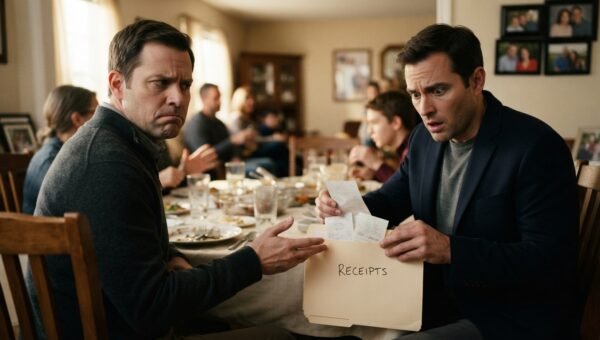
Grandma didn’t blink. She reached into the manila envelope and pulled out a second piece of paper, smaller, yellower, and folded twice over. She laid it right on top of the glossy ballroom brochure. It was an original receipt from the county clerk office, dated six months ago, for four hundred and twenty dollars.
“You always did have a terrible memory for numbers, Arthur,” Grandma said, using my father’s full first name the way she only did when he was being particularly foolish. “You said Clara’s wedding wasn’t real because nobody paid for it. But someone did.”
My father scoffed, leaning back in his chair. “Oh, stop it. She paid for it herself out of spite, or her husband did.”
“Look at the bottom of the slip, Arthur,” Grandma said, her voice dropping an octave until the whole dining room went completely still. “Read the signature line. Read who actually paid part of hers.”
My father stared at the paper, his jaw tightening. He reached across the table, picked up the yellowed receipt with two fingers, and squinted at the bottom corner where the bank stamp and the handwritten name were inked in fading blue.
I watched his face. The color drained right out of his cheeks, leaving him looking grey and suddenly much older. His lips moved silently as he read the name once, then twice, as if the letters might rearrange themselves into something else if he looked hard enough.
“That’s impossible,” he whispered.
“It’s not impossible at all,” Grandma said, her voice hard as river stone. “She came to my kitchen six months ago, crying her eyes out because you wouldn’t even answer her phone calls about the date. She asked if she could send a check through me so you wouldn’t ruin it with your stubborn pride.”
My brother looked up from his phone, frowning. “Who is that? Whose name is on the paper?”
Nobody answered him for three seconds. The only sound in the room was the grandfather clock in the hallway ticking away the seconds, steady and loud.
“It’s your Aunt Martha,” Grandma said into the quiet.
The name hung in the air like smoke. Aunt Martha, the sister my father had banished from our lives thirty-two years ago over a petty argument about a tractor repair and a property line, a woman I hadn’t seen since I was six years old and eating saltine crackers on her back porch.
My father stood up so fast his chair screeched against the hardwood floor. “She has no right,” he choked out, his face turning a dark, mottled red. “After everything she did, sending money behind my back to my own daughter? That’s a slap in the face.”
“No, Arthur,” Grandma said, standing up to her full, small height and looking him straight in the eye. “That is what a parent does when they actually care about a child instead of a bank account. She read about it in the local paper, and she sent enough to cover the fees and a small dinner because she knew her own brother was too proud and too cruel to do it himself.”
My father looked around the table, but nobody was meeting his eyes now. My uncle was staring down at his roast beef. My brother was slowly turning his phone over in his hand, the screen dark.
“She’s not even in the family anymore,” my father muttered, though his voice lacked any real authority now. “She’s dead to us.”
“She isn’t dead,” Grandma said, turning toward the front window that looked out over the long gravel driveway. “In fact, she’s sitting right out there in the silver sedan by the hydrangeas.”
We all turned to look. Through the sheer lace curtains of the dining room window, parked right beside Grandma’s old Buick, was a dusty gray sedan with out-of-state plates. A woman with short, silver-grey hair was sitting behind the steering wheel, her hands resting on the top of the steering column, looking steadily toward the front porch.
I didn’t think about what I was doing. My feet just moved. I walked past my father, who was still standing by his chair with his hands braced against the edge of the table like a man trying to steady himself during an earthquake. I pushed open the front screen door, letting the spring hinge slam behind me with a sharp, familiar twang.
The autumn wind caught my hair as I walked down the two concrete steps of the porch and across the crunching gravel of the driveway. The sun was dipping low behind the ridge, throwing long, cold shadows across the hood of the sedan.
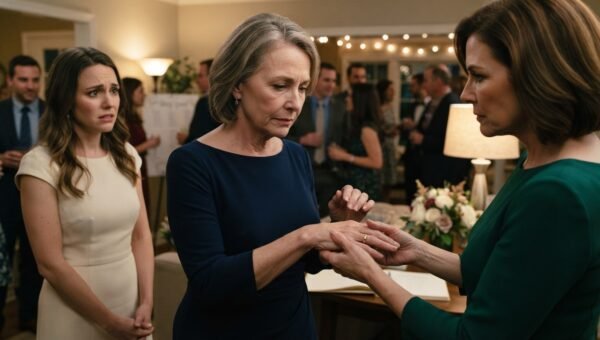
As I got closer, the woman inside rolled the passenger window down four inches. She didn’t smile right away, but her eyes, the exact same shade of hazel as the old photographs Grandma kept in the tin box on the top shelf, welled up with tears before she could stop them.
“Hello, Clara,” she said, her voice raspy and real, just like I remembered from thirty years ago when she used to sneak peppermint sticks into my coat pocket. “You look just like your mother did at your age.”
I stood there beside the car door, my hand resting on the warm metal of the fender, and for the first time in six months, my shoulders finally dropped.