PART 1
I drove school bus route 6 for thirty years across the back roads of Crawford County. If you do that kind of work long enough, you learn how to read children by their posture before they even step up the metal stairs. You know who had a fight over breakfast, who did not get dinner the night before, and who is trying to make themselves invisible.
In January of 1986, the temperature dropped below zero for two solid weeks.
On a Thursday morning, out past the county gravel pit where the old tenant trailers sat, seven-year-old Toby climbed on. He did not have a winter coat. He wore a faded flannel shirt with two missing buttons, thin cotton pants with worn-out knees, and his lips were already pale blue. His teeth clicked together so hard you could hear them over the idling diesel engine.
I did not make a speech. Out here, poor folks have their pride, and if you embarrass a child in front of forty other kids, you break something in them. I reached behind my seat, grabbed the heavy wool spare coat I always carried in my emergency kit, and wrapped it straight around his shoulders.
“Sit right here behind me, Toby,” I told him. “Right over the front floor heater.”
That day I gave him the peanut butter crackers from my metal lunchbox. From that morning until the mud thawed in April, that became our routine.
Every morning, Toby took the front seat right over the register. Every morning, I handed back half a sandwich or my sleeve of crackers. He never asked for it, but his small hands took the food quietly, and he ate every single crumb before we pulled into the elementary school gravel lot.
Then, the second week of May, the trailer out by the pit was empty. The landlord pulled the power meter, the school office marked him withdrawn, and nobody knew where the family went. Thirty years on the road means hundreds of children pass through your life, but some stay stuck in your heart like a splinter. Toby was one of them.
Now, I am seventy-three years old. Life has a way of stripping things down to the bone when you get to this side of the mountain. I buried my husband, Frank, last October after four hard years of medical bills and hospice care.
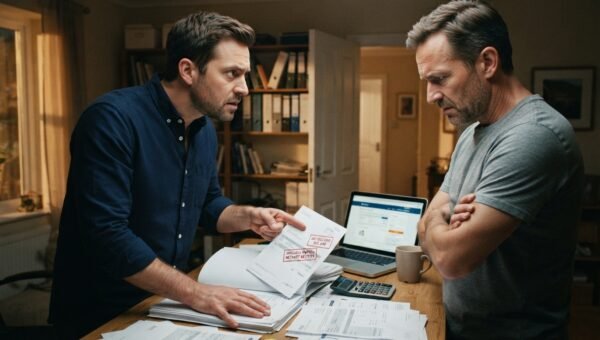
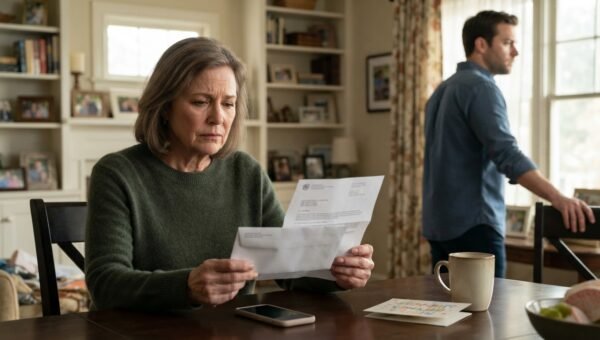
The pension from the school district and my Social Security barely cover groceries and the fuel oil tank. Two weeks ago, the final foreclosure notice arrived from the county seat. Nine thousand two hundred dollars behind on back taxes and the lien Frank took out against the acreage when the combine engine blew.
The bank gave me until next Friday at noon to vacate the farmhouse Frank’s grandfather built with his own hands.
This morning at eight o’clock, gravel crunched in the driveway. A long black town car eased up by the rusty mailbox. A tall man in a fine dark wool coat stepped out into the biting wind. He walked up the porch steps, took off his gloves, and reached into his coat pocket.
He looked at me for a long moment, then laid a faded, worn pair of child’s gloves in my dry palm. They were stiff and stained with motor oil from forty years ago, but I recognized the green knitted cuff immediately.
“You kept me warm when no one else did, Mrs. Miller,” he said. His voice was deep, but his eyes were the exact same pale gray.
Before I could find my breath, he turned back toward the idling car. The passenger door swung open, and an older woman stepped out into the cold air.
PART 2
The woman walking toward my porch walked with a careful, halting limp. She wore a heavy quilted winter coat, and her silver hair was pinned back in a neat bun. As she stepped up into the porch light, my knees went weak.
It was Martha Higgins, Toby’s mother. In 1986, she had worked double shifts at the poultry processing plant over in Union City, riding a rusted bicycle twelve miles each way in the freezing rain while her husband drank up whatever was left in the cupboard.
“Clara,” Martha said, her voice shaking as she reached out and took both of my cold hands into hers. “For thirty-eight years, I have prayed for the chance to stand on this porch and thank you to your face.”
Toby put a steady arm around his mother’s shoulder. “When my dad packed us into the truck in the middle of the night that spring, he left half our things behind, but my mother made sure those gloves came with us. She kept them in her cedar box for forty years.”
I invited them inside, embarrassed by the chill in the living room because I had kept the thermostat set at fifty-eight to save the heating oil. I put the kettle on the stove and set out a plate of butter cookies on the kitchen table.
Toby sat down in the same wooden chair Frank used to sit in after coming in from the barn. He looked around the room, taking in the drafty window frames and the neat stacks of unopened envelopes on the side table.
“Where is Mr. Miller?” Toby asked quietly.
I had to clear my throat twice before I could speak. “Frank passed away in October. Heart failure after a long decline.” I looked down at my hands. “I am actually packing up the house, Toby. The bank has a lien on the property, and the back county taxes got away from me while Frank was in the hospital. I have seven days left.”
Toby set his mug down on the table. The warmth left his face, replaced by a quiet, determined stillness. He did not offer pity, and he did not ask how much I owed.
Instead, he reached into his leather briefcase, pulled out a thick blue folder, and set it squarely between our tea cups.
“Mrs. Miller,” he said, “I did not come here today just to say thank you.”
PART 3
Toby opened the folder and turned it toward me. Inside was an official bank receipt stamped by the First National Bank of Crawford County, dated yesterday afternoon at three-thirty.
Right on the center line, typed in clean black ink, was my mortgage account number, Frank’s name, and a zero balance. Stamped across the top in red ink was the word SATISFIED. Attached behind it was a county tax certificate showing the 2024, 2025, and 2026 property taxes paid in full to the township treasurer.
I stared at the paperwork, unable to process what my eyes were reading. “Toby, this is over nine thousand dollars. I cannot take this from you. I have no way to pay you back.”
“You already paid it, Clara,” Martha said from across the table, wiping her eyes with a handkerchief. “You paid it every single morning when you kept my boy from freezing to death. When my husband walked out on us in Cincinnati two years after we left here, Toby and I had nothing. But he remembered what you told him on that bus. You told him he was smart, and you told him he had to finish school no matter how hard it got.”
Toby leaned forward, his voice completely level and calm. “I worked my way through Ohio State, Mrs. Miller. I run an industrial refrigeration and logistics company in Columbus now. We operate thirty-two warehouses across four states. I have the resources, and I have spent the last five months tracking down where you were after my mother found your name in an old school district directory.”
He slid a second document out of the folder. It was a formal deed transfer from the county recorder.
“The bank does not own this ground anymore,” Toby said. “Neither does the county. Frank’s grandfather’s land belongs to you, free and clear, for the rest of your life. Nobody can mail you an eviction notice, and nobody can put a padlock on that barn.”
My chest hitched, and forty years of holding things together alone in the cold finally broke wide open. I sat at my own kitchen table and wept while this grown man, who had once sat shivering by my bus heater, reached across the table and held my trembling hands.
ENDING
We spent the rest of the afternoon sitting by the kitchen stove. Martha told me about Toby’s two daughters, both in college now, and Toby asked about the old school bus route, remembering every stop from the gravel pit to the bridge over Mill Creek.
Before they left at dusk, Toby walked around the back of the house with a notepad. He looked at the roof over the back porch, checked the furnace exhaust pipe, and took down the name of the local fuel oil company on the kitchen calendar.
Two hours after the black car pulled out of the driveway, a truck from Crawford Oil backed up to the side yard. The driver hopped down, dragged the heavy hose to my tank, and pumped two hundred gallons of heating oil into the cellar without asking for a signature or a check. When I ran out to the porch to ask what was going on, the driver just tipped his hat and said the bill was already settled on an open account in town.
Tonight, the wind is howling against the north side of the house just like it did back in the winter of 1986. But the radiators are clanking with steady heat, the kitchen is seventy degrees, and the deed to this house is sitting under the family Bible on the sideboard.
On the table beside my reading lamp sit those small, worn-out gloves.
When you do a kindness for a child, you never think about where it will go. You just see a little boy with blue lips and cold hands, and you do what an honest person is supposed to do. You give him your coat, you give him your crackers, and you turn up the heat.
You never imagine that nearly forty years later, when the cold finally comes for you, that same child will walk back through the snow to keep you warm.