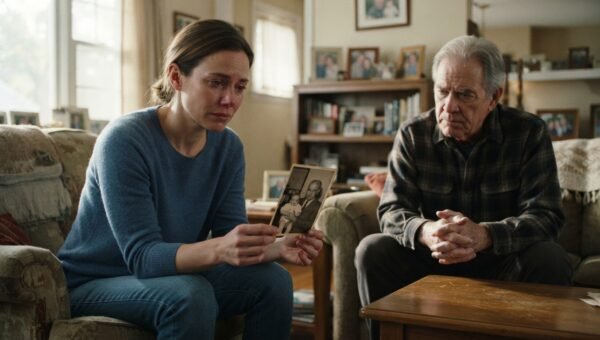
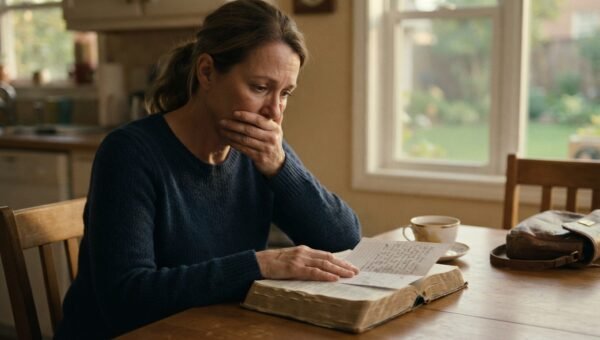
Marcus was the one who laughed first. He was standing right beside the oak dining table where Grandma Clara’s will had just been read by a lawyer who smelled faintly of peppermints and old carpet.
“Well, I guess that settles it,” Marcus said, holding up a velvet-lined box that clicked shut with a sharp little snap. “Chloe got the pearls, I got the gold rings, and you got a hundred pounds of cast iron that probably doesn’t even thread straight.”
Chloe didn’t bother looking up from her phone. She was already checking her reflection in the glass screen, smoothing down her blazer like she was posing for a real estate listing. “Honestly, Corinne, what are you even going to do with that thing?
It’s older than mom was. You can’t even get needles for those antiques anymore.”
They didn’t stay long after that. Cousins rarely do when there is nothing left to divide. They shook hands with the lawyer, offered me a vague, pitying nod that felt more like a dismissal, and walked out to their matching silver SUVs with their pockets heavy and their minds already set on the weekend.
I stayed behind in the quiet living room. Grandma Clara had passed away three weeks earlier in that high-backed armchair by the front window, and the house still held the faint, stubborn scent of her lavender water and toasted rye bread. The lawyer packed his leather briefcase, muttered something polite about probate closing in sixty days, and left me alone with the machine.
It was a Singer 27 from the nineteen-thirties. The black Japan finish was worn down to gray metal along the front edge where Grandma’s wrists had rested through thousands of hours of piecing quilt blocks and mending feed sacks.
It was heavy enough to throw your back out if you lifted it wrong, sitting in its quarter-sawn oak cabinet with the knee-control lever dangling underneath like a dead limb.
“You take care of that one,” Grandma had told me once, back when I was nine years old and sitting on a stack of telephone books just to reach the presser foot. “Everything else in this house is just glass and metal people buy to look important. This machine keeps going.”
I didn’t care about what Marcus and Chloe thought of the jewelry. Those gold rings and pearl strands had been bought decades ago when grandfather was still running the grain elevator, but they were just surface things. They were the kind of inheritance people fight over because they are shiny enough to photograph for a holiday card.
I hired a local guy with a flatbed truck named Dale to help me haul the heavy oak cabinet out to my sedan, and by Tuesday afternoon it was sitting in the corner of my small spare room.
The room smelled of fresh paint and old dust, but once I wiped down the wooden top with a damp cloth and some lemon oil, the old walnut grain came back to life with a deep, honeyed glow.
For a full month, I used it almost every evening. After working eight hours at the county records office, coming home to the rhythmic, mechanical thrum of the shuttle hook moving back and forth was the only thing that quieted my mind. I hemmed curtains for the kitchen, repaired the strap on my favorite leather purse, and patched a tear in an old winter coat. It ran with a steady, heavy-duty purr that made the floorboards vibrate just enough to feel like company.
Then November brought a sharp, biting frost that rattled the windowpanes, and the machine jammed solid right in the middle of a zigzag stitch.
I pressed my foot against the knee lever, but the mechanism refused to budge.
The handwheel wouldn’t turn forward or backward. It felt like something had dropped inside the gear housing beneath the bed, locking the main shaft tight. I didn’t want to force it and strip the brass gears, so I unclipped the belt, tilted the heavy machine back on its brass hinges, and looked underneath into the dark, oil-stained recess of the cast-iron body.
That was when I noticed the seam.
It wasn’t part of the original casting. Sewing machine frames from that era are cast in molds with a rough, sandy texture painted over with black enamel, but right along the lower belly of the bed, there was a plate of cold-rolled steel screwed flush into the iron with four tiny slotted machine screws. They were painted over to match the rest of the machine, but the paint had cracked in a thin, hairline circle where someone had tightened them down long after the factory doors closed.
I went to the kitchen drawer, found a small flathead screwdriver with a yellow plastic handle, and came back to the floor.
The first screw creaked twice before it broke loose. The second one came easier. By the time I backed out all four, the metal plate fell away into my palm with a dry, metallic clink that sounded too loud in the quiet room.
Behind it was a cavity hollowed out of the cast iron itself, just deep enough to hold a folded square of dark wool cloth tied shut with a piece of heavy waxed thread.
My fingers were shaking a little as I lifted the wool bundle out and set it on the polished wood floor. I snipped the thread with my small snips and unfolded the fabric.
Inside lay three things.
First was a heavy brass safety deposit box key stamped with a notched number and the logo of the First National Bank of Cairo, downtown branch.
Second was a bank ledger book with thick, yellowed pages, bound in black cardboard.
Third was a folded sheet of lined notebook paper, covered in Grandma Clara’s familiar, spidery handwriting. Her hand had grown shaky in the last year of her life, but every letter was still sharp and deliberate.
I opened the ledger first. The pages were filled with columns of figures, dates going back nearly twenty years, tracking the sale of the south forty acres of timberland that our family had owned since the Depression. I remembered when that land was sold. Uncle Raymond and my father had argued with Clara for months, telling her she was sitting on dead capital, that she needed to hand over the title so they could subdivide it for modular homes. Clara had told them both to walk out her front door and not come back until they learned how to speak to an elder.
She sold it herself a week later to a timber company three counties over.
I turned to the back page of the ledger. There was a list of names written in red ink. Marcus, Chloe, Raymond, Sarah, David. Every single one of them had a thick, jagged red line drawn straight through their names, pressing so hard the ballpoint pen had torn a small hole in the paper.
At the very bottom of the page, written alone in clean blue ink that hadn’t faded yet, was my name: *Corinne.*
I picked up the loose sheet of lined paper and unfolded it.
*If you are reading this,* Clara had written, *it means the machine finally stopped. You are the only one who ever sat here long enough to learn how to keep a stitch straight without rushing. Your cousins only know how to take what is sitting on top. They haven’t earned what lies underneath. The key goes to box 114 downtown. Do not tell Raymond. Do not tell the lawyer. Take this key and take the ledger.*
I sat on the floor for a long time, the cold linoleum pressing through the knees of my jeans, staring at those lines until the letters blurred together at the edges.
The next morning, I didn’t go straight to the bank. I took the heavy machine, still tilted on its hinges, down to Arthur’s Repair and Restoration on River Street. Arthur was an old man who had been fixing sewing machines and typewriters since before I was born, his fingers permanently stained with grease and graphite, his shop smelling of WD-40 and ozone from old electric motors.
He didn’t even look up from the Kenmore he was tearing down when I set the heavy Singer on his counter with a dull thud.
“That’s a twenty-seven,” Arthur said, his voice like gravel rolling down a tin chute. “They don’t make the shuttles like that anymore. What’s wrong with it? Jammed?”
“The pedal locked,” I said, laying the steel plate and the key on the laminate counter beside him. “And I found something inside.”
Arthur stopped turning his screwdriver. He looked down at the small steel plate, then at the brass key stamped with the First National logo, and finally up at my face. He wiped his hands slowly on a greasy blue rag he kept tucked in his back pocket.
“You find that inside the belly?” he asked quietly.
“Behind a false plate.”
Arthur picked up the key, turned it over twice in his palm, and let out a long, slow breath through his nose. He didn’t ask what was on the list. He didn’t ask about my cousins. He just looked toward the front window where the morning traffic was slushy and slow on River Street.
“Arthur,” I said, my throat feeling dry. “Should I take this to the bank today?”
He looked back down at me, his eyes sharp behind wire-rimmed glasses that had bits of solder stuck to the frame. “Look, Corinne, I’ve known your family since your granddaddy was hauling corn in a Ford flatbed. Clara was harder than railroad spikes.” He leaned across the counter, dropping his voice so the man working on lawnmower parts in the back wouldn’t hear. “You should probably call this bank before you tell anyone what we found.”
I left the machine with him for a tune-up, it turned out a small copper washer had simply slipped out of alignment and jammed the hook driver, a minor fix that had nothing to do with the secret compartment, and walked four blocks down to the limestone building of the First National Bank.
The lobby was quiet, smelling of floor wax and old paper. The loan officer, a man named Mr. Henderson who wore a gray tie with a faint ink stain on the knot, looked at the brass key and then at my driver’s license with raised eyebrows.
“Box 114,” he murmured, tapping a few keys on a terminal that looked like it belonged in a museum. “Registered to Clara Mae Miller. Exclusive right of survivorship notation filed on… let me see here. November twelfth, three years ago.”
He stood up without another word, took a heavy iron ring from his drawer, and motioned for me to follow him through a heavy steel door into the vault.
The safety deposit box was lower down, near the floor. When Mr. Henderson pulled it out and set it on the small stainless-steel shelf in the private booth, my hands were shaking so badly I could barely get the key into the slot. The brass tumblers clicked with a clean, heavy sound.
Inside the box was not cash, but three thick brown envelopes sealed with red wax seals bearing the imprint of Clara’s heavy brass desk stamp, the one with her maiden initials. There was also a cashier’s check made out in my name from the sale of the timberland, dated two weeks after she had crossed my cousins off her ledger.
The total on the check was $84,200.
Underneath the check was a short note written on the back of a church bulletin: *To pay off your student loans and buy yourself a house with a porch that doesn’t leak. Don’t spend it on anyone who wouldn’t sit with you when the room is quiet.*
I sat in that small, cold booth for twenty minutes, staring at the numbers on the paper. The silence in the vault was absolute, broken only by the faint hum of the building’s air system somewhere behind the walls.
The confrontation happened two weeks later, right on schedule.
Word travels fast in a town where everyone buys their groceries at the same Piggly Wiggly and the bank tellers go to church with your mother’s friends. Marcus found out when he went to cash a small dividend check from an old mutual fund account at the downtown branch and happened to mention to the teller, a woman he had gone to high school with, that he was Clara Miller’s grandson and expected things to move smoothly.
The teller had looked up, smiled a very thin, tight smile, and told him that the primary estate accounts had been settled under separate seal nearly a fortnight ago.
By Sunday afternoon, Marcus and Chloe were standing on my front porch before I even had my coat off.
Marcus didn’t knock. He just pushed the front door open, I had left the deadbolt unlatched while bringing in groceries, and tracked slush right across the new entryway rug I had bought with my first small withdrawal.
“What is this about a bank box, Corinne?” Marcus demanded, his face red from the cold and something much uglier. “The lawyer said everything was distributed according to the original probate filing. There wasn’t any cash listed on the inventory.”
Chloe came in right behind him, her eyes darting past me into the living room where the old Singer sewing machine sat in the corner, its walnut cabinet gleaming under the light of the floor lamp.
“You cleaned out Grandma’s accounts,” Chloe said, her voice shaking with a mix of disbelief and pure, unadulterated fury. “That was supposed to be split three ways. Mom said Grandma was losing her mind at the end. She didn’t know what she was doing.”
I stood by the kitchen counter with a bag of flour in my arms, feeling the cold air rolling in through the open front door. I didn’t rush. I set the flour down on the laminate, wiped my hands on a dish towel, and walked slowly into the living room.
“She knew exactly what she was doing,” I said. My voice sounded steady, almost hollow, which seemed to startle Marcus more than if I had started yelling.
“The hell she did,” Marcus barked, taking a step toward me. “That estate was family property. The machine was part of the household distribution, which means whatever was inside it belongs to all of us under the general residual clause.”
“It wasn’t inside the machine,” I said quietly. “It was inside the ledger Clara kept for twenty years. The one where she wrote down every time you didn’t call her on her birthday.”
Chloe let out a sharp, ugly laugh. “Oh, stop being dramatic. She was an old woman who forgot things. Give us the key, Corinne, or we’ll have our lawyer file an emergency injunction tomorrow morning. You won’t keep a dime of it once court costs eat through your little salary.”
I walked over to the secretary desk by the window, picked up the thick manila envelope containing the bank’s certified copy of Clara’s notarized assignment and her handwritten letter, and laid it flat on the dining table between us. I didn’t open it. I just rested my hand on top of the brown paper.
“You can call your lawyer,” I said, looking straight into Marcus’s eyes. “And he can call the First National legal department. They already verified Clara’s signature while she was fully competent, three years before she passed. The judge signed off on the transfer on the tenth. There is nothing left to divide.”
Marcus stared at the envelope, his jaw working as he tried to find something else to say, some other leverage to pull from the air. But he could see the bank’s embossed seal through the translucent corner of the folder. He knew what that seal meant. In a town like ours, a bank seal was the end of the conversation.
Chloe looked at the sewing machine in the corner, her gaze catching the small brass spool pin and the worn wooden cabinet where Grandma’s hands had rested for half a century. For a second, she looked like she wanted to reach out and smash something, but she just turned on her heel, her boots clicking hard against the linoleum.
“You’re a thief,” she spat over her shoulder as she reached the door. “You manipulated an old woman.”
“She didn’t manipulate anyone,” a voice said from the doorway.
We all turned. Arthur was standing on the porch, holding a brown paper bag with my spare machine belt inside. He had walked up while the door was still open, his old canvas jacket zipped to his chin, his gray hair blowing in the wind off the river. He looked at Marcus and Chloe like they were two stray dogs he was getting ready to chase off his lawn with a broom.
“I repaired that machine forty years for your grandmother,” Arthur said, his voice flat and hard as a paving stone. “And she was sharper at ninety than you two ever will be on your best day. Now get off this porch before I call the sheriff about your boots tracking mud across her floor.”
They didn’t answer. Marcus muttered something under his breath, grabbed Chloe’s arm, and hauled her down the wooden steps toward their SUVs. The doors slammed with two heavy, hollow thuds that rattled the front windows, and then the gravel crunched as they backed out into the street without their headlights on.
The house grew very quiet again.
Arthur stepped inside, kicked the snow off his work boots, and set the paper bag on the table next to Clara’s envelope.
“You need any more oil for that shuttle?” he asked, nodding toward the corner.
“No,” I said, feeling a strange, heavy warmth settling into my chest for the first time since the funeral. “I think it’s running smooth enough now.”
He nodded, pulled his cap down tighter over his forehead, and walked back out into the cold afternoon, leaving the door closed behind him.
I walked over to the corner, sat down on the wooden stool, and pulled the knee lever toward me with my right foot. I didn’t turn on the lamp yet, letting the gray winter light from the window fall across the iron bed. I threaded a bobbin with a length of heavy cotton thread, strong, dark blue thread that wouldn’t fray under pressure, and lowered the presser foot down onto a scrap of old denim.
When I pressed my foot down, the old machine didn’t hesitate. It caught the rhythm immediately, its heavy cast-iron heart settling into a deep, steady hum that filled the room, moving forward stitch by clean, unbroken stitch.