PART 1
My wife stopped attending family dinners after my mother joked about her accent one too many times. Elena grew up in San Salvador, moved to Chicago when she was twelve, and speaks English with a cadence that is soft, clear, and unmistakable. My mother, Helen, had turned that cadence into dinner table entertainment for five years. She would ask Elena to repeat grocery lists, mimic her vowels under the guise of being hard of hearing, and laugh with my younger brother, Greg, until the tablecloth shook.
I kept going to Sunday dinners alone.
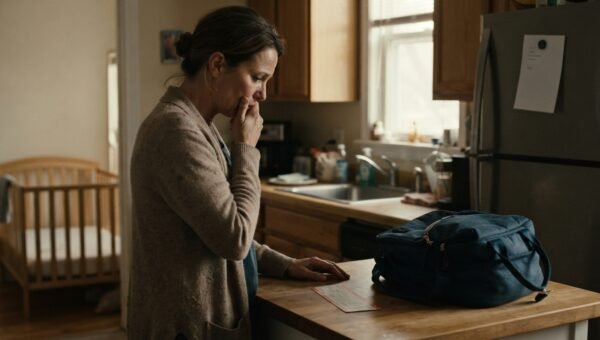
I told myself avoiding conflict was easier. Whenever Elena set her napkin down on our kitchen counter at home and asked why I never said a word, I gave her the same practical excuse: “You know how Mom gets when people push back. If we ignore it, she’ll get bored and stop.”
Elena looked at me one night in September and said, “She isn’t getting bored, David. You’re just leaving me out there.”
After that, she simply stopped getting into the passenger seat when I backed out of our driveway on Sundays. Our fourteen-year-old daughter, Chloe, usually stayed home with Elena or went to soccer practice. But as Christmas approached, Mom began calling three times a week, insisting that the holidays were about tradition and that family showed up no matter what petty squabbles existed.
Elena didn’t argue. She told me to go, and she told Chloe she could decide for herself.
Chloe, who had barely spoken two sentences to me all week, grabbed her winter coat on Christmas afternoon and climbed into my truck.
Mom’s dining room smelled like burnt sugar and roast beef. The good china was out, the gold-rimmed plates my father had bought thirty years ago. Greg was already there with his beer, leaning against the sideboard, and Mom was bustling between the stove and the table with a carving knife.
“Look who made it,” Mom said, kissing Chloe’s cheek before looking past her toward the hallway. “And Elena? Still too fragile for a holiday roast?”
“She’s resting, Mom,” I said, putting my keys in my pocket. “Leave it alone.”
“I only asked a question, David,” Mom said, waving the knife toward the head of the table. “Sit down. Let’s eat before the potatoes turn into paste.”
Dinner went by with the usual noise. Greg talked about his shop, Mom complained about her property taxes, and Chloe pushed peas across her plate with her fork, silent as a shadow.
I felt the familiar relief of an evening almost finished without an explosion.
Then Mom brought out the almond ring.
She sliced into the pastry, paused, and looked over at Greg with a smirk. “You know, I tried reading that recipe card Elena sent over two years ago. The one for the Christmas bread with the raisins. I swear, Greg, you’d need a translator just to read the handwriting. It sounds like someone trying to order tacos through a bad drive-thru speaker.”
Greg barked a laugh, half-choking on his coffee.
I felt that tight, sour pinch in my chest, the one I had lived with for years. I opened my mouth to say something mild, something that would slide by without starting an argument, but before I could speak, Chloe dropped her fork.
The metal clattered hard against the gold rim of the plate.
“Grandma,” Chloe said, her voice steady and clear across the table. “Mom heard all of this last year.”
Mom frowned, holding the cake server midair. “What are you talking about, sweetheart? Elena wasn’t even here last Christmas.”
I looked at Chloe, warning in my eyes. “Chloe, don’t start.”
“I’m not starting anything, Dad,” she said. She reached into the pocket of her corduroy pants, pulled out her phone, and laid it flat on the white linen right next to her water glass. “You asked what she meant when she stopped coming. You told her she was being too sensitive. But she heard you.”
PART 2
Chloe tapped the screen twice. A voice memo app opened, showing an audio track labeled November 24.
“Chloe, put the phone away,” I said, my voice dropping an octave. “We are having Christmas dinner.”
“No,” Chloe said. She looked directly at Greg, then at Mom, and finally at me. “Grandma just said the same thing about Mom’s recipe last year. Almost word for word. I had my phone on the sideboard recording the family toast for my seventh-grade media project. You forgot I left it there.”
Mom scoffed and set the cake server down with a thud. “For heaven’s sake, Helen’s own granddaughter spying on her. David, tell your child to behave herself.”
Chloe pressed play.
The recording started with the hollow, rustling hiss of a phone mic against wood, followed by the clink of silverware and Greg’s heavy voice talking about the price of winter tires. Then came Mom’s voice, unmistakable and sharp.
“She acts like she’s royalty just because she works at a law firm,” the speaker rasped. “Can’t even pronounce half the street names in Cook County without sounding like she just crossed the border yesterday.”
Greg’s loud, ugly braying laugh came through the small speaker next to Chloe’s glass.
Mom’s face went tight. Her jaw set, her eyes darting toward the living room as if someone outside might be listening through the window. “That was private conversation in my own home,” she snapped. “People joke around in their own kitchen, Chloe.”
“Wait,” Chloe said quietly. “Keep listening.”
On the phone, my own voice came through the speaker. It was casual. Flat. Entirely relaxed.
“Just ignore her,” my voice said from the screen. “That’s how she is. She doesn’t mean anything by it, Elena just makes a big deal out of nothing.”
The phone clicked off as Chloe touched the glass.
The room went dead. The furnace in the basement kicked on with a low, vibrating hum beneath the floorboards, but nobody moved.
I stared down at the small black rectangle on the linen cloth. I had no memory of saying those words. None. If someone had asked me five minutes earlier, I would have sworn under oath that I had always defended Elena, or at least stayed completely neutral. I had built an entire story in my mind where I was the tired peacemaker caught between two stubborn women.
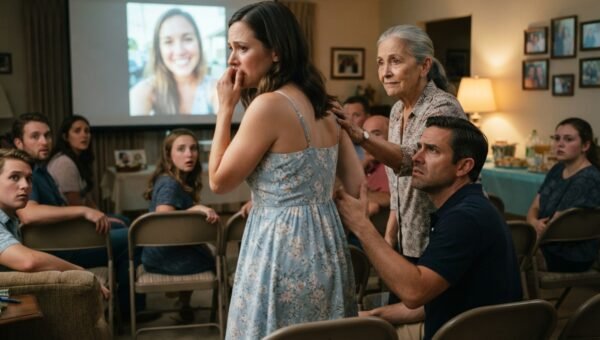
In that quiet dining room, listening to the echo of my own careless voice, that whole story fell to pieces.
“Chloe,” I managed, my mouth dry as paper. “Where did you get that?”
“I gave it to Mom the day after Thanksgiving last year,” Chloe said. Her chin was trembling, but she didn’t look away from me. “Because you told her she was imagining things. You told her Grandma loved her and she was just taking things the wrong way. She listened to it once, handed me my phone back, and cried in the laundry room for an hour.”
PART 3
Greg cleared his throat, shifting uncomfortably in his chair. “Look, kid, grown-ups vent. Your dad was just trying to keep your grandmother from getting worked up. You don’t understand how family works.”
“Shut up, Greg,” I said.
My voice was barely louder than a whisper, but Greg stopped instantly. He looked at me with his eyebrows raised, half-smiling as if he expected me to laugh it off like always.
“David,” Mom began, her tone turning smooth and defensive, the voice she used whenever she was cornered. “You know how much I’ve done for this family. I took care of you when your father passed. I opened my home every single Sunday. If Elena wants to take every little observation as an insult, that is on her, not on you, and certainly not on me. You don’t let a fourteen-year-old dictate what we talk about at Christmas.”
I looked at my mother. Really looked at her.
I saw the fine lines around her mouth, the rigid way she held her shoulders, and the cold, stubborn certainty in her eyes that she was entitled to hurt whoever she pleased as long as it happened under her roof. For fourteen years of marriage, I had protected that stubbornness. I had treated her comfort as the most fragile thing in the world, while treating my wife’s dignity like something that could be stretched and bruised without ever breaking.
“She didn’t imagine it,” I said.
“David, don’t be ridiculous,” Mom said, reaching across the table to touch my wrist. “It was a joke.”
I pulled my arm back before her fingers reached my skin.
“It wasn’t a joke, Mom. It was cruel. It was cruel last year, and it was cruel ten minutes ago.” I stood up. My knees felt stiff, and the room seemed strangely bright. “And the worst part of that recording wasn’t what you said. It was me.”
“Sit down and finish your dessert,” Mom ordered, her voice hardening. “You are making a scene over nothing.”
“Get your coat, Chloe,” I said.
Chloe didn’t hesitate. She picked up her phone, slid her chair back without making a sound, and walked straight toward the front closet.
“David John!” Mom’s voice rose to a screech as she stood up, knocking her cloth napkin off her lap onto the floor. “If you walk out of this house on Christmas Day over a child’s tantrum, don’t you bother coming back for Sunday dinner!”
I reached into my pocket, took out the brass key to her back door that had been on my ring since I was twenty-two, and laid it on the edge of the table next to the almond ring.
“I won’t,” I said.
ENDING
The drive home was forty minutes in total darkness. Snow had started falling along the highway, big, wet flakes that smeared against the windshield before the wipers swept them aside.
Chloe sat in the passenger seat, staring out the side window. Neither of us said anything until we were three blocks from our house.
“Are you mad at me, Dad?” she asked, her voice small.
“No,” I told her. I kept my eyes on the road, my hands gripped so tight on the steering wheel that my knuckles ached. “I’m ashamed of myself. You did the right thing.”
When we pulled into our driveway, the front porch light was on. Elena had set out two small luminarias by the front steps, paper bags glowing with battery candles against the cold.
We walked inside through the kitchen. The house smelled like cinnamon and fresh pine. Elena was sitting on the sofa in the living room with a book in her lap, wearing a grey wool sweater I had bought her three winters ago. She looked up, surprised to see us home two hours early.
“Is everything okay?” she asked, setting her book on the coffee table.
Chloe took off her boots in the entryway, gave her mother a quick, tight hug around the neck, and headed upstairs to her room without a word.
I stood by the doorway, my winter coat still zipped to my throat. Elena watched me, her dark eyes cautious, waiting for the usual report: how the roast turned out, how Mom’s arthritis was doing, what Greg had said about his work.
I walked over and sat down on the far end of the sofa.
“Chloe played the recording,” I said.
Elena went very still. The warmth in her face drained, replaced by that quiet, guarded stillness she had worn around my family for the last three years. “David, I told her to delete that. I didn’t want her carrying it around.”
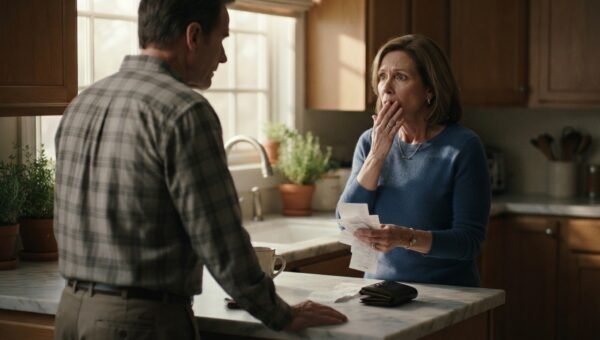
“I heard myself, Elena,” I said. My voice cracked on her name, and for the first time all night, the tears I had been choking down burned behind my eyes. “I heard what I said to you. How I brushed you off. How I let them treat you like you were an outsider in my own family.”
Elena looked down at her hands folded in her lap. She didn’t offer a polite contradiction. She didn’t tell me it was okay.
“I gave my mother her key back,” I said. “I’m not going back there. Not for Sunday dinners, not for holidays. Not until she apologizes to you, and even then, I’m done pretending that keeping the peace means letting people tear you down.”
Elena looked up at me. There was no triumph in her face, no satisfaction at having won an argument. There was just a long, tired sadness that had been waiting a very long time for someone to tell the truth.
“It wasn’t your mother who broke my heart, David,” she said softly. “It was you.”
“I know,” I said. “I know.”
We didn’t fix fourteen years of cowardly silence that night. We didn’t have a tearful embrace or a clean slate. But I took off my coat, stayed on that couch beside her, and for the first time since we married, I didn’t try to explain away the damage I had done. I just sat in the quiet of our own home and let the truth stand where it belonged.