PART 1
My son-in-law, Greg, used to smirk whenever he caught me filing away store stubs in my plastic accordion files. “Nobody needs a paper trail for groceries, Evelyn,” he would say, shaking his head at the kitchen island while drinking his morning coffee. “It’s the digital age. If you lose something, it lives in the cloud.”
I never argued with him. I grew up in an era where paper was the only thing standing between an ordinary person and someone else’s mistake.
I kept receipts for oil changes, property taxes, dental work, and water heaters. I kept the receipt for the first sofa my daughter, Laura, and I picked out when she finished nursing school.
When Laura got sick three years ago, paper stopped mattering to me for a while. We spent twenty-two months running between chemotherapy appointments, lab work, and specialized clinics two counties over. Greg handled the insurance calls because my nerves were frayed, and I spent my days sitting by Laura’s bed, holding her hand and rubbing lavender lotion into her dry skin. When she died on a rainy Tuesday in October, the house went completely silent.
Laura and I had purchased the four-bedroom split-level on Oak Ridge Road eight years earlier. She had just started working full-time at the regional medical center, and I had retired from twenty-seven years as an office clerk for the county water district.
We pooled everything we had: my modest savings from my late husband’s pension and her down payment assistance grant. We bought the place together so neither of us would ever have to worry about rent again. Two years after we bought it, Laura met Greg at a church charity dinner. They married ten months later, and Greg moved into our house.
I never asked him for rent. Greg worked as a mid-level manager at an auto parts distribution warehouse, and he always spoke about saving for their future. He paid his share of the electric bill and covered the internet, but Laura and I continued splitting the property taxes and the mortgage through a joint checking account we kept at the local credit union.
After Laura’s funeral, Greg changed. The easy smile he used to wear vanished. When Laura’s friends brought over casseroles, he thanked them at the door and closed it before they could step inside.
He started leaving his work boots in the entryway where I had always kept a runner rug. Whenever I walked into the kitchen to brew tea, he would look at his watch or take his laptop into the den.
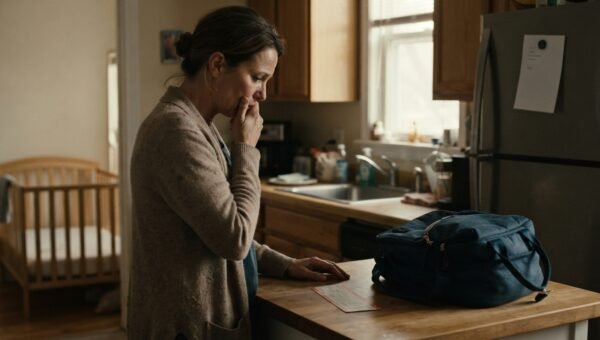
Four months after the burial, I walked downstairs on a Saturday morning to find a typed letter sitting next to the sugar bowl on the kitchen table.
It was a standard notice to vacate. Greg had typed it himself, but the language was stiff and formal. It stated that as the sole surviving spouse of Laura Mitchell-Hayes, he was the rightful owner of the property at 114 Oak Ridge Road. It gave me thirty days to pack my belongings and turn over all keys.
My hands trembled so hard I had to set the paper flat against the wood. “Greg?” I called out toward the living room.
He walked out of the den, wearing his weekend sweatshirt, holding a mug of black coffee.
He didn’t look angry. He looked like an auditor delivering bad news to a client.
“I gave you four months to adjust, Evelyn,” he said calmly. “Most people wouldn’t have waited that long. But I can’t move forward with my life while living with my late wife’s mother. It’s unhealthy for both of us. The house was in Laura’s name, and everything she owned passed to me when she died. That’s the law in this state.”
“This is my home, Greg,” I said, my voice barely above a whisper. “Laura and I bought this place together before you two even went on your first date. My money is in these walls.”
“Laura handled the financing,” he replied smoothly. “When we did our estate planning two years ago, she showed me the deed. It was in her name. If you contributed cash back then, that was an informal family gift. Legally, you’re a tenant at will. I checked with an attorney on Thursday. He drafted the notice. Thirty days is standard.”
I was too tired, too hollowed out by grief to stand there shouting. I felt a deep, sick shame that I had let things drift for so long without checking on them. I walked back upstairs to my bedroom, closed the door, and sat on the edge of the mattress.
For three days, I didn’t fight. I looked at listings for one-bedroom apartments on the south side of town. The rents were astronomical, nearly double what my monthly pension brought in. I realized I would burn through what little savings I had left within eighteen months.
On the fourth evening, I pulled three large cardboard boxes from the back of my closet to start looking through my files for old moving receipts and bank statements, hoping to calculate how much money I would need for a security deposit and a rental truck.
Near the bottom of the second box, underneath old tax filings from 2015, I found a thick manila folder labeled “Oak Ridge Closing.” Inside was the original paperwork from the day Laura and I sat in the title company’s conference room with a notary and a cup of lukewarm water.
I flipped past the mortgage disclosures and the termite inspection report until I hit the warranty deed. Stapled to the back of it was an addendum on heavy legal stock that I had completely forgotten about. It was signed by Laura and me, with two blue notary stamps at the bottom.
The text was unmistakable. It explicitly designated Laura Mitchell and Evelyn Mitchell as joint tenants with right of survivorship.
Under the law, joint tenancy with right of survivorship means that if one owner dies, their share doesn’t pass through a will, it doesn’t go to probate, and it doesn’t go to a spouse. The entire property automatically becomes the sole property of the surviving joint owner.
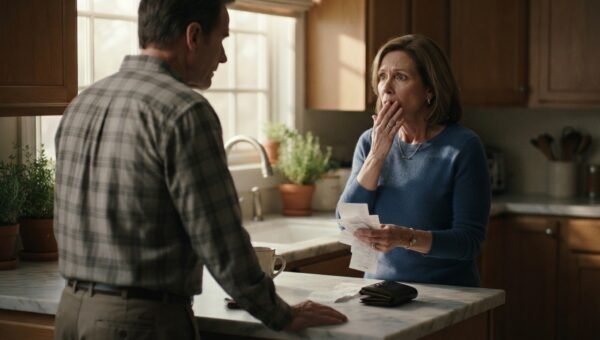
The next morning, I brought the paper down to breakfast. I placed it gently beside Greg’s plate while he was spreading butter on toast.
“I’m not leaving, Greg,” I said evenly. “Laura and I were joint owners with survivorship. The house didn’t go to you. It belongs to me.”
Greg picked up the paper, glanced at it for three seconds, and let out a dry, dismissive laugh.
“Evelyn, this is an unrecorded draft,” he said, tossing it back onto the table like a piece of junk mail. “Laura told me about this. Your name was taken off the final deed before closing because your credit score dragged down the interest rate. The recorded deed at the county courthouse lists Laura Mitchell as sole owner. That means it belongs to her estate. And her estate belongs to me. You have twenty-six days left.”
He grabbed his keys and left for work.
I sat at the table staring at the blue notary stamp. He sounded so sure of himself that a cold wave of doubt crept into my chest. I had worked in a county office for nearly three decades. I knew that what existed in a home file meant nothing if it didn’t match the county register.
At nine o’clock, I put on my winter coat, took the manila folder, and drove downtown to the County Clerk’s Office of Deeds and Records.
The clerk behind the counter was a woman in her late fifties named Brenda. She wore wire-rimmed reading glasses and had a stack of property transfer filings beside her keyboard.
“Help you with a search, ma’am?” Brenda asked.
“Yes,” I said, sliding the original deed and the survivorship page across the counter. “I need to check the official recording for 114 Oak Ridge Road. My daughter passed away, and my son-in-law says this addendum was never filed.”
Brenda pulled up the parcel identification number on her terminal. She typed for a moment, adjusted her glasses, and pulled the digital archive of the 2016 deed transfer. Then she looked at the paper I had handed her.
“Well, your son-in-law was right about one thing,” Brenda said, frowning at her screen. “The survivorship addendum isn’t on the digital record. The deed was indexed under Laura Mitchell as sole owner.”
My stomach sank. “So he’s right? The house is his?”
“Hold on a minute,” Brenda muttered, leaning closer to her monitor. “That doesn’t make sense. The recording fees on the transaction summary match a multi-page filing with an addendum. Let me look at the microfiche scan from the original intake batch.”
She clicked through several archived logs. Her fingers stopped moving over the keyboard. Her brow furrowed, and she stared at the scan for nearly two full minutes.
“Evelyn,” Brenda said, her tone suddenly hushed and serious. “Wait right here. Don’t leave.”
She picked up her desk phone, dialed a three-digit extension, and spoke in low, clipped sentences. “David? I need you out here at station three right now. Bring the supervisor override key. We have an altered index on a 2016 parcel.”
PART 2
David Miller, the chief deputy clerk, came out of a back office holding a beige plastic clipboard. He was a gray-haired man in his sixties who walked with a slight limp and had the meticulous, slow-moving manner of someone who spent forty years around public records.
Brenda pointed at the monitor. “Look at the batch intake log from June 14, 2016. The original document was scanned in as four pages, including the survivorship rider with Evelyn Mitchell’s signature and the notary block. But look at the current public index. The record was replaced three years ago with a three-page file that omitted the rider.”
David leaned over Brenda’s shoulder. He inserted a small key into the side of the terminal, turned it, and typed a long password. The screen refreshed, showing an administrative history that ordinary users never see.
“A document replacement request was processed on August 19, 2023,” David said, his voice quiet. “Someone filed an affidavit of correction claiming the original recording contained a clerical error by attaching an unexecuted rider. Who requested the correction, Brenda?”
Brenda clicked into the attached request form. A scanned document appeared on the glass.
My eyes fixed on the signature line at the bottom. It bore Laura’s name, but the handwriting was stiff, angular, and rushed. Laura had been a pediatric nurse; she wrote in neat, fluid cursive with round loops. Above Laura’s name was a notary seal from a shipping store out near the interstate. Attached to the request was an authorization letter granting Gregory Hayes the authority to act as the filing courier on her behalf.
In August 2023, Laura was undergoing high-dose radiation therapy. She was confined to bed, severely fatigued, and had not driven a car in three months.
“Did my daughter come in here to sign this?” I asked, my voice catching in my throat.
“The clerk who processed this was a temporary hire who only worked here six months,” David said, shaking his head slowly. “He didn’t check identification properly. He saw a notarized affidavit and entered the change into the land registry. But here is the problem: an affidavit of correction cannot legally remove a grantee from a deed without a quitclaim deed signed by that grantee. Your signature is nowhere on this correction, Mrs. Mitchell.”
“I never saw it,” I said. “I never signed anything.”
“Then the correction was void from the second it was stamped,” David told me plainly. “You cannot remove an owner’s interest in real property through a unilateral affidavit. By state statute, the 2016 deed with the survivorship rider remains the legally binding record. As of the date of your daughter’s passing, you became the sole owner in fee simple.”
He looked directly at me. “Mrs. Mitchell, this isn’t just a record error. Someone deliberately manipulated a county land record to strip your name off a title. That is a class three felony under state law.”
He printed two certified copies of the original four-page deed, complete with the gold raised seal of the county clerk, and a copy of the fraudulent 2023 correction file.
“Take these directly to an estate attorney,” David advised. “And if you feel unsafe in that house, you go to the police department across the street.”
I took the envelope, walked out into the chilly afternoon air, and sat in my sedan for fifteen minutes. My head was spinning, but for the first time in four months, the numbness in my chest was gone. It had been replaced by a clean, hard anger.
I didn’t call the police right away. I called Martha Vance, an attorney who had handled my late husband’s probate twelve years earlier. Martha’s office was three blocks away, above a hardware store on Main Street. She agreed to see me between client appointments.
Martha reviewed the certified documents with a yellow highlighter in her hand. When she finished reading the 2023 affidavit, she took off her glasses and laid them on her desk.
“Greg didn’t just try to evict you, Evelyn,” Martha said. “He tried to manufacture a paper trail while your daughter was dying. If he succeeded in convincing you to move out without checking the records, he would have filed for quiet title after a year and sold the property. At current market rates, that house is worth at least $340,000. He would have walked away with every dime of your equity.”
“Can he force me to sell?” I asked.
“He owns nothing,” Martha said firmly. “He has no legal claim to the property whatsoever. Laura’s marriage to him did not invalidate a preexisting joint tenancy with survivorship. The house never entered her probate estate. It is yours. Period.”
Martha drafted two formal letters on her firm’s letterhead. The first was an immediate revocation of the unlawful notice to vacate. The second was a formal thirty-day notice for Gregory Hayes to remove all personal property from 114 Oak Ridge Road, citing illegal attempted eviction and unauthorized tampering with property records.
“Do you want me to serve this by sheriff?” Martha asked.
I looked at the certified papers in my lap. I remembered Greg smirking at my receipt boxes. I remembered him sitting at my kitchen table, drinking his black coffee, telling me I had twenty-six days left to pack my life into cardboard boxes.
“No,” I told her. “I want to hand it to him myself.”
PART 3
I arrived back at the house at four o’clock. Greg’s grey sedan was parked in the driveway. Through the living room window, I could see he had already moved two large plastic storage bins near the front door, clearly intending for me to start packing.
When I opened the front door, the smell of burnt toast hit me. Greg was in the kitchen, leaning over his laptop, a calculator resting beside his mousepad. He was looking at real estate listings on the local MLS website.
“Did you find an apartment?” he asked without looking up from the screen. “You need to secure something before the end of the month. The leasing offices around here take weeks to process applications.”
I took off my coat and hung it on the wooden peg by the door. I walked into the kitchen and set Martha Vance’s legal envelope on the counter, directly over his calculator.
“Look at it,” I said.
Greg frowned, annoyed by the interruption. He opened the envelope, pulled out Martha’s letter, and scanned the first few sentences. His face stiffened.
“What is this?” he muttered. “You hired a lawyer? Evelyn, you’re throwing away money you don’t have. I told you the county deed is in Laura’s name.”
“I was at the county clerk’s office two hours ago, Greg,” I said. My voice was steady, clearer than it had sounded since Laura’s diagnosis. “I met with David Miller. We pulled the original 2016 record. We also pulled the affidavit of correction you had notarized at the UPS Store on August 19, 2023.”
Greg’s jaw clenched. He didn’t move. The confidence that usually sat so comfortably on his shoulders seemed to slip an inch.
“You took Laura’s name, forged her signature, and submitted an unauthorized document to strip my name off the deed while my daughter was lying in a hospital bed vomiting from radiation,” I said. Every word felt heavy and cold. “You thought because I kept paper receipts in cardboard boxes, I was an old woman who didn’t understand how public records work. I worked for the county for twenty-seven years, Greg. I know how microfiche works. I know how digital archives work. And I know what happens when someone files a fraudulent instrument in a public registry.”
“Laura wanted me to have the house,” Greg said defensively, his voice rising. “She knew I couldn’t afford to buy another place on my salary! We talked about it. She agreed that you could find a senior living apartment with your pension. She was going to sign the paperwork, but she was too sick that week. I was just trying to carry out her wishes!”
“Laura loved this house,” I said. “She helped me paint every single baseboard. She planted the hydrangeas in the front yard. She would have cut her own hand off before she made her mother homeless.”
Greg stood up, pushing his chair back until it scraped against the linoleum. “You can’t prove I forged anything. Laura could have signed that before she got worse. It’s a notarized document.”
“David Miller already flagged the notary,” I replied. “The county clerk’s legal division is forwarding the file to the district attorney’s office tomorrow morning for an inquiry into notary fraud and filing false instruments. But Martha Vance gave me a choice.”
Greg stared at me, his breathing shallow. “What choice?”
“You pack your clothes, your tools, and your computer tonight,” I told him. “You leave the keys on the counter. You sign a voluntary surrender of any purported claim to the estate. If you are out of this house by noon tomorrow, Martha will hold the file in civil escrow. If you fight this, or if you ever step foot on this property again, the district attorney gets the full packet by two o’clock.”
He opened his mouth to speak, but the words withered. He looked down at Martha’s letter, then at the certified gold seal on the clerk’s document resting beneath it. He knew what a felony charge would do to his job at the warehouse.
Without saying another word, Greg walked past me, went into the guest bedroom, and began pulling his clothes out of the closet.
ENDING
Greg was gone before ten the next morning.
He packed his clothes into four suitcases and loaded his golf clubs and tools into the trunk of his car. He left his house key and the garage door opener on the kitchen island, right next to the salt shaker. He didn’t say goodbye, and I didn’t watch him drive away.
That afternoon, Martha Vance walked the finalized paperwork through probate court. Because the property had passed outside of probate through joint tenancy, there was no estate contest to fight. The title was cleared in my name alone. Martha also had Greg sign a standard release waiving any claims against the residence in exchange for me not pursuing an immediate civil judgment for his four months of rent-free occupancy.
The county clerk’s office permanently expunged the fraudulent 2023 affidavit from the registry. Brenda called me personally on Friday to tell me the digital title was clean, correctly reflecting Evelyn Mitchell as the sole surviving owner.
The house felt larger after Greg left, but it did not feel empty.
Over the weekend, I opened all the windows to let the crisp autumn breeze move through the rooms. I spent Saturday washing the kitchen curtains and packing up Laura’s nursing textbooks to donate to the community college library where she had earned her degree.
On Sunday evening, I sat at the kitchen table with a hot cup of black tea. On the corner of the table sat my old green accordion file.
I picked up the certified deed from the county, with its raised gold seal and the clear blue signatures from 2016, and slid it neatly into the section labeled “Home & Property.” Next to it, I placed the small grocery receipt from that morning for my tea bags and honey.
Greg was wrong about the paper trail. In a world full of people willing to rewrite history when you aren’t looking, sometimes a piece of paper is the only truth that holds its ground.