PART 1
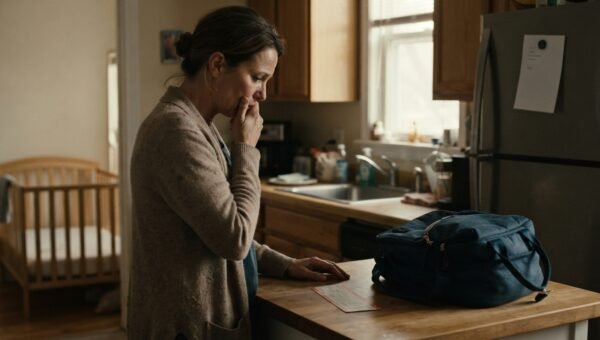
My son Todd moved back into my house on a rainy Tuesday in October with two scuffed suitcases and thirty-eight dollars in his checking account.
He did not have a plan, a lease, or a job lead. His marriage had collapsed four months earlier after his wife caught him draining their joint savings for online sports betting, and his apartment deposit had already been swallowed by back rent.
I stood on my front porch, looked at my thirty-eight-year-old son standing by the curb with his collar pulled up against the damp air, and I opened the screen door. That was my mistake. I thought I was being a mother.
Within three weeks, Todd had completely rewritten the history of how he got through that door.
I heard him on the phone out on the back deck while I was peeling potatoes at the kitchen sink. He had his voice dropped into that smooth, long-suffering baritone he used whenever he wanted to sound like a saint.
“Mom just couldn’t handle the yard work after Dad’s anniversary passed,” he told his cousin Mark. “She was calling me two, three times a week in tears. I had to give up my place in town just to make sure she was eating properly. She begged me to stay, man. What kind of son walks away from that?”
I stood by the sink with the paring knife still wet in my hand. My husband, Arthur, had been gone six years. I maintained the lawn myself with the self-propelled Toro mower Arthur bought in 2018, and I had never once called Todd in tears about yard work. In fact, when Todd called me from a motel parking lot in September, he had been crying so hard I could barely understand his address.
I didn’t confront him that night. That was my second mistake. I told myself his pride was hurting from the divorce. Men say foolish things when they feel small, and I figured letting him save face with his cousins wouldn’t cost me anything.
It cost me plenty.
By December, the guest room looked like a bachelor pad in a frat house. He left damp towels balled up on the carpet, took over the refrigerator with cases of craft beer he bought with my debit card, and started inviting his friends over on Thursday nights for poker.
They parked in my driveway, blocked my mail carrier from reaching the box, and tracked mud across the linoleum I had waxed by hand. Whenever I asked him to give me a head count before inviting four grown men into my home at eight in the evening, Todd would chuckle, pat my shoulder, and say, “Don’t get worked up, Mom. You worry too much. It’s good for you to have life in the house.”
Then came March.
Every spring, my family gathers at my house for Sunday lunch after church. My older sister Claire comes, along with her daughter Megan, who has been an administrator at a licensed memory-care facility in county health for nine years. Megan is sharp, practical, and does not miss a single flicker in a room.
Todd spent the first twenty minutes of lunch carrying the roast chicken from the stove to the table like he was the host presenting a banquet.
He poured the sweet tea, made a show of helping me pull out my chair, and took the head of the table where Arthur used to sit.
“We’re glad to have you all here,” Todd said, clearing his throat while everyone passed the buttered rolls. “Mom’s been having some rough days lately, so having family around really helps anchor her.”
Claire stopped her fork halfway to her plate. “What kind of rough days, Martha?”
Before I could answer, Todd leaned his elbows on the table and gave Claire a grave, solemn look. “Just little things at first. Leaving the stove burner clicking. Forgetting whether she paid the water company. She won’t admit it, of course, but it’s gotten to the point where I’m stepping in on daily routines. In fact, Megan, you and I should probably sit down this week. I think I’m going to need to take over the finances soon just to keep the household from running off the rails.”
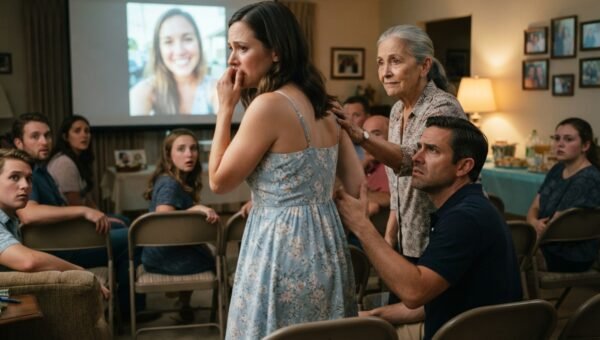
The room went dead silent.
Megan slowly set her linen napkin beside her plate. She didn’t look shocked or flustered. She looked at Todd the way she looks at intake paperwork when the numbers don’t add up.
“You’re handling her bills, Todd?” Megan asked quietly.
“I’m keeping an eye on things,” Todd said, leaning back and resting his thumb in his belt loop. “Someone has to.”
“Okay,” Megan said, tilting her head. “Who carries her supplementary health insurance? Is it through Arthur’s old union or an independent carrier?”
Todd blinked. His hand moved off his belt. “It’s through the state fund. The one Arthur had.”
“Arthur was a municipal water inspector, Todd. Municipal retirees here don’t use the state fund; they have the county trust,” Megan said, her voice completely even. “Second question. What day of the month is her property tax escrow drawn, and what bank holds the primary checking?”
Todd shifted in Arthur’s chair. A small bead of sweat showed right at his hairline. “I don’t have the calendar memorized, Megan. I have the receipts in the office. The point is she’s slipping.”
“Third question,” Megan said, ignoring his deflection completely. “How much is her monthly water bill on average?”
“Around two hundred,” Todd snapped, his face reddening. “Why are you grilling me like I’m on a witness stand? I live here. You don’t.”
“Her water bill is thirty-two dollars a month,” Megan said. “Because she has an automated senior conservation credit, and she lives alone. Or she did.”
Todd opened his mouth to argue, but I didn’t let him.
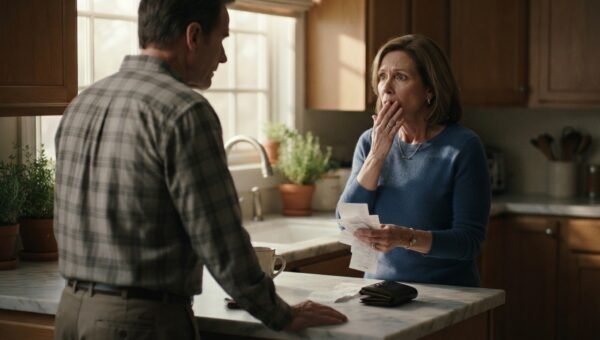
I smiled, reached to the small telephone stand sitting right beside my chair, and opened the top drawer. I pulled out a stapled, four-page legal packet and slid it across the white tablecloth directly into Megan’s hands.
It was a durable power-of-attorney form. Todd’s signature was already penned on the agent acceptance page in blue ink.
The line for the principal’s signature was completely blank.
PART 2
Megan picked up the packet with both hands. Her eyes scanned the first page, flipped straight to the fourth page where Todd’s name was entered as sole attorney-in-fact, and stopped at the empty signature line beside the notary block.
“Where did this come from, Aunt Martha?” Megan asked.
“I found it four days ago,” I said, keeping my hands resting in my lap. “Tucked inside the printer tray in Arthur’s old study. Along with two typed letters addressed to First National Bank and the county clerk’s office, requesting that all future correspondence and statements be forwarded to Todd’s private post office box on Highway 14.”
Claire dropped her fork completely. It hit the edge of her china plate with a sharp clatter. “Todd Allen, what on earth is this?”
Todd didn’t look at his aunt. He stared directly at me, his jaw set hard. “You went through my things.”
“It was in my printer,” I said. “Using paper I bought, on a desk Arthur built with his own hands. You left the top sheet jammed in the feed roller on Wednesday morning before you went to your interview.”
“I was preparing for an emergency,” Todd said, his voice rising, trying to regain control of the table. “You’re seventy-one years old, Mom. You wander around this house, you misplace your reading glasses, you get confused about what day the recycling runs. If you have a stroke tomorrow, who handles the mortgage? Who pays the hospital? I’m your only living son. Having the paperwork ready isn’t a crime; it’s being responsible.”
“You don’t have the paperwork ready, Todd,” Megan said, cutting through his noise with that cold, professional authority she used on difficult families at the clinic. “You filled out an unexecuted statutory power of attorney, granted yourself complete access to banking, real property, and retirement accounts, signed your own acceptance as agent, and then announced to this entire family that Martha is cognitively impaired before any physician has ever evaluated her.”
“I never said she had dementia!” Todd shot back.
“You told everyone at this table she leaves the stove on and can’t manage her checking account,” Megan replied. “In my line of work, we call that laying the groundwork. You establish a public narrative of decline so that when the signature finally appears on the county record, nobody asks questions.”
The roast chicken was getting cold between us. Nobody touched their water glasses.
“I have not missed a utility payment in forty-eight years,” I said. My voice did not shake, though my chest felt tight enough to snap. “I have never left a burner on. When your father died, I sat down at that oak table and taught myself how to balance the pension disbursements, how to file the homestead exemptions, and how to keep this roof patched without asking a soul for a dollar. You have been in this house five months, Todd. You haven’t paid fifty cents toward the groceries. You haven’t put gas in the mower once.”
“I told you I was getting back on my feet!” Todd yelled, slamming his open palm on the table. The water glasses jumped. “Everything I do in this family gets picked apart! I came here to help you, and you treat me like a common thief!”
“Show me your phone, Todd,” Claire said suddenly from the other side of the table.
Todd froze. “What?”
“Show me your phone,” Claire repeated, her voice shaking with an older sister’s quiet fury. “If you’re so worried about Martha’s money, let’s see what you’ve been doing with yours.”
Todd grabbed his car keys off the sideboard and stood up so fast his dining chair scraped back across the rug. “I don’t have to sit here and be interrogated by my own family on a Sunday afternoon. You want to run this place by yourself, Mom? Fine. Let’s see how long you manage when the water heater blows or the roof leaks.”
He walked down the hall, slammed the front screen door hard enough to rattle the glass in the transom, and drove off in his pickup with a squeal of tires on the wet asphalt.
PART 3
The front door stayed shut, but the silence in the dining room was worse than the shouting.
Megan didn’t let the silence linger. She turned her chair toward me and laid the papers flat on the tablecloth. “Martha, did you sign anything else for him? Anything at all? A car title, a blank check, a change-of-address card?”
“No,” I told her. “I have my own lockbox in the bedroom closet. The only reason I found those papers was because I went to print my quarterly church financial summary. When the red light started blinking, I opened the paper tray and found three copies of that form, along with his handwritten notes on how to access my First National login.”
Megan let out a slow breath. “We need to go to the branch tomorrow morning at eight-thirty. Not because he can do anything with this blank form, but because he knows your passwords if they were written down in that study.”
I didn’t sleep that night. I sat in Arthur’s armchair in the dark living room, watching the headlights of passing cars sweep across the ceiling. I kept thinking about Todd when he was nine, breaking his wrist on the backyard swing and hiding behind the garage because he was afraid I would be angry about the emergency room bill. I had held him in the passenger seat of our old station wagon all the way to St. Jude’s, telling him money didn’t matter, that he was my boy and nothing came before him.
Now he was thirty-eight years old, sitting across from me at Sunday dinner, trying to make my sister think my mind was rotting so he could take my house to cover his debts.
At seven o’clock on Monday morning, Todd crept back through the kitchen door, hoping to slip into the guest room before I was awake.
He didn’t make it past the counter.
I was sitting on the stool with my coat already on, my purse on my lap, and two cardboard boxes sitting neatly on the floor beside the refrigerator.
Todd stopped in the doorway. His eyes were bloodshot, his polo shirt was rumpled from sleeping in his truck, and he smelled like stale diner coffee.
“Look, Mom,” he began, his voice raspy, trying out an apologetic smile that didn’t reach his eyes. “Yesterday got out of hand. Megan always was nosy, and she got me defensive. I shouldn’t have raised my voice at the table.”
“Your things are in those two boxes,” I said.
He stopped. The smile dropped off his face completely. “What are you talking about?”
“The rest of your clothes are packed in your two suitcases by the front door,” I said. “Your poker table is folded up on the porch. You have until noon to load your truck.”
“Mom, you can’t just kick me out!” he shouted, stepping forward into the kitchen. “I live here! You legally have to give me thirty days’ notice if you want me out of this house!”
“You don’t have a lease, Todd. You don’t have a utility bill in your name. You are a guest who overstayed,” I told him, standing up from the stool. I didn’t yell. I didn’t cry. I looked him straight in the eyes. “And if you say one word about tenant rights, I am walking into the sheriff’s department at nine o’clock with that power-of-attorney form and a copy of the browser history from the study computer, where you spent Tuesday night searching how to transfer a deed without probate.”
He went entirely still. The bluster went out of his shoulders all at once, like air leaking out of a tire.
He knew. He knew exactly what he had searched, and he knew I had checked the history log before Megan and Claire ever arrived for lunch.
“I owe people, Mom,” he whispered. His voice cracked, sounding like that terrified nine-year-old in the backyard for half a second before his selfishness took over again. “You don’t understand what kind of trouble I’m in. If I don’t settle the credit line from the divorce by the end of the month, they’re garnishing my wages from the new warehouse job.”
“Then you will work the overtime and pay it,” I said. “Arthur and I paid for every shingle on this roof with forty years of honest sweat. I will not let you gamble this house away to pay for your mistakes. Pack your truck.”
ENDING
By eleven o’clock that morning, Todd’s truck was loaded.
He didn’t say goodbye. He didn’t ask for a sandwich or a cup of coffee. He tossed his duffel bag into the passenger seat, slammed the tailgate on his folded poker table, and pulled out of the driveway without looking back at the porch where I stood.
At twelve-fifteen, Megan picked me up. We went straight to First National Bank on Main Street.
We sat across from Mr. Henderson, who had managed Arthur’s and my accounts since 1994. In less than forty minutes, we changed the online login credentials, reset the security questions to things Todd could never guess, and placed an administrative verbal-password requirement on every account tied to my Social Security number. If anyone calls asking to transfer five dollars or five thousand, they have to give a secret code word that only Megan and I know.
After that, we walked across the courthouse square to the county clerk’s office and registered a formal revocation notice against any unrecorded power of attorney bearing my name, just in case Todd had tried to print another copy elsewhere.
When Megan dropped me off at home that afternoon, the house felt larger than it had in months.
The air in the hallway smelled clean again, free of stale beer and takeout pizza. I walked into Arthur’s study, took the stapled power-of-attorney packet off the desk, and dropped it into the bottom drawer of the file cabinet under the tax records from 1982.
I left the principal signature line blank.
A lot of mothers in my position would have felt guilty. They would have called by Tuesday evening, asked where he was sleeping, offered to pay a month of motel rent, or apologized for embarrassing him in front of his family. I didn’t do any of that. Loving your child doesn’t mean lying down in the road so they can drive over you twice.
That evening, I made myself a pot of tea, took Arthur’s old garden shears from the shed, and went out to the front walk to trim back the hydrangeas by the porch steps.
The sun was going down cool and clear over the pines. My hands were steady on the wooden handles, the cuts were clean, and when the streetlights flickered on down the lane, I knew exactly which day the recycling was coming, exactly how much money was in my bank, and whose name belonged on the front door.