PART 1
My son moved back home after his divorce and told everyone I had begged him to stay.
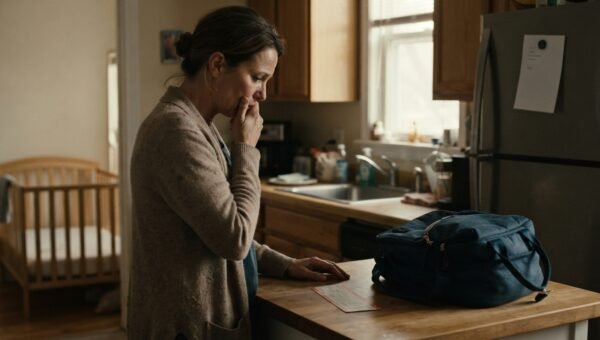
The truth was very simple. He arrived on a rainy Tuesday evening with two scuffed suitcases, seventy dollars in his checking account, and nowhere else to go. His name is Greg. He was forty-two years old, smelling of damp wool and stale coffee, standing on the front porch of the brick ranch house I had lived in alone since my husband, Arthur, died six years ago.
“Just for a few weeks, Mom,” he told me that night at the kitchen table. He was eating the leftover pot roast straight from the bowl. “Until the deposit clears on an apartment near the office.”
I gave him the guest room at the end of the hall. I bought his favorite brand of rye bread and the dark roast beans he liked. I paid for every carton of milk, every box of cereal, and every strip of bacon. I didn’t ask him for a dime toward the electric bill, even though the meter ran twice as fast once he moved in his desktop computer and started taking twenty-minute showers twice a day. When his friends started dropping by on Thursday nights, leaving empty beer bottles on Arthur’s workbench in the garage and parking their trucks across my hydrangeas, I bit my tongue. I told myself he was grieving the end of a ten-year marriage. I told myself a mother gives grace.
Then three months passed, and Greg didn’t look at a single apartment listing. Instead, he started walking through my rooms like a landlord doing an inspection. He would rap his knuckles against the hallway drywall and say things like, “We ought to tear this out, open up the living room.”
The shift happened so quietly I almost didn’t recognize it for what it was. He stopped asking if he could invite people over. He simply invited them. He started leaving his mail on top of my stack by the bread box. And then he started talking to my relatives on speakerphone in the kitchen, making sure I could hear him.
“Yeah, Aunt Carol,” he would say, leaning against the counter while I was peeling potatoes at the sink. “Mom was so lonely out here by herself. She begged me to stay. She practically cried when I mentioned looking at a rental across town. I couldn’t leave her like that.”
I stood over the sink, my hands cold under the tap water, wondering how a child I raised could turn my charity into his sacrifice.
The boiling point came on the second Sunday of October. It was our family Sunday lunch. My sister Elaine came over, along with her daughter, my niece Sarah. Sarah has been a licensed social worker in elder care for twelve years. She spends her workdays visiting assisted living homes, reviewing state assistance paperwork, and helping families navigate the hard realities of aging.
We were sitting around the dining room table, passing a platter of roast chicken and buttered carrots. Greg was sitting at the head of the table. Arthur used to sit there, but Greg had simply taken the seat the first Sunday he arrived and never moved.
Greg took a drink of sweet tea, set his glass down hard enough to clink against the china, and cleared his throat.
“I think we need to talk about Mom,” he announced to the room.
Elaine looked up from her plate. Sarah paused with her fork halfway to her mouth.
“What about me, Greg?” I asked softly from my chair on the side.
“Well, you’re getting forgetful, Mom,” he said, shaking his head with a little sigh that sounded practiced. “You forgot to buy the paper towels yesterday. And last week you misplaced your glasses twice. I’m just worried about you out here managing all the bills and the house upkeep on your own. It’s getting to be too much. I might need to step in and take over the finances soon, just to keep everything straight and protect you.”
The room went completely quiet.
Sarah lowered her fork onto her plate. It didn’t make a sound. She leaned forward, rested her forearms on the tablecloth, and looked straight at Greg.
“Greg,” Sarah said, her voice completely even. “Who holds the mortgage on this house?”
Greg blinked. His eyes shifted toward the chandelier, then back to Sarah. “Well, it’s… it’s one of the big banks. Chase, probably. Or Wells Fargo.”
“Uncle Arthur paid this house off in 2018,” Sarah said. “Second question. What company provides the heating oil for the furnace, and how much did the tank refill cost last month?”
Greg shifted in his seat. The back of his neck began to turn red. “I don’t look at the furnace bills. Mom handles the utility drawer.”
“Third question,” Sarah said, not letting him breathe. “What is Mom’s supplemental health insurance premium, and when is it drafted?”
Greg’s jaw tightened. “Why are you grilling me like I’m on trial? I’m her son. I live here. I’m the one taking care of her.”
“You can’t answer any of them,” Sarah said.
I didn’t raise my voice. I didn’t cry. I smiled a small, tired smile, reached down to the small mahogany sideboard right beside my chair, and opened the shallow top drawer.
I pulled out a crisp, four-page legal document and slid it across the white tablecloth directly in front of Sarah.
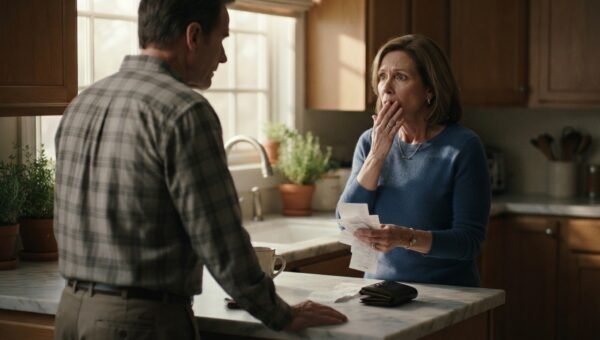
It was a standard durable financial power-of-attorney form. Greg had printed it off the county legal aid website, filled in his own name as the sole agent, and signed it on the line marked ‘Designated Attorney-in-Fact.’ His signature was there in dark blue ink, dated three days earlier.
The line for the principal was blank. My signature wasn’t on it.
PART 2
Sarah pulled the papers toward her. She read every line, her eyes moving methodically down the first page, flipping to the second, then the third.
“Where did you find this, Aunt Martha?” Sarah asked.
“In the pocket of his navy blazer,” I said. “The one he dropped on the entryway bench on Thursday night. He asked me to take it to the dry cleaner on Friday morning because he had a job interview on Monday. I check pockets before I take things to the cleaners. Arthur taught me that forty years ago.”
Elaine set her linen napkin on the table. She looked at her nephew with a face like stone. “Greg, what is this?”
Greg pushed his chair back an inch. The wood legs scraped against the hardwood floor. “It’s nothing. It’s just preparation. You’re all blowing this out of proportion. I went to the clerk’s office downtown because a guy at the office said if something happens to an older parent, probate locks up all their bank accounts. I was just getting the paperwork ready so we wouldn’t be scrambling if Mom had a fall or had a stroke. I was going to bring it to her this week with a notary.”
“You filled in full real estate conveyance authority,” Sarah said, tapping her finger on page three. “You checked the box that allows you to borrow against real property, close credit lines, and liquidate personal checking accounts without secondary approval. You didn’t just fill in healthcare advocacy, Greg. You gave yourself complete financial control over every asset Aunt Martha owns.”
“Because I live here!” Greg’s voice jumped up an octave. He looked around the table, desperate for someone to nod along. “I’m the one who sacrificed my independence to move back into this tiny town. I gave up my life in the city to come out here and make sure she didn’t burn the house down. Do you know how hard it is to put your life on hold for an aging parent?”
“You didn’t put your life on hold,” I said, looking right into his eyes. “You lost your lease.”
Greg closed his mouth so hard his teeth clicked.
“Your ex-wife’s lawyer sent a letter to this house three weeks ago,” I continued, keeping my voice as steady as a plumb line. “They were trying to serve you papers because you stopped paying your half of the credit card debt you both ran up during the divorce. You didn’t move here to take care of me. You moved here because your landlord evicted you when you couldn’t pay your four-thousand-dollar share of the rent arrears, and you had nowhere else to sleep.”
Sarah didn’t look surprised. In her line of work, she saw this every month. Adult children who hit a financial wall, moved back into their childhood bedrooms, and slowly convinced themselves that their parents’ paid-off homes belonged to them by right of survival.
“I need you to show me your phone, Greg,” Sarah said quietly.
“Excuse me?” Greg scoffed, crossing his arms over his chest. “I’m forty-two years old. You don’t tell me what to do with my personal property.”
“You printed this form on Thursday,” Sarah said, pointing at the date stamp in the tiny footer at the bottom of the page. “The footer says it was printed from an email attachment sent by an attorney named Miller on Elm Street. Uncle Arthur used Miller’s firm for his estate twenty years ago. Did you call Miller’s office pretending to be acting on Aunt Martha’s behalf?”
Greg didn’t answer. He looked at the doorway to the hall, like he was calculating whether he could walk out of the room without looking like a coward.
“Sarah,” I said, placing my hand over hers on the table. “Don’t bother with his phone. I already know what he did.”
PART 3
Two days before our Sunday lunch, after I found that document in Greg’s blazer pocket, I didn’t confront him right away. I took a picture of every page with my phone, put the papers back in his jacket pocket, and drove myself straight down to the First National Bank branch on Main Street.
I had banked there for thirty-four years. The branch manager, a man named Tom Vance who had coached Greg in Little League thirty years ago, sat with me in his glass-walled office.
“Tom,” I had said, “I need to know if anyone has inquired about my accounts.”
Tom typed on his computer for less than two minutes before he looked up over his reading glasses. His face was troubled.
“Greg came in on Tuesday morning, Martha,” Tom told me. “He brought a copy of Arthur’s death certificate and asked what the procedure was to add an authorized signer to your primary savings and your money market account. He told the teller you were having mobility issues and couldn’t make the drive into town.”
Tom had turned the monitor slightly. “Our teller told him that you’d have to appear in person with two forms of identification, or present an executed, notarized durable power of attorney. He was pretty irritated when he left.”
Sitting at my dining table now, looking at my son sitting in Arthur’s chair, I laid that out for everyone in the room.
“You went to Tom Vance,” I said. “A man who watched you strike out at third base when you were nine years old. You told him I couldn’t walk into the bank myself. And when he told you that you needed a piece of paper, you went to Arthur’s old lawyer, asked for the template they had on file, signed your name to it, and brought it home.”
Elaine let out a low, disgusted breath. “My God, Greg.”
Greg’s face drained of color. He stood up so fast his chair tipped backward, hitting the floor with a loud wooden thud. He didn’t pick it up.
“You’ve been spying on me!” he yelled, his hands shaking at his sides. “In my own family! You’re treating me like a criminal! I’m your son, Mom! Everything I was doing was for this family. If I took over the accounts, I could have invested that dead cash sitting in your two-percent money market and actually made us some money! You’re letting two hundred thousand dollars sit there rotting while I’m struggling to get back on my feet!”
There it was.
The exact figure. The money market account held two hundred and twelve thousand dollars, the life insurance Arthur had left behind to ensure I would never be a burden to anyone if I needed round-the-clock nursing later in life. Greg had looked at my statements while I was out tending my garden. He had done the math. He didn’t see his mother’s safety net. He saw his seed capital.
“That dead cash,” I said, my voice barely above a whisper, “is the reason I was able to buy your groceries for three months. It’s the reason you had a warm bed to sleep in while your friends thought you were doing me a favor.”
“I have rights here,” Greg said, his chest heaving. “I’m a resident. You can’t just treat me like a stranger.”
Sarah stood up then. She stood tall, her hands resting calmly on the table. “Actually, Greg, you’re an at-will guest. You have no lease, you’ve paid zero rent, and there is no record of tenancy. But more importantly, taking a power-of-attorney document, filling it out with unauthorized authority, and attempting to access funds by falsely representing a senior citizen’s mental capacity is something the state adult protective board takes very seriously. If Aunt Martha signs an affidavit of attempted financial exploitation, you won’t be worrying about rent. You’ll be answering to the county prosecutor.”
Greg looked from Sarah to Elaine, and finally down at me.
He wanted me to soften. He wanted me to do what I had done every time he scraped his knee, every time he failed a college class, every time his marriage went sour. He wanted me to sigh, reach out, pat his arm, and tell the others that he just made a mistake.
I looked at him, and for the first time in forty-two years, I saw him clearly. He was not a hurting boy. He was a grown man who had decided that my old age was his opportunity.
“You have until five o’clock tomorrow evening to pack your two suitcases,” I said. “And the boxes in the garage.”
“Mom,” he pleaded, his voice cracking. “Come on. Where am I supposed to go?”
“You’re a forty-two-year-old man,” I told him, picking up my fork again. “Figure it out.”
ENDING
He didn’t wait until five o’clock the next day.
He packed that night. I stayed in my bedroom with the door shut, listening to him drag his bags down the hallway and haul his computer equipment through the kitchen. He slammed the front door hard enough to rattle the glass in the storm door, and his car tires spit gravel as he backed out of the driveway.
He left a mess in the guest room. The bed was stripped, two empty soda cans were left on the nightstand, and the closet hangers were scattered on the floor.
On Monday morning, Sarah drove me back to First National Bank. We didn’t do anything dramatic. I simply signed a document revoking any pending authorizations and placed a security alert on my accounts requiring two forms of government identification and an in-person signature for any withdrawal over five hundred dollars. Then we went to the locksmith on Fourth Street, and by two in the afternoon, every lock on the front, back, and garage doors had been changed.
Two weeks later, Greg sent me a text message. It wasn’t an apology. It was a photograph of a rental application for a studio apartment thirty miles south in Canton. He asked if I would co-sign the lease and wire him eight hundred dollars for the application and security deposit.
I looked at that text on my kitchen counter for a long time. The house was completely quiet. There were no boots clomping through my garage, no strange men drinking beer around Arthur’s workbench, and no voice on speakerphone telling my relatives how frail and helpless I was becoming.
I deleted the text without replying.
It has been four months now. I haven’t heard from Greg, though Elaine tells me he is living with a coworker and working second shift at a distribution center. Sometimes, when I walk past the guest room, I feel an ache right in the center of my ribs. A mother never stops wanting her child to be decent.
Every Sunday, I still cook lunch. Sarah comes over, and Elaine brings a fresh apple pie or some rolls from the bakery. We sit around the dining table, and I sit at the head of it now, in Arthur’s old chair.
Before we eat, I look down at my hands. They have liver spots and wrinkles around the knuckles, but they are steady. Nobody manages my life for me, and nobody ever will.