PART 1
My son moved back into my home on a Tuesday with four heavy suitcases and told the entire family I had begged him to stay.
In reality, he showed up on my porch with an eviction notice from his apartment complex, an empty bank account, and nowhere else to go. His divorce from his ex-wife, Sarah, had finalized three weeks earlier, leaving him with mounting credit card balances and a shattered ego.
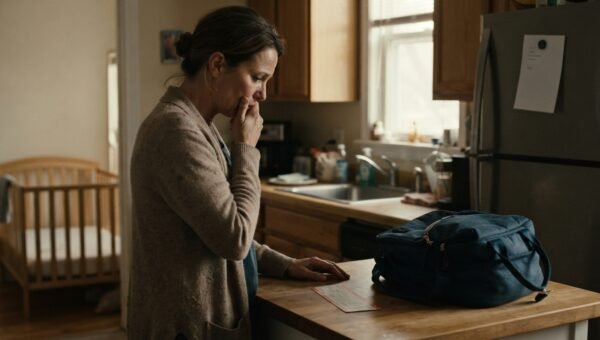
I took him in because he is my child. I am sixty-six years old, retired from thirty-two years of teaching middle school English, and I live alone in the three-bedroom ranch house my late husband, Arthur, and I paid off twelve years ago.
I gave David the guest bedroom down the hall. I stocked the refrigerator with the brand of deli roast beef and ginger ale he liked. I paid for every grocery run, bought his preferred laundry detergent, and didn’t charge him a single dime for rent or utilities. I told myself he just needed two or three months to regain his footing. Arthur always used to say that people do foolish things when their pride gets bruised, so I tried to give our boy some grace.
Within a month, David stopped treating my home like a temporary shelter and started treating it like his bachelor pad.
He left his work boots in the entryway for me to trip over.
He took over the living room television every evening, leaving pizza boxes on Arthur’s restored oak coffee table. Then he started inviting his friends over on Thursday and Friday nights without asking me first. They drank beer on my back patio until midnight, leaving empty cans in my flowerbeds and laughing loudly while I tried to sleep. When I asked him quietly to keep the noise down because my bedroom faces the yard, he waved a dismissive hand at me.
“Relax, Mom,” he said, not even looking up from his phone. “You have nothing to wake up early for anyway. Let me have some people over. I’ve been through hell this year.”
I bit my tongue. That was my biggest mistake. I told myself that keeping the peace was better than causing an argument under my own roof. But David mistook my patience for weakness.
The turning point came on a warm Sunday in October. My niece, Laura, came over for our regular family roast chicken lunch.
Laura is thirty-four, sharp as a tack, and has worked for eight years as a licensed director of care coordination at a regional elder care facility. She knows the ins and outs of senior advocacy, estate administration, and the sad ways families can turn on older relatives. She was also Arthur’s goddaughter, and she visited me twice a month just to check in.
David sat at the head of my dining table, in Arthur’s old chair. He had poured himself a glass of wine, and halfway through the meal, he looked across the table at Laura with a heavy, practiced sigh.
“I’m glad you’re here today, Laura,” David said, setting his fork down with a loud clatter. “We need to talk about Mom. I hate to say it, but she’s been getting really forgetful lately. Misplacing mail, forgetting what day it is, letting things slip. Honestly, it’s getting unsafe. I’m going to have to step in and take over her finances soon just to keep her protected.”
The dining room went completely still.
I felt the heat rise up into my neck. I had lived in this house for forty years. I balanced my checkbook to the penny every single Friday morning. I had never missed a utility bill, a property tax installment, or a prescription refill in my life. The only thing I had “misplaced” that week was my spare reading glasses, which David had borrowed without asking to read a car maintenance manual.
Laura set her fork down. She looked at me, then turned her full attention to David. Her voice was completely level, the way she speaks to families in crisis at her facility.
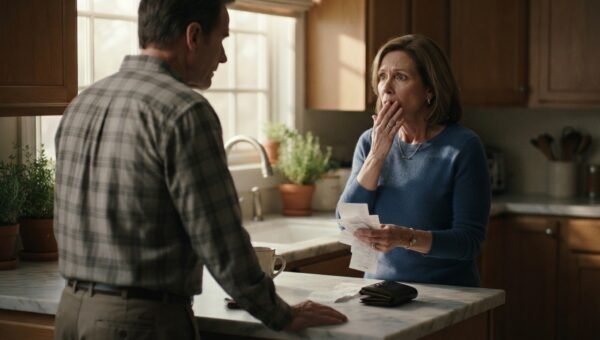
“That’s a serious claim to make, David,” Laura said quietly. “If you’re planning to manage Aunt Clara’s finances, you obviously understand her basic overhead. So tell me: what company holds her homeowner’s insurance policy?”
David blinked. He shifted in Arthur’s chair. “Well, it’s… it’s one of the big ones. State Farm or Allstate. One of those.”
“It’s Erie Insurance, and she’s had them since 1988,” Laura said, her eyes never leaving his face. “Second question. What day of the month does her supplemental health insurance draft from her checking account?”
“She pays that online,” David muttered, his ears turning red. “I haven’t set up the portal login yet.”
“She writes a paper check on the third of every month because that company charges a fee for debit cards,” Laura replied. “Third question. What is her monthly water and sewer budget?”
David slammed his open palm on the table. “This is ridiculous! I don’t need a pop quiz from my little cousin! The point is she’s deteriorating, and as her son who actually lives here sacrificing my own personal space to watch over her, I need legal control so bills don’t get missed!”
I didn’t yell. I didn’t cry.
I looked at my son, saw the naked greed and desperation behind his anger, and realized exactly why he had laid the groundwork for this conversation. He wanted Laura’s professional endorsement so the rest of the family wouldn’t ask questions when he took control of my accounts.
I wiped my mouth with my cloth napkin, stood up, and walked over to the antique sideboard against the dining room wall. I opened the top right drawer, pulled out a crisp manila folder I had placed there three days earlier, and walked back to the table.
I handed the document straight to Laura.
“Take a look at that, honey,” I said softly.
Laura opened the folder. Her eyes scanned the first page, and her face hardened.
It was a standard durable financial power-of-attorney form for our state. David’s full legal name was listed as the sole attorney-in-fact, granting him total authority over my bank accounts, investments, and real estate. At the bottom of the second page, David had already filled in his signature, printed his name, and entered the date.
The line for the principal was completely blank. My signature wasn’t on it.
PART 2
David stared at the manila folder in Laura’s hands, and all the bravado drained out of his posture.
“Where did you get that?” he asked. His voice dropped an octave, losing its aggressive edge.
“I found it on Tuesday,” I said, sitting back down in my chair. “You used my printer in the den to make three copies. You left the original on the glass scanner bed, facedown, right underneath the lid. When I went to make a copy of my church newsletter receipt, there it was.”
Laura flipped through the pages with practiced precision. As an elder care administrator, she reviewed these exact documents every working day of her life.
“This isn’t just a basic medical proxy, David,” Laura said, her voice dropping into a cold, clinical tone. “This is an immediate durable financial power of attorney. It doesn’t even require two physicians to certify cognitive incapacity. The second this gets notarized, whoever holds it can liquidate checking accounts, withdraw from retirement funds, and execute deeds on real property.”
She lifted her head and looked directly at him. “You signed this as the designated agent on October eighth. That was four days ago. Were you planning to slip this in front of Aunt Clara while she was watching the evening news, tell her it was a routine property tax form, and drive her to a mobile notary?”
David’s face twisted into an ugly mask of defensive panic. “You’re twisting this! Both of you! Do you know how stressful it is to watch someone age? I’m trying to be proactive! Mom forgot where her car keys were two weeks ago!”
“My spare keys were in your coat pocket because you drove my Buick to the grocery store without telling me,” I said, keeping my hands folded calmly on the tablecloth. “And you didn’t print this to protect me, David. Let’s tell the truth in front of family.”
He didn’t answer. He looked toward the hallway as if calculating whether he could walk out of the room.
“I called your former father-in-law on Friday,” I continued.
David’s eyes snapped back to me, wide with panic. “You did what? Sarah’s dad has nothing to do with this! We’re divorced!”
“He has plenty to do with it,” I said. “Because Sarah’s father is a good man who worked thirty years at the credit union in town, and he helped Arthur and me set up our first college savings account for you when you were four years old. I called him because I wanted to know the real reason Sarah walked out on you. You told me she left because she was tired of your long work hours. But that wasn’t the truth, was it?”
The room felt entirely empty except for the three of us. The grandfather clock in the foyer ticked against the silence.
“You took out a fifty-thousand-dollar home equity loan against your joint townhouse behind her back,” I said, reciting the facts the way I used to recite vocabulary lists to seventh graders. “You used it to day-trade cryptocurrency on margin. You lost every single cent of that money in four months. When the bank issued the default notice, Sarah found out. Her parents had to bail her out of the deficiency judgment so she wouldn’t have to file personal bankruptcy. She divorced you because you are a financial wreck who gambles money you don’t have.”
David swallowed hard. His throat bobbed. “It wasn’t gambling, Mom. It was a calculated investment. The market turned. Everyone lost money.”
“You lost fifty thousand dollars of marital equity,” Laura cut in sharply. “And then you moved in here. How much unsecured debt are you carrying right now, David?”
He looked down at his plate. “That’s none of your business.”
“How much?” I asked. This was my home, my food on his plate, and my life on the line.
“Twenty-eight thousand,” he mumbled.
“Speak up, David,” I said.
“Twenty-eight thousand dollars,” he snapped, glaring at me. “Across four credit cards. The interest is eating me alive. The collection agencies call my cell phone ten times a day. My car note is two months behind. I can’t even get approved for a studio apartment with my credit score being what it is. I’m drowning, okay? Is that what you wanted to hear? I’m drowning!”
“And you thought my house was your life raft,” I said.
“You have savings!” he yelled, leaning over the table. “You have Arthur’s pension! You have the money from his life insurance just sitting in a certificate of deposit earning four percent while I’m about to lose everything! What good is that money doing you? You sit in this old house, you buy cheap chicken, and you clip coupons! I am your only child! When you die, it all comes to me anyway! Why should I have to suffer right now when you have plenty to spare?”
That was the wound. Not the messy kitchen, not the beer cans in my flowerbed, not even the noise on Friday nights. It was the realization that my son did not see me as his mother who had spent decades loving and supporting him. He saw me as an obstacle standing between him and an inheritance he felt entitled to collect early.
Laura stood up from the table, holding the manila folder firmly against her chest. “Clara, I’m calling my office’s legal counsel right now to pull the deed records on this house and flag your name with the county clerk’s fraud alert system. We’re going to put an immediate freeze on your credit reports with all three bureaus before this afternoon is over.”
David jumped out of his chair, knocking his wine glass over. Red wine spread across my cream-colored table runner. “You touch my mother’s credit files and I swear to God I’ll sue you for family interference!”
Laura didn’t even flinch. She pulled her phone from her purse. “Try it, David. You signed a legal instrument attempting to seize control of a competent adult’s assets under false pretenses of cognitive decline. In this state, adult protective services investigates that as attempted financial exploitation of a vulnerable adult. Do you want me to file the state intake report right now from this dining room?”
David froze. The fight completely left his shoulders. He looked at Laura, then turned to me, his mouth opening and closing like a fish on a pier.
“Mom,” he whispered, suddenly transforming back into the little boy who used to apologize after breaking a neighbor’s window. “Please. You wouldn’t let her do that to me. I’m your son. I made a bad mistake. I was scared. Tell her to stop.”
I looked at the wine soaking into the fabric Arthur had bought me for our thirty-fifth anniversary.
“Sit back down, David,” I said. “We are not finished.”
PART 3
David sank slowly back into his chair. He didn’t look at Laura. He didn’t look at the spilled wine. He kept his eyes glued to the dark wood of the table.
“I am not going to have you arrested,” I said evenly. “Not because you don’t deserve the shock of it, but because Arthur’s name is on that front porch, and I will not drag our family name through the county courthouse blotter.”
A flicker of relief passed across David’s face, but I raised my hand before he could speak.
“Don’t you dare smile,” I told him. “Here is what is happening today. Laura is going to sit right here at this table with my laptop. We are locking down every single account I own. We are adding two-factor authentication that goes exclusively to my mobile phone, which has a passcode you do not know. We are placing a fraud freeze on my credit files with Equifax, Experian, and TransUnion. Tomorrow morning at nine o’clock, Laura and I are walking into my bank to revoke any third-party authorizations on my accounts and verify that no unauthorized inquiry has been made.”
“Mom, I never called your bank,” David insisted, his voice trembling. “I swear to you, I only printed the form. I hadn’t taken it anywhere yet.”
“Because you needed my signature or a forged notary stamp to make it work,” Laura said without looking up from her phone as she opened the state protective registry app. “And don’t bother lying about calling the bank, David. The power of attorney form you printed has the specific legal legal rider required by First National Bank of the Valley on page four. You asked them what form they required, didn’t you?”
David closed his eyes and leaned his forehead against his palms. He didn’t deny it. He had gone to my bank branch, asked a teller what paperwork was required for an adult child to manage an aging mother’s accounts, and brought the packet home.
“You have until six o’clock tonight to pack your things,” I said.
David’s head snapped up. “What? Mom, no! Where am I supposed to go? I told you, I have no money!”
“You have a working car, and you have the forty-five-dollar-an-hour salary from your logistics job at the distribution center,” I said. “You make nearly ninety thousand dollars a year, David. Your problem is not that you don’t have an income. Your problem is that you think you are above consequences. You will go to an extended-stay motel near your warehouse. You will pay for it with your paycheck on Friday. And you will begin living within your means.”
“An extended-stay motel?” he shouted, tears of pure humiliation finally spilling down his cheeks. “Those places are for transients! You’re going to kick your own son out on the street over a piece of paper?”
“You didn’t see me as your mother when you printed that paper,” I replied, my voice steady and firm. “You saw me as a senile woman you could use to pay off your bad bets. You told our family I was losing my mind so no one would question you when you drained my life savings. That is not something a son does. That is something a predator does.”
He sat there for another minute, waiting for me to soften. I had softened when he wrecked his first car at nineteen. I had softened when he dropped out of his first college program and needed tuition covered for a second one. I had softened when he showed up on my porch with four suitcases last month.
He looked into my face and saw that the bank was closed.
David stood up, shoved his chair back so hard it screeched against the hardwood floor, and stomped down the hallway toward the guest room. Within minutes, we could hear the violent slamming of dresser drawers and the scrape of heavy luggage across the floorboards.
Laura reached across the table and took my hand. Her fingers were warm and steady. “Are you okay, Aunt Clara?”
“My hands are shaking a little,” I admitted. “But my mind has never been clearer.”
We sat together at the table while David packed. Laura opened her laptop and guided me through each credit bureau website. We placed freezes on all three credit files, requiring a unique PIN sent to my personal cell phone to lift them. We logged into my retirement account portal and verified that no contact information or beneficiary designations had been modified.
By five-fifteen, David dragged his four suitcases down the hallway. He had loaded two plastic garbage bags with his laundry and his extra shoes. He stood in the entryway, looking at me with cold, bitter eyes.
“You’re making the biggest mistake of your life,” he said, holding the front doorknob. “When you actually do get sick, when you actually need someone to take care of you, don’t bother calling my number. You made your choice.”
“I did,” I said, standing in the archway of the living room. “I chose my dignity. Give me the house key, David.”
He reached into his pocket, pulled off the brass key to my front deadbolt, and threw it on the console table by the door. It hit the wood with a sharp, heavy click.
He walked out, pulled the door shut behind him, and drove his sedan down the driveway without looking back.
ENDING
The house was completely quiet after the sound of his exhaust faded down the road.
Laura stayed with me for another two hours. She helped me strip the sheets from the guest bed and carry them down to the washing machine. We treated the wine stain on the dining room runner with club soda and salt, though a faint shadow of red remained set into the fibers.
Before she left at eight o’clock, Laura set a new document on the kitchen counter.
“Tomorrow morning, after we see the branch manager at First National, we are going to my friend Sarah Jenkins’ estate law office,” Laura said gently. “We are going to execute a proper, legal healthcare directive and a revocable financial trust. If you ever do become incapacitated, Aunt Clara, two board-certified physicians will have to sign off on it, and I will be your designated agent alongside an independent fiduciary trust officer. Nobody will ever be able to contest your autonomy again.”
I hugged my niece at the front door. “Thank you, Laura. Arthur would be proud of you.”
“Arthur would be proud of you, Aunt Clara,” she said softly. “You defended yourself.”
The next morning, the local locksmith arrived at seven-thirty. I paid him one hundred and eighty-five dollars to rekey both exterior deadbolts and install a high-security strike plate on the front entry door. Watching him drill into the doorframe felt like closing a heavy iron gate, but it was the safest sound I had heard in weeks.
At nine o’clock, Laura and I sat in the office of Mrs. Gable, the head branch manager at First National. When Mrs. Gable pulled up my account profiles, she confirmed that David had indeed come in the previous Tuesday asking for power-of-attorney documentation, claiming his mother was experiencing rapid cognitive decline. Mrs. Gable entered a permanent fraud warning in their system, requiring my in-person photo identification and a secondary verbal security phrase for any transaction exceeding one thousand dollars.
Two weeks later, Sarah, David’s ex-wife, called me. She had heard through family that David was living at a long-term corporate suite complex three miles from his workplace.
“I’m sorry, Clara,” Sarah said, her voice filled with genuine sorrow. “I should have warned you about what he did to our home equity. I was just so ashamed of how it all ended.”
“You have nothing to apologize for, Sarah,” I told her. “David made his choices. I am just grateful I found that paper before he found a way to use it.”
It has been four months now.
David has not called, and I have not dialed his number. A relative told me he has started paying down his credit card balances through a wage-garnishment agreement with a settlement firm, and that he is still working his distribution job. Part of me, the part that carried him as a baby and bandaged his scraped knees, hopes he learns how to stand on his own two feet before he ruins the rest of his adult life.
But I no longer carry the burden of saving him from himself.
Every Friday morning at eight o’clock, I sit at Arthur’s oak table with my cup of black coffee and my ledger book. The house is peaceful. The guest room down the hall is clean, made up with fresh white linens, waiting for whenever Laura or her cousins come to visit for the weekend.
I open my checkbook, write my checks, and balance every line down to the exact cent. My mind is sharp, my home is my own, and the only signature that carries weight in this house belongs to me.