PART 1
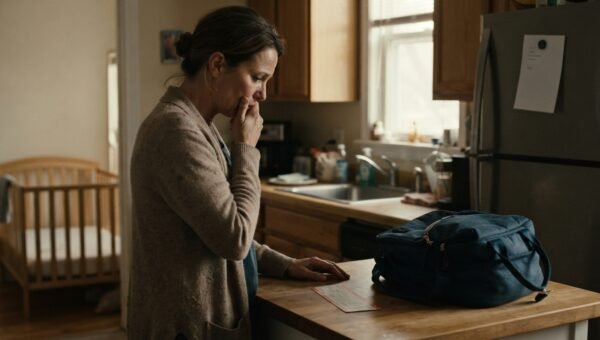
The nurse took my phone away at six in the morning because hospital policy did not allow personal belongings in the prep bay. I remember handing it to her in a little clear plastic bag with my name written across the front in black marker. I had no reason to think that day was anything other than what Dr. Keller told me it was: a routine removal of an inflamed gallbladder that had kept me awake with stomach spasms for three weeks.
When they finally brought my phone back into the recovery room at two that afternoon, the screen showed three missed calls and a voice message from my daughter, Chloe.
I called her back before the anesthesia had completely cleared out of my mouth. My tongue felt thick, and the surgical tape across my right side pulled every time I took a breath.
Chloe answered on the second ring, but she wasn’t asking how I felt. She was crying so hard she could barely get her words out.
“Where were you?” she asked.
“Chloe, honey, I was in surgery,” I said. “They just wheeled me back to the room. I still have the IV in my hand.”
“Don’t do that,” she said, her voice turning cold and sharp in a way I had never heard before. “Do not lie to me from a hospital bed. I called you when my water broke at five this morning.
I called you before they took me back for the epidural. You promised you would be sitting in that waiting room before anyone else got there.”
“I was asleep on an operating table, Chloe,” I told her. “I had surgery scheduled for today.”
“Your surgery was on the schedule for next Tuesday,” she said. “You told me that yourself two weeks ago. You swore you picked a date a full week before my due date so you wouldn’t miss this. And then you didn’t pick up. You didn’t even text.”
“They called me on Monday and said there was an opening,” I told her, trying to sit up against the rough hospital pillows. “They told me Dr. Keller’s schedule moved.”
“You always have an excuse, Mom,” she said. “Every single time something matters to me, something convenient happens to you. Dad got here at six. Dad held my hand through the entire labor.
Dad was the one who bought the baby’s first car seat and waited in the hallway for eight hours.”
“Chloe, please listen to me,” I begged.
“I can’t do this with you,” she said. “I have a newborn baby in my arms, and for once in my life I am not going to let you make it about your drama.”
She hung up.
I called her back twice. Both calls went straight to voicemail. Two days later, I drove over to her house with an eight-pack of newborn onesies, a yellow knitted blanket my own mother had made before she passed, and a small casserole dish wrapped in foil. Her husband, Mark, answered the door. He didn’t invite me inside. He stood in the narrow doorway with his socks on the welcome mat and told me Chloe was nursing and didn’t want any visitors.
“Just give her these,” I said, holding out the bag.
“She said to tell you she needs space, Evelyn,” Mark said quietly.
He looked tired, and he looked uncomfortable, but he took the bag and closed the door until the latch clicked.
I was sixty-two years old, standing on my daughter’s front porch in the middle of a Thursday afternoon with surgical incisions still itching under my waistband, completely shut out.
I told myself she was exhausted. I told myself new mothers are overwhelmed and emotional, and that once the sleepless nights settled into a routine, she would realize I had never abandoned her on purpose. But three months went by without a text. Then six months. Then a year.
Every time I reached out, my messages sat on delivered with no reply. When my granddaughter, Lily, turned one, I mailed a card with a hundred-dollar savings bond inside. The card was never returned, but I never received a thank-you note either.
After eighteen months of silence, the grief turned into a hard, dull knot in my chest. My friends told me to keep pushing, but pushing only made Chloe pull further away. My ex-husband, Richard, posted photos on Facebook every Sunday afternoon: Richard holding Lily at the zoo; Richard sitting on Chloe’s living room rug feeding Lily mashed bananas; Richard with his arm around Chloe at the park.
Richard and I had been divorced for fourteen years. He had walked out when Chloe was sixteen to live in an apartment near the lake, leaving me with a mortgage, two maxed-out store credit cards he forgot to mention, and a teenager who blamed me for the quiet house. For years, he had been the weekend parent who showed up with movie tickets and left before the hard conversations started. Now, according to the pictures, he was the devoted grandfather who never missed a single milestone.
Two years after the surgery, on a Tuesday morning in October, my doorbell rang.
I opened the door expecting the postal carrier. Instead, Chloe was standing on my porch. She was wearing an old gray sweatshirt, her hair pulled into a messy knot, holding a blue hospital billing folder against her ribs with both hands.
“Why didn’t you tell me?” she asked.
PART 2
I stood in the doorway, staring at her face. It was the first time I had seen my daughter up close in seven hundred and forty days. She looked thinner, and the corners of her eyes had small lines that hadn’t been there when she was pregnant.
“Tell you what, Chloe?” I asked.
She didn’t answer right away. She walked past me into the front hall, her sneakers squeaking slightly on the wood floor, and set the blue folder down on my kitchen table.
“I was going through the old files from Lily’s birth,” Chloe said, her voice unsteady. “We’re trying to refinance our house, and the loan officer asked for our medical debt records from 2024 to make sure an old lab bill Mark had was cleared up. St. Jude Regional sent us the entire digital archive for our family account because Mark and I are linked on the hospital’s portal.”
She pulled a printed statement from the blue folder and smoothed it flat on the counter.
“Look at the bottom of the second page,” she said.
I put on my reading glasses. It was an itemized administrative log from St. Jude Regional Outpatient Surgery Center, dated October 12, 2024. Halfway down the page, printed in small monospace type, was an entry under scheduling history:
*Procedure Rescheduled from 10/22/2024 to 10/15/2024. Reason: Patient Conflict. Requested by Authorized Family Contact: Richard Miller. Authorization Phone: (555) 382-9104.*
I stared at the phone number. I had memorized that number in 1994 when we bought our first house together.
“I didn’t authorize this,” I whispered. “Chloe, look at me. I never called them to move that date. When the clinic called me on that Monday, the receptionist told me Dr. Keller’s office had a cancellation and moved my slot up because of my gallbladder infection. She told me the doctor wanted it out right away.”
“I know,” Chloe said. A tear spilled over her lower lid and ran down her cheek. “I called the billing office this morning before I drove over here. I asked them how someone else could reschedule an adult’s outpatient procedure.”
She pulled out another paper from the folder. It was a copy of my old patient intake paperwork from 2018, back when I had a minor wrist fracture treated at the same hospital network. Back then, Richard and I had been divorced for six years, but my old emergency contact card had never been purged from their system. His name was still listed as an authorized primary contact with full medical coordination permissions.
“When you went to the clinic for your pre-op bloodwork two weeks before the birth, they had you verify your emergency contact,” Chloe said, her words coming faster now. “They asked if Richard Miller was still your authorized contact, and the intake worker noted that you said you lived alone now. But she never clicked the button to delete his profile from the master directory. She just checked the box for pending update.”
“How did he even know I had an appointment?” I asked. My hands were shaking so hard I had to rest them flat against the countertop.
“Because he asked me,” Chloe said, covering her face with one hand. “Two weeks before I went into labor, Dad took Mark and me out to dinner at the steakhouse downtown. He asked me how you were doing. He asked if you were stressed about the baby. And I told him you were nervous because you had a gallbladder surgery scheduled for October 22nd, exactly three days before my due date. I told him you were worried you wouldn’t heal in time to help me with the nursery.”
She let out a ragged breath that sounded like a sob caught in her throat.
“He called the hospital the next morning,” Chloe said. “He used his name, he gave your birth date, and he told the surgical coordinator that you were having severe abdominal pain and couldn’t make the 22nd because of a family emergency. He asked them to slide you into the first morning opening they had that week. The first opening was October 15th. The exact morning my water broke.”
“Why?” I asked. The question sounded small and hollow in my quiet kitchen. “Why would he do that to you? You were alone in that delivery room waiting for me.”
“He didn’t do it to hurt me,” Chloe said, looking directly into my eyes. “He did it because he wanted you gone. When he showed up at the hospital at six that morning, he told Mark and me that he had called you on his way over. He told us he offered to pick you up, and that you told him you were too busy getting ready for your own appointments to sit in a waiting room all day.”
I felt the room tilt. For two years, my daughter had believed I chose a morning of errands over her labor.
“He told you I said that?”
“He said those exact words, Mom,” Chloe wept. “He sat by my bed and held my hand and said, ‘Don’t worry, honey. Your mother has always had trouble putting other people first. But I’m here. You have me.'”
She reached across the counter and touched my wrist. Her fingers were warm and trembling.
“And that’s not even the worst part,” she said.
PART 3
Chloe took a deep breath, pulled a third paper from the folder, and laid it directly over the scheduling log.
“When I saw the phone number on that statement this morning,” she said, “I got in my car and drove straight to Dad’s house. I didn’t call first. I used my key, walked into his kitchen, and put this billing record on the breakfast bar while he was drinking his coffee.”
“What did he say?” I asked.
“At first, he tried to laugh it off,” Chloe said. “He told me the hospital must have made a data entry error. He said old computer systems mix up family files all the time. But I told him I had already spoken to the patient advocacy director at St. Jude, and that the phone call where he changed the date was logged on a recorded administrative line from his cell number. Once I said the word ‘recorded,’ his face changed completely.”
She leaned against the counter, her shoulders dropping.
“He admitted it, Mom. He didn’t even apologize. He stood there in his kitchen and told me that you had twenty years of being the primary parent, and it was his turn. He said you were going to dominate the entire birth, that you would take over the nursery, and that the baby would bond with you first just like I did when I was little. He said he earned the right to be the grandparent who mattered.”
I looked at the third sheet of paper Chloe had placed on the table. It wasn’t a billing statement. It was a printout of an intake nurse’s internal clinical notes from St. Jude Outpatient Surgery, logged at 6:45 AM on October 15, 2024.
*Caller (Richard Miller, ex-husband/authorized contact) contacted prep desk at 06:15 to confirm patient arrival. Caller stated patient (Evelyn Miller) experiences severe pre-procedure anxiety and requested staff collect all personal items and cellular devices immediately upon check-in to prevent patient from becoming agitated or calling family members. Caller requested staff advise patient to rest quietly without outside phone distractions until discharge.*
The room seemed to go completely still.
“He called the floor while I was checking in,” I said, reading the words twice to make sure I wasn’t imagining them. “He told them to take my phone.”
“He knew Mark or I would call you as soon as labor started,” Chloe said, tears running freely down her face now. “He knew that if your phone rang while you were sitting in that waiting area before the IV was in, you would tear that hospital bracelet off your wrist and walk out the front door to come to me. So he told the nurses you were mentally unstable with medical panic and needed your phone confiscated for your own safety.”
The memory hit me with sudden, terrifying clarity. The young nurse at six in the morning had been overly gentle, speaking to me in that quiet, cautious tone hospital staff use when they think a patient is about to have a breakdown. She had insisted on taking my handbag and placing my phone into that plastic bag forty minutes before they even started my IV line, telling me Dr. Keller preferred zero screen stimulation before general anesthesia.
It hadn’t been hospital policy at all. It had been Richard.
“He kept you away from me on the most important day of my life,” Chloe whispered. “He let me hate you for two years. Every Sunday dinner, every time I complained about how much it hurt that you never called, he sat there and nodded. He would pat my shoulder and tell me that some mothers just aren’t cut out for being grandmothers.”
She sank into one of my kitchen chairs, the same chairs she had sat in to do her high school algebra homework, and buried her face in her arms.
I didn’t say anything. I didn’t point out that she should have trusted me. I didn’t remind her of the eighteen months of unread text messages or the birthday cards she never acknowledged. None of that mattered now. The wall that had stood between us for two years hadn’t been built by pride; it had been built by a man who treated our family like a contest he was determined to win.
I pulled out the chair next to her and sat down. I put my hand on the back of her neck, just like I used to do when she was a little girl with a fever, and let her cry until her breathing slowed down.
“What are you going to do?” I asked quietly.
Chloe lifted her head. Her eyes were red, but the uncertainty was gone from her face.
“Mark changed the locks on our house an hour ago,” she said. “I called Dad from my car right after I left his driveway and told him that if he ever steps foot on our property again, I will have the police escort him off. I told him that Lily will grow up knowing who he is, but she will never be left alone in a room with him for as long as I live.”
ENDING
Chloe stayed at my house for three hours that afternoon.
We didn’t fix two years of silence in three hours, but we sat at that kitchen table and went through every single milestone I had missed. She pulled out her phone and showed me video after video: Lily taking her first steps across the living room rug, Lily tasting a lemon wedge for the first time and shivering, Lily singing half the words to a song about a yellow bus.
When Chloe showed me the photo of Lily wearing the yellow knitted blanket coming home from the hospital, my throat tightened.
“Mark saved it,” Chloe said softly. “Even when I was furious with you, Mark wouldn’t let me give it away. He kept telling me that the mother he met when we were dating didn’t seem like the kind of woman who would just abandon her daughter.”
Before she left, Chloe asked me to ride with her to pick up Lily from daycare.
I sat in the passenger seat of her car, watching the familiar streets of our town roll past. My hands rested in my lap, calm for the first time in two years. When we walked into the daycare lobby, a little girl with Chloe’s wide brown eyes and dark curls was sitting on a foam mat, stacking plastic red cups into a crooked tower.
She looked up when the door chimed.
“Lily,” Chloe said, kneeling down on the floor and opening her arms. “Come here, baby. Look who came with Mommy.”
Lily stood up, wobbling slightly on her small sneakers, and ran straight into Chloe’s arms. Then she turned her head and looked at me, her fingers tucked into the hem of her denim overalls. She was shy, the way two-year-olds are around people they only know from framed pictures on a bookshelf.
“This is your Nana,” Chloe said, her voice catching just a little. “She’s going to come over and have dinner with us tonight.”
Lily looked at me for a long moment, then reached down, picked up a single red plastic cup from the floor, and held it out toward my hand.
I took the cup, sat down on the rug beside her, and helped her build the tower back up.