PART 1
For thirty-one years, Arthur and I built a quiet, steady life in our brick-and-siding home on the edge of town. We raised two daughters, paid off our cars, and chipped away at the mortgage until the final discharge letter arrived in the mail like a small, clean victory. When my brother-in-law, Gary, went through his bitter divorce in late autumn, my husband looked across the kitchen table with that soft, burdened look he always got when family trouble came knocking.
“Just for a few weeks, Martha,” Arthur said, his hand resting flat on the laminate counter. “Until he finds his footing. You know how Gary is when he loses his anchor. He’s sleeping on a cot in his friend’s den. We have the guest room. It won’t cost us a dime.”
I agreed because that is what you do when you are married three decades and share a history thicker than blood. I stripped the spare bed, aired out the feather pillows, and cleared half the closet space for Gary’s heavy flannel shirts and duffel bags.
The first month, Gary was quiet. He ate his meals standing at the counter, kept his head down, and mumbled polite thank-yous when I washed his laundry. But by month three, the temporary arrangement had hardened into a permanent fixture. Gary’s boots lived permanently by the back door, tracking in winter slush and red clay.
His mail piled up on the sideboard—collection notices from credit card companies, medical bills, and envelopes from local auto lenders. When I asked Arthur when his brother might start looking at apartments or rental listings, Arthur always had a smooth, practiced excuse.
“The rental market is dead right now, Martha,” he would say, staring hard at the evening news. “Prices are outrageous. Give him until spring. He’s trying to get his landscaping business off the ground again.”
Spring came and went, bringing humid June heat and no change in our household dynamic. By August, nine full months after Gary walked through our front door with two trash bags of clothes, I had reached the breaking point. The final straw wasn’t grand or dramatic. It was simply Gary leaving the refrigerator door wide open after midnight, letting the compressor hum uselessly while spoiled milk curdled in the door bin, combined with the fact that he used my favorite cast-iron skillet to scrape paint off a window sash.
I cornered Arthur in the hallway while Gary was out running errands. My voice was lower than I intended, vibrating with a fatigue that had settled deep into my bones.
“Arthur, this has to end,” I said, crossing my arms tight against my chest. “Nine months is not a few weeks. He has a truck, he has hands, and he’s been taking cash jobs for months. You need to sit him down tonight and give him a firm move-out date. Thirty days. End of September. That is final.”
Arthur didn’t nod the way he usually did when he wanted to appease me. Instead, his jaw locked, and a dark, defensive flush crept up his neck. He looked at me with a sudden, sharp anger that felt entirely out of proportion to a conversation about a guest room.
“He has nowhere else to go, Martha,” Arthur snapped, his voice tight and trembling slightly. “You have no idea what you’re asking. Drop it.”
“I am not dropping it,” I fired back, my own temper flaring. “This is my home too. I want my house back.”
He turned and walked away down the hall, leaving me standing alone in the dim light. I spent the rest of the evening simmering with quiet resentment, convinced Arthur was simply too weak-willed to set boundaries with his family. But two nights later, the nature of that weakness shifted from ordinary brotherly loyalty into something cold, heavy, and terrifying.
PART 2
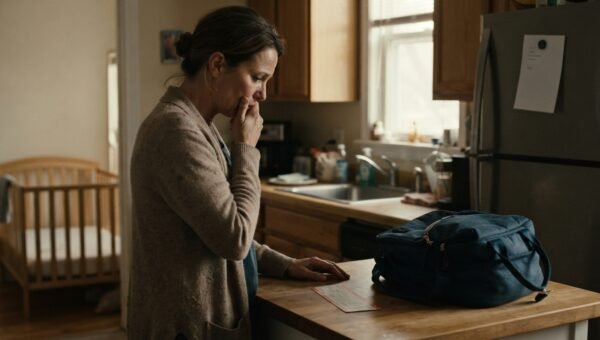
It was past midnight when I woke up thirsty. The house was dark, save for the pale amber glow of the digital clock on the microwave. As I padded down the hallway toward the kitchen in my bare feet, I noticed a thin line of yellow light spilling out beneath the basement door and onto the hardwood floor.
At first, I thought Arthur had left the laundry room light on again. But as I drew closer, I heard the low, urgent murmur of voices coming from the garage workshop area beneath the main floor. Arthur and Gary were down there, talking in tense, hushed tones that carried right up through the floor joists.
I didn’t mean to eavesdrop, but the sheer urgency in Gary’s voice stopped me dead in my tracks on the cold tile of the kitchen.
“You’re going to have to tell her eventually, Artie,” Gary hissed, his voice carrying a harsh, ragged edge. “She’s already breathing down my neck about the room. If she keeps pushing to sell or refinance to help out the girls, this whole thing blows up in our faces.”
I froze. My hand hovered over the refrigerator handle.
“Keep your voice down,” Arthur hissed back, sounding panicked. “She doesn’t suspect anything. She thinks we paid the mortgage off fair and square just like we planned.”
“Yeah, well, you promised her she would never find out who really owns the house,” Gary shot back, his boots scuffing hard against the concrete floor. “You can’t hide a thirty-thousand-dollar encumbrance forever, Artie. Especially not when the payments are due.”
My heart hammered against my ribs like a trapped bird. The blood rushed in my ears, drowning out the ambient hum of the house. I didn’t wait to hear another word. I pushed the side door open and stepped right into the glare of the overhead fluorescent lights.
Both men jumped as if they had been struck by lightning. Arthur went completely pale, his mouth opening and closing soundlessly. Gary stepped back, his hands raised slightly as if warding off a physical blow.
“What does that mean?” I asked. My voice sounded unnervingly calm, like glass ready to shatter. “What did you just say about who owns this house?”
Arthur swallowed hard, wiping his sweaty palms down the front of his gray work pants. “Martha. Honey. It’s not what you think. Let’s just go inside—”
“No,” I said, stepping further into the garage and blocking the exit. “You said someone else owns the house. Explain it right now, or I call the sheriff from my cell phone this second.”
Gary let out a harsh, bitter breath, shaking his head. He looked at Arthur with a mixture of disgust and exhaustion. “I told you, Artie. You can’t keep lying to a woman who manages every bill in this house.”
PART 3
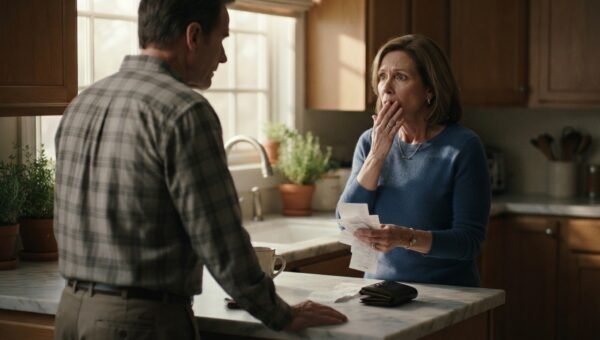
The sun hadn’t even crested the horizon the next morning when I sat down at the kitchen table with my laptop. Arthur was sitting across from me, looking smaller than I had ever seen him, his shoulders hunched forward as if he were carrying a wet wool coat. Gary had left early, claiming he had an early job site, but his truck was still parked dead in the middle of the driveway.
I bypassed Arthur entirely, logging directly into the county recorder of deeds public portal using our old property ID number. My hands were shaking so badly I had to re-type my password three times.
I pulled up our original closing documents from thirty-one years ago, scanning down the pages until I saw our names listed as grantors and grantees just as I remembered. But then I clicked on the active encumbrances tab—a section I had never had reason to open since we finished paying our primary mortgage note five years ago.
There it was, recorded digitally on the exact same afternoon we signed our purchase papers back in the nineties. A private lien. The amount was thirty thousand dollars. Exactly matching the down payment we had used to secure the house loan.
The lienholder wasn’t a bank. It was a private trust bearing the name of Gary’s former father-in-law, a wealthy local contractor who had passed away two decades ago.
I turned the laptop screen around so it faced Arthur. The glowing light reflected in his tired, bloodshot eyes.
“Care to tell me why Gary’s ex-family financed our down payment behind my back?” I asked, my voice dangerously steady. “And why there’s a balloon payment attached to it that’s about to trigger?”
Arthur pressed the heels of his hands into his eyes, letting out a long, ragged sigh that sounded like defeat.
“We didn’t have the cash for the twenty percent, Martha,” he whispered through his fingers. “Not back then. My credit was ruined from the truck dealership failure. Gary went to his father-in-law, old man Henderson, and begged him for the loan. Henderson agreed, but only under the table, and only if Gary’s name was secretly tied to the equity as a silent partner to protect the principal.”
“A silent partner,” I repeated, the words tasting like ash in my mouth. “In *my* home. The home I worked fifty hours a week at the hospital to help pay off.”
“It was supposed to be temporary,” Arthur pleaded, reaching out a trembling hand toward mine. “Gary was supposed to pay it off in five years with his business profits. But he defaulted. Year after year, he rolled the interest over. And when Henderson died, the trust passed to his estate. Two months ago, the estate executors finally caught up with the ledger. They want their thirty thousand dollars plus accumulated interest, or they start foreclosure proceedings on the lien.”
The room went dead silent. The pieces clicked together with the brutal clarity of a slammed door. Gary hadn’t come to our spare bedroom because he was down on his luck after a divorce. He had come because the estate lawyers were closing in, and Arthur had been secretly draining our joint savings to help him make interest payments so I wouldn’t find out the roof over our heads was half-owned by a ghost from Gary’s past marriage.
ENDING
I didn’t scream. I didn’t throw plates or shatter coffee mugs against the drywall. Anger that deep and cold doesn’t waste itself on noise.
I stood up from the kitchen table, closed the laptop with a crisp snap, and walked straight to the front hallway. I grabbed Gary’s heavy canvas duffel bag from the coat closet, opened the front door, and walked out onto the porch.
Gary’s truck was idling in the driveway—he must have come back while we were talking, listening from the porch. He stepped out of the cab, looking defensive and uncomfortable.
I hurled the duffel bag off the porch steps, watching it land with a dull thud in the wet grass.
“You have twenty minutes to get your tools, your truck, and every last one of your belongings off this property,” I said, my voice cutting through the morning air like a razor. “If you aren’t gone by eight o’clock, I am calling the sheriff to enforce the trespassing laws on a property where your secret lien doesn’t grant you a single square inch of residency.”
Gary opened his mouth to argue, saw the look in my eyes, and thought better of it. He turned on his heel, slammed his truck door, and backed out of the gravel drive so fast his tires spun.
I walked back inside, locking the solid oak front door with a firm, double click of the deadbolt. Arthur was still sitting at the kitchen table, staring down at his empty coffee cup.
“We’re selling the house, Arthur,” I said, pulling out my phone to call a real estate attorney whose name I trusted. “You can give Gary his share of whatever is left after the estate gets paid off, and you can find your own apartment. Because as of today, I am buying out my own life, and you are no longer part of the collateral.”