PART 1
The comments started small back in May, usually right after Sunday dinner while we were clearing the table. My daughter-in-law, Brenda, would look at my son, Kevin, and give a tight little sigh if I asked where the extra napkins were. Within two months, she was telling the neighbors by the mailbox that I had left the electric kettle on twice.
I knew I hadn’t. My memory wasn’t what it was at forty, but at sixty-eight I still balanced my checkbook to the penny and worked three mornings a week at the community library circulation desk.
Yet when someone you love looks at you with rehearsed pity, you begin to inspect yourself in every mirror. You wonder if you did leave the side gate unlatched, or if you really did forget an appointment you have no recollection of making.
By late July, Kevin dropped by on a Tuesday evening without calling first. He stood in my kitchen, jingling his car keys in his jacket pocket, looking everywhere except directly into my eyes. He told me they had been talking about my living situation, and he thought it was best if he held onto my spare set of house keys for safety. When I hesitated, he put a heavy hand on my shoulder and said, “Mom, nobody wants something terrible to happen because you’re too proud to accept a little help.”
I handed them over. The shame made my stomach hurt for three days.
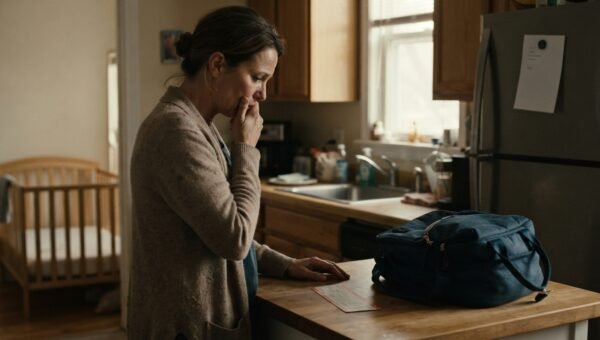
Then came the second week of August. I went to get milk for my morning tea and noticed a small yellow sticky note stuck flat against the side of the refrigerator, tucked right under the magnetic calendar from the hardware store.
It was written in blue ballpoint ink, in a neat, slanted handwriting that was completely unfamiliar to me:
Don’t sign anything Thursday.
I pulled the square of paper off the enamel. I stared at it until my tea went cold on the counter. Nobody had been inside the house besides Kevin, Brenda, and the teenager from down the block who mows the lawn every other Saturday, and he never steps past the porch.
I turned the paper over. On the back, written smaller and pressed hard enough to dent the paper, was a ten-digit phone number with a local area code.
I spent Wednesday in a quiet fog, walking through the rooms of the home I had lived in for thirty-four years, running my fingers along the doorframes. I kept checking the deadbolt Kevin had insisted on taking the spare key for.
On Thursday morning at nine sharp, Kevin’s gray crossover pulled into my driveway.
Brenda got out first, carrying a thick black leather portfolio under her arm. Right behind them was a tall woman in a navy pantsuit holding a notary stamp box and a clipboard.
Kevin didn’t knock. He used the key he had taken for my safety, letting all three of them straight into my foyer.
“Mom,” Kevin called out, his voice loud and artificially bright. “We brought Rachel from the mobile notary service. We’re going to get everything squared away today so you don’t have to stress about managing the property taxes or the utility accounts anymore. It’s just simple paperwork to simplify your routine.”
Brenda smiled, unzipping the folder on my dining room table. “It will only take five minutes, Clara. Then we can take you to the garden center for lunch.”
My hands started shaking. I stepped back toward the hallway. “I need to wash my face first,” I told them. “Give me two minutes.”
I slipped into the downstairs half-bathroom, turned the lock on the knob, and shut the door until the latch clicked into place. My chest felt tight. I pulled the crumpled yellow note out of my cardigan pocket, smoothed it against the edge of the sink, and dialed the number on my cell phone.
It rang twice before a steady, calm female voice picked up.
“Mrs. Ellis,” the woman said, without waiting for me to speak. “I’m Sarah Miller. I’m a fraud investigator with First National Bank. Do not unlock that door, and do not put your pen to those papers. Someone has spent the last three weeks practicing your signature on your equity accounts.”
PART 2
The small bathroom felt cold despite the summer heat outside. I leaned my hip against the porcelain sink and kept my voice down to a whisper.
“How did you get a note inside my house?” I asked.
“Your branch manager, Marian, called my desk on Monday,” Sarah Miller said. “She noticed three separate withdrawal slips flagged for signature variance over the past twenty days. When Marian called your home phone on Tuesday afternoon to verify an inquiry about a $150,000 home equity line, a younger woman answered, claimed you were resting because your dementia was progressing, and asked for the application forms to be emailed to her instead.”
Sarah paused, letting me hear the quiet rustle of files on her end of the line.
“Marian has known you for fifteen years, Mrs. Ellis. She knew your late husband, Arthur. She knew you wouldn’t take out an equity loan against a paid-off house without walking into the branch yourself. Marian drove over to your house yesterday while you were at your library shift. She knew the lock on your back porch screen was loose. She left that note on your fridge because she was terrified your son was monitoring your calls.”
Through the bathroom door, Kevin’s knuckles hit the wood twice. “Mom? Are you alright in there? Rachel has another appointment across town at ten. We need to get this done.”
“I’m drying my hands, Kevin,” I called back. My voice wavered, but it was loud enough to carry through the paneling. “Give me just a second.”
“Listen to me carefully,” Sarah said into my ear. “The notary standing in your dining room is legitimate, but she doesn’t know what’s in that folder. Your daughter-in-law contacted a private mobile agency yesterday afternoon. She prepared a statutory durable power of attorney and a quitclaim deed transferring your home into an LLC registered under Brenda’s maiden name. If you sign those documents before that notary stamps them, they can record the deed at the county clerk’s office by noon. Once that happens, undoing it requires months in court.”
“Why would Kevin do this?” I whispered. “He’s my only child.”
“Kevin has three defaulted business loans on his auto detailing shop,” Sarah replied plainly. “The bank initiated foreclosure proceedings on his personal residence two weeks ago. He owes $218,400 across two commercial lenders, and the sheriff’s sale is scheduled for the first of next month.”
The number hit me like a physical blow. Kevin had told me back in April that his business was expanding. He had bragged about hiring two new mechanics. He had let me cook Sunday roast every weekend while he sat on my sofa, smiling, drinking sweet tea, and planning how to strip the roof from over my head to cover his debts.
“What do I do?” I asked Sarah.
“Open the door, walk into the dining room, and ask the notary to read the document title out loud,” Sarah instructed. “I am sitting in my car three houses down your street right now with Detective Ramirez from the elder protection unit. We saw them pull up. We are walking up your driveway.”
I ended the call and tucked the phone back into my sweater. I unlocked the door and pulled it open.
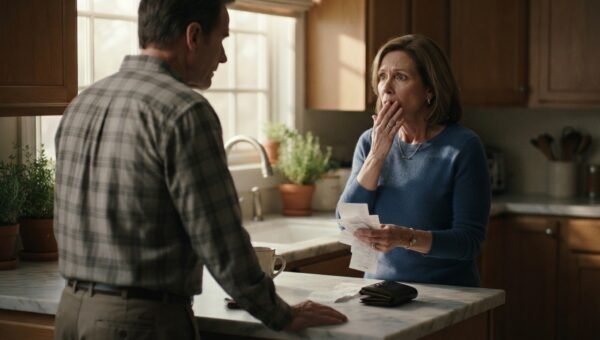
Kevin was standing in the hall, holding a blue ballpoint pen out toward me. Brenda was already sitting at the head of my table, tapping her manicured nails against the open leather folder.
“There you are,” Brenda said, her smile not reaching her eyes. “Let’s get through this, Clara. Just three signatures where the yellow tags are, and we’ll handle the rest.”
PART 3
I walked past Kevin without looking at the pen he was holding. I walked directly over to the dining table and stood on the opposite side, facing the notary.
Rachel looked uncomfortable. Her official seal sat on top of a heavy black ledger, and she was watching Brenda with a slight furrow in her brow.
“Rachel,” I said, keeping my hands resting flat on the mahogany table. “Would you please read the heading on that first document for me? Kevin told me this was to simplify my utility bills.”
Brenda’s hand immediately shot across the table, covering the top sheet of paper. “Clara, don’t be difficult. We discussed this on Sunday. You’re getting overwhelmed by small details, and it’s making you paranoid.”
“Let her read it,” I said.
Rachel reached out, sliding Brenda’s hand aside with firm, professional distance. She turned the first page toward me and adjusted her reading glasses.
“This is an irrevocable quitclaim deed,” Rachel said clearly. “It conveys the residential parcel at 414 Elm Street from Clara Mae Ellis to Oak Ridge Holdings LLC for the sum of ten dollars and other valuable consideration. The second document is a general durable power of attorney granting full financial control to Brenda Vance.”
The room went dead silent. The grandfather clock in the corner ticked twice.
“Kevin,” I said, turning to look at my son. “Is your business in foreclosure?”
The color drained from his cheeks. His jaw tightened, and his eyes darted from me to Brenda, then down to the carpet. “Mom, nobody was going to take the house from you. We were just going to take an equity draw to bridge the gap until the commercial contract cleared. We would have made the monthly payments. You never would have known the difference.”
“You took my keys,” I said. The words came out quiet and steady. “You let your wife tell the neighbors I was losing my mind so nobody would question why you were handling my affairs.”
“We didn’t have a choice!” Brenda snapped, her voice suddenly shrill in the quiet house. “Do you have any idea what happens to us if the bank takes our house? You’re sitting on three hundred thousand dollars of paid-off equity that you don’t even use! You live in this big house all by yourself while your son is drowning!”
Before Kevin could answer, the front screen door opened.
Detective Ramirez walked into the foyer, his badge clearly visible on his belt, accompanied by a woman in a gray trench coat holding a leather briefcase.
Rachel, the notary, immediately packed her stamp back into its plastic case, snapped her ledger shut, and stood up. “I am terminating this signing immediately. This appointment was misrepresented to my agency.”
Kevin took two steps backward into the living room, his hands half-raised. “Officer, this is a private family misunderstanding. Nobody has done anything illegal.”
“Mr. Ellis,” Detective Ramirez said, stepping between Kevin and the table. “We have surveillance footage from the First National drive-through from last Friday, showing your wife attempting to deposit a cashier’s check using an altered signature card. We’d like both of you to step outside and speak with us.”
Brenda grabbed her designer purse off the chair, her face flushed red with anger, but Detective Ramirez placed himself firmly in front of the door.
“Outside,” he repeated.
Kevin looked back at me once from the front porch. His shoulders were slumped, his eyes filled with a miserable mixture of guilt and panic. “Mom, please,” he muttered.
I didn’t answer him. I stood by my dining room window and watched them stand beside the patrol car in the August sun while Sarah Miller came inside and sat down at the table with me.
ENDING
We sat together for nearly an hour while Sarah went through my bank statements. She had brought duplicate copies from the branch, showing the three withdrawal attempts that Marian had blocked.
Brenda hadn’t managed to pull any money out yet, but she had been close. The bank immediately placed a protective fraud lock on all my accounts, requiring my physical presence and photo identification for any transaction over five hundred dollars.
The county prosecutor’s office spent the autumn reviewing the case. Because the deed was never executed and the forged withdrawal slips had been caught by Marian before the funds were disbursed, the criminal charges were eventually reduced to attempted grand larceny and fraud. Kevin and Brenda took a plea deal that put Brenda on three years of supervised probation, along with mandatory community service and restitution for the administrative fees the bank incurred.
Kevin lost his business anyway. The auto shop closed its doors in October, and their house was sold at auction two weeks before Thanksgiving. They moved into a rented two-bedroom apartment forty miles north, near Brenda’s family.
Kevin called me once, right around Christmas. He called from an unfamiliar number, his voice sounding tired and thin through the receiver. He asked if he could come by, just for half an hour, to talk without Brenda there.
I sat in my favorite armchair by the window, looking at the snow settling on the hydrangeas in the front yard. I thought about the months I spent doubting my own mind, checking the stove four times a night, wondering if I was slipping away. That was the part that wouldn’t heal. Losing money would have been terrible, but making me feel like my own mind was betraying me was something I couldn’t brush aside with a holiday dinner.
“No, Kevin,” I told him gently. “Not right now.”
“Mom, I’m still your son,” he said.
“I know you are,” I replied. “And that is why it hurts as much as it does.”
I hung up the telephone and let the house stay quiet.
The next morning, I took the bus downtown to the First National branch. I brought Marian a box of lemon shortbread cookies from the bakery near the library, and we sat in her small glass office while she helped me set up an independent trust for the property with a local legal aid attorney.
When I got home, I walked into the kitchen and made myself a fresh pot of tea. The yellow sticky note was gone, but the little square magnet from the hardware store was still holding my calendar on the refrigerator door.
I reached into my purse, took out the new deadbolt keys the locksmith had handed me that morning, and set them right on the center of the kitchen counter where they belonged.