PART 1
The dentist told me the tooth was cracked clean to the root, and pulling it plus doing the bone graft would run exactly $900 out of pocket.
My fixed income after my husband, Richard, died four years ago doesn’t have much slack. I get my modest pension and Social Security, which keeps the lights on in our small ranch house on Maple Street, but a surprise bill like that meant choosing between groceries and fixing an infection.
I didn’t want to ask my son, Mark. A mother never wants to hold her hand out to her grown child. But he runs an equipment rental firm that he always claimed was thriving, and I felt desperate.
When I called him on a Tuesday morning, he sighed into the phone. He said business had been slow all winter, payroll was tight, and every dollar he had was tied up in parts inventory.
“Mom, I just don’t have $900 sitting around right now,” Mark told me. “If I had it, you know I’d give it to you. Can’t you just ask the clinic for a monthly payment plan?”
I swallowed hard and told him I understood. I felt guilty for even putting pressure on him. I put the $900 on an old credit card with a high interest rate, bought some soft soup, and tried to forget about the embarrassment.
Six days later, on a Sunday afternoon, I was scrolling through Facebook and saw twenty photos uploaded by my daughter-in-law, Courtney. It was their tenth anniversary party. They had rented out the private courtyard at a downtown steakhouse. There were floral arches, an open bar, custom wine glasses printed with their names, and a hired three-piece band. A party like that easily cost five or six thousand dollars.
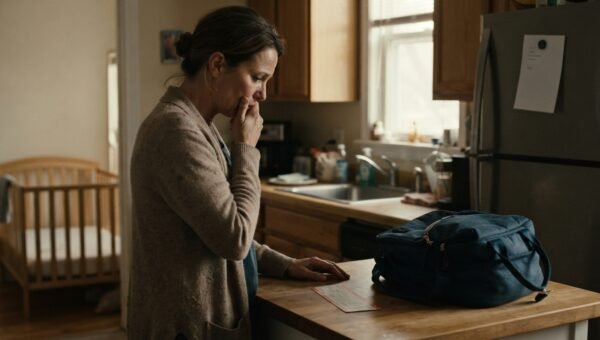
I sat at my kitchen table with an ice pack pressed against my swollen jaw, staring at the bright photos on my tablet. Mark was holding up a glass of champagne, laughing next to his friends. I felt a quiet ache in my chest, but I stayed quiet. I told myself it was Courtney’s money, or maybe her parents had chipped in. I didn’t want to be the bitter mother-in-law who counted other people’s pennies.
Four weeks went by. The credit card bill came in the mail, and I sent in my minimum payment of forty dollars.
Then Mark called me out of nowhere. His tone wasn’t tired or dismissive like before. He sounded hurried, overly cheerful, the way he used to sound in high school when he needed me to sign a permission slip he had forgotten about.
“Mom, I need a small favor,” he said, talking fast. “I’m expanding the rental yard to pick up a big commercial contract. The bank is approving a $75,000 line of credit, but because I opened a new corporate entity last tax year, their automated underwriting flagged it for a secondary guarantor. It’s just a formality. Standard paperwork. We just need to pop into the branch on Elm Street and put your signature down so they can release the funds.”
I gripped the receiver. “You want me to cosign a loan, Mark?”
“It’s not a real loan you have to pay, Mom. It’s just backing my credit line for six months until the seasonal revenue posts. I’ll take you to lunch right after.”
“No,” I said. The word came out before I could soften it.
The line went completely quiet for several seconds. When Mark spoke again, all the warmth was gone.
“What do you mean, no?”
“I mean I can’t do that. I don’t have the money to back seventy-five thousand dollars if something goes wrong. And I’m still paying off that $900 tooth on a credit card because you said you were broke.”
“Are you serious right now?” His voice climbed in pitch. “You’re holding a tooth over my head when I’m trying to build a future for my family? That anniversary party was booked eight months ago, Mom. You’re being completely selfish. You sit alone in that paid-off house doing nothing, and the one time your own flesh and blood asks for a signature that costs you zero dollars, you turn your back on me?”
He hung up hard.
For two days, he sent angry texts accusing me of favoring his older sister who lives in Ohio, calling me stubborn, telling me I was sabotaging his life’s work. By Thursday afternoon, my stomach was in knots. The guilt was eating me alive. I couldn’t sleep. I hated the thought of my son hating me.
I called him back and said I would meet him at the First Community Bank branch just to look at the paperwork and hear what the banker had to say.
Mark was already waiting in the lobby when I walked in. He had a travel mug of coffee, wearing his good company polo shirt. He gave me a quick, stiff side-hug that felt more like a pat on the back, avoiding eye contact.
“Thanks for coming to your senses, Mom,” he muttered. “This will take ten minutes.”
A loan officer named Sarah Miller called us back into a corner office. She was a professional woman around my age with silver-streaked hair and reading glasses hanging on a chain. She had a thick manila folder open on her desk.
Mark leaned across the desk, all smiles. “Sarah, good to see you again. This is my mother, Evelyn. We’re ready to add her as the secondary guarantor on the equipment schedule and wrap this up.”
Sarah looked down at the folder, then glanced up at me. Her eyes lingered on my face for a second longer than normal.
“Mrs. Vance,” Sarah said evenly, “before we execute any guaranty instruments, the Patriot Act and our bank compliance regulations require me to review the co-borrower disclosure and financial privacy notices with you individually.”
Mark stiffened in his chair. “Wait, why? We didn’t do that with the preliminary intake. She’s just cosigning.”
“It is standard procedure when an individual guarantees a commercial facility, Mark,” Sarah said, her voice completely calm and unyielding. “I just need five minutes with your mother. You can help yourself to fresh coffee in the waiting area.”
Mark shifted on his feet, his jaw tightening. He looked at me, then at the banker. “Don’t take all day. I have contractors waiting at the shop.”
The moment the office door clicked shut behind him, Sarah took off her glasses. She didn’t hand me a pen. Instead, she reached over, gripped the corner of her computer monitor, and turned the screen around so it was facing me directly.
“Mrs. Vance,” she said quietly. “Did your son explain the current structure of this application to you?”
“He said he was the only applicant,” I replied, my hands shaking a little in my lap. “He said he just needed me as a backup signature.”
Sarah shook her head. On the screen was the bank’s underwriting portal. Under the section labeled *Primary & Secondary Applicants*, Mark’s name was listed on the left. But on the right, under *Primary Co-Applicant*, there was already a second name attached.
It wasn’t Courtney.
It was Brenda Vance.
My stomach dropped into a cold pit. Brenda was my late husband Richard’s estranged sister. We hadn’t heard a single word from her since Richard’s memorial service four years ago, when she caused an ugly scene in the funeral home parking lot demanding Richard’s vintage truck.
Beside Brenda’s name on the screen was a current residential address: *1428 Oak Hollow Lane*.
That address hit me harder than the name. For four years, Mark had told me that 1428 Oak Hollow Lane—the rental duplex Richard had bought before he died—had been completely lost to county tax foreclosures and bad debts right after Richard passed.
PART 2
I stared at the glowing letters on the computer screen until they blurred together.
“Is this a mistake?” I asked, my voice barely above a whisper. “Brenda lives out of state. And that property on Oak Hollow… Mark told me the county seized it back in twenty-twenty-two because Richard had unpaid contractor liens on it.”
Sarah folded her hands on the blotter. She looked at me with genuine sympathy, not the rehearsed courtesy of a bank clerk.
“Mrs. Vance, this application was submitted three weeks ago,” Sarah explained. “Mark and Brenda applied jointly as co-owners of Vance Properties LLC. The Oak Hollow duplex is listed as the primary collateral asset for this credit facility. According to the title binder attached to the file, the property generates $2,400 a month in gross rental income. It was never foreclosed.”
The room felt suddenly close, like all the air had been pulled out of it.
Four years ago, when Richard died suddenly from a stroke, I was in a fog of grief and confusion. Richard had always handled our investments and rental properties. When Mark stepped in to help me sort through the filing cabinets in Richard’s home office, I had trusted him completely. Mark had come to my kitchen table with a stack of papers and a grave expression, telling me that Richard had made bad private loans and that the Oak Hollow house was underwater with back taxes and mechanic’s liens. He had told me to let it go so the creditors wouldn’t come after my house on Maple Street.
I had signed whatever quitclaim and administrative waivers he put in front of me, believing my son was protecting his widowed mother from bankruptcy.
“If Brenda is already the co-applicant,” I said, trying to steady my breath, “why did he bring me here today?”
Sarah clicked her mouse and brought up the underwriting conditions tab. A red warning banner flashed across the top of the page.
“Yesterday morning, our risk department ran an updated judgment search,” Sarah said. “A $42,000 personal tax warrant was filed against Brenda Vance in county court three days ago. That immediately disqualified her as an eligible guarantor. Under our commercial guidelines, the loan cannot close unless a substitute guarantor with clear credit and clean real estate equity replaces Brenda’s position on the note. Mark isn’t asking you for a casual signature, Mrs. Vance. If you sign this agreement, you are pledging your home on Maple Street to cover a business venture already tied to an unencumbered property you thought was gone.”
The pieces didn’t just fit together; they slammed into place with bruising clarity.
He couldn’t help me with my $900 dental bill because he didn’t care to spare it. He had enough cash flow from Richard’s hidden rental property to fund lavish anniversary parties, but when his shady business partner’s debts threatened his bank loan, he ran to me, guilt-tripped me, called me selfish, and tried to trick me into putting my only shelter on the chopping block.
“What happens if I don’t sign?” I asked.
“The application is denied,” Sarah said simply. “The file will be closed for failure to meet underwriting conditions.”
“Can I have copies of these pages?”
Sarah hesitated for a fraction of a second, then nodded. “You have a legal right to see any application document where you are named as a proposed guarantor.”
She hit print. The small laser printer behind her desk whirred to life, spitting out four crisp sheets: the joint commercial application, the LLC ownership schedule showing Mark and Brenda as equal fifty-percent members, the title summary for Oak Hollow Lane, and the guarantor pledge agreement that would have encumbered my house.
I folded the papers neatly, placed them inside my leather handbag, and zipped it shut.
“Thank you, Sarah,” I said.
“Are you all right to walk out there, Mrs. Vance?”
“I’m better than I’ve been in four years,” I told her.
I opened the office door. Mark was pacing by the water cooler, tapping on his phone. When he saw me emerge, he shoved the phone into his pocket and hurried over, a smug, relieved grin spreading across his face.
“All set?” he asked, reaching for my elbow to guide me toward the exit. “See? I told you it was just routine nonsense. Come on, I’ll buy you that chicken salad sandwich down the street.”
I pulled my arm back from his touch.
“We need to go to your truck, Mark,” I said, keeping my voice entirely level. “Right now.”
His smile flickered and died. “What’s the matter with you? Did she make you sign or not?”
“Walk to the parking lot,” I said.
PART 3
The afternoon sun was bright and harsh against the asphalt. Mark unlocked his heavy black pickup, and we both got into the cab. He slammed his door, clearly irritated.
“Mom, what is your problem? Did you sign the paperwork?”
Instead of answering, I reached into my purse, pulled out the four printed pages, and dropped them onto the center console between our seats.
Mark glanced down. When he saw the title sheet for Vance Properties LLC and the address for Oak Hollow Lane, the color drained from his face so fast it looked like someone had pulled a plug.
“Where did you get this?” he demanded.
“Sarah Miller,” I said. “She turned the screen around, Mark. She showed me who your partner is.”
He stared at the papers, his fingers twitching against the steering wheel. For three or four seconds, he couldn’t find a single word. The arrogance he had carried into the bank was completely gone, replaced by the ugly, cornered panic of a child caught red-handed.
“Mom… look,” he started, his voice cracking slightly. “You don’t understand the legal side of this. It’s complicated.”
“Explain it to me then,” I said. “Explain how the house your father bought with our life savings—the house you told me was seized by the county four years ago—is currently sitting in an LLC with your name and Brenda’s name on it, pulling in twenty-four hundred dollars every single month.”
“Dad owed Aunt Brenda money!” he blurted out, grasping for an excuse. “Years ago, before he got sick, he borrowed cash from her for equipment and never paid her back. When he died, she threatened to sue the estate. She was going to drag you into probate court and take everything! I made a deal with her to protect you!”
“You made a deal to protect yourself,” I said, staring directly into his eyes. “If Richard owed Brenda money, there would have been a promissory note. There would have been a claim against the estate. But there wasn’t one. You brought me quitclaim deeds when I couldn’t even think straight after his funeral. You lied to my face, Mark. You stole your father’s rental house, gave half to the woman who disgraced his memorial, and pocketed the rest.”
“I took care of all the maintenance!” he shouted, turning red in the face. “I managed the tenants! I put the work in! You couldn’t have handled running that place alone, Mom! You would have lost it anyway!”
“And when I couldn’t chew my food because of a cracked tooth,” I continued, cutting straight through his shouting, “you told me you didn’t have nine hundred dollars. You watched me take out a credit card with twenty-four percent interest while you drank champagne in a private courtyard downtown. And then you brought me into this bank to sign away my home so Brenda’s tax debt wouldn’t ruin your business deal.”
“I was going to pay the loan payments!” Mark slammed his fist against the steering wheel. “I would never have let them touch your house! Why can’t you ever just trust me?”
“Because you are a thief,” I said.
The cab of the truck fell dead silent.
That word hung in the hot air between us like lead. In thirty-four years of raising him, I had never called him a names. I had excused his temper, paid for his mistakes, smoothed over his arguments with his sister, and convinced myself that his coldness was just stress from work. But seeing the paper with Richard’s handwriting on the original deed reference attached to Brenda’s name shattered every excuse I had ever made for him.
“Get out of the truck, Mom,” he whispered, staring straight out the windshield, his jaw trembling with rage. “Just get out.”
“I’m getting out,” I told him. “And you have until Monday morning to call an estate attorney.”
“For what?” he sneered, turning his head back toward me with venom in his eyes. “You signed those deeds four years ago. The statute of limitations on estate claims is past. You gave up your rights. You don’t have a case, and you don’t have the money to fight me.”
“Maybe,” I said, opening the passenger door and stepping down onto the pavement. “But Sarah Miller kept a copy of this file. And tomorrow morning, I’m taking these papers to the county recorder’s office, the state licensing board, and the IRS to see if Brenda’s tax warrant matches the income reported on that LLC. Let’s find out how solid your paperwork really is when someone besides your grieving mother looks at it.”
I slammed the heavy truck door shut.
Mark didn’t wait. He threw the truck into reverse, the tires squealing against the asphalt, and sped out of the bank parking lot without looking back.
ENDING
I didn’t hire an expensive lawyer because Mark was partially right about one thing: a full courtroom trial would have drained whatever small savings I had left.
Instead, I called my daughter, Karen, in Ohio that evening and told her everything. She took the first flight out the next morning. Karen didn’t yell, and she didn’t panic. She is an accountant for a logistics company, and she knows how numbers and paper trails work.
Together, we went to the county courthouse on Friday afternoon. We pulled the original transfer documents from four years ago. It took Karen less than an hour to spot the fatal flaw in Mark’s scheme. When Mark had me sign the quitclaim deeds after Richard’s death, he had signed them as the executor of Richard’s estate before the probate court had officially granted him letters of administration. The transfer had been legally defective from day one.
Karen called Mark on speakerphone from my kitchen table on Saturday morning. Her voice was cold, professional, and ruthless.
“You have two choices, Mark,” Karen said into the phone. “Option one is that you and Aunt Brenda voluntarily dissolve Vance Properties LLC and transfer one hundred percent of the Oak Hollow property into a clean revocable trust under Mom’s name alone. Option two is that Mom files a formal complaint for probate fraud, and I hand our audit packet to the county prosecutor and the bank’s fraud division. You’ll lose the equipment business, your contractor’s license, and you’ll probably face criminal charges.”
Mark tried to bluster. He cursed, he yelled, and he blamed Courtney. But Karen didn’t flinch. She gave him forty-eight hours.
On Tuesday afternoon, we met in a neutral title company office downtown. Brenda didn’t even show up; she had signed her portion over to Mark via an emergency power of attorney the night before, terrified of having her county tax warrants scrutinized any further.
Mark sat across the conference table with dark circles under his eyes, his signature jerky and sharp as he signed the deed transfer and dissolution agreements. He didn’t look at me once. He didn’t say goodbye when he picked up his car keys and walked out into the corridor.
The Oak Hollow duplex is now held safely in my family trust, managed by a licensed property company that handles the tenants and deposits the net rental income directly into my account every month.
The first check that cleared was for $1,950 after property management fees.
The very next morning, I drove over to the dental clinic. I stood at the reception counter, took out my debit card, and paid off the remaining $860 balance on my cracked-tooth procedure in full.
I haven’t heard from Mark in five months. Karen tells me he’s struggling to keep his equipment business afloat without that line of credit, and part of me still feels the dull, lingering ache of a mother who wishes things had been different. But when I sit on my front porch on Maple Street in the quiet evenings, listening to the breeze through the oak trees, I don’t feel afraid anymore.
My home is mine. My husband’s hard work wasn’t erased. And for the first time in four years, I can finally sleep through the night without carrying the weight of someone else’s lies.