PART 1
My son, David, moved three states away to Ohio right after college, and slowly, year by year, he stopped coming home. At first, it was just missing an Easter dinner because of his job at an engineering firm. Then it was skipping Thanksgiving because travel was hectic. Eventually, it turned into five straight Christmases where a UPS box of expensive store-bought gifts would land on my front porch, but David and his wife, Clara, never showed up.
I blamed Clara for every single empty chair at my kitchen table.
That was much easier than admitting the truth. It was easier than admitting that maybe I had pushed too hard, that my comments about their small starter home had stung, or that my phone calls always felt like a guilt trip. If Clara was the cold, controlling daughter-in-law who was keeping my boy away from me, then I didn’t have to look in the mirror. I spent years stewing in that bitter little comfort.
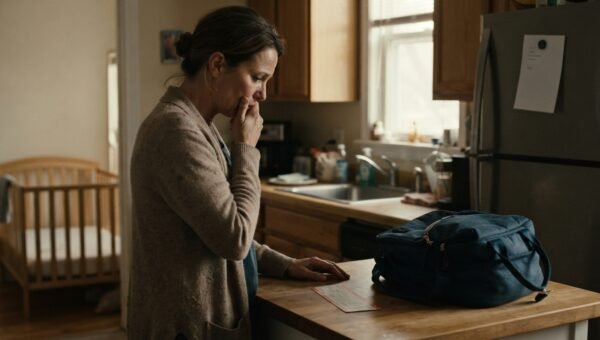
Then, two weeks ago, a heavy brown cardboard box was delivered to my doorstep in Pennsylvania. There was no festive holiday paper. It had my name printed on a shipping label with David’s return address in Columbus. When I sliced through the packing tape at my counter, my stomach dropped.
Inside were cards. Dozens of them.
I reached in with trembling fingers and pulled out a stack. They were every single birthday card I had mailed to David since the month he left for Ohio.
Twenty-second birthday, twenty-third, twenty-fourth, all the way up to his twenty-seventh. Every milestone card, every Hallmark envelope where I had written his address in my neat cursive, was right there in the box.
None of them had ever been opened. The seals were completely intact.
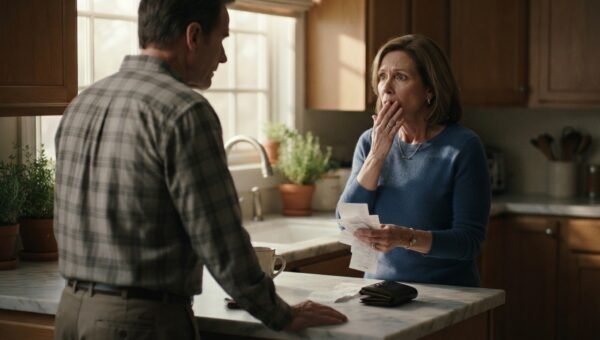
The blood rushed straight to my face. The fury was so sudden and violent that my hands shook. I stood over my kitchen island convinced that Clara had finally shown her true colors. She hadn’t just kept David away; she had intercepting his mail, hoarding my love and my money away from him, and now she had shipped them back to rub my face in it.
I grabbed my phone and dialed David’s number without taking a breath. When he picked up, his voice sounded flat and tired, the way he always sounded when I called during the workday.
“David, this is sick,” I blurted out, my voice cracking before I could stop it. “If your wife hates me that much, she could just tell me to my face.
She didn’t have to box up five years of my birthday cards and mail them back like garbage.”
There was a long, dead silence on the line. I could hear the faint hum of his office in the background.
“Mom,” he said slowly, sounding genuinely bewildered. “What are you talking about? What cards?”
“The cards in the mail, David! Every birthday card I sent you since college. They just arrived here in a box from your address. Unopened. Did Clara put you up to this?”
“Mom, stop,” he snapped, his tone sharpening. “Leave Clara out of this. I mailed that box to you yesterday.”
The anger caught in my throat. “You mailed them?”
“Yes,” David said. “A guy brought them to my front door on Sunday afternoon in a plastic grocery bag. Mom, I swear to God, I never got those cards. I thought you stopped sending them after I moved.”
The air left the room. I sank onto the wooden barstool, staring down at the faded pastel envelopes on the counter. “You never got them? David, I mailed them to your apartment on High Street. Then to your house on Maple.”
“They never made it to my mailbox,” he insisted quietly. “The guy who brought them said he found them locked in a storage drawer at his work. Mom, look at the envelopes. Look at the yellow stickers on the front.”
I picked up his twenty-third birthday card. There, pasted right over David’s apartment address, was a pale yellow postal forwarding label with a barcode.
It showed the card had reached Columbus. But instead of being delivered to David’s apartment, every single envelope had been forwarded to a post office box across town.
I read the number aloud over the phone: “PO Box 412, Columbus, Ohio.”
“I never had a PO box in my life,” David said. “I lived twenty minutes from that zip code.”
My pulse hammered in my ears. I set the phone on speaker and sat down on the kitchen floor with the entire pile spread around me. Every single envelope had that same forwarding sticker. All of them redirected to PO Box 412.
“David,” I whispered, holding the fifth card in the sequence. “Who was the man who brought these to your house?”
“His name is Greg Miller,” David answered. “He works for a small commercial property office. He said he was clearing out old abandoned mailboxes and records from a strip mall annex they took over last month. He found this pile of forwarded mail from years back. He looked up my name online, saw I lived in town, and dropped them off.”
“Why were they forwarded at all?”
“Because,” David’s voice dropped, carrying a strange, hollow tremor, “someone submitted an official change-of-address form to the postal service under my name right after I graduated. Greg let me look at the old box rental agreement in the file. The box wasn’t rented by Clara, Mom. It was opened under a business account.”
“What business?”
“An old consulting LLC,” David said. “The primary name on the rental lease was Frank Miller. Dad’s name. Dad’s signature. Dad’s old driver’s license number.”
A cold, sickening chill crawled down the back of my neck.
“David, that is impossible,” I said, my voice barely above a whisper. “Your father died of a heart attack two months before your college graduation. We buried him in May. You moved in August. He was gone before you ever left this state.”
PART 2
The silence between us stretched so long that the phone screen dimmed in my hand.
“Mom, I’m looking at a photo Greg texted me of the original paper rental card,” David said, his voice shaking. “It’s Dad’s handwriting. You know how he made that sharp little hook on the capital F? It’s his. And the signature date is October 14th.”
Frank died on March 22nd. We held the service at St. Jude’s on March 26th. There was an open casket, an obituary in the county gazette, and a granite headstone in the township cemetery. He had been in the ground for seven months by that October.
“Someone stole his identity,” I said immediately, trying to find ground to stand on. “People target deceased records all the time, David. They buy social security numbers off the internet, they open mailboxes to run check scams or credit card fraud. That has to be what happened.”
“If it was a stranger running a scam,” David replied, “why would they file a change-of-address specifically for my name, using Dad’s old company name, and then only intercept mail from family?”
That stopped me.
I pulled the rest of the pile toward me and began sorting through the envelopes. There were six birthday cards, three Easter notes, and two congratulatory cards I had sent when he got his first engineering promotion. Every single piece was from me. There were no bank statements, no pre-approved credit cards, no IRS forms. Just personal mail from my address in Pennsylvania.
Worse, whoever collected the mail had never opened a single envelope. The cards had just been tossed into that post office box, collected, and filed into a drawer until the lease lapsed and the office forgot about them.
“I’m driving to Columbus tomorrow morning,” I told David.
“Mom, you don’t have to do that.”
“I have spent five years believing your wife turned you against me,” I said, my voice breaking. “I have spent five years sitting in this empty house thinking my only child decided I wasn’t worth a visit or a phone call. I am getting in my car.”
I left before dawn. The drive across western Pennsylvania into Ohio was four hours of cold gray highway. All I could think about was Frank. We had divorced when David was fourteen. It hadn’t been an explosive split with lawyers screaming in courtrooms; it had been a slow, sour unraveling of two people who realized they had nothing left to say to each other. Frank was always secretive, always tucking papers into his leather briefcase, always keeping private post office boxes for his consulting side-hustles. Even after the divorce, he lived three towns away, visited David on weekends, and paid his child support reliably until David turned eighteen.
When Frank died suddenly at fifty-four, his affairs were a disaster. His second wife, a quiet woman named Brenda whom he had married four years after our split, had handled the estate. Or at least, she claimed to handle it. Frank left behind a mountain of unpaid credit accounts, a small life insurance payout that barely covered his debts, and a house in Altoona with an upside-down mortgage. Brenda had sold what she could, packed her things, and moved back to central Ohio where her sister lived. I hadn’t spoken to her since the funeral reception.
I pulled into Columbus just past eleven in the morning. David met me at a small coffee shop near the commercial strip where PO Box 412 had been located.
When I walked through the door, my heart broke a little. David stood up from a booth, and he looked so much older than the boy who had packed his sedan in my driveway five years ago. His hair was thinning at the temples, and his shoulders carried the hunch of desk work. He hugged me, stiffly at first, then held on for an extra second.
He slid a manila folder across the laminate table. Inside was a photocopy of the commercial mailbox agreement.
I looked at the signature line. The ink had faded on the carbon copy, but the name was undeniable: *Frank Miller*. The street address listed was Frank’s old business address in Pennsylvania, but the contact phone number had an Ohio area code.
“Did you call that number?” I asked.
“It was disconnected three years ago,” David said. “I checked the reverse lookup records through a friend at work. The number belonged to an old landline registered to an apartment off Bethel Road. The lease on that apartment was in Brenda’s name.”
The breath caught in my throat. “Brenda?”
“Brenda moved to Columbus three weeks before I did,” David said quietly. “She knew where I worked because I mentioned the company to her at Dad’s funeral. But Mom, why would Brenda open a box in Dad’s name? Why would she redirect my mail?”
“Brenda didn’t know your father’s handwriting well enough to forge that signature,” I said, staring hard at the photocopy. “She only knew him for four years. Look at the flourish on the loop. Frank used a heavy fountain pen. He had that exact signature on our mortgage in 1998.”
“Then who signed it, Mom? A ghost?”
I stared at the paperwork until my eyes stung. Then I noticed the date again: *October 14th*.
I opened my purse, pulled out my old leather checkbook registry from that year, which I still kept in my glovebox for emergency records, and scrolled back on my phone to Frank’s estate probate filings. Frank’s will had been submitted to the county courthouse on October 10th. Brenda had been named executor, but she hadn’t filed the paperwork alone.
She had hired Frank’s brother, Mark.
Mark was Frank’s younger brother, an accountant who lived twenty minutes outside of Columbus. Mark and Frank had shared an office suite twenty years ago before they had a falling out over an inheritance from their parents. Mark had power of attorney for Frank’s business accounts during the final year of Frank’s life when Frank had his first mild stroke. And Mark had possessed a full box of Frank’s pre-signed business documents, signature stamps, and company stationery.
I looked up at David. “Your uncle Mark.”
David’s eyes narrowed. “Uncle Mark hasn’t spoken to us since Dad’s service. He didn’t even sit with us at the church.”
“Because he and your father hated each other,” I said. “And Mark knew every single loophole your father ever used to hide money.”
PART 3
We didn’t call ahead. David drove us to Mark’s house in a quiet, wooded subdivision in Dublin, Ohio. It was a large, modern brick ranch with a pristine lawn and a late-model Lincoln parked in the driveway.
When I rang the bell, the chimes echoed deep inside the house. A minute later, the heavy front door swung open.
Mark stood in the entryway wearing a zip-up fleece and reading glasses hanging from a cord around his neck. He looked so much like Frank around the eyes that it made my stomach clench. He froze when he saw me, his hand tightening on the edge of the storm door.
“Helen?” he said, his voice flat. Then his eyes drifted to David. “David. What are you two doing here?”
“We need to talk about PO Box 412, Mark,” I said, keeping my voice entirely steady. “And we need to talk about Frank’s mail.”
Mark didn’t blink, but the color drained right out of his jaw. He stood there for five full seconds, weighing whether to slam the door in our faces. But David stepped up beside me, six feet tall and broad-shouldered, and Mark slowly pushed the glass door open.
“Come inside,” Mark muttered.
The house was immaculate, smelling faintly of lemon polish and stale coffee. We sat in the formal living room. Mark didn’t offer us a drink. He sat on an armchair opposite us, resting his forearms on his knees, staring at the floor.
“How did you find that box?” Mark asked quietly. “The building was torn out for a medical center.”
“The management company cleaned out the annex office before the demo,” David said, his voice hard. “They found five years of birthday cards my mother sent me. Unopened. Forwarded under Dad’s name with an application signed months after he died.”
Mark took a slow breath and rubbed his face with both hands. When he looked up, there was no shame in his expression, only a sour, exhausted resignation.
“Frank owed me eighty thousand dollars,” Mark said bluntly. “He borrowed it in 2014 when his consulting business went under. He signed a promissory note against his life insurance and his commercial accounts. He swore to God that if anything happened to him, the policy would pay me back first.”
“Frank didn’t have eighty thousand dollars in insurance,” I interrupted. “His policy barely paid twenty-five thousand, and it went straight to the funeral home and his back taxes.”
“That’s what Brenda told you,” Mark snapped. “That’s what she told the probate court. But Frank had a secondary private annuity through an old partnership we set up in the nineties. A death benefit of one hundred and fifty thousand dollars. And he named David as the sole beneficiary three days before he died.”
David flinched. “What?”
“You were twenty-one, fresh out of school,” Mark said, glaring at David. “You didn’t know the policy existed. Frank did it behind Brenda’s back, and he did it behind mine. He cut me out completely to leave you a nest egg he didn’t even own. That money was mine. It was my retirement he gambled away on bad real estate deals.”
“So you stole it?” David’s voice rose, trembling with pure fury.
“I didn’t steal a dime,” Mark said defensively. “The insurance company required a certified death certificate and a confirmed address for the beneficiary to release the claim packets. Brenda was desperate for cash. She knew if you got that payout, she wouldn’t see a nickel of Frank’s leftover estate because the creditors would come after the house. So Brenda and I made a deal.”
I felt physically sick. “What kind of deal?”
“Brenda used Frank’s old company records to rent the box in Columbus under the old LLC name before the probate closed,” Mark said. “She had a power of attorney document Frank signed before his stroke that had never been officially revoked with the postal service. She filed a blanket forwarding request for ‘David Miller’ from your Pennsylvania address to that box, so any official notices or insurance claim forms from the annuity company would come directly to us.”
“And the birthday cards?” I asked, tears finally spilling over my lashes. “Why did you keep my birthday cards?”
Mark looked away, staring out the back window toward his patio.
“The postal carrier didn’t sort personal mail from business mail,” Mark said, his voice dropping to a mumble. “The forwarding order caught everything addressed to David that came through that regional hub for the first eighteen months. Brenda picked up the mail once a month. She took the insurance paperwork, forged David’s signature on a settlement release, and we split the annuity account through Frank’s defunct LLC.”
“You forged my signature on a six-figure insurance claim?” David stood up so fast his chair scraped loudly against the hardwood floor.
“I took what your father owed me!” Mark shouted back, standing up to face him. “Not a penny more! Brenda took the rest and moved to Florida four years ago. I didn’t care about your damn birthday cards, David. Brenda threw them in a metal filing drawer in the back office of that rental suite because she didn’t want to burn them, and she didn’t want to open them. She was scared the envelopes had cash in them that would trigger a paper trail. When the lease ran out, we both just walked away.”
I sat frozen on the sofa, looking at this man who had sat at my Thanksgiving table twenty years ago.
All those years. Five Christmases where I sat alone in my kitchen, hating my daughter-in-law, convincing myself that the girl David married was poisonous and selfish. Five birthdays where I checked my bank account to see if the fifty-dollar check I slipped inside had cleared, only to assume David was so cold he couldn’t even be bothered to cash his mother’s money.
And all the while, David had been sitting in Columbus, wondering why his mother had completely stopped sending cards the moment he moved away from home.
ENDING
We didn’t yell anymore. There was nothing left to scream about.
David pulled his phone out right in Mark’s living room and called the local police precinct, followed by the postal inspection service. Mail fraud and forgery involving federal forwarding orders and probate assets do not just disappear because five years have passed.
Mark didn’t try to stop him. He sat back down in his leather chair, looking frail and hollowed out, staring at the Oriental rug while David gave the dispatcher our location.
The two officers arrived twenty minutes later, followed by an investigator from the county sheriff’s department who took our statements and collected the copies of the mailbox application and the returned envelopes. The paperwork was clear, the paper trail through Frank’s old business was intact, and the commercial office manager, Greg Miller, had already handed the original file over to the postal authorities.
By the time we walked out of Mark’s house, the afternoon sun was dropping low behind the trees, casting long, sharp shadows across the driveway.
David walked me back to my car, but neither of us got in. We stood by the driver’s side door in the cold Ohio wind.
“Mom,” David said, his voice thick and rough. “Clara told me three years ago that I should call you and ask why you stopped writing. She told me maybe you were depressed, or maybe you felt abandoned. I was too stubborn. I told her that if you wanted to talk to me, you knew my number.”
I reached out and pulled my son into my arms. He was shaking, and I buried my face into the shoulder of his coat, crying the kinds of tears that leave your chest aching.
“I called her terrible names in my head, David,” I whispered against his coat. “I blamed her for every quiet Sunday. I was so angry at her because it was easier than looking at how distant we had become.”
“She’s making pot roast tonight,” David said, pulling back and wiping his eyes with the back of his sleeve. “She’s been waiting by the phone all day to see what we found out. Come to the house, Mom. Please.”
We drove back to David’s neighborhood in convoy. When we pulled into the driveway of the modest two-story home I had once criticized for being too small, Clara was already standing on the front porch with a sweater wrapped around her shoulders.
She didn’t wait for us to reach the steps. She walked down the concrete walkway, looking between David’s red eyes and mine. Before David could even introduce the conversation, I stepped forward and wrapped my arms around Clara.
“I am so sorry,” I told her, my voice breaking completely. “I am so sorry for what I thought, and I am so sorry for how I treated you.”
Clara didn’t pull away. She let out a long, shuddering breath and hugged me back, warm and tight, right there on the cold sidewalk.
“David told me about the box, Helen,” she said gently. “Come inside. It’s freezing out here.”
That evening, we sat around their kitchen table with the pot roast cooling on our plates. In the center of the table was the pile of envelopes. One by one, with Clara and David sitting beside me, David took a butter knife and carefully slit open each birthday card, from twenty-two to twenty-seven.
Inside the twenty-second card was a faded twenty-dollar bill I had forgotten about. Inside the twenty-fifth was a handwritten letter where I had told him how proud I was of the man he was becoming, written during a week when I thought he had completely forgotten me.
David read every single one out loud. His voice cracked on the third card, and by the sixth, all three of us were laughing through our tears at the corny dog cartoons and the goofy messages I used to pick out at the pharmacy.
The legal fallout took months. The federal postal inspectors launched an investigation into the insurance fraud, and Mark eventually took a plea deal that forced him to surrender a substantial portion of his home equity to repay the stolen annuity into an escrow account for David. Brenda was tracked down in Florida, facing civil liability and restitution orders through the probate court.
None of that money mattered to me. David used part of the recovered annuity to pay down their mortgage, but the checks from the court were just paper.
What mattered was the shelf in David’s living room.
The last time I visited Columbus, Clara had bought a simple wooden display box. Inside, arranged in a fan beneath the glass, were the six opened birthday cards, creases smoothed out, resting right beside a framed picture of the three of us standing on their front porch.
I haven’t missed a birthday since. But now, when the card arrives in Ohio, David doesn’t just read it. He calls me the second it leaves his mailbox, and for the first time in ten years, the phone calls aren’t filled with guilt. They just sound like home.