PART 1
My father called me three days before my daughter Clara’s wedding to tell me he was not coming.
He was seventy-six years old, living alone in a brick ranch house forty miles south in Defiance, Ohio. When he said his night vision had gotten too poor for the highway, I offered to leave the rehearsal dinner early, drive out, pick him up, and put him in a hotel room near the venue.
He went quiet for several seconds, the heavy kind of quiet he used whenever he had already dug his heels in. Then he said no, he did not want to be a burden on anyone, and he hung up before I could argue.
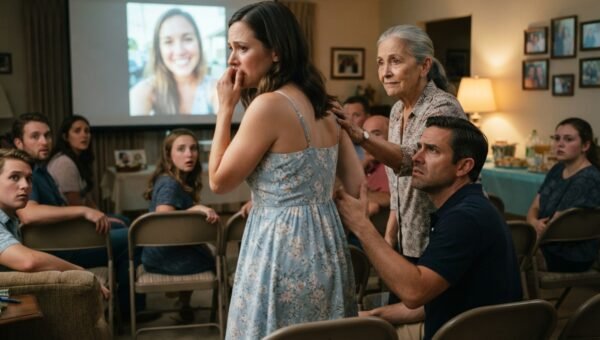
Clara took it harder than she admitted out loud. She spent twenty minutes in the church bridal suite crying into a wad of paper towels, trying not to ruin her makeup while her bridesmaids stood around awkwardly holding bobby pins and hairspray. Clara had worshiped her grandfather since she was five years old. To have him vanish on the biggest Saturday of her life felt like a slap. But Clara is strong, so she dried her cheeks, fixed her powder, smiled for two hundred guests, and walked into the reception like nothing was missing.
I spent the whole night carrying a knot of anger in my chest.
My father had never been a frail man. He had worked thirty-two years on county road maintenance, through ice storms and ditch collapses, and he did not shy away from discomfort. Using weak eyesight as an excuse felt cowardly and cheap.
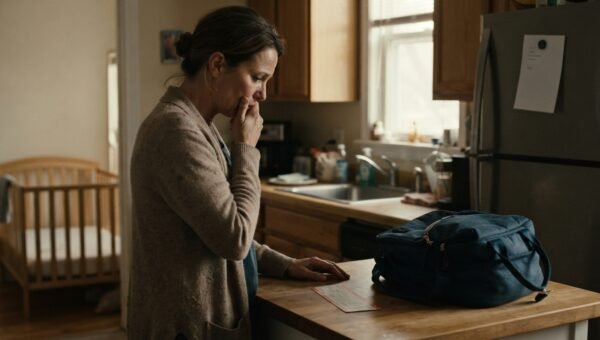
At eight o’clock Sunday morning, my kitchen phone rang while the coffee maker was still dripping.
It was Dad. His voice sounded thin and gravelly. He asked, “Did Clara have a beautiful night, Maggie?”
I did not bother to soften my tone. “She cried in the bathroom before she walked out, Dad. She put on a brave face, but you broke her heart over a forty-minute drive. I don’t know what you want me to say.”
There was another long pause on his end. He did not sound defensive, just tired in a way I had never heard him before.
“Go out to your mailbox before you decide to hate me forever,” he said quietly. “Look at what’s in there, and then drive down here.”
He hung up.
I stood by the kitchen counter with my slippers on, looking through the blinds at the driveway.
The Sunday paper was sitting on the porch steps, but our green rural mailbox out by the road had its little red flag pushed up.
I walked out through the wet grass. Inside the metal box was a small yellow padded mailer, taped shut with heavy masking tape. My name was scrawled across the front in my father’s slanted handwriting. There were no postal stamps on it, which meant someone had slipped it into the box by hand during the night.
I tore the tape off right there in the morning air.
Three items spilled into my palm.
The first was a white plastic key card from the Riverfront Grand Hotel, the boutique inn sitting directly across the street from Clara’s reception hall in downtown Toledo.
The second was a printed parking garage slip from the Riverfront municipal deck. The date was yesterday. The entry time stamped on the front read 4:12 PM, twenty minutes before Clara’s ceremony started.
The exit time was 11:48 PM, right as our reception had wrapped up.
My father had sat across the street from his only granddaughter’s wedding for nearly eight hours.
The third item was a piece of lined yellow notebook paper, torn along the margin and folded twice. I unfolded it with shaking fingers. Written in blue ballpoint pen was a short note:
“I drove up at three o’clock yesterday afternoon, Maggie. I came to tell Clara the truth about where the money for this wedding really came from, and why I couldn’t sit at that table. But then I stood by the lobby doors across the street and watched through the windows. I saw who walked her down the aisle. Once I saw Richard take her arm, I knew what was waiting for me if I stepped inside.”
The paper began to rattle in my hands.
Richard was my ex-husband. He had vanished twelve years ago, leaving Clara and me with sixty thousand dollars in unpaid liens, an empty bank account, and a defaulted mortgage. We had not seen him in over a decade until six months ago, when he suddenly reappeared with expensive clothes, a new sports car, and a cashier’s check that covered Clara’s entire thirty-thousand-dollar wedding balance.
Clara had believed her father was simply trying to make amends for abandoning us. I had swallowed my pride and allowed Richard to walk her down the aisle because Clara begged me to let her have her father for one day.
Now, staring at my father’s parking ticket, I realized Dad knew something about that money that Clara and I had never even imagined.
PART 2
I did not wake my new son-in-law or Clara. I threw on jeans, grabbed my purse, and drove south on Route 24 toward Defiance. My hands stayed clamped to the steering wheel the whole way.
Twelve years ago, when Richard walked out, he took everything that wasn’t bolted down. He emptied our joint savings, cleared Clara’s college fund, and left behind past-due notices from three different credit cards he had opened under my name. If Dad hadn’t cosigned a signature loan at the local credit union and let Clara and me live in his spare rooms for two years, we would have lost the house entirely. Dad had spent a decade watching me work two jobs as a dental receptionist and an evening bookkeeper just to keep Clara in shoes and school supplies.
Then, last fall, Richard showed up at Clara’s engagement party uninvited.
He drove up in a charcoal Mercedes sedan, wearing a tailored navy suit and looking like he stepped out of an executive catalog. He pulled Clara aside on the patio, pulled out a certified bank draft for thirty-two thousand dollars, and told her he was a partner in a logistics firm in Florida. He said he had spent years regretting his mistakes and wanted to give his daughter the fairytale wedding she deserved.
I was suspicious from the start. But Clara looked at that check like it was a lifeline, and she looked at Richard with wide, hopeful eyes. When she asked me if Richard could walk her down the aisle instead of her having to walk alone, I backed down. I didn’t want my bitter history to poison her joy. Dad had stayed silent about the whole thing, only giving a tight nod whenever the wedding planning came up.
When I pulled into Dad’s gravel driveway in Defiance at ten that morning, his gray Buick was parked under the carport. The hood was stone cold, but the tires had fresh road dirt on them.
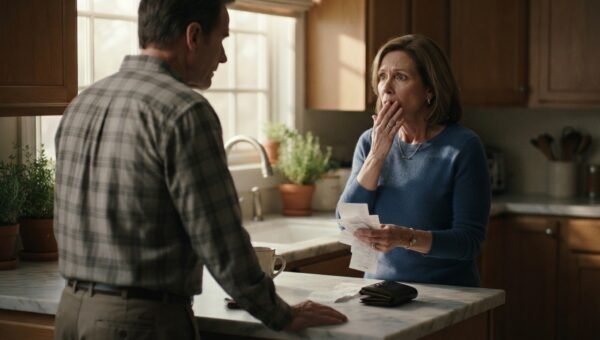
I let myself in through the side screen door. The house smelled like stale Folgers and bacon grease. Dad was sitting at the worn oak kitchen table, still wearing the flannel shirt and brown trousers he probably slept in. On the table between his elbows sat a thick, olive-green metal lockbox with the latch popped open.
“You read the note,” he said without looking up.
“Dad, what were you doing sitting in a hotel across the street all night?” I demanded, pulling out a chair. “Why did you lie about your eyes? If you were right there, why didn’t you come inside?”
Dad reached into the metal box and pulled out a stack of paper. They weren’t letters. They were copies of legal filings, bank receipts, and a printed county property lien with a red county clerk stamp across the bottom.
“I didn’t lie about being unable to look at him,” Dad said, his voice flat. “Four months ago, after Clara announced that Richard paid the venue deposit, I went down to the county courthouse in Paulding. You remember that eighty-acre parcel out near Antwerp? The timber lot your mother and I owned since 1984?”
A cold shock ran down my neck. “Of course I remember it. You said you leased the hunting rights to pay down your medical deductible two years ago.”
“I didn’t lease it,” Dad said quietly. “In 2013, when Richard skipped town, the bank came after your house because he had taken out a second mortgage and forged your signature on the equity release. You were thirty days from foreclosure, Maggie. You were crying every night at the stove, trying not to let Clara see.”
I stared at him. “Dad, the credit union gave me that emergency consolidation loan. You cosigned it.”
“No,” Dad said. He pushed a document across the table to me. “The credit union turned us down flat. Richard’s name was on the deed, and the title was clouded. To clear the lien so the bank wouldn’t evict you and Clara, somebody had to come up with forty-five thousand dollars in cash within forty-eight hours. I went to the Defiance State Bank and took out a hard-money note using my Antwerp timber land as collateral.”
I looked down at the paper. It was an amortization schedule from 2013. My father’s signature was at the bottom, alongside the bank president’s seal. Every month for the last ten years, my father had been quietly paying six hundred and twenty dollars a month out of his county pension to keep the roof over my head.
“I was two years away from owning that land free and clear again,” Dad continued, his voice trembling slightly. “Then, this past February, an attorney in Toledo called me. He told me a private investment group had bought up the secondary debt on my Antwerp note from the bank holding company. They were calling the balloon payment. Forty-two thousand dollars, due in thirty days, or they took the land.”
“Who was the investment group?” I asked, though my stomach was already dropping through the floorboards.
Dad pushed another paper across the table. It was a corporate registration document from the Ohio Secretary of State’s office.
The registered agent and sole officer of the shell company that bought my father’s mortgage note was Richard.
PART 3
I couldn’t breathe. The room seemed to shrink down to the hum of the old refrigerator.
“Richard bought your debt?” I whispered.
“He bought the paper for pennies on the dollar through some distressed asset firm he works with,” Dad said. “He knew about that Antwerp parcel because he tried to talk me into signing it over to him back in 2009 for one of his failed strip mall ideas. He knew the note had a five-year balloon reset clause that the old bank had never enforced as long as I paid my monthly note on time.”
Dad leaned forward, his knuckles white against the tabletop.
“In March, Richard came to this house. He sat in that very chair you’re sitting in. He told me he was going to foreclose on the Antwerp timber lot unless I signed a quitclaim deed transferring the property to his LLC for ten dollars. He said if I signed it quietly, he would use the proceeds from clear-cutting the walnut trees to pay for Clara’s wedding, buy his way back into her life, and play the generous father.”
“And if you didn’t?”
“If I didn’t, he told me he would foreclose on the timber, file an eviction against this house to satisfy the deficiency balance, and tell Clara that her grandfather was an old failure who lost the family land out of spite. He looked me in the eye and said, ‘Let me be the hero for once, old man. You had your turn.'”
Tears burned the backs of my eyes, hot and sharp. “Dad… why didn’t you tell me? Why didn’t you call me the second he walked through that door?”
“Because Clara was happy,” Dad said, his voice cracking for the first time. “For the first time since she was a little girl, she wasn’t carrying the shame of a father who threw her away. She was showing me pictures of wedding dresses. She was talking about floral arrangements. If I told you, you would have fought him, you would have ended up in court, the wedding would have been canceled, and Clara would have had her heart crushed all over again. I couldn’t do that to her.”
“So you gave him the land?”
“I signed the deed,” Dad said. “He sold the timber rights thirty days later to an outfit out of Fort Wayne for seventy-eight thousand dollars. He took thirty-two thousand of my timber money and handed it to Clara for the caterer, the open bar, and the venue. That wasn’t Richard’s generosity. That was your mother’s legacy, paid for by the sweat of my back, laundered through that snake’s bank account so he could buy our granddaughter’s respect.”
The anger that had been building inside me since Sunday morning didn’t disappear; it turned into pure, cold stone.
“Why did you go to Toledo yesterday?” I asked softly.
Dad reached out and touched the hotel key card sitting beside his coffee mug.
“I bought a suit on Friday,” he said. “A blue one from JCPenney. I drove up yesterday afternoon intending to walk into that bridal suite, lay these papers on the table, and tell Clara the whole truth before she took another step. I checked into the hotel across the street to change my clothes. But at four o’clock, I looked out the second-floor window toward the front steps of the church.”
He stopped, taking a ragged breath.
“I saw Clara get out of the limousine in that white dress. She looked just like your mother on our wedding day in 1968. She looked so radiant, Maggie. And then Richard stepped out of his car, took her hand, and smiled at her. And Clara hugged his neck like a drowning girl finding a life raft. I stood by that window with my hand on the doorknob, and I realized that if I walked across that street, I would be destroying her wedding day to save my own pride.”
He wiped his eye with the back of his rough hand.
“So I took off the suit. I put my old clothes back on, walked down to the hotel lobby, and sat behind the glass doors until midnight. I watched every person arrive. I heard the band playing through the open windows when the doors opened. I stayed right there with her until the lights went out.”
ENDING
I didn’t say another word. I stood up, gathered every single document from the table, packed them into the metal lockbox, and locked the clasp.
“Get your coat, Dad,” I said.
He looked up, startled. “Maggie, no. Let her have her honeymoon. They’re leaving for Mexico tomorrow.”
“She is not getting on a plane believing a lie bought with your blood,” I said, my voice steady. “Clara is twenty-six years old. She is a grown woman, and she deserves to know who really carried her across that finish line.”
We drove back to Toledo together in my car.
Clara and her new husband, Luke, were at our house, sorting through gifts and loading luggage into the trunk of Luke’s sedan. Richard was standing by the porch railing with a cup of coffee, looking smug and satisfied, wearing a designer polo and sunglasses.
When Richard saw my father step out of the passenger side, the smile vanished from his face. His posture went completely rigid.
Clara ran down the porch steps. “Grandpa! You came! Why didn’t you come yesterday? Are you okay?”
Dad didn’t speak. He stood beside the car with his shoulders slightly bent, looking at the ground.
I walked past Richard, set the green metal lockbox on the patio table, and unlatched it. I pulled out the 2013 bank note, the county deed transfers, the timber sale contract from Fort Wayne, and the Secretary of State filing bearing Richard’s signature.
“What is this, Mom?” Clara asked, looking between me and the paperwork.
“Look at the dates, Clara,” I said quietly. “Your father didn’t pay for your wedding out of his savings. He forced your grandfather to sign over the Antwerp timber lot under threat of foreclosure, sold the wood off your grandmother’s land, and used the cash to play the big shot.”
Richard stepped forward, his face turning an ugly shade of red. “Maggie, you’re crazy. Don’t ruin our daughter’s morning with your bitter nonsense.”
“Shut up, Richard,” I said, without raising my voice. “The paperwork has your LLC seal on it. The notary is your attorney in Defiance. The timber check was deposited into your corporate account three weeks before you wrote Clara’s wedding draft.”
Clara took the papers into her hands. She stood there on the driveway in her sneakers and shorts, reading through the lines. Her hands began to shake. She looked at Richard, then she looked at Dad’s worn, work-calloused hands, then down at the deed where my mother’s name had once been listed alongside Dad’s.
Richard tried to touch her shoulder. “Clara, honey, it was a business transaction. I helped him settle an old note—”
Clara stepped back so fast Richard nearly stumbled off the porch step. The look on her face wasn’t grief or sadness anymore. It was total, devastating disgust.
“Get off my mother’s property,” Clara whispered.
“Clara—”
“Get in your car and get out of here,” she said, her voice rising, sharp and final. “Don’t you ever call me again. Don’t you dare come near my family.”
Richard looked at me, then at Luke, who had stepped between Richard and Clara with his arms crossed. When Richard realized there was no charm left to play, he turned around, walked to his Mercedes without another word, and sped down the street, kicking up gravel against the curb.
The driveway went dead quiet except for the wind in the maples.
Clara walked across the grass toward my father. She didn’t say anything about the wedding or the missed ceremony. She wrapped her arms around Dad’s neck and buried her face into his flannel shirt. Dad stood there for a second, startled, before his arms came around her, holding her so tight his knuckles went white again.
“I’m sorry, baby,” Dad whispered into her hair. “I should have been there.”
“You were there,” Clara said through her tears, pulling the hotel parking receipt out of her pocket where she had tucked it after I handed her the papers. “You were there the whole time.”
Clara canceled the resort in Mexico that afternoon. She and Luke used the travel insurance refund to hire a property attorney, and by autumn, the Defiance County prosecutor had opened a formal review into Richard’s predatory debt-purchase practices.
The Antwerp timber land was gone, but Dad’s house was safe, and for the first time in twelve years, the truth was out in the daylight where it belonged. On Sunday evenings now, Dad doesn’t eat alone. He sits at the head of our kitchen table, right where he earned his place.