PART 1
The repo truck pulled up to my curb on a clear Thursday morning, right past my hydrangeas.
I was at the kitchen sink rinsing out a coffee mug when the yellow strobe lights caught the window. A young man in heavy work boots walked up the driveway with a clipboard in his hand. He checked the license plate on the silver 2018 Chevy Equinox parked by the garage, looked down at his paper, and hooked a chain to the front axle.
I went out in my house slippers, holding the front door open behind me.
“Excuse me,” I said. “What are you doing with that car?”
He didn’t look mean, just tired. “Repossession order, ma’am. Regional Auto Credit.”
“That car is paid off,” I told him. My voice shook a little, but I stood straight. “My son drives it, but the title was in my name. I took the original loan out five years ago so he could get to work. He finished paying it last summer.”
The driver tapped the clipboard with his pen. “I just have the order here. Default on an equity title loan taken out nine months ago. Balance due is $14,200. You’re listed as the primary borrower.”
I stared at him. The air smelled like cut grass and diesel exhaust. “I didn’t take out any loan nine months ago.”
“You’ll have to call the office, ma’am. I can’t leave the vehicle once the hook is on.”
I watched that silver Equinox get dragged up onto the flatbed and hauled down the street.
When it turned the corner, my quiet neighborhood went back to looking like nothing had happened.
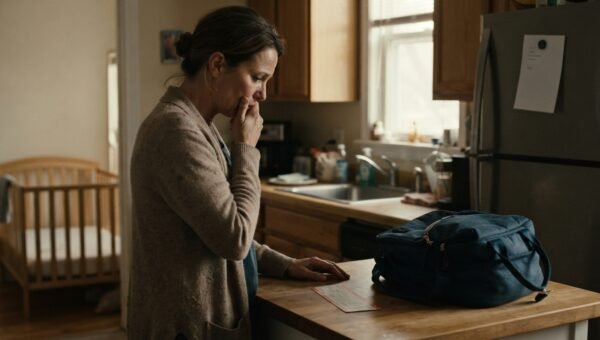
I went back inside and sat down at the table. My hands were shaking so hard I could barely unlock my phone.
Three years ago, my son Kevin had wrecked his old pickup. He was twenty-eight, working odd jobs in heating and air, and he had no credit score worth mentioning. I took out an $18,000 loan in my name so he could buy the Equinox. The agreement was simple. He was supposed to send me $340 on the first of every month until it was done.
For two years, he paid. Then the payments slowed down. Fifty dollars short one month. A promise to catch up the next. Then nothing.
I reminded him twice. The first time, he told me I was riding him while he was trying to build a business. The second time, he slammed his coffee cup on my counter and said, “You never let anyone breathe, Mom.”
After that, I stopped asking. I didn’t want every Sunday dinner turning into an interrogation. I thought that was the end of it. Then, three months before the repo truck showed up, Kevin had stopped by with a grease smudge on his cheek and handed me an official-looking letter from the original bank stating the lien had been released. He kissed my cheek and said, “Told you I’d handle it, Mom. You’re free and clear.”
Now a different company had just hauled the car away.
I dug through my desk drawer, found the number for Regional Auto Credit from the driver’s slip, and called.
The representative on the other end was a woman named Brenda. She verified my Social Security number, my date of birth, and my address.
“Yes, Mrs. Miller,” Brenda said, her keyboard clicking in the background. “A title loan was executed on October 14th of last year for $15,000 against the 2018 Chevrolet. Electronic application, signed with digital authentication using your personal details.”
“I never signed that,” I said. “I never saw a single dollar.”
“The funds were disbursed to a prepaid debit card registered under your name,” Brenda said. “No payments have been posted since February. And the secondary emergency contact listed on the application is your daughter, Chloe.”
That stopped me cold.
Kevin was reckless with money. He always had been. If you told me Kevin had forged my name to pull cash out of that car to pay off his credit cards or buy tools, I would have been furious, but I wouldn’t have been surprised.
Chloe was different. Chloe was thirty-one, worked as a compliance clerk at a dental clinic, and kept every receipt in labeled plastic envelopes. Chloe called me every Wednesday at six. Chloe was the child who never caused trouble.
I hung up with the loan company. I sat in the kitchen until the grandfather clock in the hallway struck noon.
I called Kevin first. His phone went straight to voicemail.
Then I called Chloe.
She answered on the second ring. “Hey, Mom. Are we still on for Saturday?”
“Kevin’s car just got towed out of my driveway,” I said.
The line went dead silent. Not the silence of a bad connection, but the heavy, deliberate quiet of someone holding their breath.
“Mom,” she whispered.
“They told me a loan was taken out in October,” I said, keeping my voice as level as I could. “They said my name was on it. And they said your name was the emergency contact.”
“Where are you right now?” she asked.
“I’m sitting at my kitchen table.”
“Don’t call Kevin,” Chloe said. Her voice sounded strained, like she was holding back tears. “I’m leaving the office right now. I’ll be there in twenty minutes.”
PART 2
Chloe walked through my back door twenty-two minutes later. She didn’t put her purse on the counter like she usually did. She kept it clutched against her stomach, her keys balled up in her fist.
“Where is Kevin?” she asked before she even took off her jacket.
“I told you, he didn’t answer his phone,” I said. “Chloe, look at me. Did Kevin take that money?”
“No,” she said.
She sat down in the wooden chair across from me. The afternoon sun was coming in sideways through the blinds, throwing stripes across the kitchen table.
“Then who did?” I asked.
Chloe looked down at her hands. Her knuckles were white. “I did, Mom. I applied for it. I used your paperwork from the filing cabinet in the den.”
The kitchen went very cold. I felt a knot tighten right under my ribs.
“You took out a fifteen-thousand-dollar loan in my name?” I could barely hear my own voice. “To buy what, Chloe? What could you possibly need that kind of money for?”
“I didn’t keep a single cent of it,” she said, her voice cracking. “I swear to you on my life, Mom. I didn’t spend it on me. I was paying someone to leave you alone.”
Before I could ask her what on earth she was talking about, the front door rattled and swung open hard.
Kevin marched in. He was wearing his gray work shirt with his name stitched in blue thread. He had grease on the cuffs and sweat on his forehead.
“Mom, what happened?” Kevin demanded, walking straight into the kitchen. “Some neighbor called and said my car was on a flatbed. Did that bank make a mistake?”
He stopped when he saw Chloe sitting there with tears streaming down her face.
“What’s going on?” Kevin asked, looking between the two of us. “Why is Chloe crying?”
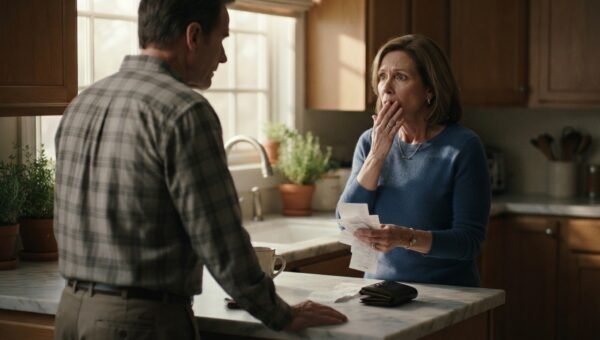
“Chloe took out a second loan on the Equinox last October,” I told him, every word feeling heavy on my tongue. “Using my identity. The car is gone because nobody paid the bill.”
Kevin’s mouth dropped open. He looked at his sister like she had grown a second head. “Are you kidding me? Chloe, that was my car! I spent three years busting my knuckles to pay Mom back for that note! I paid off that title!”
“You didn’t pay it off!” Chloe yelled, standing up so fast her chair scraped against the linoleum. “You stopped paying Mom six months before it was done! I saw her bank account when I helped her do her taxes. You skipped four payments and then gave her some fake paperwork to get her off your back!”
Kevin’s face flushed a dark, guilty red. He looked at the floor, unable to meet my eyes. “I was going to give her the rest once my commercial contracts came through.”
“You’re a liar, Kevin,” Chloe sobbed. “You always leave the mess for someone else.”
“Enough,” I said. I stood up and put my hands flat on the table. “Both of you, stop. Kevin, sit down.”
Kevin slumped into the chair by the window, staring out at the empty driveway.
I turned back to my daughter. “Chloe. Who were you paying to leave me alone?”
Chloe opened her purse with trembling fingers. She pulled out her phone, unlocked the screen, and placed it gently in front of me on the table.
“He started texting me six months after Dad died,” Chloe whispered. “He told me if I ever told you, he’d come to the house. He said he had unfinished business with you.”
I looked down at the screen. The contact name saved at the top was “Dad.”
My husband, David, had died eight years ago in a hospital room on the third floor of St. Jude’s after an eighteen-month fight with colon cancer. I had held his hand when his monitor went flat. I had signed his death certificate. I had picked out the gray suit he was buried in at Oakridge Cemetery.
I picked up the phone.
The messages went back months. The tone was chilling, cold, and demanding.
*The house on Elm Street still has that bad roof latch I told her to fix,* one message read from last August. *Tell her I need five thousand to keep the creditors away from her pension.*
Another message from October: *You want your mother sleeping peacefully, Chloe? Wire the funds to the account I gave you. She never told you what really happened in Duluth before Kevin was born, did she?*
The final text, sent just three weeks ago, made my stomach drop into my shoes:
*Tell your mother I never died in that room. Tell her I’m ready to come home.*
PART 3
I read that final text three times.
Kevin leaned over the table, squinting at the screen. “What is that? Who is that?”
“It’s Dad,” Chloe wept. “Kevin, he knew things. He knew about the loose floorboard under the washing machine. He knew about the Duluth trip when Mom almost lost the baby. He knew what Dad’s voice sounded like in the voicemails he sent.”
“Let me hear a voicemail,” I said.
My voice didn’t sound like mine anymore. It was quiet, completely empty of fear, replaced by something hard and sharp.
Chloe tapped an audio file on the thread and hit play.
A raspy, low voice came through the small phone speaker: *”Chloe, honey. Don’t stress your mother out. Just handle the wire like a good girl. You know how she gets when she’s rattled.”*
Kevin reached out and grabbed the edge of the table. “That… that sounds just like him.”
“No,” I said firmly. “It doesn’t.”
I set the phone down.
“Mom, he had David’s old signet ring in a photo he texted me,” Chloe cried. “The one with the chipped onyx corner. He said he kept it before they closed the casket.”
“David was buried with that ring,” Kevin said, his face pale. “I watched Uncle Ray put it on his finger before the service.”
“Ray,” I said.
The word hung in the kitchen air like smoke.
David had an older brother named Ray. Ray was three years older, taller, and had spent his entire life running small-time cons and borrowing money from anyone who had a soft spot in their heart. When David got sick, Ray showed up at the hospital twice. The first time was to ask David if he had left him anything in his will. The second time was the morning David passed.
Ray had stayed in the room for twenty minutes after the nurses stepped out to give us privacy. He told me he wanted a moment alone with his little brother. When we had the viewing two days later, Ray stood by the casket, patted David’s chest, and left before the funeral started. We hadn’t seen him in nearly six years.
“Mom?” Chloe looked up, tears sticking her eyelashes together. “What are you thinking?”
“Ray helped David build the back porch on Elm Street,” I said. My words were slow, measuring every piece. “Ray drove the truck when David and I broke down in Duluth back in 1989. And Ray stayed in the hospital room alone with David’s body before the mortuary transport arrived.”
Chloe stared at me, her mouth slightly open. “Uncle Ray? But… the voice…”
“There are apps now, Chloe,” Kevin said quietly. The anger had completely drained out of him, replaced by a sick realization. “You can feed thirty seconds of an old video into a computer and make it say whatever you want. Uncle Ray had all those old VHS tapes from Thanksgiving.”
“He told you David never died in that room,” I said, pointing at the phone, “because Ray was the only person in that room when the doctors walked away. He stole David’s ring right off his cold hand, Chloe. He took it eight years ago.”
Chloe put her face in her hands and let out a dry, ragged sob. “I gave him fifteen thousand dollars. I stole your car title to give him fifteen thousand dollars because I thought… I thought Dad had abandoned us and was coming back to ruin you.”
I walked around the table and pulled my daughter’s head against my chest. She was shaking all over.
“You should have come to me,” I whispered into her hair. “No matter what you thought it was, Chloe. You should have come to me.”
“I was so ashamed,” she choked out. “I thought if you found out, it would kill you.”
I looked over at Kevin. My son was staring at the wall, his hands shoved deep into his work pants.
“Kevin,” I said.
He looked up, shame written all over his face.
“Your sister committed fraud because she was terrified,” I said. “You stopped paying me because it was convenient, and then you lied to my face with a forged lien release so you wouldn’t have to look like a failure.”
“Mom, I’m sorry,” Kevin muttered, his voice cracking. “I swear I was going to make it right.”
“You’re going to make it right starting right now,” I said. “Both of you.”
I picked up Chloe’s phone. I looked at the number saved under “Dad.”
I pressed the call button and turned on the speakerphone.
It rang four times. Then a man answered, his voice rough and gravelly, not through a computer filter, but plain and old.
“Yeah? You got the rest, Chloe?”
“Hello, Ray,” I said.
A sudden, sharp intake of breath came through the receiver.
“Helen?”
“David is buried at Oakridge,” I said, my voice steady and clear. “Row four, plot twelve. I put fresh flowers on his stone two weeks ago. And I am sitting in my kitchen with his children, a detective’s business card on my counter, and every single text message you sent to this phone.”
Silence stretched over the line. Ray didn’t speak. He didn’t offer an excuse. He knew exactly what he had done.
“The police will have the bank account numbers you used to receive those wires by tomorrow morning,” I continued. “If that fifteen thousand dollars isn’t returned, or if you ever contact my children again, I will make sure the state prosecutor charges you with grand larceny, extortion, and identity theft. You will die in a state penitentiary, Ray. Do you understand me?”
Ray hung up. The click was loud and final.
ENDING
We didn’t get all the money back. People like Ray don’t keep cash sitting in bank accounts.
Two days after that phone call, a certified envelope arrived at my house. Inside was David’s gold signet ring with the chipped onyx corner, wrapped in a paper towel, along with a cashier’s check for $4,200. That was all Ray had left. He had emptied what he could and vanished. The police took the report, but men like Ray know how to drift across state lines and stay off the books.
The $14,200 loan balance on the Equinox remained my legal problem. The lender didn’t care about family tragedies; they cared about contracts.
I didn’t let Chloe take another loan, and I didn’t let Kevin walk away.
We had an attorney draft a formal agreement between the three of us at the dining room table. Kevin surrendered the title of his work trailer to me as collateral. He agreed to pay $500 a month directly to Regional Auto Credit until the repossession fees and loan balance were cleared. He took extra night shifts doing commercial duct cleaning to afford it. Every month on the first, the bank receipt lands on my counter.
Chloe attends counseling every Tuesday evening. She was carrying six years of quiet, suffocating guilt, believing she had to be the shield that protected our family from shadows. She pays $200 a month toward the interest, not because I demanded it, but because she said she needed to feel like she was putting the pieces back where they belonged.
The Equinox was redeemed from the impound lot three weeks after it was taken. Kevin drives it to work every morning. There is a small dent on the rear bumper from the tow chain that neither of us ever bothered to fix.
It sits in my driveway sometimes on Sunday afternoons when they both come over for roast chicken.
Last Sunday, after the dishes were washed and dried, I walked upstairs to my bedroom. I opened the small wooden jewelry box on my dresser, took out David’s ring, and slipped it onto my pinky finger.
The gold was worn smooth. The onyx was still chipped where David had caught it on an engine block thirty years ago.
It was just an old piece of metal. It couldn’t speak, it couldn’t send messages, and it couldn’t haunt anyone.
I took it off, placed it back in the velvet groove, and closed the box. Then I walked downstairs to sit on the porch while my children argued over who was going to take the leftovers home.