PART 1
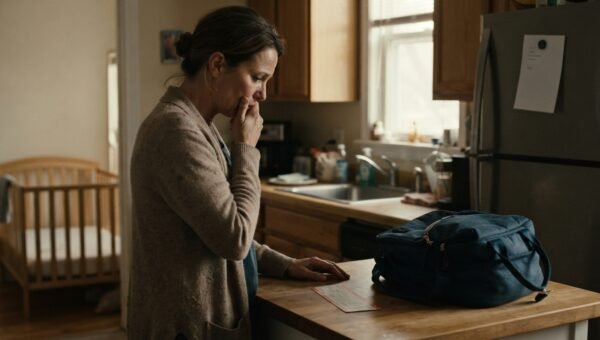
The day my granddaughter Clara came home from the hospital, I had already washed every onesie in unscented detergent, boiled the glass bottles, and stacked the freezer with two weeks of homemade casseroles. I had raised two boys by myself after my husband, Richard, died twelve years ago. I thought I knew how to take care of a baby.
My son, David, met me at their front door. He did not invite me into the living room.
He stood in the entryway with his arms crossed, shifting his weight while his wife, Gina, stayed back in the nursery.
“Mom, we appreciate the food, but we need to set firm boundaries,” David told me. His voice sounded practiced, like he had rehearsed it on the drive back from the hospital. “Things have changed since the nineties. Safe sleep guidelines, wake windows, sanitation. You do things the old-fashioned way. Gina’s mother is going to handle the daytime care when Gina goes back to work. Evelyn is certified in infant CPR and she follows modern routines.”
I stood on the porch with a warm dish of baked ziti burning through my oven mitts. I asked if I could at least hold Clara for five minutes. David took the glass dish from my hands, set it on the hallway table, and gave me a stiff, one-armed hug.
“We need bonding time right now,” he said quietly. “Let us get settled. We will call you for Sunday dinners.”
Evelyn moved into their guest bedroom that same week. She was two years younger than me, impeccably dressed, and worked part-time as a bookkeeper for local commercial properties. She had never been warm toward me, but she always presented herself as polished, organized, and endlessly capable. Whenever I saw pictures of Clara on social media over the next three months, Evelyn was holding her, tracking feedings on a color-coded mobile app, and smiling beside Gina.
I took the rejection hard, but I kept my mouth shut. I did not drop by unannounced. I sent diapers, paid for a year of Clara’s pediatric health savings plan, and sat at home every evening feeling like a stranger to my only grandchild.
Then came a Tuesday night in late October. My phone rang at 12:14 in the morning.
When I saw David’s name on the screen, my stomach dropped. Parents with three-month-old babies do not call past midnight unless something terrible has happened.
“Mom?” His voice was shaking so badly he could barely get the word out. “Can you come over right now? Please. Just drive over.”
“Is Clara okay?” I asked, already grabbing my car keys from the counter.
“Clara is sleeping in her crib. She is fine,” David said, his breath hitching into the phone. “Gina is at a medical conference in Chicago until tomorrow night. Evelyn walked out three hours ago and she is not answering her phone. Mom, I need you here. I checked the doorbell camera.”
I did not stop to change out of my sweatpants. I threw on a heavy coat and drove the four miles across town in under ten minutes.
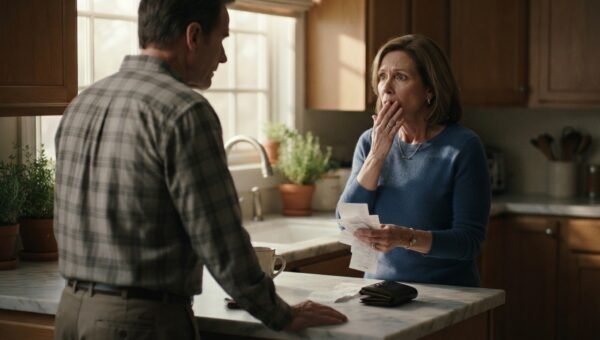
The front door of David’s house was unlocked. When I walked inside, the downstairs was completely dark except for the glare of David’s laptop on the kitchen island. David sat on a wooden barstool with his head in his hands.
On the marble countertop next to his elbow was a legal pad. It had Evelyn’s tight, slanted handwriting all over it. She had written down feeding times and bottle volumes for the afternoon: 1:30 PM, 3:45 PM, 5:15 PM.
“Look at the times,” David whispered, pointing at the pad without lifting his head. “Look at what she wrote, and then look at the baby monitor log.”
I pulled my reading glasses from my pocket and leaned over the island. The nursery camera app on David’s phone showed that Clara had been left in her crib from 1:00 PM until nearly 4:00 PM without anyone entering the room. Clara had cried herself hoarse for forty minutes while the log claimed Evelyn had fed her four ounces of formula and burped her.
“She was faking the logs,” David said, his voice cracking with rage and guilt. “She was writing down schedules that never happened. When I got home from the office around six, she told me Clara had a wonderful, peaceful day. Then around nine o’clock, Evelyn said she was running to the twenty-four-hour pharmacy for infant gas drops. She never came back. Her car is gone. Her suitcase from the guest room is gone.”
“Did she pack her clothes?” I asked, looking toward the hallway.
“She took everything she brought with her,” David said. “Her drawers are empty. But that is not why I called you, Mom. That is not even the worst of it.”
He spun his laptop screen around toward me.
“I bought a new doorbell camera last week because our package deliveries kept getting mixed up,” David said. “Evelyn did not know I installed it on the side garage entrance. I started pulling footage from this afternoon to see what time she actually walked out to her car.”
David clicked the spacebar.
The screen showed the paved walkway beside their garage, recorded at 2:18 that afternoon. In the video, Evelyn walked briskly down the path toward the curb. She was not holding Clara. She was carrying a thick, dark green expanding file folder.
I recognized that folder instantly. It had been Richard’s. It was the heavy canvas folder my husband used to store our old tax returns, commercial lease papers, and business filings before he died of a heart attack in 2014. After Richard’s death, I had kept that folder in a locked metal file cabinet in our basement, and when David bought this house four years ago, he had taken that entire cabinet to store our family financial history and deeds.
In the video, Evelyn stopped at the edge of the driveway where a dark blue sedan was idling. A tall man in a dark overcoat stepped out from the passenger side. His back was turned toward the camera, but his build, his silver hair, and the distinct stoop in his left shoulder made the air freeze in my lungs.
Evelyn handed him the green folder. She looked around nervously, stepped closer to the car, and spoke.
David leaned forward and turned the volume slider all the way up. The audio was slightly muffled by the wind, but the words cut through the quiet kitchen with terrifying clarity.
“Here is the rest of the commercial paper,” Evelyn said on the recording. “Take it and get out of here, Richard.”
PART 2
The kitchen went completely silent except for the faint hum of the refrigerator.
David stared at me, his eyes wide and bloodshot. “Mom? Why did she call him Richard? Dad died twelve years ago. We buried him. What is in that folder?”
My hands were trembling so hard I had to grip the edge of the kitchen island to stay upright. “David, play it again. Turn the brightness up.”
He replayed the clip three times. In the clear afternoon light of the video, the man took the folder from Evelyn, turned halfway toward the car door, and I caught the side profile of his jaw and nose. It was not my husband. Richard had a crooked bridge on his nose from a college football injury, and his left earlobe was split from an old shop accident. This man had neither.
Yet from behind, the resemblance was sickening. The exact same height, the exact same posture, and the exact same heavy woolen coat Richard used to wear when he managed the warehouse district properties across the county line.
“That is not your father,” I said firmly, finding my voice even as my chest throbbed. “I sat by your father’s bed at Saint Jude’s Hospital when his heart stopped. I held his hand until the mortician arrived. Your father is in the ground at Oak Hill Cemetery.”
“Then who is that?” David demanded. “And why did Evelyn have Dad’s old business files? Why did she steal them from my locked office cabinet?”
“Where is the key to that cabinet?” I asked.
David rubbed his face with both hands. “I keep it on my office desk inside a ceramic cup. Anyone living in this house could have picked it up. Mom, when Gina took this job last year, Evelyn helped us review the closing papers for this house. She offered to digitize our older tax records. I thought she was just being helpful.”
I did not wait for David to pull up more camera footage. I walked straight down the hall to David’s home office. The door was slightly ajar. The two-drawer metal filing cabinet sat in the corner beneath the window. The top drawer was pulled out two inches.
I knelt down and looked inside. The folders labeled for David’s college loans and their current mortgage were undisturbed. But the back partition, the section where Richard’s old business papers from his commercial storage partnership had sat untouched for over a decade, was completely empty.
Richard had run a small commercial storage park on Route 9 with two partners from 1998 until 2011. Before he died, Richard told me the business had been dissolved after a bad zoning dispute and a bank buyout that left them with barely enough money to pay off the bank loans. I had trusted him completely. After his funeral, an attorney named Marcus Vance had handled the final probate filings, handed me a modest life insurance check, and told me all outstanding corporate debts were settled.
I pulled out my phone and looked at the date on the screen. October 24.
October 24 had been the date Richard always met with his business partners for their annual distribution.
“David,” I said, walking back into the kitchen. “Did Gina know her mother had access to these files?”
“No,” David said, looking up in panic. “Gina thinks Evelyn just stays here to watch Clara. Gina works eighty hours a week at the clinic. She has no idea.”
“Call your wife right now,” I said. “Put her on speakerphone.”
It took four rings before Gina answered, her voice groggy from sleep in her hotel room. When David told her that Evelyn had disappeared and had been neglecting Clara in her crib, Gina broke down in tears. But when David mentioned the green file folder and the man at the curb, Gina’s crying stopped instantly.
There was a long, dead silence on the line.
“Gina?” David said, his voice rising. “Did you hear me?”
“David,” Gina whispered, her voice suddenly flat and terrified. “My mother didn’t take infant CPR classes last month. She lied to you. She has been in massive debt to a private lender since June. Two weeks ago, she asked me if your dad’s old company still owned the land behind the Route 9 warehouse parcel. I told her I didn’t know anything about it.”
“Why would she ask you that?” David shouted.
“Because my uncle’s name is Richard,” Gina confessed, her voice shaking uncontrollably. “My mother’s estranged brother is named Richard Miller. He has been in and out of state prison for fraud for twenty years. He found out your father had the same first name and owned land that was never officially transferred after the probate court closed.”
PART 3
The room seemed to tilt beneath my feet.
Richard Miller. Evelyn had never mentioned having a brother. Whenever family trees were brought up at holidays, Evelyn claimed she was an only child whose parents died young in Pennsylvania.
I looked at the legal pad on the counter again. Evelyn had not been leaving Clara alone because she was lazy. She had been leaving Clara alone because she was meeting someone, systematically going through my late husband’s old corporate records, and using David’s address as a base of operations.
“David,” I said, keeping my tone perfectly level. “Stay here with Clara. Do not touch that computer. Lock the deadbolt, call the non-emergency police line, and report Evelyn as a missing person who abandoned an infant. Give them the make and model of her car. I am driving down to Route 9.”
“Mom, no,” David said, jumping up from the stool. “You can’t go out there in the middle of the night. It’s nearly one in the morning.”
“Your father’s name is on those documents, and my granddaughter was left crying in a crib for three hours while this woman stole from our family,” I told him. “I know the Route 9 office. I know where the spare gate key used to be hidden. If they are trying to liquidate or transfer something tonight, that is where they went.”
I left David’s house and drove south down the county highway. The fog was thick over the asphalt, hanging low in the trees. The old storage park on Route 9 sat behind a rusted chain-link fence, half-hidden by overgrown pine trees and an abandoned diner.
When I reached the access road, my headlights caught fresh tire tracks pressed into the gravel.
The main iron gate was chained, but the padlock was swinging loose, cut clean through with a pair of heavy bolt cutters. I turned off my headlights, rolled down my window, and coasted the car fifty yards down the gravel drive.
Near the back of the lot, parked beside the corrugated metal office shack, sat Evelyn’s silver crossover and the dark blue sedan from the camera footage. The office window had a faint yellow light burning behind the dusty blinds.
I took my heavy steel tire iron from behind my driver’s seat, slid my phone into my coat pocket with the camera set to record, and stepped out into the damp cold.
I walked quietly along the edge of the metal storage units, keeping to the shadows. As I reached the side window of the office, I could hear two voices arguing sharply through the rotted wood frame.
“We can’t file this with the county recorder until eight in the morning anyway,” a man’s gravelly voice snapped. “Why did you pack your bags and run tonight? You tipped the boy off.”
“The kid has a new camera on the side garage, Richard!” Evelyn’s voice was shrill, completely stripped of the calm, polished demeanor she put on around my son. “He’s going to check it. When he sees me taking the folder, he’s going to call the police. We need to have the quitclaim deed signed and notarized by sunrise so Marcus can submit the title transfer electronically the second the county clerk’s server opens.”
I pressed myself against the wall, holding my phone right at the edge of the glass.
Inside, Evelyn stood over an old laminate desk with her overcoat still on. Opposite her was the silver-haired man from the driveway. Spread across the desk were the original paper deeds to the three-acre commercial parcel behind the storage units—land that the state highway department had announced six months ago was being appraised for an interstate bypass ramp.
Beside them sat a third person. A man in his sixties wearing a rumpled trench coat and wire-rimmed glasses.
It was Marcus Vance. The probate attorney who had handled my husband’s estate twelve years ago.
“The probate court never realized Richard left this parcel out of the corporate dissolution,” Marcus was saying calmly, tapping a red fountain pen against a stack of official blue-backed legal paper. “Because your brother has the exact same first name and can produce an old driver’s license with Richard’s birth year, the title company in Ohio will process the transfer as a surviving partner buyout. We split the state compensation payout three ways: four hundred thousand each. But Evelyn, you should have stayed in that house until morning. Leaving the baby was stupid.”
“The baby wouldn’t stop screaming,” Evelyn spat, her face twisted with ugly disdain. “I couldn’t concentrate on finding the original survey maps with that brat wailing in my ear.”
My hands stopped shaking. The shock that had paralyzed me on David’s porch three months ago evaporated entirely, replaced by a cold, sharp fury.
I did not smash the window. I did not storm inside with the tire iron. I held my phone steady, recorded every single face, every document spread across that desk, and Marcus Vance signing his notary seal to the fraudulent transfer deed.
Then I stepped back into the shadows, walked to my car, locked the doors, and dialed 911.
ENDING
Three county sheriff cruisers arrived with their emergency lights off, blocking the narrow gravel access road just as Marcus Vance was carrying his briefcase toward his car.
When the deputies stepped out with their flashlights drawn, Evelyn panicked. She tried to throw the green folder into a rusted dumpster behind the office, but a deputy caught her by the arm before she could let go.
I stood by my car in the cold mist and watched the entire scene unfold. Evelyn looked over at me as the handcuffs clicked around her wrists. The polished grandmother who had lectured me about safe sleep and modern wake windows looked small, disheveled, and completely broken. She didn’t say a word to me. She looked down at the gravel and let the deputy guide her into the back of the cruiser.
Marcus Vance attempted to claim he was merely executing an after-hours client transaction, but the video on my phone told the entire story. Within forty-eight hours, the state bar association froze his license, and the county prosecutor filed felony charges of grand theft, forgery, and elder financial exploitation against all three of them.
Evelyn was also charged with felony child endangerment for abandoning Clara in the house for hours at a time while she met her brother at local parking lots to plan the scheme.
The following afternoon, David and Gina sat in my living room. Gina looked like she hadn’t slept in three days. Her eyes were swollen red, and she couldn’t look me in the face.
“I didn’t know, Carol,” Gina said, her voice cracking as she held Clara against her chest. “I knew my mother was terrible with money, but I thought she was trying to turn her life around. I thought she was helping us. I let her talk me into keeping you away because she said you were too stubborn to follow modern rules. She made me believe you were a danger to Clara.”
David sat beside his wife, looking down at his lap with tears streaming down his cheeks.
“Mom,” David said quietly. “I took Clara away from you because I was arrogant. I wanted to prove that we knew better than you. I almost let my own daughter get hurt because I was too proud to trust the woman who raised me.”
I didn’t lecture them. I didn’t remind David of the cold afternoon he left me standing on the porch with a hot dish of ziti in my hands. They had spent the last twenty-four hours realizing that their baby had been left to scream in an empty house while a criminal rifled through their drawers. They were already living with the punishment of their own terrible judgment.
I walked over to the sofa, sat down beside Gina, and reached out my arms.
Gina placed Clara into my lap. Clara looked up at me with big, dark eyes, let out a soft sigh, and rested her cheek against the fabric of my sweater.
The highway department eventually purchased the Route 9 commercial parcel through the probate court for $1.1 million. Because Richard had died without a specific commercial will for that omitted asset, the entire proceeds were legally mine as his surviving spouse.
I took that money and set up a fully protected irrevocable trust for Clara’s future education and medical care, with an independent bank trustee so no family member—including David and Gina—could ever borrow against it or gamble with it.
Every morning now, my alarm goes off at six. I drive across town, walk through David’s front door with my own key, and take over Clara’s care while her parents work.
I use the modern infant thermometer they bought, and I track her naps on the phone app because it helps David and Gina feel secure during their long workdays. But when Clara gets fussy, I turn off the white noise machine, lift her into the rocking chair by the window, and hum the same old-fashioned lullabies I sang to David forty years ago.
She falls asleep in my arms every single time.