PART 1
On the morning of my fifty-fifth birthday, my husband, Greg, handed me a small velvet box before I had even poured my first cup of coffee. Inside was a heavy key fob with a silver logo. He grabbed my sweater from the hall tree, took me by the elbow, and led me out onto the front porch in my slippers.
Parked in our gravel driveway, catching the early June sun, was a pearl-white Lexus SUV with a massive red velvet ribbon strapped across the hood.
Our neighbors, Tom and Brenda, were already standing at the edge of their lawn clapping.
Tom whistled and shouted that Greg had set the bar impossibly high for the rest of the husbands on our street. Greg stood there with his arm around my shoulders, grinning from ear to ear, soaking up every single second of their applause. He told them he had been planning this for two full years. He said a woman who had worked thirty years as an administrative clerk deserved to drive something that made her feel like royalty.
Everyone looking at me thought the tears streaming down my cheeks were tears of overwhelming joy.
They were tears of cold, sick panic.
We could not afford that car. We could barely afford the repairs on my eleven-year-old Subaru Outback, which had spent the entire previous winter blowing cold air through the heater vents because we didn’t have the twelve hundred dollars to replace the blend door actuator. Our roof was nineteen years old.
We still owed thirty-four thousand dollars on our primary mortgage, and Greg’s small commercial equipment repair business had been limping along ever since his main regional supplier raised parts prices by thirty percent after the pandemic.
When Tom and Brenda finally walked back inside their house, I pulled Greg into our kitchen and shut the front door. My hands were shaking so hard I dropped the keys on the counter.
“Greg, what did you do?” I asked him, my voice barely above a whisper. “Where did the money come from? Tell me right now.”
He chuckled, walked over to the refrigerator, and pulled out the milk carton like it was any regular Tuesday. “Martha, honey, take a breath. Enjoy your birthday for once in your life. I didn’t touch our joint checking, and I didn’t touch the home equity. I took on weekend rebuild jobs down in Canton for eighteen months.
Cash jobs. I tucked every single dollar away into a separate account so I could buy this outright without stressing you out.”
He sounded so steady. He looked right into my eyes with that warm, reassuring expression he had used for twenty-eight years of marriage. He kissed my forehead, told me the title and registration were in the glove compartment, and promised me that not a single monthly payment would ever come out of our household budget.
I wanted so desperately to believe him that I let myself stop asking questions. For three months, I drove that SUV to the county administration building every morning. But every time I turned the ignition and watched the digital screen light up, a knot tightened in my stomach.
The truth arrived on a humid Tuesday afternoon in early September.
I walked down the long driveway to get the mail and found a certified envelope from a regional auto finance lender based out of Columbus.
It was addressed to me, Martha Keller. I stood by the mailbox, tore the perforation open, and pulled out three sheets of crisp paper.
It was a final notice of default and impending repossession.
The letter stated that the account was ninety days delinquent. The original financed amount on the vehicle was seventy-one thousand four hundred dollars. The monthly payment was one thousand one hundred and eighty-six dollars. The vehicle identification number listed on the default sheet matched the registration card sitting in my glove box digit for digit.
Worse than the balance was the signature page attached to the disclosure. At the bottom was an electronic signature bearing my full legal name, my Social Security number, and an IP address timestamped at four in the morning back in early May.
I had never seen those documents in my life. I had never agreed to finance a single dime.
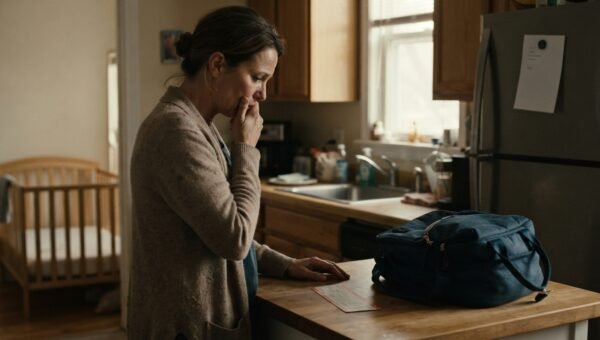
My knees nearly gave out right there by the road. I felt the blood drain completely from my face. My husband had not saved cash. He had forged my credentials, saddled me with a debt larger than our remaining mortgage, and let the payments bounce until repo agents were scheduled to pull into our driveway.
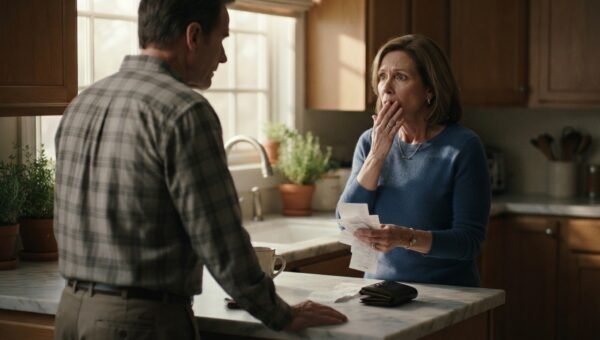
I marched into the house. Greg was sitting at the kitchen table with his laptop open, reviewing an invoice for a hydraulic pump. I threw the certified papers directly over his screen.
“Look at that,” I choked out, fighting back bile. “Look at it, Greg! You told me you paid cash. You forged my name on a seventy-one-thousand-dollar loan, and now they’re coming to take the car and ruin my credit!”
I braced myself for what normally happens when a spouse gets caught in a financial disaster. I expected him to shout, to make excuses, to stammer, or to break down in tears and beg for forgiveness.
Instead, Greg didn’t even flinch.
He slowly picked up the notice, glanced at the loan balance, and let out a long, heavy sigh. Then he leaned back in his chair, looked up at me, and his entire face relaxed.
“Thank God,” he muttered quietly. “I was honestly hoping you’d find out before she did.”
I stared at him, stunned into complete silence. “Before who did? What are you talking about?”
Greg stood up, walked over to the metal filing cabinet in our small laundry room, and brought back a manila folder. He laid it flat on the table, opened the flap, and slid another set of loan documents across the wood toward me.
“Look at the VIN,” he said.
I looked down. It was an identical vehicle purchase agreement from an entirely different credit union across the state line. The vehicle identification number was identical down to the last character. The car had been financed six weeks before my birthday for sixty-eight thousand dollars.
Then my eyes moved up to the primary borrower line.
It was not my name. It was not Greg’s name.
The name typed on the borrower line was Evelyn Miller.
My younger sister.
PART 2
The room felt like it was spinning. Evelyn is four years younger than me. She has lived alone in a modest two-bedroom bungalow three miles across town ever since her divorce eight years ago. She works as a medical billing specialist at the community clinic, watches every penny she makes, and has never bought a brand-new car in her entire life.
“Why is Evelyn’s name on a loan for my car?” My voice cracked, rising in pitch. “What did you do to my sister, Greg?”
“Sit down, Martha. Just listen to me for two minutes,” Greg said, his voice terrifyingly calm. He pulled out a chair for me, but I refused to touch it. “Last winter, the business hit a wall. You know that. What you didn’t know is that the parts distributor put a mechanic’s lien on my shop equipment because I owed forty thousand dollars in back orders. If I lost the shop, we lost everything.”
“So you bought an eighty-thousand-dollar luxury SUV?” I screamed. “How does that make any sense?”
“It wasn’t supposed to be an expense. It was capital,” he said, speaking as if he were explaining basic math to a child. “A guy I know through the trade association, a broker named Miller down near Cincinnati, told me about an inventory loophole. Some independent dealerships write secondary collateral paperwork on high-end transfer units before the manufacturer title clears through the state registry. If you have clean credit and an inside manager, you can initiate a pre-approved commercial lease-purchase, draw the funds against the dealer invoice, and hold the vehicle while the secondary paper processes.”
I felt nauseous. “Speak plain English, Greg.”
“Evelyn agreed to help me,” he insisted, holding his hands up defensively. “Back in April, I went to her house. I told her the shop needed bridge financing to clear the supplier lien before our summer contracts kicked in. I told her I found a commercial fleet deal where I could purchase a company vehicle under her signature, flip the unit immediately through an auto broker auction in Columbus, pocket thirty thousand dollars in net cash after paying off the equipment lien, and pay off her note within sixty days. She knew she was signing loan paperwork, Martha. She wasn’t blind.”
“And the birthday present?” I asked, my chest burning. “The red ribbon? The speech on the front porch for Tom and Brenda?”
Greg looked down at the floor, the first flicker of shame finally showing in his eyes. “The broker fell through. By mid-May, the auction market for luxury units softened, and he couldn’t move the car without taking a twenty-thousand-dollar loss on the paper. The dealer was demanding the car back or full funding from the lender. If Evelyn’s lender inspected the lot and found the vehicle missing, it was an immediate default trigger. So I took the paperwork to a second regional lender online. I used your employee verification from the county and registered the car under your name to pull a second loan payout to cover the first one.”
“You washed the loan,” I whispered, the horror settling deep into my bones. “You committed bank fraud. Twice.”
“I was juggling balls to keep the roof over our heads!” he yelled, suddenly defensive. “I thought the shop would have two major county municipal contracts signed by July. If those contracts came through, I was going to pay off Evelyn’s note completely, then refinance your note into the business name. I bought you the car because I wanted you to have something nice out of all this garbage! I thought I could fix it before either of you ever got a statement.”
“The letter in my hand says ninety days delinquent,” I said, my voice dead and cold. “If my loan is ninety days delinquent, that means Evelyn’s loan is four months delinquent. Have you talked to her?”
Greg didn’t answer. He turned his back to me and leaned heavily against the kitchen sink.
“Greg,” I said, louder this time. “Has Evelyn been getting collection calls?”
“Her cell phone went straight to voicemail when I tried calling her last week,” he muttered to the kitchen window. “Her address on the first loan application was routed to my commercial post office box so she wouldn’t get the initial statements. But the secondary collection warnings… they usually go to the home address on the driver’s license.”
I didn’t wait to hear another word. I grabbed my purse, took the set of keys to my old Subaru, and walked out the door. The white Lexus sat in the driveway, gleaming in the late afternoon sun like a monument to my husband’s arrogance and deceit. I backed down the gravel drive, kicked up stones, and drove straight to Evelyn’s house.
When I pulled up to her curb, her small front porch light was already on. I walked up the concrete steps and knocked hard on the door.
Evelyn opened it after three locks clicked. Her eyes were red and swollen, and she was wearing the gray cardigan she only puts on when she is sick or completely overwhelmed. Behind her on the dining table were stacks of white envelopes with bright red delinquent stamps spread across the mahogany surface.
She looked at me, and her chin trembled.
“Martha,” she sobbed, burying her face in her hands. “I am so sorry. I ruined everything. The sheriff was here two hours ago.”
PART 3
I pushed past the door, wrapped my arms around my sister, and held her while she shook. She had been crying for hours.
When she finally caught her breath, we sat at her small kitchen table with a pot of hot water between us. I laid my certified repossession notice right next to the thick stack of papers she had received.
Her paperwork told a completely different story than the one Greg had spun in our kitchen twenty minutes earlier.
“Greg came to me in tears back in April,” Evelyn explained, wiping her eyes with a damp paper towel. “He sat right where you’re sitting now. He told me that you were in deep medical debt. He told me you had found a lump during your annual exam, had a series of unauthorized biopsy screenings at the university hospital that our insurance refused to cover, and were too proud to tell anyone in the family.”
A wave of cold rage washed over me so intense I thought my heart might give out. “He told you I was sick?”
“He told me you had forty-five thousand dollars in pending medical bills and that collection agencies were threatening to garnish your county wages,” Evelyn cried. “He told me he had an arrangement with a fleet logistics company through his shop. He said if I co-signed on an asset acquisition loan for a company transport vehicle, the business would receive a thirty-five-thousand-dollar equipment rebate check within thirty days that he could hand directly to the hospital billing office to wipe out your debt.”
He had not told her about an equipment supplier lien. He had weaponized her love for me. He knew Evelyn would never risk her credit for a failing machinery repair shop, but she would move mountains to save her older sister from financial ruin.
“He told me he would handle every single payment through his business account,” Evelyn continued, her hands trembling as she smoothed out a document. “He promised my name would be removed within ninety days once the title cleared. Then, three weeks ago, my debit card was declined at the grocery store. I checked my checking account, and my bank had frozen my savings because of a cross-collateralization clause on my car loan. My credit score dropped three hundred and ten points overnight. And today… today a county process server handed me a court summons for a civil judgment from an auto lender in Cleveland.”
“The car is sitting in my driveway right now, Evelyn,” I told her, my voice steely and steady. “He didn’t sell it to an auction. He put a red bow on it and gave it to me for my fifty-fifth birthday. And then he forged my signature on a second loan with another lender to keep the dealer quiet.”
Evelyn stared at me in horror. “He committed identity theft against both of us.”
“Yes, he did.”
We spent the next three hours going through every single piece of paper on that table. We laid out the timeline. Greg had acquired the vehicle using Evelyn’s pristine seven-hundred-and-eighty credit score in mid-April. When the first payment bounced in May, the dealership began getting audit flags from the lender. Desperate to prevent Evelyn from finding out, Greg accessed my personal filing cabinet at home, took my county pay stubs, forged my signature on an online loan portal, and processed a secondary title application using an altered dealer purchase agreement.
He didn’t do it to save our family. He did it to maintain his image as a successful business owner, a generous husband, and a capable man who had everything under control. He had risked his sister-in-law’s home and his wife’s livelihood just so he could stand on our front lawn in front of Tom and Brenda and play the hero.
At nine o’clock that evening, I called our oldest son, David, who works as a loan officer for a regional agricultural bank two counties over. I put the phone on speaker between Evelyn and me and laid out the facts without emotion.
David listened in total silence for twenty minutes. When I finished, he didn’t try to defend his father.
“Mom,” David said quietly, his voice heavy with grief. “This isn’t a family dispute. This is dual-lender bank fraud and identity theft. If the repo agency picks that car up from your driveway before you report the forgery, the second lender will file a criminal affidavit alleging grand larceny against whoever possesses the vehicle. You and Aunt Evelyn have to go to the police station tomorrow morning. If you don’t file the police report first, you become co-conspirators in the eyes of the credit bureaus.”
“Your father will go to prison, David,” I whispered, the weight of thirty years of marriage crashing down on my shoulders.
“Dad made his choice when he used Aunt Evelyn’s social security number,” David replied firmly. “Do not go down with him.”
ENDING
I did not sleep that night. I slept on Evelyn’s guest bed, and at eight o’clock the following morning, the two of us walked into the county sheriff’s department.
We sat in a small, windowless interrogation room with a detective from the financial crimes division. We laid out both loan packets, the certified repossession notices, my county payroll verification, and an affidavit from my bank verifying that the IP address used to sign the second loan originated from Greg’s shop computer while I was clocked into work at the administration building.
The detective took notes for an hour, shook our hands, and told us we had done the only thing that could save our personal credit records from total destruction.
By noon, two county deputies and a private flatbed tow truck pulled into my driveway.
Greg was in the garage working on a tractor engine when the deputies stepped out of their cruiser. Through the open garage door, I watched him walk out, wiping grease from his hands with a red rag. When he saw the tow truck backing up toward the pearl-white Lexus, his shoulders slumped. He looked over at my Subaru parked on the street. He saw me sitting in the driver’s seat with Evelyn beside me, watching him.
He didn’t wave. He didn’t shout. He stood frozen on the lawn as the deputies spoke to him, handed him a clipboard of paperwork, and escorted him into the back of their patrol vehicle without handcuffs while they took his official statement. The flatbed winch whined loudly as the Lexus was dragged up onto the metal ramps, its tires screeching against the steel before it was secured with heavy chains and hauled away.
The legal fallout took nearly fourteen months to fully resolve.
Because Evelyn and I filed immediate identity theft reports with the police, the Federal Trade Commission, and both financial institutions, the lenders were forced by federal law to remove the seventy-one-thousand-dollar and sixty-eight-thousand-dollar default marks from our credit reports. Evelyn’s bank unfroze her savings account, and her credit score slowly crawled back above seven hundred.
Greg was not sent to state prison, largely because he had no prior criminal record and cooperated fully with the county prosecutor. Instead, he accepted a felony plea agreement for forgery and grand theft by deception. He received five years of supervised probation, eighty days of community service, and a mandatory restitution order to cover the dealer fees, auction losses, and legal costs totaling fifty-four thousand dollars.
His business did not survive the felony conviction. The commercial supplier canceled his account immediately, his commercial insurance was revoked, and he was forced to liquidate every piece of shop equipment at a public sheriff’s auction to satisfy the outstanding mechanics’ liens.
I filed for divorce three weeks after the car was towed.
People in our small town had plenty to say. Brenda from across the street came over once while I was packing boxes and asked me how I could abandon my husband of nearly three decades over a financial mistake when he was only trying to give me something beautiful.
I looked at Brenda, remembered the sight of my sister weeping at her kitchen table with a sheriff’s summons in her hand, and simply closed the door in her face.
It was never about a car. It was about the fact that Greg was entirely comfortable setting fire to the women who loved him just to keep himself warm in the glow of other people’s admiration.
I sold our house in the spring. After paying off the remaining thirty-four thousand dollars on the mortgage and splitting the remaining equity per the court settlement, I had enough money to put a down payment on a modest brick duplex two doors down from Evelyn.
I still drive my eleven-year-old Subaru Outback. Last month, I finally paid cash out of my own checking account to have the heater blend door replaced. The heat blows hot and clean through the vents now, every single morning. It doesn’t have a backup camera, heated leather seats, or a digital dashboard. But every mile on that odometer belongs entirely to me, paid for with honest work, and nobody will ever come in the middle of the night to take it away.