PART 1
Thirty-four years of marriage teaches you how to ignore certain things. You learn which drawers not to open, which old photographs to pass by without comment, and how to accept the small, quiet corners of privacy your spouse carves out for themselves. I thought I knew everything about Claire. We met when we were both in our late twenties, weathered from previous losses, and looking for something steady.
Her first husband, a man named Arthur, had passed away from a sudden heart condition just three years before we met. She still used his last name on a single legacy checking account at a credit union across town. For decades, I let it go. It seemed harmless. A stubborn anchor to a chapter of her life that ended in tragedy.
The trouble started on a Tuesday morning in October when Claire and I sat across the desk from a loan officer named Marcus at our local bank. We were applying for a home equity line of credit to fix our aging roof and upgrade the HVAC system before winter set in. We brought our tax returns, our retirement statements, and three months of bank records. Marcus was friendly, professional, and efficient until he stopped typing. He stared at his monitor for a long, uncomfortable minute, his fingers hovering over the keyboard.
He turned the screen slightly toward us, pointing at a line item on our consolidated asset verification printout. It was an automatic monthly transfer of three hundred dollars originating from Claire’s legacy credit union account. The routing number traced back to an individual account held at a different regional bank. The transfer had gone out on the same day every single month for one hundred and thirty-two months. Eleven straight years.
I looked at Claire. Her face went entirely bloodless. Her hands, resting on top of her purse, clenched so tight her knuckles turned white.
I asked Marcus what account that was, assuming it was some forgotten utility or an old insurance policy tied to her late husband’s estate. Marcus shook his head and told us that for the purpose of the loan underwriting, any recurring monthly debt obligation of that size had to be fully disclosed and accounted for, or the application would stall under compliance rules.
He asked Claire who the recipient was. Claire looked straight ahead at the wall behind Marcus and said it was a private personal matter that had nothing to do with our joint finances or our home.
Marcus politely excused himself for ten minutes to speak with his branch manager. The moment the glass door clicked shut behind him, I turned to my wife. I asked her what she had been paying three hundred dollars a month for the last eleven years without telling me. Eleven years meant it started right after our tenth wedding anniversary, during a time when we were pinching pennies to pay for our daughter’s braces and scraping together tuition money.
Claire refused to look at me. She kept her chin tilted up, her jaw set in that stubborn way that used to end our arguments before they began. She whispered that I needed to drop it, that I had to trust her, and that if Marcus pressed us, we would just walk out of the bank and forget about the home equity loan.
But I couldn’t just forget it. Three hundred dollars a month is nearly forty thousand dollars over eleven years. In our house, forty thousand dollars was not a minor rounding error. It was a new car, a safety net, or peace of mind.
When Marcus returned, he did not look happy. He informed us that under federal lending guidelines, unexplained recurring outflows of that nature required a signed statement of purpose or proof of third-party settlement. Claire looked him dead in the eye and told him we were withdrawing our application. She stood up, grabbed her coat, and walked out of the branch before I could even gather our paperwork. I muttered an apology to the loan officer, scooped up our folders, and hurried out into the parking lot after her.
PART 2
The drive home was conducted in a silence so thick you could have cut it with a knife. I kept my eyes fixed on the wet asphalt, my hands gripping the steering wheel until my palms ached. Every time I tried to ask a question, Claire simply turned her head toward the passenger window and stared out at the passing storefronts. By the time we pulled into our driveway, my chest felt tight with a mixture of anger and a cold, creeping dread. I had spent half my life trusting this woman, sharing a bed, paying taxes, raising a family, and building a quiet retirement. Now I felt like a stranger sitting next to someone I had never truly met.
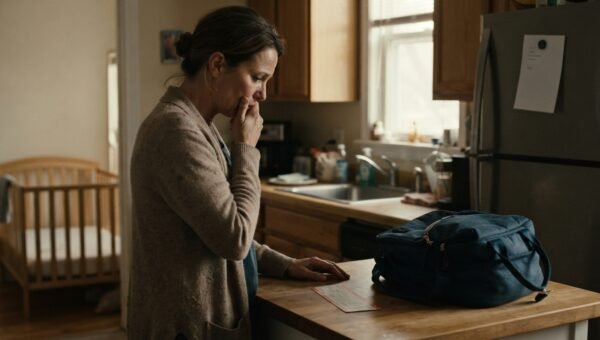
Inside the house, Claire dropped her keys on the entry table and headed straight for the kitchen. I followed her, planting myself in the doorway so she couldn’t walk past me. I told her we were done playing games. I told her that if she didn’t tell me right now who she had been sending three hundred dollars to every month since 2015, I was going to pull our joint bank statements from the last twenty years and hire someone to untangle every penny.
Claire stopped with her hand on the refrigerator door. Her shoulders slumped forward, and the rigid posture she had maintained all morning finally collapsed. She turned around, her eyes red-rimmed and swimming with tears. She didn’t yell or try to deflect. She just let out a long, ragged sigh that sounded like air escaping a punctured tire.
She told me to grab my jacket. She said she couldn’t explain it with words, that I wouldn’t believe her if she just sat there and talked, and that she had to show me. I asked her what on earth she was talking about. She just repeated herself, her voice shaking, telling me to get back in the truck if I wanted the truth.
We drove for twenty-five minutes out toward the older, industrial side of the city, past the brick warehouses and the overgrown rail yards, stopping in front of a faded beige apartment complex with peeling paint and tired landscaping. It was the kind of place people lived when they had run out of choices or were just barely keeping their heads above water. Claire parked her car near a row of overflowing trash bins, turned off the ignition, and sat staring at the steering wheel for a long moment. She whispered that this was where the money went. Then she opened her door and motioned for me to follow her up the concrete exterior stairs to unit 204.
PART 3
My heart hammered against my ribs as I climbed the stairs behind her. Claire knocked twice on the battered metal door of apartment 204. After a few seconds, the lock clicked and the door swung open. A young man in his late twenties stood in the doorway, wearing a faded t-shirt and holding a sleepy toddler with messy brown curls on his hip. He looked tired, with deep circles under his eyes and shoulders that carried the distinct weight of a hard life.
When he saw Claire, his face lit up with a warm, complicated smile. He called her “Aunt Claire” and stepped back to let us in. For a fraction of a second, a wave of relief washed over me. I thought maybe it was some down-on-his-luck nephew, a son of a deceased sibling that Claire had been quietly supporting behind my back because she was too proud to ask me to share the burden. I thought about how we could handle that, how family is family, and how we could have just talked about it openly.
Then I stepped inside the small, cramped living room and looked around.
The apartment smelled faintly of cheap formula and damp carpet. On the faux-wood wall paneling next to a small television, there was a small gallery of cheap frames holding family snapshots. My eyes drifted to a faded, black-and-white polaroid pinned near the center. It showed a very young Claire, no older than nineteen, standing outside the steps of a county hospital, looking down with a soft, bewildered expression at a small bundle wrapped in a knitted blue blanket.
Someone had taken a fine-tip black marker and written words across the bottom margin of the photo, right beneath the edge of the blanket. I stepped closer, my breath catching in my throat as I read the handwritten caption. It said: Mother of Thomas, age seventeen days.
I turned around slowly, my eyes locking onto my wife. She was standing by the small kitchen counter, her head bowed, her hands pressed flat against the laminate surface as if she were trying to hold the earth steady beneath her feet. I looked back at the young man, who was now setting the toddler down on a worn rug with plastic toys scattered across it. I looked at his jawline, the shape of his nose, and the exact way his ears set against his head. He looked older than nineteen now, but the features were unmistakable.
I asked Claire if this was what the checks were for. Not a charity case. Not a distant nephew.
Claire did not even wait for me to finish the sentence. She started crying, a deep, ugly sob that wrenched itself out of her chest, falling into a chair by the kitchen table and covering her face with her trembling hands.
My Wife Kept Her First Husband's Account, Then I Found Out Who She Was Really Paying Every Month
Thirty-four years of marriage teaches you how to ignore certain things. You learn which drawers not to open, which old photographs to pass by without comment, and how to accept the small, quiet corners of privacy your spouse carves out for themselves. I thought I knew everything about Claire. We met when we were both in our late twenties, weathered from previous losses, and looking for something steady. Her first husband, a man named Arthur, had passed away from a sudden heart condition just three years before we met. She still used his last name on a single legacy checking account at a credit union across town. For decades, I let it go. It seemed harmless. A stubborn anchor to a chapter of her life that ended in tragedy.

The trouble started on a Tuesday morning in October when Claire and I sat across the desk from a loan officer named Marcus at our local bank. We were applying for a home equity line of credit to fix our aging roof and upgrade the HVAC system before winter set in. We brought our tax returns, our retirement statements, and three months of bank records. Marcus was friendly, professional, and efficient until he stopped typing. He stared at his monitor for a long, uncomfortable minute, his fingers hovering over the keyboard.

He turned the screen slightly toward us, pointing at a line item on our consolidated asset verification printout. It was an automatic monthly transfer of three hundred dollars originating from Claire's legacy credit union account. The routing number traced back to an individual account held at a different regional bank. The transfer had gone out on the same day every single month for one hundred and thirty-two months. Eleven straight years.

I looked at Claire. Her face went entirely bloodless. Her hands, resting on top of her purse, clenched so tight her knuckles turned white.

I asked Marcus what account that was, assuming it was some forgotten utility or an old insurance policy tied to her late husband's estate. Marcus shook his head and told us that for the purpose of the loan underwriting, any recurring monthly debt obligation of that size had to be fully disclosed and accounted for, or the application would stall under compliance rules. He asked Claire who the recipient was. Claire looked straight ahead at the wall behind Marcus and said it was a private personal matter that had nothing to do with our joint finances or our home.

Marcus politely excused himself for ten minutes to speak with his branch manager. The moment the glass door clicked shut behind him, I turned to my wife. I asked her what she had been paying three hundred dollars a month for the last eleven years without telling me. Eleven years meant it started right after our tenth wedding anniversary, during a time when we were pinching pennies to pay for our daughter's braces and scraping together tuition money.

Claire refused to look at me. She kept her chin tilted up, her jaw set in that stubborn way that used to end our arguments before they began. She whispered that I needed to drop it, that I had to trust her, and that if Marcus pressed us, we would just walk out of the bank and forget about the home equity loan. But I couldn't just forget it. Three hundred dollars a month is nearly forty thousand dollars over eleven years. In our house, forty thousand dollars was not a minor rounding error. It was a new car, a safety net, or peace of mind.

When Marcus returned, he did not look happy. He informed us that under federal lending guidelines, unexplained recurring outflows of that nature required a signed statement of purpose or proof of third-party settlement. Claire looked him dead in the eye and told him we were withdrawing our application. She stood up, grabbed her coat, and walked out of the branch before I could even gather our paperwork. I muttered an apology to the loan officer, scooped up our folders, and hurried out into the parking lot after her.
PART 2

The drive home was conducted in a silence so thick you could have cut it with a knife. I kept my eyes fixed on the wet asphalt, my hands gripping the steering wheel until my palms ached. Every time I tried to ask a question, Claire simply turned her head toward the passenger window and stared out at the passing storefronts. By the time we pulled into our driveway, my chest felt tight with a mixture of anger and a cold, creeping dread. I had spent half my life trusting this woman, sharing a bed, paying taxes, raising a family, and building a quiet retirement. Now I felt like a stranger sitting next to someone I had never truly met.

Inside the house, Claire dropped her keys on the entry table and headed straight for the kitchen. I followed her, planting myself in the doorway so she couldn't walk past me. I told her we were done playing games. I told her that if she didn't tell me right now who she had been sending three hundred dollars to every month since 2015, I was going to pull our joint bank statements from the last twenty years and hire someone to untangle every penny.

Claire stopped with her hand on the refrigerator door. Her shoulders slumped forward, and the rigid posture she had maintained all morning finally collapsed. She turned around, her eyes red-rimmed and swimming with tears. She didn't yell or try to deflect. She just let out a long, ragged sigh that sounded like air escaping a punctured tire.

She told me to grab my jacket. She said she couldn't explain it with words, that I wouldn't believe her if she just sat there and talked, and that she had to show me. I asked her what on earth she was talking about. She just repeated herself, her voice shaking, telling me to get back in the truck if I wanted the truth.

We drove for twenty-five minutes out toward the older, industrial side of the city, past the brick warehouses and the overgrown rail yards, stopping in front of a faded beige apartment complex with peeling paint and tired landscaping. It was the kind of place people lived when they had run out of choices or were just barely keeping their heads above water. Claire parked her car near a row of overflowing trash bins, turned off the ignition, and sat staring at the steering wheel for a long moment. She whispered that this was where the money went. Then she opened her door and motioned for me to follow her up the concrete exterior stairs to unit 204.
ENDING

```text
The young man, Thomas, looked back and forth between us with a heavy, resigned expression that told me he had lived through this exact moment a hundred times in his head. He walked over to the kitchen counter, picked up a worn ceramic mug, and softly told me not to yell at her. He explained that he wasn't looking for trouble, that he hadn't known about the adoption surrender papers until he tracked down his original sealed birth records two years after turning eighteen, and that Claire had only started sending the money voluntarily when he lost his job at the warehouse during the winter layoff cycle and was facing eviction with his infant son.

I stood there in that cramped, overheated room while the pieces of my entire marriage fractured and rearranged themselves into something unrecognizable. Thirty-four years of shared history, taxes, vacations, quiet Sunday mornings, and mutual trust dissolved into a pile of ash in less than five minutes. It wasn't just the secret itself, though the sheer scale of hiding a child for decades cut deeper than any knife. It was the fact that she had lived a completely separate life right beside me, guarding a locked vault in her mind that I was never permitted to touch.

I did not scream. I did not make a scene in front of the young man or his little boy. I simply looked at Claire, who was still weeping quietly into her hands, unable to meet my eyes. I told her quietly that I was going back to the truck.

I walked out of that apartment, down the concrete steps, and got into the passenger seat of our vehicle because my legs felt too weak to drive. I sat there in the autumn chill, staring out at the dingy parking lot, waiting for her to come down, knowing with absolute certainty that when we finally got back to our house, everything was already over.