PART 1
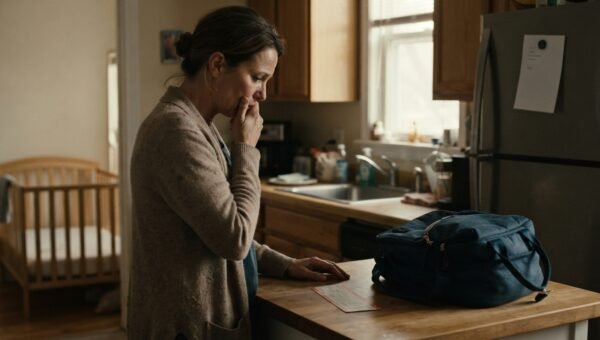
When my father died, his second wife, Linda, locked the door to his study before the ambulance had even cleared the driveway. She looked at me across the living room with dry, hard eyes that showed no sign of the thirty years they had spent together. I was grieving, exhausted from months of hospital vigils, and unprepared for a battle. When I asked about his ashes, she didn’t hesitate.
She told me he wanted to stay with her in the house they bought together, right above the mantelpiece in a heavy ceramic urn.
It felt wrong. For as long as I could remember, Dad talked about the old timber pier at Willow Lake. That was where he taught me how to cast a line when I was seven, before my mother passed away and long before Linda ever entered our lives. He had said a hundred times that when his time came, he wanted his dust carried out past the reeds where the water runs deep and clear. But when I brought that up, Linda crossed her arms and shut me down completely. She claimed he changed his mind last summer, that she knew his final wishes better than a daughter who lived three hours away and only visited on holidays. I didn’t fight her. I was too tired, too heavy with the grief of losing the last real anchor of my family.
I let her keep the urn, believing I had already lost him entirely.
Two months passed in a gray blur of work and quiet emptiness. Then my phone rang on a Tuesday morning. It was the director at Miller and Sons Funeral Home. He asked if I was the daughter of Arthur Vance, and when I told him I was, he paused before speaking carefully. He said there was an unclaimed item left in my father’s file that required a signature and an in-person pickup. I assumed it was an extra copy of the death certificate or some delayed paperwork regarding the cemetery plot Linda had supposedly purchased. I drove out there on my lunch break, parking my sedan in the gravel lot behind the brick building.
The director led me back to his office, pulled a manila folder from a filing cabinet, and slid a small, heavy envelope across the desk.
Inside was not paper. It was a tarnished brass fishing lure, the kind with a double treble hook and a worn red stripe, and a small, folded greeting card stamped with a faded picture of a bass jumping out of water. I unfolded the card. Dad’s handwriting was unmistakable, cramped and leaning hard to the left. He had written: If Linda keeps the ashes, let her have her peace. Take this to the lake instead. This is what belongs to us.
I stared at the words, my throat tightening. He had dropped this package off at the funeral home a full year before he died, anticipating Linda’s stubborn control and preparing his own quiet escape route for me. I picked up the heavy brass lure, turning it over in my palm. The metal was cold against my skin. Near the eyelet, where the paint had chipped away from years of tackle box wear, someone had scratched numbers into the brass using a sharp tool.
Latitude and longitude coordinates, followed by a specific date: October 14, 1996.
The date hit me like a physical blow. That was the exact Tuesday in autumn when my ten-year-old brother, Toby, vanished from the state park near Willow Lake while out on a camping trip with Dad. The official story, accepted by the police and local newspapers back then, was that Toby wandered off into the dense pine woods as dusk fell and succumbed to the elements before search parties could find a trace of him. But looking at those scratched coordinates on the lure, sitting in the quiet funeral home office, I knew my father had spent thirty years carrying a secret about that day.
PART 2
I left the funeral home without going back to work, driving straight out toward the old state park road that led to the western shore of Willow Lake. The autumn air was sharp, smelling of damp earth and decaying leaves, almost identical to the weather on the day Toby disappeared. As I turned down the narrow gravel access road that had been closed to public vehicles for over a decade, my tires crunched rhythmically against the stone. I parked near the rusted metal gate where the paved road ended and pulled a pair of sturdy hiking boots from my trunk, lacing them up with trembling fingers.
Using my phone’s GPS, I punched in the numbers scratched into the brass lure: 45.2819 north, 84.6132 west. The map application spun for a moment before dropping a red pin deep inside a wooded ridge that overlooked a hidden cove, about two miles off the main hiking trail. Nobody went back there. The terrain was steep, choked with briars and fallen hemlock trees that had rotted into soft mounds of orange mulch.
As I hiked deeper into the woods, the silence grew heavy. The canopy of oak and pine blocked out the afternoon sun, casting long, bruised shadows across the forest floor. I kept my hand closed tightly around the brass lure in my coat pocket, feeling its sharp edges press against my palm. Every step felt like walking backward through time. I remembered October 1996 with agonizing clarity, the frantic search parties with their orange vests, the search dogs whining in the cold air, and my father sitting on an overturned bucket by the command tent, staring at the ground with a look of absolute, hollow devastation that I had never understood until now.
When my phone chimed, signaling that I was within fifty feet of the coordinates, I stopped and looked around. I was standing on a high ridge overlooking a steep ravine where a seasonal creek had long since dried up. At the base of a massive, split-trunk oak tree that looked centuries old, the ground appeared slightly depressed, as if the earth had settled over a long period. Resting against the roots of the tree was a weathered gray plastic toolbox, half-buried under a thick carpet of pine needles and damp moss.
I dropped to my knees beside the box, my breath catching in my throat. My fingers brushed away the dirt and pine needles, uncovering a rusted metal latch. I snapped the latches open, the metal groaning in the quiet forest, and lifted the lid. Inside, protected by layers of heavy-duty plastic sheeting and electrical tape, was a collection of items that instantly unraveled everything I thought I knew about my family.
PART 3
I peeled back the plastic wrapping with shaking hands, laying the contents out across a flat slab of grey slate near the base of the oak tree. There was a small, canvas duffel bag containing children’s clothing, sized for a ten-year-old boy, neatly folded and remarkably well-preserved. Beside it sat a heavy brown leather wallet, water-damaged but intact. I opened the wallet and found Toby’s school picture from the third grade, along with several hundred dollars in old twenty-dollar bills that still had the small portraits.
At the bottom of the toolbox was a thick stack of legal-sized paper, bound with a thick rubber band that snapped the moment I touched it. It was a journal, handwritten entirely in my father’s precise, draftsman handwriting. The first entry was dated October 14, 1996—the night Toby went missing. I sat down hard on the damp earth, ignoring the cold seeping through my jeans, and opened the notebook to the first page.
The words jumped out at me, stark and horrifying. Dad hadn’t lost Toby to the woods. He hadn’t wandered off into the dark. According to the journal, my father had discovered that his business partner, a man named Arthur Vance Sr.’s long-time associate Marcus Gable, had been embezzling thousands of dollars from their construction firm, threatening to ruin our family and frame my father for federal fraud. On that October afternoon, Marcus had intercepted my father at the lake cabin, demanding the company ledgers and threatening not just financial ruin, but physical harm to me and my little brother if my father went to the police.
Toby had walked into the cabin while they were arguing, hearing things a ten-year-old was never meant to hear. The journal entry described an accidental confrontation, a sudden push, and a tragedy that happened before my father could stop it. Marcus, panicking, had helped my father cover it up, convincing him that if the truth came out, Dad would go to prison for manslaughter and I would be left an absolute orphan with nothing. They buried Toby in a shallow grave right here on the ridge, constructing an elaborate lie about a lost child in the woods to protect my father from a life sentence and Marcus from exposure.
For thirty years, my father lived with that crushing secret, tormented by guilt, while staying married to Linda—who had known Marcus socially back then and had quietly helped broker business ties between them years later. As I turned to the final entries, written just weeks before my father died, the truth crystallized into sharp focus. Dad had tried to break away from Marcus, threatening to go to the authorities with this exact box of evidence. Marcus, now a wealthy local developer, had been visiting the house under the guise of old friendship, keeping my father isolated and heavily medicated during his final illness. Linda had been helping him manage the household, keeping me at a distance to ensure nobody looked too closely at Dad’s papers before he passed away.
ENDING
I packed the journal, the wallet, and the boy’s belongings back into the plastic sheeting, sealing the box as securely as I could before carrying it back down the trail to my car. I drove straight past my apartment and headed directly to the state police barracks forty miles away, bypassing the local town where Marcus’s influence ran deep.
When I placed the toolbox on the metal intake counter and slid my father’s confession across to the duty sergeant, the atmosphere in the room shifted instantly. Two detectives were assigned to the case before the end of my shift, and within forty-eight hours, search warrants were executed at both the remote ridge and Marcus Gable’s sprawling lakefront estate. They recovered the physical remains where my father’s journal indicated, bringing my little brother home after three decades of cold silence.
Linda called me four days later, her voice shrill and panicked, demanding to know why police cruisers were parked outside her home and why her bank accounts had been frozen under suspicion of obstruction and conspiracy. I didn’t scream at her. I didn’t argue about the ceramic urn sitting on her mantelpiece. I simply told her that the truth was finally out of the woods, and hung up the phone for good. I took my father’s brass fishing lure out to the edge of Willow Lake the following weekend, standing alone on the old timber pier as the morning mist rose off the water. I didn’t scatter ashes, because my father didn’t get his peaceful rest quite yet, but I dropped the little brass lure into the deep current where it finally sank out of sight, washing away thirty years of lies.