PART 1
The hospice nurse told me to get some rest, but I couldn’t leave the armchair beside Arthur’s bed. For nine years, our house had been defined by a heavy, suffocating silence. It was the silence left behind when our only daughter, Chloe, packed a single suitcase, slammed the front door, and swore she would never set foot in our home again. She hadn’t spoken to her father since the night of that terrible argument, and she hadn’t spoken to me in five years, after I made the agonizing choice to stand by my husband instead of listening to my own child.
Arthur had wasted away over the final six months, cancer eating through him until he was nothing more than a frail shadow beneath a cotton blanket. On his final afternoon, when he could barely muster the breath to whisper, he looked straight into my eyes and made me swear a solemn oath. He gripped my wrist with a surprising, desperate strength and told me not to call Chloe. He said she had made her choice years ago, that a funeral wouldn’t change her stubborn heart, and that dragging her back into our misery would only bring more pain. I promised him I would keep the service small and private. I wanted to honor his dying wish because I believed, naively, that he was simply trying to spare us all one final bitter confrontation.
Arthur passed away quietly just before midnight. The next morning, while the funeral director was handling the initial arrangements, I went back into our bedroom to gather a change of clothes for Arthur to wear.
That was when I noticed the cheap, battered prepaid phone tucked between the mattress and the wooden headboard. It was an old model, the kind you buy off a rack at the local pharmacy with cash, entirely separate from our monthly family plan. The screen flickered to life when I pressed the side button. It didn’t ask for a face ID or a passcode; it opened right up to a messaging app filled with hundreds of unsent drafts, all addressed to the same number, and all saved under a childhood nickname I hadn’t heard spoken aloud in nearly a decade: Little Bird.
My hands began to shake as I scrolled through the dates. The messages spanned years, filled with broken sentences, apologies that were never sent, and fragments of a lonely old man trying to reach across an unbridgeable chasm. But it was the very last draft, saved just two days before Arthur lost consciousness, that made the blood freeze in my veins.
The text read: I finally found the proof you were right about the accident. Attached to it was an insurance document with a digital timestamp and a header I had never seen before in my life. The name of the driver listed on the official loss report wasn’t my husband. It was someone our daughter had accused years earlier, back during the trial and the police investigation, when Arthur and I both stood in front of her, looked her in the eye, and told her she was confused, hysterical, and lying to protect her own careless driving.
PART 2
I sat down hard on the edge of the mattress, the cheap plastic phone burning into my palm. The name on the insurance document belonged to Bradley Vance, a local contractor’s son and a boy Chloe had dated briefly during her senior year of high school. I remembered the night of the accident with sickening clarity.
It was a rainy Tuesday in November. Chloe had called us from the side of a county road, her voice hysterical, sobbing that Bradley had run another car off the embankment near the old mill bridge, leaving a passenger with permanent injuries, before forcing Chloe to swap seats so the police would think she was the one behind the wheel.
When the local sheriff arrived, Bradley was standing right beside her, calm, polite, and wearing a borrowed jacket, while Chloe was shaking so hard she could barely stand. Bradley told the responding officer that Chloe had panicked while driving his truck on a slick curve. Because Chloe had trace amounts of cold medicine in her system from a lingering sinus infection, and because Bradley’s family had deep roots and influence in the county, the initial report treated her as the primary suspect. Arthur and I had believed the police report over our own daughter. We sat in the courtroom gallery and watched her plead her innocence, our faces carved with disappointment. When the judge handed down a suspended sentence and probation, Arthur refused to let her back into the house until she admitted her guilt. Chloe refused to lie, packed her bags that very night, and walked out of our lives forever.
Now, staring at the digital file on the prepaid phone, the truth stared back at me with terrifying precision. Arthur hadn’t just stumbled upon this document by accident; he had spent the last four years quietly investigating the case behind my back. The attachment contained a scanned deposition from a mechanic who had repaired Bradley’s truck the morning after the crash, detailing front-end damage that matched the other vehicle’s paint, along with a bank statement showing a mysterious five-thousand-dollar transfer from Arthur’s personal savings account to a private investigator in a city three counties over. My husband had known the truth for years. He had spent thousands of dollars confirming it, yet he kept it buried in the memory of a burner phone to protect his own pride and to shield himself from the crushing guilt of knowing he had broken his daughter’s life and never asked for her forgiveness.
PART 3
The funeral was a small, muted affair held under a gray autumn sky. A handful of aging neighbors and my sister attended, but the pew on my left remained entirely empty, just as Arthur had planned. Throughout the service, the prepaid phone rested heavily in my coat pocket like a stone. Every time someone offered condolences, my mind drifted back to the screen and the hundred unsent messages. Arthur was gone, taking his secrets to the grave, but he had left the burden of his cowardice directly on my doorstep. I realized then that if I followed his dying wish and kept quiet, I would be just as guilty as he was. I would be choosing the comfort of a quiet lie over the agonizing, necessary work of facing the truth.
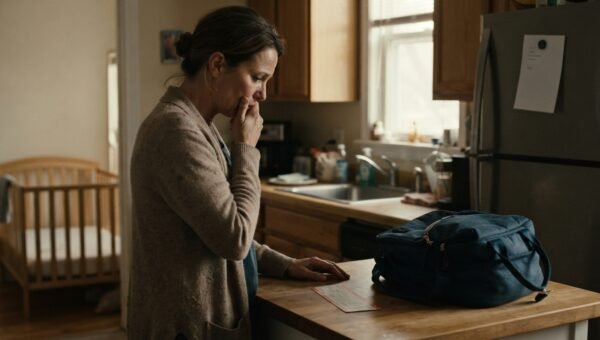
The morning after the burial, I sat at the kitchen table with a cup of cold coffee and stared at the contact information attached to the burner phone. There was a single phone number listed under the name Little Bird, along with a physical address for an apartment in a coastal town two hours north where Chloe had managed to build a quiet life away from the wreckage of our family. My fingers hovered over the keypad for nearly an hour. Every excuse imaginable ran through my head: she had made it clear she wanted nothing to do with us; reopening old wounds would only cause more suffering; maybe I should just mail the phone anonymously and let her draw her own conclusions. But the image of my husband’s final, desperate grip on my wrist convinced me otherwise. He wasn’t trying to protect Chloe; he was trying to protect his own legacy from the shame of what he had done.
I dialed the number, my heart hammering against my ribs so loudly I thought it would drown out the ringing tone. It rang four times before a cautious, guarded voice answered on the other end. It was a voice older, firmer, and more tired than the one I remembered slamming our front door nine years ago, but it was unmistakably my daughter. She didn’t say hello; she simply waited, listening to the static on the line as I struggled to find the air to speak.
ENDING
“Chloe,” I whispered, my voice cracking entirely. “It’s Mom.”
There was a sharp intake of breath on the other end, followed by a long, heavy silence that felt heavier than anything Arthur had left behind. For a second, I thought she was going to hang up, and I wouldn’t have blamed her.
“Why are you calling?” Chloe asked, her voice dangerously steady, devoid of the tears I had expected. “Dad made it clear years ago that I didn’t exist anymore.”
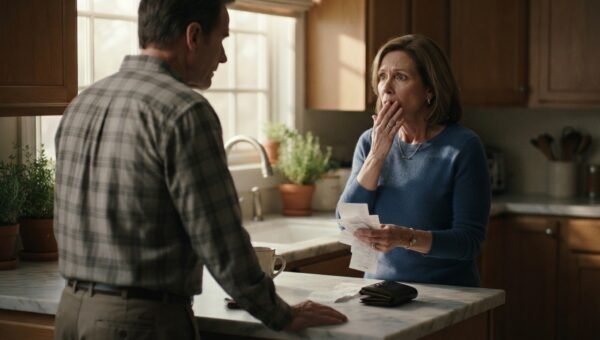
“Your father passed away two days ago,” I said, tears finally spilling down my cheeks as I pulled the burner phone out and laid it flat on the wooden table. “Before he died, he left something behind. He didn’t want me to call you, Chloe. But I found his hidden phone. I found the insurance papers. I found everything.”
Another pause stretched between us, filled only by the distant hum of traffic outside her apartment. When she spoke again, the guarded wall in her tone had cracked, replaced by the ghost of the terrified girl who had stood by the side of a dark road a lifetime ago.
“Did he know?” she asked softly, the tremor in her voice cutting straight to my soul. “Did he know the truth before he died?”
“Yes,” I answered, closing my eyes as the full weight of our shared devastation settled over the kitchen. “He knew. And I am so, so sorry we didn’t listen.”
I stayed on the phone with her for three hours, not offering excuses or defenses, but simply listening as the years of silence finally began to melt away. The road to rebuilding what was broken would be long and painful, but for the first time in nearly a decade, the silence in our house was finally gone.