PART 1
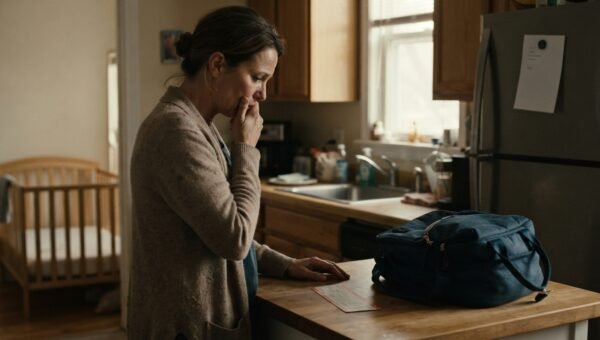
The silence in my kitchen had grown so heavy that I started jumping whenever the refrigerator clicked on. For six months, the calendar on the wall remained completely blank where Sunday family dinners used to be marked in red ink. My son, Mark, stopped bringing seven-year-old Lily around after I told him no. Twenty thousand dollars was not a number I could pull from a savings account. It was a sum that required selling things I had spent decades gathering, or dismantling the quiet security I built after my husband passed.
When Mark asked for the loan back in February, he sat right where you are imagining, at my laminate kitchen table, twisting his wedding ring until his knuckle turned white. He said his landscaping business had hit a wall with equipment failure and payroll taxes, and that a local supplier was threatening to slap a lien on his trucks. He swore on Lily’s head that it was a temporary bridge loan. He promised he would pay it back in four equal installments once a municipal contract cleared in the spring.
I wanted to believe him because mothers are wired to look for any excuse to rescue their children. But my accountant had reviewed my fixed income the previous month when we filed my taxes, and my margins were razor thin. I told Mark the truth with my hands shaking around my coffee mug. I told him I simply did not have twenty thousand dollars to give, and even if I did, tying up my retirement fund would leave me vulnerable if my health failed.
Mark’s face did not crumple into sadness. It hardened into something cold and unfamiliar. He stood up so fast his chair scraped loudly against the linoleum. He told me I was choosing a pile of worthless numbers in a bank account over my own flesh and blood. Then he said if I cared so little about his family surviving, I would not have to worry about seeing them at all. He walked out the back door and let it slam hard enough to rattle the windowpanes.
From that afternoon onward, the blackout was total. I called Mark twice a week during the first month, but my calls went straight to voicemail. I texted daughter-in-law Sarah, but her replies were polite, frozen walls of text saying they needed space to figure things out and asking me to respect their boundaries. Birthdays passed without a card or a phone call. I missed Lily’s spring soccer games, where she always played defense with her blonde hair flying out of a messy ponytail.
I missed her school music recital, where she had practiced the recorder for weeks just to play hot cross buns for me.
Every time I drove past her elementary school, my chest tightened. I thought about dropping by the playground during recess, but Mark’s parting words echoed in my head, warning me that showing up uninvited would only push them further away. So I stayed home and watered my geraniums, feeling like a ghost haunting my own life. I kept my phone charged and sitting right on the counter, praying for a change of heart, a stray text, or a random photo of Lily holding up a handmade craft.
The envelope arrived on a Tuesday in August, postmarked from the local post office downtown. There was no return address, just my name and address written in unsteady, blocky handwriting that clearly belonged to a child. My hands were trembling as I tore the flap open, half expecting a cruel note dictated by Mark or Sarah telling me to stop thinking about them.
Instead, a folded piece of white construction paper slid out onto the table, along with a small, lined index card.
PART 2
I unfolded the construction paper first. It was a crayon drawing of our family standing outside my house, rendered in bright blues and greens. But something was deeply wrong with the picture. Mark and Sarah stood in the front yard with their arms around each other, and Lily was standing right beside them. Yet right over the front porch of my house, a heavy red block of crayon had been scribbled back and forth dozens of times, creating a thick, solid barrier that looked like a heavy door slammed shut. Behind that red door, a tiny pair of eyes peered out from a window.
My breath caught in my throat. I picked up the lined index card next. Written in that same childlike hand, but with words spelling out unevenly across the lines, was a sentence that made my stomach drop into a bottomless pit. Daddy says Grandma can’t see me until she gives back tly took.
I stared at those words for a full minute, the ink blurring behind sudden tears. Until she gives back what she took. What on earth did Mark tell that little girl? Did he tell Lily that I had stolen money from them? Did he twist my refusal to give him twenty thousand dollars into some twisted narrative where I was hoarding money that rightfully belonged to his family?
I picked up my landline phone immediately and dialed Mark’s cell phone. It rang four times before going to voicemail. I didn’t leave a message. I tried Sarah’s number next. Same thing. Voicemail. The frustration and panic boiling inside me made it hard to breathe. I walked over to the kitchen window and looked out at my quiet street. It was broad daylight, but I felt completely isolated.
Ten minutes later, before I could decide whether to drive straight over to Mark’s house and demand an explanation face-to-face, my phone rang. The caller ID displayed the name of Lily’s elementary school. My heart hammered against my ribs as I pressed answer.
It was Mrs. Gable, the school guidance counselor whom I had met a couple of times during parent-teacher nights. Her voice was uncomfortably gentle, the kind of tone professionals use when they are bracing someone for bad news.
Mrs. Gable asked if I could come down to her office that afternoon. She said she had been reviewing artwork from the third-grade counseling enrichment group, and Lily’s recurring imagery had raised some professional concerns. She mentioned that Lily had been withdrawn in class for months, missing homework assignments, and talking frequently about a heavy secret at home that made her stomach hurt.
When I arrived at the school fifteen minutes later, Mrs. Gable was waiting for me by the glass double doors. She led me down a quiet hallway smelling of floor wax and old paper into her small, windowless office. Without wasting any time, she laid out a stack of four drawings across her cluttered desk. Every single one of them featured my house, and every single one of them featured that heavy, violent block of red crayon over the doors and windows.
Mrs. Gable pointed to the final drawing in the stack, the one at the very bottom. In this drawing, Lily had drawn herself standing outside the red door with tears streaming down her face, and near the bottom margin, she had scrawled a messy note.
Look what Daddy took out of Grandma’s drawer, Mrs. Gable read softly, tracing the pencil line with her fingernail. Daddy said Grandma has a secret box in her room, and he had to borrow it so we wouldn’t lose our home.
The office seemed to tilt sideways. A secret box in my room. I didn’t have a secret box. I didn’t have a safe. I had an old metal lockbox tucked away in the back of my bedroom closet under a stack of heavy wool sweaters, containing a few sentimental items and the paper deed to my house, which was completely paid off.
PART 3
I sat frozen in the counselor’s office, staring at Mrs. Gable as her words slowly sank into my brain like lead weights. A secret box in my room. The deed to my house.
For weeks, Mark had been coming over occasionally while I was out at the grocery store or tending to my volunteer work at the community center, using his spare house key under the tired excuse of checking on the lawn sprinkler system or picking up mail. I had trusted him implicitly. I never once suspected that my own son would sneak into my bedroom, rifle through my private belongings, and take the single most valuable physical asset I possessed.
He didn’t need twenty thousand dollars in cash from a bank loan. He needed unencumbered collateral to secure a high-risk commercial bridge loan or a private hard-money loan from a shady lender who didn’t care about income verification as long as there was clear, unmortgaged property to seize if payments defaulted.
Mrs. Gable was watching me closely, her expression filled with a mix of professional concern and deep pity. She asked if I understood what Lily was trying to communicate through her art. Lily wasn’t just expressing sadness about missing her grandmother. She was carrying the crushing weight of a family secret that her father had explicitly told her to keep quiet, a secret involving adult theft and deception that had terrified a seven-year-old child into believing her family was in mortal danger.
I thanked Mrs. Gable in a voice that sounded like it belonged to a stranger, scooped up the drawings and the index card, and walked out of the school into the glaring afternoon sun.
I didn’t drive home. I drove straight to the county courthouse downtown, my hands gripping the steering wheel so tightly my knuckles turned white. In the records division, I pulled public property filings for my parcel. It took the clerk fifteen minutes to locate the most recent document registered against my home address.
There it was, stamped and recorded three months ago. A secondary lien and a quitclaim-style collateral assignment of deed, bearing a signature that bore a terrifyingly close resemblance to my own clumsy handwriting. Mark hadn’t just asked me for a loan. When I said no, he decided to steal my future right out from under my mattress, using my own home as poker chips for his failing landscaping business.
From the courthouse parking lot, I didn’t call Mark. I called the police non-emergency line and asked to report a case of identity theft and elder property fraud involving forged documents.
ENDING
The investigator, a quiet man named Detective Miller, listened to my account for nearly an hour at my kitchen table, examining the index card, Lily’s drawings, and the fraudulent courthouse filings side by side. He did not offer any empty platitudes about family being everything. He simply took notes, bagged the physical evidence, and confirmed that forging an elderly parent’s signature on property collateral is a serious felony offense.
Two days later, Mark showed up at my front door unannounced. He looked haggard, his shirt unbuttoned at the collar, his eyes red-rimmed and frantic. He didn’t even knock properly; he hammered his fist against the wood until I unlocked the deadbolt and pulled the door open just a few inches, keeping the security chain latched.
He started talking a mile a minute, claiming the lender was a monster, that the business was just one week away from turning a profit, and that the whole lien thing was just a temporary misunderstanding that he was going to clear up once his municipal check finally cleared. He begged me to call the police back and tell them it was all a family mix-up, warning me that if he went to jail, Sarah and Lily would lose everything.
I looked at my son through the narrow gap in the doorway, feeling a cold, profound numbness where my grief used to live. I told him he should have thought about Lily before he used a seven-year-old child as a pawn in his financial crimes and taught her that lying and theft were normal ways to solve life’s problems.
I closed the door in his face before he could finish his next sentence and slid the deadbolt home with a solid, final click.
A week later, Child Protective Services and local authorities intervened to check on Lily’s well-being following the school counselor’s mandatory report, ensuring the child was safe and shielded from the fallout of her father’s criminal actions. Sarah called me in hysterics, blaming me for destroying the family, but I didn’t back down. I told her that my door remains open for my granddaughter whenever she is safe and free from manipulation, but Mark will have to answer to a judge for what he stole from under my roof. The house is mine again, protected and legally restored, but the calendar on my kitchen wall remains blank for now, waiting for the day my granddaughter can finally walk through my front door without a red barrier in her way.