PART 1
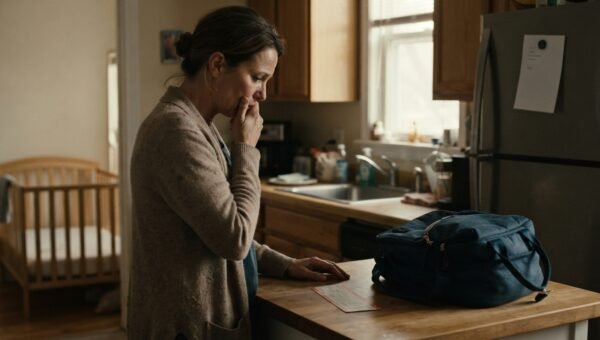
Her name was Clara Vance, and she lived in apartment 11B, right at the end of the long, carpeted hall on the eleventh floor. For forty-six years, she was the building ghost that everybody went out of their way to avoid. She was thin, stiff-backed, and dressed exclusively in heavy wool cardigans, even during the humid dead of July. She never returned a greeting. She never held the elevator door if she heard someone jogging down the corridor.
If a neighbor’s grocery bag lightly brushed her hallway wall, she would bang on their door five minutes later, her voice thin and venomous, threatening to call the superintendent or file a complaint with the city.
I moved into 11F eight years ago after my husband, Richard, passed away. The apartment was smaller than the home where we had raised our two boys out in New Jersey, but the rent-stabilized lease belonged to my late aunt, and taking it over gave me a quiet place to live on my modest pension. During those eight years, I must have crossed paths with Clara hundreds of times in the lobby or by the mailboxes. Every single time I tried to offer a polite nod, she stared directly through me. Her eyes were pale gray, watery, and completely devoid of warmth. When she looked at me, her mouth would pull into a tight, miserable line, as if the very sight of my face offended her.
Around the building, the stories about her were practically folklore. The super, a kind Dominican man named Hector who had worked in the building since the late nineties, told me she had lived in 11B since roughly 1980. He said nobody had ever seen a guest enter her home. She had no visitors on Thanksgiving, no packages delivered at Christmas, and no relatives checking in when she had a bad coughing fit in the dead of winter. If maintenance had to enter to bleed the radiators, she stood over them with her arms crossed, watching their every movement like they were thieves. Most of the tenants wrote her off as an eccentric, bitter old recluse. After a while, you simply learned to step into the alcove by the laundry room whenever you heard her slow, dragging footsteps coming down the hall.
Then, three weeks ago, Hector noticed that her daily newspapers were piling up outside her door.
The Friday, Saturday, and Sunday editions were lying untouched on the mat. When he knocked, there was no answer. The smell that crept through the bottom seal of the door on Monday morning made him immediately call the emergency services.
They found Clara Vance slumped over her small kitchen table. She was seventy-nine years old, and the medical examiner later determined that her heart had simply stopped beating in her sleep several days prior.
Because she had no known next of kin listed with management, the city treated her apartment as an unattended death scene with an unlocated estate. The police sealed the door with yellow tape, and for four days, an uneasy quiet settled over our floor. Tenants in the elevator whispered about how sad it was to die so utterly alone, though nobody pretended they were going to miss her. I felt a hollow pang of sympathy for her, mostly because I knew what grief and isolation felt like after losing Richard, but I certainly didn’t think her passing had anything to do with me.
Then, on a gray Thursday afternoon, two detectives from the local precinct knocked on my door.
I opened it, wiping flour off my hands from baking, expecting them to ask routine questions about whether I had heard any unusual noises over the weekend. Instead, the older detective, an exhausted-looking man named Miller, held up a small spiral notepad.
“Are you Evelyn Vance Morris?” he asked, checking the name carefully against his notes.
“Yes, I am,” I said, my chest tightening. “Is something wrong?”
“Mrs. Morris, we need you to come down the hall with us into 11B,” Detective Miller said gently. “The public administrator’s investigator was doing an initial sweep of the premises to locate family records, and they found items bearing your legal name, your maiden name, and several documents that belong to your deceased parents. We need you to step inside and tell us what we are looking at.”
My stomach dropped. My maiden name was Vance. But Vance is hardly an uncommon name, and my father, Arthur Vance, had been an only child who grew up in upstate New York before dying in a car crash when I was just six years old. My mother, Margaret, had raised me entirely by herself on a schoolteacher’s salary until she passed away fifteen years ago. My family tree on my father’s side was completely bare. There were no aunts, no cousins, no long-lost sisters.
“I don’t understand,” I told the detective, my voice trembling. “I didn’t know Miss Vance. We were just neighbors. We never spoke a single sentence to each other.”
“Just come take a look, ma’am,” the younger officer said quietly, holding the hallway door open.
I followed them down the carpeted hall toward the peeling yellow tape. Hector was standing near the service elevator with his hands shoved in his pockets, watching me with wide, worried eyes. Detective Miller cut through the tape with a pocketknife, turned the brass deadbolt, and pushed the heavy door inward.
The apartment smelled of stale peppermint, rubbing alcohol, and old paper. The shades were drawn completely shut, letting in only thin slivers of gray afternoon light across the worn parquet floor. The living room was spotless, but it was suffocatingly crowded. Every wall was lined with tall wooden bookshelves, and every surface held neat, towering stacks of vintage cardboard boxes and framed photographs.
I stepped across the threshold, and an electric chill hit the back of my neck.
I looked at the nearest bookshelf. Sitting right at eye level was a small, chipped porcelain music box shaped like a white carousel horse. The gold paint on the bridle was worn away on the left side where a child’s thumb would rest.
My breath caught hard in my throat. My mother had bought me that exact music box for my fifth birthday. It had vanished from our house in Syracuse forty-nine years ago, the very same month my father died, and my mother had spent weeks weeping because she thought the movers had stolen it.
I took two steps deeper into the dim room, my hands shaking uncontrollably, and looked at the framed pictures resting on the mantel above the radiator.
There, staring back at me from decades of silver-plated frames, were photographs of me. School portraits from the second grade. A snapshot of me sitting on a yellow tricycle in front of a house I barely remembered. A candid photo of my mother standing by our old porch, her face young and tired.
And then, right in the center of the wall, there was a heavy mahogany door leading to the rear bedroom, left slightly ajar. Detective Miller reached out and pushed it all the way open.
Inside, sitting on a plain wooden easel under a single bare lightbulb, was a massive, hand-drawn family tree sketched in dark ink, surrounded by dozens of taped bank receipts, newspaper clippings, and official legal seals. At the very root of the trunk was my father’s name, Arthur Vance. Directly beneath his name were two branches, drawn side by side in neat, identical cursive:
*Evelyn Vance, born 1957.*
*Clara Vance, born 1947.*
I gripped the doorframe to keep my knees from buckling. The woman who had lived down the hall from me in cold silence for eight years wasn’t an eccentric stranger. She was my half-sister.
PART 2
The room seemed to tilt beneath my feet. Detective Miller grabbed my elbow, steadying me as I swayed in the doorway.
“Take your time, Mrs. Morris,” he said. His voice was calm, but his eyes were sharp, watching my reaction for any sign that I was putting on an act. “You’re telling us you had no idea she was your sister?”
“My father died in 1963,” I whispered, my voice cracking. “He died in a car accident near Binghamton. My mother told me he was an only child and that his parents were already gone. There was never any mention of another daughter. Never. Not once in my entire life.”
I walked toward the easel. The paper was heavy drafting vellum, yellowed along the edges, taped securely to a plywood backing. Below the two names, Clara had drawn meticulous, obsessive timelines in dark blue ballpoint ink. Every major milestone of my childhood was recorded there with terrifying precision: the name of my elementary school in Syracuse, the year I got my braces, my high school graduation in 1975, my wedding to Richard in 1978, the birth of my first son, David, in 1981, and my second son, Mark, in 1984.
Next to each date were small, clipped newspaper announcements, photocopies of school honor rolls, and even candid snapshots taken from across the street. There was a grainy photo of me walking down the steps of my high school carrying a binder, completely oblivious to the person holding the camera from inside a parked car.
“She wasn’t just living near you,” the younger officer murmured, looking around the room. “She was tracking you.”
“Why?” I asked, my chest aching so badly I could barely draw air. “Why would she do this? If she was my sister, why didn’t she ever knock on my door? Why did she treat me like dirt in the hallway?”
Detective Miller directed my attention to the heavy oak desk sitting beneath the window. The desk was covered in neat piles of legal manila folders, each labeled with a year and a subject. The top folder, thick and bound with black binder clips, was labeled: *Arthur Vance Estate & Settlement — 1964.*
I pulled a chair out and sat down, my hands trembling as I opened the cover.
The story began to piece itself together through cold, official paper. Clara was ten years older than me. She had been born to a woman named Evelyn Ross, a woman my father had lived with for five years in Pennsylvania before abandoning her in the late 1950s. Arthur Vance had walked out on Clara and her mother, relocated to upstate New York, changed the trajectory of his life, and married my mother, Margaret. He had hidden Clara’s existence entirely from my mother, living a double life of omission.
When my father died on that wet November highway in 1963, he left no will. At the time of his death, he owned a half-interest in a lucrative commercial lumber yard outside Elmira, along with a significant life insurance policy.
In 1964, Clara’s mother hired an aggressive estate attorney to petition the surrogate court for Clara’s rightful share as Arthur’s first-born child. But my mother, Margaret, terrified of losing everything and blinded by the humiliation of discovering her late husband’s secret past, fought back with ruthless intensity.
Tucked inside the folder was a yellowed court transcript from Broome County. My mother’s lawyer had successfully argued that Clara’s mother had never legally established Arthur’s paternity before his death, using old state statutes from the early 1960s that heavily favored children born inside formal marriages while cutting out out-of-wedlock offspring. The judge ruled against Clara and her mother. My mother received the entirety of the lumber yard buyout, worth over eighty thousand dollars in 1964 money, along with the full life insurance payout.
Clara and her mother were left with absolutely nothing.
A handwritten letter, folded into quarters and tucked inside the court ruling, caught my eye. The handwriting was sharp, angry, and dated October 12, 1966. It was written on cheap, lined notebook paper:
*Margaret,*
*You took the bread out of my child’s mouth. Arthur built that business while he was still sleeping in my bed. You told the judge my daughter didn’t exist. You raised your little girl on money that belonged to mine. Clara will never forget what you did to us. Neither will I.*
I sat frozen, staring at the ink. My mother, the gentle, quiet woman who baked pies and taught fourth-grade English, had fought an orphaned teenager in court to protect our financial security, wiped her out completely, and then buried the secret so deep that I lived sixty-eight years without ever suspecting it.
“Look at this, Mrs. Morris,” Detective Miller said, handing me another folder from the corner of the desk. “This explains how she ended up in this building.”
I opened it. It contained copies of building leases dating back to the late 1970s.
Clara hadn’t lived in this building by coincidence. My late aunt, my mother’s older sister, had moved into apartment 11F in 1976. Clara, working as an administrative clerk for the city’s housing department, had discovered my aunt’s address through public voter registration logs. In 1980, when apartment 11B became vacant, Clara used her municipal connections and tenant priority status to secure the lease directly down the hall.
For decades, Clara had embedded herself next to my family, waiting like a spider. When my aunt died eight years ago and the rent-controlled lease passed down to me, Clara didn’t move away. She stayed right where she was, waiting for me to arrive.
PART 3
The realization made the hair on my arms stand up. For eight full years, every time I took out my garbage, unlocked my deadbolt, or carried my groceries down the hall, my secret older sister was watching me through her peephole.
She wasn’t avoiding me because she was a grumpy eccentric. She was avoiding me because looking at my face made her choke on sixty years of unhealed rage. I was living on the comfort and stability that had been bought with money stolen from her childhood. Every wrinkle on my face was a reminder of the mother who had cast her into poverty.
“Did she ever try to contact you, ma’am?” Detective Miller asked. “Any threatening notes? Any weird calls?”
“Never,” I said, shaking my head as tears finally spilled over my cheeks. “She never said a word to me. If we met at the mailboxes, she just looked at me with this terrible, hollow stare. I thought she hated the world. I had no idea she just hated me.”
“There is one more thing,” the younger officer said, pointing toward a small fireproof safe sitting open on the floor beside the nightstand. “The public administrator’s investigator unlocked this an hour before we came to your door. There’s a formal will inside.”
I stood up slowly, walked over to the safe, and pulled out the crisp, white legal envelope. The document inside was recent, drafted in November of 2024 by an estate attorney on 42nd Street.
It was Clara Vance’s Last Will and Testament.
I read through the standard legalese until my eyes hit the disposition of assets:
*I, Clara Vance, being of sound mind, declare this to be my last will. I leave my personal effects, including all family photographs, records, and original heirlooms belonging to my late father, Arthur Vance, to my half-sister, Evelyn Vance Morris.*
*Furthermore, having lived frugally and invested my civil service salary and savings for forty years, I hold liquid assets and municipal bonds valued at approximately seven hundred and twenty thousand dollars ($720,000). I direct my executor to transfer the entirety of these funds into an irrevocable trust for the benefit of Evelyn Vance Morris, on one condition:*
*She must personally empty apartment 11B. She must touch every object her mother took from me, look at every year of my life that was spent in the cold, and understand the price that was paid so that she could live in peace.*
I dropped the paper onto the bed. Seven hundred and twenty thousand dollars.
She had lived in a threadbare sweater, eating canned soup and hoarding decades of newspapers, sitting on a small fortune that she refused to spend on herself. She had weaponized her entire life, her entire death, into a single, devastating lesson. She hadn’t left the money to me out of love or sisterly affection. She had left it to me as an inescapable burden of guilt. She wanted me to know that every penny she had amassed was earned in the shadow of the inheritance my mother had stolen from her.
I walked through the rest of the apartment in a daze. In the second bedroom, which she had used for storage, were neat rows of clear plastic bins. I opened one. Inside were toys from the early 1960s: wooden blocks, a worn velvet bear, a silver baby cup engraved with the initials *C.V.*
Beside them were my own childhood items. A set of vintage Nancy Drew books that had belonged to me, bearing my maiden name scribbled on the inside cover in blue crayon. My mother had sold several boxes of our childhood belongings at a yard sale in Binghamton back in 1972 to pay for my college textbooks. Clara had apparently driven up, walked into our yard, bought them back, and kept them locked away for half a century.
She had spent fifty years living in the periphery of my life, an invisible witness to a family that had erased her.
ENDING
The probate process took five long, agonizing months. Because Clara had left a legally airtight, updated will with a licensed New York attorney, the court verified the documents without contest. There were no other claimants. No long-lost relatives stepped forward. By late spring of 2026, the surrogate court officially designated me as the sole heir of Clara Vance’s estate.
I spent nearly three weeks clearing out apartment 11B, exactly as she had commanded.
Hector helped me carry the heavy furniture down to the freight elevator, but the personal belongings I packed myself, box by box, day after day. I went through her receipts, her quiet utility bills, her sparse collection of church bulletins, and her notebooks. In forty years of journal entries, she almost never wrote about daily hobbies or friends. She wrote about the court case. She wrote about her mother’s early death from pneumonia in 1968. And over and over, she wrote about justice.
She believed that by surviving me, by watching me grow old and frail down the hall, she was holding the line against the lie my parents had built. She had turned herself into a living monument to our father’s cowardice.
I kept the porcelain carousel horse. It sits on the small table in my foyer now, right next to the front door. Every time I leave my apartment, I look at the chipped gold paint on the bridle and remember the little girl who was cast out into the cold while I was protected inside a warm house.
I didn’t keep the money.
I couldn’t bring myself to buy a new car, take a cruise, or remodel my kitchen with funds that had been saved through a lifetime of bitter deprivation and spite. But I didn’t reject the inheritance either, because doing so would have let the city absorb it, erasing Clara’s final statement entirely.
Instead, I worked with Clara’s attorney to establish a permanent endowment in her name: *The Clara Vance Foundation for Displaced Children and Single Mothers*, based in Broome County, New York, just miles from the courthouse where she was legally erased sixty-two years ago. The fund provides legal representation and emergency housing assistance for mothers and children fighting for their rights in family court.
Apartment 11B was repainted and leased to a young couple with a newborn baby last month. The hallway no longer smells like peppermint and dust. Sometimes, when the elevator doors open on the eleventh floor, I still catch myself looking toward the end of the corridor, expecting to see a thin woman in a heavy wool cardigan watching me from the shadows.
She wanted to break me with the truth. She wanted me to spend the rest of my days crushed under the weight of my mother’s sin. But as I look out my living room window at the city below, I don’t feel anger toward Clara, and I don’t feel hate toward the mother who tried to protect me in the only flawed, cruel way she knew how.
I just feel a profound, quiet sorrow for two little girls who shared the same father’s eyes, lived twenty feet apart for nearly a decade, and never once got to hold each other’s hand.