PART 1
The envelope arrived on a Tuesday in mid-October, nearly four months after we buried Mama behind the small Baptist church out on Old Creek Road. It had the blue First Community Bank logo in the upper left corner, addressed to Mrs. Ruthie Miller or Clara Miller, Rights of Survivorship.
My maiden name. I had not gone by Clara Miller in thirty-two years, not since I married Donald back when Jimmy Carter was leaving office.
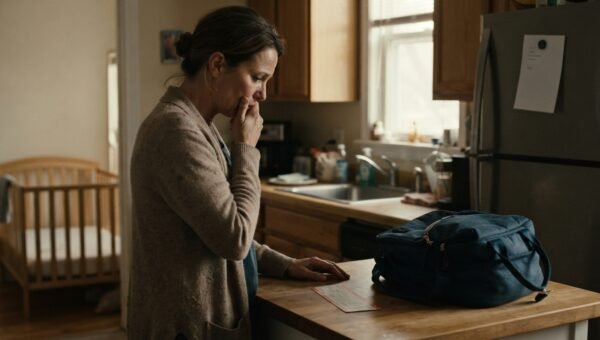
I stood by my kitchen sink with a butter knife in my hand, staring at the paper. My hands were already stiff from the autumn dampness, swollen slightly around the knuckles the way Mama’s used to get every time the frost began to bite the tomato vines. Outside, the leaves on the big sweetgum tree were turning that dull, muddy red.
I did not open it right away. My first thought was that it had to be a mistake, some leftover overdraft fee or a closed checking account balance of four dollars and twelve cents that had accumulated fifteen cents of interest over the summer.
Four months earlier, my younger sister Brenda had sat at my drop-leaf kitchen table, wearing a crisp linen pantsuit that looked entirely too expensive for an August funeral in western North Carolina. She had opened her beige leather organizer, laid a cashier’s check face up on the oilcloth, and pushed it across to me with her manicured index finger.
Twelve hundred dollars even.
“That is your half, Clara. Fair and square,” Brenda had said, not looking me dead in the eye, but looking at the spice rack behind my left shoulder. “You know how those nursing home rehabilitation stays eat through everything. Between the private room supplement Mama insisted on after her hip broke, the physical therapy copays, the prescription donut hole, and the funeral home expenses, there was basically nothing left. I had to cover the flowers out of my own pocket, but I’m not going to nickel-and-dime my own sister over carnations.”
I took the check. I told her thank you.
I am not a fighter. I have never been a fighter. When Brenda wanted the silver-plated tea set that our grandmother brought from Virginia, she took it. When she decided Mama’s 1998 Buick LeSabre was too old to bother selling and gave it to her husband’s nephew for scrap value, I did not question her receipts.
Brenda lived in Charlotte. She worked in commercial real estate management. She understood spreadsheets, legal notices, and probate filings. I had spent thirty-one years working the circulation desk at the county library before taking an unpaid leave of absence, and eventually early retirement, when Mama began leaving the gas burners on.
For two years, my life was Mama’s house.
I gave up my salary, my quiet afternoons, and my pension accrual because Mama begged me not to put her in a memory unit while her mind was still mostly clear. Brenda came up from Charlotte twice in those twenty-four months. Once for Thanksgiving, where she spent forty minutes complaining that Mama’s bathroom smelled like rubbing alcohol and witch hazel, and once in May, when she brought a notary to Mama’s bedside so Mama could sign the durable financial power of attorney over to her.
“It just makes the bill-paying simpler, Clara,” Brenda had told me in the hallway that afternoon, speaking in that brisk, administrative whisper she uses when she wants someone to stop asking questions. “You have your hands full changing sheets and pureeing squash. Let me deal with Medicare and the supplemental insurance.”
Mama had looked at Brenda that day with her sharp, cloudy eyes, pressed her dry lips together, and signed the papers with a shaky hand. After Brenda drove away in her spotless Audi, Mama grabbed my wrist with a grip that bruised my forearm.
“Don’t you fret none, Clara,” Mama had whispered, her breath smelling of the peppermint drops she kept under her tongue. “The quiet ones always think they’re getting cheated, but God don’t sleep.”
I thought it was just the stroke talking. Mama’s mind wandered into old church hymns and half-remembered scripture toward the end.
Now, standing in my quiet kitchen four months after we lowered her casket, I slid the butter knife under the glued flap of the bank envelope.
I unfolded the single sheet of heavy white stock.
It was a quarterly statement for an account type I had never seen before: a high-yield tiered money market account, opened seven years ago at the downtown branch on Main Street. The balance listed at the bottom of the column was not twelve dollars, and it was not a negative charge for monthly service fees.
The ending balance was $94,182.46.
Right beneath the figure, printed in clear black typeface, were the names: Clara Miller POD / Joint Owner w/ Survivorship.
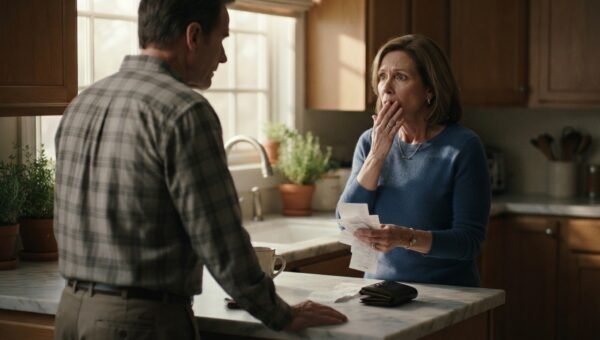
My breath caught in the center of my chest. The room felt suddenly very hot, the way it does right before an August thunderstorm breaks over the ridges. Ninety-four thousand dollars. That was more money than Donald and I had earned together in our best three years before his heart attack took him eight years ago.
I picked up the kitchen telephone, my fingers trembling so violently I misdialed the branch number twice. When the automated system finally transferred me to the operations supervisor, I asked for Mr. Harrison, the gray-headed vice president who used to attend Wednesday night prayer meetings with my parents back in the nineteen-eighties.
A young woman’s voice answered instead. “Mr. Harrison retired three years ago, ma’am. This is Sarah Vance, the assistant branch manager. How may I help you?”
“My name is Clara Miller,” I said, my voice barely above a dry rasp. “Well, Clara Miller Vance—no, Clara Miller, that’s what’s on the paper. I’m sorry. I’m calling about a statement I just received in the mail for my mother, Mrs. Ruthie Miller. She passed in June.”
There was a brief pause, followed by the quiet tapping of computer keys. Then the line went utterly silent.
“Mrs. Miller?” Sarah Vance’s tone changed completely. The crisp customer-service brightness dropped away into something measured, serious, and deeply careful. “Could you verify your Social Security number and your current address for me, please?”
I gave them to her.
“Yes,” the woman said slowly. “The flag on this file has been active since June. Mrs. Miller, we were actually preparing a certified notice for you. This account is entirely outside of your mother’s probate estate. It is an account with explicit survivorship instructions attached to it.”
“Outside the estate?” I repeated, leaning against the counter to keep my knees from shaking. “My sister, Brenda Caldwell… she handled the estate through the county court. She told me the accounts were drained by Mama’s medical care. She gave me twelve hundred dollars.”
Sarah Vance cleared her throat, a soft, deliberate sound over the wire.
“Mrs. Caldwell has no legal access to this account, ma’am. In fact, there is a physical file in the branch vault specifically concerning this money. Your mother came into the branch herself five years ago, accompanied by her attorney, Mr. Abernathy, long before any power of attorney was filed. She deposited funds from the sale of the timber parcel on the south pasture, and she set up automatic transfers from her primary checking account every single month until three weeks before she died.”
My head was spinning. Mama had sold the south pasture timber six years ago. Brenda had told me the timber money went into a trust to cover property taxes and long-term care insurance.
“There is a signed handwritten directive inside the master card jacket,” Sarah Vance continued, her voice quiet and steady. “Your mother instructed Mr. Harrison to keep it on file. It says: ‘For the daughter who stayed. Do not let her sister near it.'”
I sat down hard on the kitchen stool. Tears sprang into my eyes, hot and sudden, blurring the faded pattern of the linoleum floor. All those months of lifting Mama into the bathtub, of sleeping on the pull-out sofa in her den with a baby monitor next to my pillow, of cutting her pills in half with a razor blade while Brenda posted photos from Hilton Head and Charleston. Mama had known. She had seen every single day of it.
“There’s something else, Mrs. Miller,” Sarah Vance said, her voice dropping lower. “There is a second instruction in the file. A very specific memo your mother left regarding what we are legally required to tell your sister, Brenda Caldwell, the moment she inquires about the estate’s banking history.”
PART 2
The second instruction was not a note scrawled on a napkin or an offhand remark. It was a formal legal addendum drawn up by old Arthur Abernathy, who had practiced probate and real estate law in our county since the Korean War.
Sarah Vance read it to me over the telephone in a slow, steady cadence.
“Upon the death of Ruthie Mae Miller, should Brenda Miller Caldwell present letters of administration or demand a full audit of historical accounts under color of executor authority, the bank is hereby directed to provide copies of the six cashier’s checks drawn against the primary farm checking account between March 2021 and April 2023, totaling sixty-eight thousand dollars, made payable directly to Brenda Caldwell, marked as personal loans for residential investment. The bank shall further disclose that said loans were never repaid to the decedent, and that the survivor account ending in 4109 was established with decedent’s remaining separate property specifically to offset said distributions.”
I sat at my kitchen table for a long time after hanging up the phone, listening to the hum of the refrigerator.
Sixty-eight thousand dollars.
During the very years when Mama’s knees were giving out and the roof over the back porch was leaking into buckets, Brenda had been taking tens of thousands of dollars out of Mama’s farm account. I remembered Brenda coming up to the house in the spring of 2022, talking about a townhouse development near Lake Norman that could not miss. She had sat at Mama’s kitchen table just like she sat at mine, telling Mama that interest rates were climbing and that keeping cash sitting in a local bank was a fool’s game.
Mama had written those checks. She had given Brenda the money because Brenda was her baby, the ambitious one who made something of herself in the city. But Mama was country-shrewd, the daughter of farmers who had lived through the Depression by canning wild blackberries and salting their own pork. She had kept the carbon receipts. She had taken them straight to Arthur Abernathy’s brick office across from the courthouse, and then she had walked into First Community Bank with the timber proceeds and carved out a wall around what was left.
“You need to come down to the branch tomorrow morning, Mrs. Miller,” Sarah Vance had told me before we disconnected. “Bring your driver’s license and your mother’s death certificate. We need to transfer the title into your sole name, and we need to show you the physical file. Your sister’s attorney filed an inquiry with our legal department yesterday afternoon requesting thirty-six months of transaction logs for all accounts under your mother’s Social Security number.”
Brenda was hunting.
She had closed the estate account in July, filed her final accounting with the clerk of court showing twenty-four hundred dollars in residual liquid assets—split twelve hundred to me, twelve hundred to her—and she thought she was finished. But Brenda was too greedy to leave well enough alone. She must have remembered the timber sale from years back and wondered why the farm account had not shown the six-figure proceeds from that timber company out of Asheville.
The next morning, I dressed in my good navy slacks and the gray cardigan Donald bought me for our twenty-fifth anniversary. The wind was blowing hard off the mountain, swirling yellow birch leaves across the gravel driveway. I drove down into town, parked behind the bank, and walked through the heavy glass doors.
Sarah Vance was waiting for me in a small conference room with wood paneling and two upholstered chairs. She was a woman in her late thirties, with kind, dark eyes and hair pulled back in a neat bun. On the polished table between us sat a thick manila folder labeled *MILLER, RUTHIE M. — RESTRICTED ACCESS*.
She opened it without ceremony.
There on top was Mama’s handwriting on a piece of cream-colored stationery from her dresser drawer. The blue ballpoint ink had faded slightly, but the slant of the letters was unmistakable: firm, heavy on the downstrokes, the script of a woman who had taught Sunday school for forty years and graded essays with a sharp eye.
*For the daughter who stayed. Do not let her sister near it. Clara gave her back and her years. Brenda took her share early in cash and thought I was too old to count. This belongs to Clara alone.*
Beneath that sheet were six photocopies of cancelled cashier’s checks. Each one bore Mama’s trembling signature at the bottom, and each one was endorsed on the back by Brenda Caldwell, deposited directly into her account at Bank of America in Charlotte. Ten thousand here. Fifteen thousand there. Twelve thousand five hundred. Every check had the word “Loan” written in the memo line in Mama’s hand.
“When your sister’s lawyer called yesterday,” Sarah Vance explained, folding her hands over the desk, “he assumed there were open accounts being concealed by local staff. We notified our legal counsel in Raleigh this morning. Under North Carolina law, this survivorship account transferred to you by operation of law the moment your mother took her last breath. It is not an asset of the estate. It does not pass through the will. It never touched probate.”
She slid a signature card across the table toward me, along with a pen.
“If you sign here, Mrs. Miller, we will issue a new certificate of deposit or transfer the full ninety-four thousand into a new private account under your name alone. Once that is done, we will respond to your sister’s counsel with the formal disclosure your mother mandated.”
I picked up the pen. My fingers did not shake this time.
I thought of Mama lying in that small hospital bed we rented and squeezed into her living room, her small frame swallowed up by the quilts. I thought of the nights I woke up at two in the morning because she was crying from the pain in her hip, and how I would warm a cup of milk with a dash of cinnamon just to help her fall back asleep. I thought of Brenda arriving for the funeral two hours before the service, complaining about the traffic on Interstate 40, and leaving before the fellowship committee had finished putting the foil over the leftover ham.
I signed my name. Clara Miller.
Before I could set the pen down, Sarah Vance’s desk phone buzzed. She answered it, listened for five seconds, and looked up at me.
“Mrs. Miller,” she said quietly. “Your sister is in the lobby.”
PART 3
Brenda had not driven up from Charlotte for a friendly visit.
She had come because the county clerk of court had rejected her petition to formally discharge her duties as executor after receiving an automated notification that an inquiry into historical bank assets was pending. She walked into Sarah Vance’s office without knocking, clutching an oversized black leather tote bag, her face flushed red beneath her makeup.
“Clara?” Brenda stopped dead in the doorway, her eyes darting from me to the manila folder lying open on the mahogany desk. “What are you doing here? I called your house three times this morning. You weren’t answering your landline.”
“Good morning, Brenda,” I said. I did not stand up.
Sarah Vance stood immediately, her demeanor cool and entirely professional. “Mrs. Caldwell, this is a private client meeting. If you have business with the branch, I can have someone assist you at the teller counter.”
“I am the executor of Ruthie Miller’s estate,” Brenda said, stepping fully into the room and shutting the heavy door behind her. She set her bag on the corner of the table and pulled out a stapled legal document with the county seal stamped on the front. “I have full fiduciary authority over all assets belonging to our mother. My attorney notified your corporate office yesterday that there is an unaccounted-for balance from a 2018 property transaction that was never recorded in the primary checking register.”
She looked at me then, her lips pulled into a thin, tight line. “Clara, you shouldn’t be involved in this. You don’t understand the tax liabilities. When an estate has undisclosed assets, the state can come after the beneficiaries for back penalties. I came up here to clean up the paperwork so we don’t end up audited.”
“There is no undisclosed asset in the estate, Mrs. Caldwell,” Sarah Vance said. She did not sit down. She reached into the file, withdrew a single sheet of paper, and slid it across to Brenda.
It was the bank’s formal memorandum detailing the survivorship account, showing the original joint title date from seven years prior, and the legal determination of non-probate transfer.
Brenda snatched the paper, her eyes skimming the lines with frantic speed. I watched the color drain out of her cheeks, starting from her hairline and moving down into her throat until her skin looked the color of skim milk.
“Ninety-four thousand dollars?” Brenda’s voice cracked, losing its sharp corporate edge. She looked at Sarah, then down at the paper, then directly at me. “Ninety-four thousand? Mama had ninety-four thousand dollars sitting in this building while I was paying three hundred dollars a month out of my own pocket for her supplemental prescription coverage?”
“You didn’t pay that out of your pocket, Brenda,” I said softly.
“I managed her bills for two years, Clara! I spent hours on the phone with the insurance company! You have no idea what that kind of administrative burden looks like!” Her voice rose, filling the small room, vibrating against the glass of the window overlooking Main Street. “This money belongs to the estate. It has to be divided equally. Mama had dementia at the end, Clara. You know she did. She didn’t know what she was signing. If you think you’re just going to walk out of this bank with ninety-four thousand dollars that belongs to both of us, you’re out of your mind. I will have the court freeze this account by noon tomorrow.”
Sarah Vance did not blink. She reached back into the folder, pulled out the stack of six check photocopies, and laid them directly on top of the memorandum Brenda was holding.
“Your mother executed this survivorship designation five years ago, Mrs. Caldwell,” Sarah said, her voice dropping into that chilling, unshakeable calm that institutional people use when they hold all the cards. “Her primary physician, Dr. Robert Sterling, provided a certified affidavit of mental capacity at the time of execution, which is registered with our trust department. Furthermore, your mother left explicit instructions regarding the sixty-eight thousand dollars she advanced to you between March 2021 and April 2023.”
Brenda stared at the checks.
The top one was for fifteen thousand dollars, dated April 14, 2021. The memo line read: *Personal loan to Brenda for investment townhouse.*
The room was completely quiet except for the muffled sound of a delivery truck backing up out in the alleyway.
“Mama… Mama gave that to me,” Brenda stammered, her fingers curling around the edge of the paper. “She wanted to help with the down payment. It wasn’t a formal loan. There was no promissory note.”
“There didn’t need to be a promissory note, Mrs. Caldwell,” Sarah said evenly. “Your mother classified them as advances against your share of her total net worth. And she left a signed letter to her attorney, with copies provided to this institution, stating that if you contested the survivorship status of account 4109, the estate was to be reopened at your expense, and the sixty-eight thousand dollars in unpaid debts was to be collected from you by the successor administrator.”
Sarah looked at me.
“Which, under the alternate clause of your mother’s will, would be Clara.”
Brenda looked at the copies of her own signatures on the back of those checks. Her hands began to shake, not with grief or fear, but with the sudden, humiliating realization that she had been outmaneuvered by an eighty-two-year-old woman who wore house slippers and watched game shows all morning.
“You sat at my kitchen table,” I said, looking straight into my sister’s eyes. My voice was very calm, calmer than I had ever felt in my life. “You pushed a check for twelve hundred dollars across the oilcloth and told me that was my half, fair and square. You told me there was basically nothing left. You looked me in the face while I was washing Mama’s bedding and you knew you had sixty-eight thousand dollars of her money sitting in your bank account in Charlotte.”
“Clara, listen to me,” Brenda began, her voice dropping into a pleading whisper. “The market took a downturn. The townhouse project fell through. I lost that money. I didn’t steal it from Mama, I lost it in an investment. I was trying to make enough to help cover her long-term care later on. I was trying to protect both of us.”
“Mama protected me,” I said. “She knew you wouldn’t.”
ENDING
Brenda left the bank five minutes later. She did not take the copies of the checks with her. She left them lying on Sarah Vance’s desk, along with her estate paperwork. She walked out into the cold October wind, got into her clean white car, and drove back down toward the highway that leads to Charlotte without saying another word to me.
I sat in that conference room for another forty minutes with Sarah Vance.
We transferred the ninety-four thousand, one hundred eighty-two dollars and forty-six cents into a brand-new certificate of deposit in my name alone, drawing four and a half percent interest. Sarah set up a direct deposit so that every month, three hundred and fifty-three dollars of interest income would be transferred straight into my personal checking account to help cover my heating oil and my property taxes.
When the paperwork was finished, Sarah handed me a copy of Mama’s handwritten note in a clean white envelope.
“Do you want to keep this, Mrs. Miller?” she asked.
“Yes,” I said. “I do.”
I drove back out to the homeplace on Old Creek Road. The house was cold when I walked inside, carrying that distinct smell of old pine floorboards, dried lavender, and the lemon oil I used to wipe down the dining table every Saturday.
I took off my coat and hung it on the wooden peg by the back door. Then I walked into the front bedroom where Mama had slept for sixty years. The bed was stripped down to the bare mattress, the floral quilts folded neatly across the cedar chest at the foot of the frame.
I walked over to her dresser, the old mahogany one that Daddy had bought her from the Sears catalog after the war. Sitting on the lace doily was her glass candy dish, still holding three peppermint drops wrapped in cellophane, and the small framed photograph of Donald and me on our wedding day outside the fellowship hall.
I sat down on the edge of the mattress, opened the envelope Sarah Vance had given me, and laid Mama’s note against my knee.
*For the daughter who stayed.*
All those days when I felt so tired my bones ached, when I would stand by the kitchen window watching the rain come down on the rhododendron bushes and wonder why Brenda got to have a full life in the city while my world had shrunk down to the four walls of a sickroom—Mama had been watching. She had seen every meal I carried to her tray, every time I rubbed the menthol ointment into her swollen feet, every time I answered her calls in the middle of the dark night without raising my voice.
She had let Brenda think she was getting away with it. She had let Brenda take the sixty-eight thousand dollars, knowing that Brenda’s greed would be the very thing that trapped her if she ever tried to reach for the rest.
Two days later, Brenda’s lawyer sent a formal notice to the clerk of court withdrawing the inquiry into the bank records. The estate was closed for good. Brenda did not call me to apologize, and she did not call to ask how I was doing. Her daughter, my niece Ashley, texted me a week later to ask if I was coming down for Thanksgiving. I texted back that I was going to stay home this year, that the drive was too long on my knees, and that I had chores to tend to around the farm.
I used eight thousand dollars of the money last month to put a new metal roof on Mama’s house.
The man who did the work, young Tommy Ledbetter whose granddaddy used to trade cattle with my father, came down off the ladder on a Thursday afternoon, wiped the sweat from his forehead with the back of his sleeve, and told me that roof would last forty years without a leak.
“Your mama would be glad to see it tight again, Miss Clara,” he said, leaning against the bed of his pickup truck. “She always worried about the water coming through that valley over the kitchen.”
“Yes,” I told him, handing him a cold glass of sweet tea on the back porch. “She would.”
I still walk up the hill to the churchyard on Sunday afternoons after the preaching is done. I take a pair of garden shears and clip the weeds away from the headstone where Mama and Daddy lie side by side beneath the big white oak.
The wind comes down through the gaps in the Blue Ridge, cold and clean, carrying the scent of pine needles and damp earth. I sit on the stone bench Donald’s brothers set by the plot years ago, and I don’t feel cheated anymore. I don’t feel small, and I don’t feel forgotten.
The quiet ones don’t always lose. Sometimes, if you just wait on the truth and let people show you exactly who they are, the ground beneath your feet ends up being yours after all.