PART 1
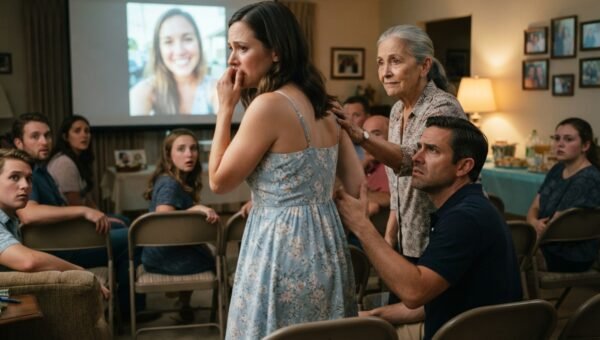
My older brother Mark stood beside the polished oak casket at Dad’s funeral and told our second cousins that he had been there every single day. I watched from the second row, my hands folded tightly in my lap, feeling the familiar, hollow ache behind my ribs. Mark wore a sharp, custom-tailored suit that cost more than my monthly car payment. He stood tall, gesturing with his hands, playing the role of the devoted son who carried the heavy burden of our father’s final years.
The truth was entirely different. For the past three years, I had been the one driving Dad to his tri-weekly dialysis appointments at the clinic on Maple Street. I was the one who spent hours in the kitchen simmering low-sodium soups, portioning out his diabetic meals, and making sure he took his blood pressure pills on time. When Dad grew too weak to climb the stairs to his bedroom, I moved into his house, sleeping on a stiff, floral armchair night after night just in case he called out for water or help to reach the bathroom. Mark visited maybe once a month, usually dropping in for twenty minutes on a Sunday afternoon, complaining about his golf game or checking his watch before rushing off to some business meeting.
Yet there he was at the reception, dabbing a dry corner of his eye with a linen handkerchief while accepting condolences from the entire neighborhood.
I stood nearby, biting my tongue until I tasted copper. I was too bone-tired to fight him. The months of interrupted sleep, the constant worry over lab results, and the heavy grief of losing the man who raised me had drained every ounce of fight from my body. I just wanted to get through the afternoon, go back to Dad’s quiet house, and pull the blankets over my head.
As the crowd thinned out and the funeral directors began folding up the chairs on the lawn, Mark walked over to me. His expression was a carefully practiced mask of solemnity. He didn’t offer a hug or ask how I was holding up. Instead, he reached into the trunk of his luxury sedan and pulled out a greasy, brown paper grocery bag with the handles torn.
“Here,” Mark said, shoving the bag into my chest. “Cleaned out the home office. Thought you might want the junk sitting in his desk drawers.
Most of it is old receipts and paperclips, but I figured you’d want to sort through it.”
Before I could answer, he turned on his heel, called out a quick goodbye over his shoulder, and slid into his car. The sleek vehicle kicked up gravel as he pulled away, leaving me standing alone in the parking lot holding a crumpled grocery bag.
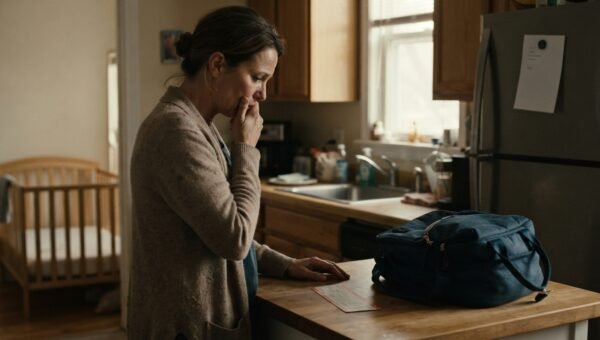
I drove back to Dad’s house in silence. The place felt enormous and painfully quiet. The grandfather clock in the hallway ticked with a hollow echo that seemed to mock the emptiness of the rooms. I walked into the kitchen, set the grocery bag down on the laminate tabletop, and pulled out the contents.
It was exactly what Mark had described. A jumble of old utility bills from 2021, dried-out ballpoint pens that wouldn’t write, a pack of sugarless peppermints, and Dad’s old silver pocket watch with a cracked crystal.
I pushed the pile around with my fingertips, feeling a dull ache of disappointment. I had hoped, foolishly perhaps, that there might be a final handwritten note or something personal left behind in that desk.
Then my hand brushed against something small and heavy at the very bottom of the bag.
I pulled it out. It was a pocket-sized digital voice recorder, the kind Dad used to buy at the electronics store to dictate grocery lists when his arthritis made writing too painful. The plastic casing was scuffed and scratched from years of sitting in the top drawer of his desk. I pressed the power button, and a tiny green indicator light flickered to life on the small screen.
There was a single audio file saved in the memory. File 01. The date stamp showed it had been recorded just three nights before Dad passed away, right around midnight.
My heart gave a heavy, irregular thud against my ribs. My hands started to shake slightly as I looked down at the little plastic device. I pressed the play button, placed the speaker close to my ear, and heard the raspy, labored breathing of my father before he began to speak.
“If Mark says he took care of me,” Dad’s recorded voice began, weak and trembling, but startlingly clear, “ask him about the house on Willow Street…”
PART 2
The recording played on in the quiet kitchen, Dad’s breath hitching between shaky sentences.
“He told me he needed to borrow the title just to secure a short-term commercial loan for his landscaping business,” Dad’s recorded voice whispered through the tiny speaker. “Just for ninety days, he swore on his mother’s grave. But I signed the papers in his lawyer’s office, and when the monthly statements stopped coming to my mailbox, I knew something was wrong. Mark said it was just a glitch with the bank. He lied to my face, honey. If anything happens to me, you check the safety deposit box at the downtown branch. The real deeds are in there, along with the letters he made me sign under pressure.”
The file clicked off with a soft electronic beep.
I sat frozen at the kitchen table, the plastic recorder clutched in my damp palm. The green light blinked out, leaving the room in a heavy, suffocating silence. A cold knot formed in my stomach. The house on Willow Street was the small rental property our grandmother had left to us both when she passed away twelve years ago, a modest duplex that provided a steady nine hundred dollars a month in rental income. Dad had always managed it, keeping the rent low for the elderly tenants who lived there. When Dad’s medical bills started mounting two years ago, I thought we were managing them with his modest pension and my part-time salary at the library. I had no idea Mark had gotten his hands on the property title.
I didn’t sleep that night. I sat in the floral armchair where I used to watch over Dad, staring out the window at the quiet suburban street as the porch light flickered against the pre-dawn fog.
The next morning, I drove straight to the downtown branch of the First National Bank where Dad had kept his accounts for forty years. Because my name had been added to his checking account a year ago so I could pay his utility bills and buy groceries, the branch manager, an old acquaintance of Dad’s named Arthur, was willing to look at the paperwork with me once I presented the death certificate and my ID.
Arthur pulled up the safe deposit box records on his terminal. His expression shifted from polite sympathy to deep concern as he scanned the screen.
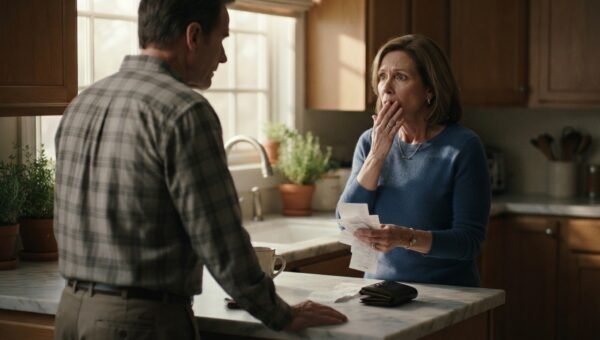
“I’m sorry to tell you this, Sarah,” Arthur said, taking off his glasses and rubbing the bridge of his nose. “According to our vault logs, your brother Mark came in three weeks ago with a notarized durable power of attorney signed by your father. He cleaned out the contents of this box. He removed the original property deeds for the Willow Street duplex, along with several stock certificates.”
“A power of attorney?” My voice came out sharper than I intended. “Dad wasn’t of sound mind to sign a new power of attorney three weeks ago. He was on heavy pain medication and hallucinating half the time.”
Arthur sighed, sliding a printed ledger sheet across the mahogany desk. “Legally, it bears a notary stamp and a doctor’s signature. But I can tell you that the signature on file looks remarkably shaky compared to the one your father put on your joint account forms last year. Furthermore, looking at the public registry records, the title for the Willow Street property was transferred via quitclaim deed to an LLC owned by Mark’s development company just ten days after that box was emptied.”
The room seemed to tilt slightly. Mark hadn’t just borrowed a title for a short-term loan. He had systematically stripped Dad of his remaining assets while I was busy running back and forth to the dialysis clinic, wiping Dad’s forehead and spooning broth into his mouth. Mark had used my round-the-clock nursing care as a convenient cover story, knowing I was too exhausted to notice what was happening behind the scenes.
PART 3
I left the bank with a thick folder of photocopies clutched against my chest. My initial sadness had completely burned away, replaced by a cold, steady fury that felt entirely foreign to me. I was tired of being the quiet, overlooked sister who did all the dirty work while Mark played the charismatic executive.
Instead of going home, I drove straight to Mark’s office in downtown commercial park. It was located on the third floor of a glass-fronted building with polished granite floors and receptionist desks made of imported walnut.
The receptionist looked up from her computer with a cool, corporate smile. “May I help you?”
“Tell Mark his sister is here,” I said, my voice unnaturally calm. “And tell him if he doesn’t come out right now, I’m walking down to the municipal police precinct with a digital audio file and a packet of bank fraud documents.”
Before the receptionist could pick up her phone, the glass door to the corner office swung open. Mark stepped out, wearing a crisp button-down shirt with the sleeves rolled up to his forearms. His face dropped the moment he saw me standing by the waiting area.
“Sarah? What are you doing here? This is highly unprofessional—”
“Save it, Mark,” I cut across him, stepping forward until I was standing right in front of him. I could smell his expensive cologne, a sharp contrast to the antiseptic hospital smell that had clung to my clothes for months. “We are going to sit down in your office right now, and you are going to tell me why you forged a power of attorney to steal Grandma’s duplex.”
Mark’s eyes flicked nervously toward the receptionist, who was suddenly very interested in her keyboard. He grabbed my elbow, his fingers digging in tightly. “Keep your voice down. Get in here.”
He pulled me into his office and slammed the heavy wooden door shut behind us.
“Are you out of your mind?” Mark hissed, leaning against his mahogany desk. “Making a scene in the lobby? Do you have any idea how hard I’ve worked to build my reputation in this town?”
“You didn’t build anything, Mark,” I said, pulling the digital recorder out of my coat pocket and dropping it onto the center of his desk with a sharp clatter. “You stole it from a dying man while I was wiping his chin. Dad left a recording. He told me everything about the Willow Street house, and Arthur down at the bank was more than happy to show me the quitclaim deed you filed through your shell company.”
Mark stared at the little recorder as if it were a venomous spider. The color drained slightly from his face, and his confident posture slumped. For a second, he looked less like a successful businessman and more like the selfish, cornered teenager he used to be.
“Dad didn’t know what he was talking about,” Mark muttered, crossing his arms defensively. “The business was failing. I needed liquidity to save the firm. If the firm went under, I would have lost my house, my investments, everything. Dad agreed to help me out.”
“Dad’s recording says you swore on our mother’s grave that it was just a temporary loan for ninety days,” I said, stepping closer. “And Arthur confirmed you emptied his safety deposit box without his consent while he was heavily medicated on hospice care. That’s not a loan, Mark. That’s elder exploitation and forgery.”
Mark opened his mouth to argue, but the defiance faltered. He looked at the paperwork I laid out on his desk. He knew as well as I did that the digital recorder, combined with the bank’s security logs and the glaring discrepancy in the notarized signatures, would not survive even a preliminary review by the district attorney’s office.
“If this gets out,” Mark said, his voice dropping to a harsh whisper, “the litigation will drag on for years. The properties will get tied up in probate, the bank will freeze everything, and nobody gets a dime. Is that what you want?”
“No,” I replied, meeting his gaze without flinching. “What I want is everything restored exactly the way Dad left it before you started treating him like your personal ATM.”
ENDING
It took three weeks of agonizing legal paperwork, mediated by Dad’s estate attorney under my strict supervision, but we finally undid what Mark had broken.
The quitclaim deed transferring the Willow Street duplex was formally reversed and returned to the estate. The stocks Mark had pulled from the safety deposit box were transferred back into the primary account, and the unauthorized loans were written off against Mark’s future share of the inheritance. To ensure he never tried anything like it again, I had myself appointed as the sole executor of the estate, stripping Mark of any legal control over the remaining property.
When everything was finally settled, I drove back to Dad’s house. The rooms were still quiet, and the grandfather clock still ticked steadily in the hallway. I walked into the empty office, picked up the old desk organizer, and slid the digital voice recorder back into the top drawer where Dad had kept it.
I sat down in the floral armchair, the same one where I had spent so many nights listening to his labored breathing. The grief was still there, heavy and sharp around the edges, but alongside it was a quiet, enduring peace.
Dad had protected me right up until his final days, leaving behind a tiny plastic lifeline hidden in a grocery bag to make sure his home and his memory weren’t stolen away in the dark. I didn’t need to give a speech at his graveside or wear an expensive suit to prove my devotion. I had kept my promise to him while he was alive, and I had honored his final words when he was gone. That was enough.