PART 1
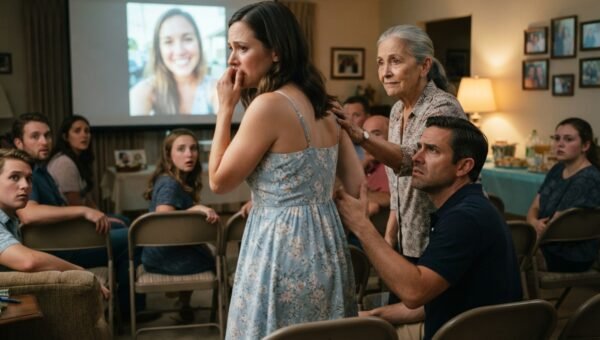
My older brother Mark stood at the podium during Dad is memorial service and told the entire church that he had been there for Dad every single day of his decline. He spoke in that smooth, practiced voice he used for client presentations at his insurance firm, pausing at all the right emotional moments. He talked about managing Dad is appointments and being the rock of the family. The mourners nodded sympathetically, some dabbing their eyes with tissues.
I sat in the third row between my two daughters, my hands folded tightly in my lap. I had spent the last four years driving Dad to dialysis three times a week, cooking low sodium meals he constantly complained about, and sleeping in a uncomfortable vinyl armchair beside his bed whenever his breathing got ragged. I let Mark talk because I was too bone tired to fight him in public. Fighting him meant a scene, and Dad would have hated a scene.
After the service, outside by the hearse, Mark handed me a heavy brown paper grocery bag with greasy handles. He gave me a patronizing pat on the shoulder, the kind coaches give players who sat on the bench.
Dad wanted you to have the junk from his desk, Mark said, looking over my head toward people he actually wanted to network with.
I am clearing out the study tomorrow to get the house ready for the market, so you can take whatever is left of his clutter now.
I did not answer. I just took the bag, its weight pulling down my tired arms, and put it in the trunk of my sedan.
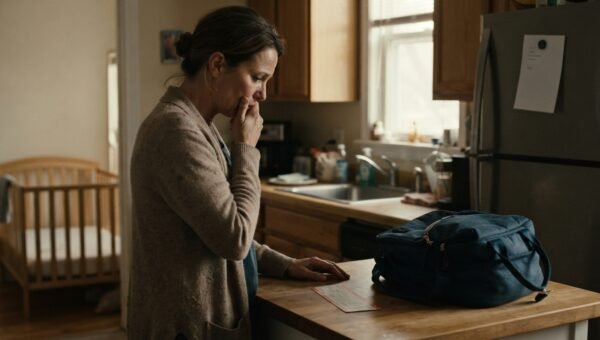
When I finally got home, the house was quiet except for the hum of the refrigerator. My daughters had gone back to their own apartments, leaving me alone with my grief and the grocery bag. I carried it into the kitchen, sat down at the laminate table, and dumped the contents out.
An avalanche of forgotten life spilled across the tabletop. A tangle of rubber bands. A handful of ballpoint pens that no longer worked. A box of paperclips. A cheap metal wristwatch with a cracked crystal face. Underneath the clutter sat a small, black digital voice recorder, the kind with a little red record button and a tiny built in speaker. It looked out of place among the office supplies.
I picked it up, my thumb brushing the textured plastic. Dad was not a tech savvy man. He still used a flip phone and wrote his grocery lists on the backs of old envelopes. I pressed the power button, wondering what on earth he would record on a digital device. The tiny monochrome screen lit up, showing a single audio file labeled with a date from just three nights before he passed away.
My heart did a strange, heavy thump against my ribs. I pressed play.
The tinny speaker hissed with static for a second, and then Dad is voice filled the quiet kitchen. It was weak, raspy, and strained, but unmistakably his.
If Mark says he took care of me, Dad began, his voice catching on a dry cough, ask him about the house on Willow Street.
PART 2
The recording cut off sharply after that single sentence. I sat alone at the kitchen table, staring at the little black recorder as the tiny light flickered out and the screen went dark.
The house on Willow Street. I knew that address. It was an old brick duplex near the industrial park across town, a property Dad had owned free and clear since the seventies and rented out to an elderly couple for modest income.
For years, Dad always said that duplex was his safety net, the asset that would pay for his final care so he would never have to be a burden on me or Mark. But about two years ago, when Dad is memory started slipping and his kidneys began to fail, Mark suddenly stepped in and started handling Dad is legal paperwork. Mark claimed he was just saving me the stress.
I picked up my phone and called our cousin Greg, who is a real estate attorney in the county seat. It was late, but Greg answered on the second ring, hearing the tightness in my voice. When I told him about the recording and asked him to check the property records for the Willow Street duplex, he promised to look into it first thing in the morning.
The next morning, while Mark was presumably tossing out Dad is belongings and scheduling a dumpster for the driveway, my phone rang at nine o is clock.
You sitting down, Aunt Sarah, Greg asked, his voice flat.
Just tell me, I said, gripping the edge of the kitchen counter.
That duplex on Willow Street is not in your dad is name anymore, Greg said. It was transferred eighteen months ago via a quitclaim deed. The signature is your dad is, but it was notarized by a woman who works in Mark is office building. And the property wasn’t sold, Sarah. It was transferred for zero dollars to an LLC. I looked up the corporate filing for that LLC. It is wholly owned by Mark and his wife.
The room seemed to tilt slightly. Eighteen months ago, Dad was having good days and bad days, but he still trusted Mark implicitly. Mark must have slipped that deed in among medical power of attorney papers or health directives, knowing Dad would sign whatever his smart lawyer son put in front of him.
I did not call Mark right away. Instead, I drove over to the Willow Street duplex. The elderly tenants, a retired machinist named Arthur and his wife, were sitting on the small front porch. I parked my car at the curb and walked up the concrete path.
Arthur stood up, his face lined with worry. We were wondering when someone would come by, Arthur said, adjusting his cap. Mr. Evans told us last year that he had to put the house in a trust for his children, and that our rent checks needed to go to a new account. But then last month, a different man came by. Mark. He told us the rent was going up by four hundred dollars starting next month, or we would have to move out. We have lived here thirty years, Ms. Sarah. We cannot afford that kind of hike.
I looked at Arthur, my chest aching. Dad would never have raised their rent. He kept it low on purpose so they could live out their retirement in peace. Mark had not just stolen our father is retirement asset; he was squeezing vulnerable seniors to line his own pockets with rental income, all while standing at a pulpit pretending to be a devoted son.
PART 3
I spent the next two hours gathering copies of bank statements I had saved from Dad is accounts, medical bills Mark claimed he was paying out of pocket, and the tax records Greg pulled from the county courthouse. The evidence formed a neat, undeniable trail. Mark had systematically stripped Dad of his primary real estate holding while letting me shoulder every single hour of physical caregiving, night after night, without offering a single dime for groceries, medication co-pays, or gas.
By three in the afternoon, I drove over to Dad is house. Mark is luxury SUV was parked in the driveway, right beside a large metal dumpster filled with old bookshelves, rugs, and boxes of photo albums.
I walked up the front steps and pushed the front door open. Mark was standing in the hallway holding a black garbage bag, looking sweaty in his designer polo shirt.
What are you doing here, Sarah, Mark asked, irritation flashing across his face. I am trying to clear this place out so we can list it by Monday. If you want any more of Dad is junk, you should have taken it yesterday.
I did not yell. I did not drop to his level or start swinging. I just walked past him into the living room, laid my brown leather folder on the coffee table, and turned around to face him.
I found something in that bag of junk you handed me yesterday, Mark, I said, my voice steady and cold.
Mark stopped moving. A garbage bag slipped slightly in his grip. What are you talking about?
I am talking about the digital recorder Dad kept in his desk drawer, I said, watching the color drain from his face. I am talking about the audio file he saved three nights before he died. The one where he told me to ask you about the house on Willow Street.
Mark let out a harsh, nervous laugh, dropping the bag to the floor with a heavy thud. Dad was out of his mind at the end, Sarah. You know his memory was gone. He hallucinated half the time. He did not know what he was signing or saying.
He knew enough to record you, Mark, I replied, stepping closer. And Greg pulled the county records on the Willow Street duplex. A zero dollar quitclaim deed notarized by someone in your office building. Transferred to an LLC that belongs entirely to you and your wife. Not to mention Arthur and Martha, who you tried to price out of a home they have lived in for thirty years.
Mark opened his mouth, but no sound came out. The polished corporate persona vanished, leaving behind a cornered man looking remarkably small in the hallway of the house we grew up in.
You are going to sign the property back over to the estate today, I said, my voice dropping an octave. Every single deed, every single title, back where it belongs so it can be split properly according to Dad is original will. And you are going to refund every extra dollar you shook out of Arthur and Martha.
And if I do not, Mark muttered, his jaw tightening with a flash of his old arrogance.
Then I take this recorder, these county deeds, and a statement from Arthur down to the county prosecutor and your state insurance licensing board tomorrow morning, I said. You want to talk about being a devoted son in front of a judge? Let us see how your firm likes having a partner on trial for elder exploitation.
Mark stared at me for a long, silent moment. The fight went completely out of him. He reached into his back pocket, pulled out his phone, and slumped down onto the arm of the living room sofa, his hands trembling as he began dialing his lawyer.
ENDING
Three weeks later, the deed for the Willow Street duplex was legally restored to our father is estate, and Arthur and Martha received a signed letter guaranteeing their rent would remain unchanged for as long as they chose to stay. The house was eventually sold through a neutral executor, and the proceeds were divided fairly, exactly as Dad had wanted all along.
Mark did not attend the final settlement meetings. He sent his attorney instead, having quietly taken a leave of absence from his insurance firm to handle personal matters. People in our extended family still occasionally ask me why Mark and I do not speak anymore, and why he vanished from social media after the funeral. I never bother explaining the whole messy truth to them. Let them remember the glowing eulogy he gave at the podium if it brings them comfort.
I kept the little black digital recorder in my bedside table drawer. Sometimes, on quiet nights when the house is still, I take it out, press play just to hear that raspy, tired voice one last time, and whisper a quiet thank you to the man who made sure the truth survived long after he was gone.