PART 1
At sixty-three, Arthur started sleeping with his phone tucked under his pillow. Thirty-eight years of marriage teaches you the exact rhythm of a person’s breathing, the weight of their limbs when they drift off, and the small habits they carry into sleep. Arthur had never been a guarded man. He left his wallet on the counter, his keys by the door, and his thoughts spoken plainly across the kitchen table.
When the phone habit started, I felt a cold prickle of suspicion that felt almost embarrassing in its predictability. I assumed an affair. At our age, people joke about midlife crises or sudden departures, but standing in the dark hallway listening to the muffled hum of notifications, my mind went straight to another woman.
The proof arrived on a Tuesday night when Arthur fell asleep hard on the living room sofa after a long drive from visiting his brother. His arm hung loose off the cushion, and the phone slipped halfway out from beneath his pillow, screen flaring bright in the dim room. A text preview lit up from a contact saved simply as Megan.
She still doesn’t know?
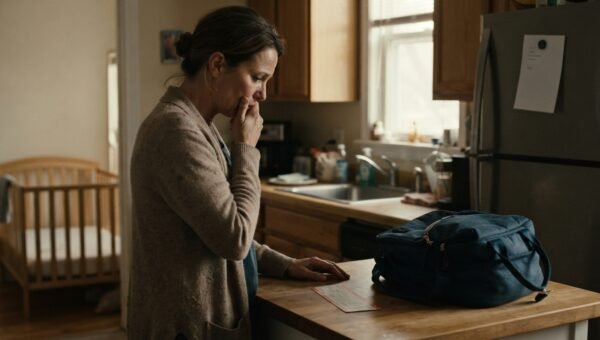
My chest tightened. I stood there in my cotton nightshirt, barefoot on the hardwood, staring at the glowing letters. Without thinking, my hand reached down and slid the phone free. The screen unlocked with his familiar pattern, and I opened the message thread.
The conversation was not romantic. There were no pet names, no late-night confessions of passion, no emojis. It was clinical, cold, and entirely baffling. It was a string of dates, blood test results, and references to a regional genetics clinic two towns over.
I stood over him, my pulse pounding in my ears, and shook his shoulder until his eyes snapped open, blinking against the lamplight. I held the phone down toward his face, the screen still lit.
Who is Megan? I asked, my voice shaking harder than I wanted it to. What is she to you? And why are you talking to her about medical tests behind my back?
Arthur didn’t jump up. He didn’t snatch the phone from my hand or get defensive in the way guilty men usually do. He just slowly sat up, rubbed his palms over his face, and stared down at the braided rug between his feet for a very long time.
The silence in the room stretched until it felt heavy enough to crush something.
Megan is your sister’s daughter, he finally said.
The words didn’t make sense. They bounced off the walls of my head like stones thrown against glass. I stared at him, waiting for the punchline, waiting for him to admit he was talking nonsense or mixing up names.
My sister doesn’t have children, I said, the words sharp and defensive. I am an only child. My mother told me a hundred times that I was her only miracle, that she lost a pregnancy before me and nothing after. I know my own family history.
Arthur looked up then, his eyes heavy with a terrible, weary resignation.
That is what your mother told you, he said quietly. But it wasn’t the truth.
PART 2
The next morning, the house felt entirely foreign, as if the walls had shifted three inches to the left while we slept.
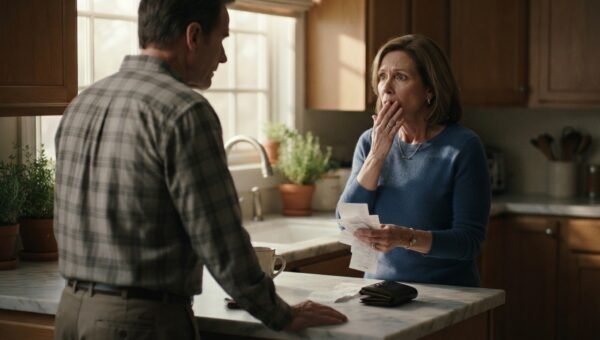
Arthur sat at the kitchen table with a mug of black coffee growing cold between his hands, not looking at me as I paced near the counter. He explained how he had found out, stumbling through it like a man walking across thin ice.
Years ago, before we were married, Arthur had worked briefly at the county records office during a summer break from college. He had seen my mother’s name on a sealed adoption index while filing misfiled historical ledgers. He didn’t bring it up then because we were young, and it wasn’t his secret to tell. But four years ago, Megan—who had been using a consumer DNA kit to piece together her biological tree—managed to trace a cluster of distant matches straight to Arthur’s side of the family before finding a closer link to my maiden name. She had reached out to him first because she found his contact information attached to an old professional registry.
Why didn’t you tell me then? I demanded, stopping my pacing and slamming my hand down on the Formica counter. Four years, Arthur? You’ve been talking to my niece—if that’s even who she is—for four years, and you let me walk around thinking my entire life was a quiet, normal picture?
Because your mother made me swear, he said, looking up at last. When we got married, she pulled me aside at the reception. She told me the truth about what happened back in the sixties—that she gave up a baby girl under pressure from her own parents, closed the file completely, and carried that grief like a stone until the day she died. She begged me never to let you know, because she was terrified you would look at her differently, or spend your whole life chasing a ghost.
I felt a hot wave of fury wash over me, burning right through the shock. My mother had been dead for six years. She had taken her secrets to the grave, leaving me to mourn a woman I thought I knew inside and out. But Arthur keeping it from me while she was gone felt like a betrayal of a different order entirely.
If Megan is real, I said, my voice dropping to a dangerous whisper, where is she? And why is she sending you medical records?
Arthur reached into his coat pocket hanging on the back of the chair and pulled out a plain white envelope. He slid it across the table toward me.
She lives about forty miles north, he said. And she needs answers about our family medical history because she was just diagnosed with a rare, hereditary autoimmune kidney disorder. The doctors need to know if it came from your mother’s side, and if you or I carry any markers for it. That’s what the texts were about. She isn’t trying to steal your life, Sarah. She’s just trying to save her own.
PART 3
I sat down slowly, the envelope heavy and inert between us. I didn’t open it right away. My mind raced through decades of holidays, quiet Sunday dinners, and my mother’s gentle, steady presence in my life. The woman I remembered was fiercely protective, deeply loving, and utterly ordinary in the best possible way. To imagine her sitting in a clinic in 1965, signing away a newborn under duress, felt like trying to picture a stranger wearing my mother’s skin.
Over the next week, the anger gave way to a hollow, restless curiosity that I couldn’t ignore. I called the number Arthur gave me. Megan answered on the second ring, her voice sounding startlingly like my own cousin’s on my father’s side—that same slight upward inflection at the end of sentences.
We agreed to meet at a neutral diner halfway between our towns on a rainy Thursday afternoon. When she walked through the door, wearing a heavy green raincoat and carrying a worn leather tote bag, I didn’t need to see a birth certificate or a DNA test. She had my mother’s high cheekbones and the exact same way of tucking her hair behind her left ear when she looked around a room.
We sat in a corner booth for three hours over lukewarm coffee and untouched club sandwiches. She showed me her adoption papers, heavily redacted by the state, alongside the modern genetic sequencing charts that mapped out the kidney condition. She wasn’t angry at me, and she wasn’t looking for an inheritance or a dramatic reconciliation. She just wanted to know if her children—she had two teenagers—might be facing the same shadow.
As she talked about her life, growing up with a loving adoptive family in upstate New York but always feeling that invisible pull, I realized something heavy and profound. My mother hadn’t lied out of cruelty. She had lied out of the absolute, crushing shame and fear of a different era, when unwed mothers were treated like outcasts and forced into heartbreaking choices. She had buried that child so deep she probably convinced herself the ghost would never rise.
But secrets don’t stay buried anymore. They wait in the dark, gathering code and data, until a twenty-third-generation swab on a plastic stick brings them crashing into the light.
ENDING
When I drove home that evening, the rain had stopped, leaving the asphalt shining under the streetlights. Arthur was waiting in the kitchen, sitting at the same table, looking like a man bracing for an eviction.
I walked in, hung up my jacket, and set my car keys on the counter.
She has my mother’s eyes, I said softly, pulling out the chair opposite him and sitting down.
Arthur looked up, tension bleeding out of his shoulders by degrees. How did it go?
It went, I said, staring at the grain of the wooden table where we had shared thirty-eight years of breakfasts and arguments and quiet mornings. She has two kids, Arthur. Your grandchildren, technically speaking, though nobody knows how to process that yet. And she needs our help with the medical history.
I reached across the table and placed my hand over his calloused knuckles. He turned his hand over and squeezed mine tightly, neither of us saying anything for a long time.
We have a lot of catching up to do, I added, feeling the strange, heavy weight of a family suddenly expanding in its autumn years. And you are going to help me every step of the way, starting tomorrow morning when we drive up to meet her kids.
Arthur nodded, a slow, deep movement of relief.
Whatever you want, Sarah. I’m right here.
For the first time in weeks, the house felt like it belonged to us again—not the clean, safe illusion we had built for decades, but the messy, complicated truth of who we actually were.