PART 1
Growing up in our house on the water, nobody ever called the boat a treasure. My father bought the rusted, sun-faded fiberglass outboard back in the late nineteen-seventies, and it spent the next forty years chugging, rattling, and smelling permanently of old two-stroke exhaust and stale bait. We called it the floating headache. When the starter motor finally died for the third time, Dad parked it behind the rusted-out tractor shed and left it to gather pine needles and spiderwebs.
When Dad passed away in June at eighty-two, my younger brother, Leo, immediately claimed the wreck as part of his inheritance. None of us cared. My older sister, Sarah, wanted the kitchen hutch, I wanted Dad’s hand-carved decoy ducks, and Leo wanted anything with a motor that he could flip for fast cash. Dad’s estate was modest, and while the will was still sitting in the lawyer’s office waiting for probate to clear, Leo decided he didn’t want to wait. Without telling Sarah or me, he listed the hull online as a vintage project boat. A week later, a local guy with a flatbed trailer hauled it away for twenty-five hundred dollars cash.
Leo pocketed the money before the ink on the death certificate was even dry, claiming the boat was a gift granted to him years ago in casual conversation. Sarah was furious, threatening to contest his share of the estate over it, but I was just tired.
I figured let him have his twenty-five hundred dollars and his scrap metal. We had bigger things to worry about, like cleaning out closets, sorting through decades of medical bills, and deciding what to do with the small house that smelled so strongly of Dad’s pipe tobacco.
That was until a Tuesday afternoon a month later, when a stranger walked up my gravel driveway while I was unloading groceries.
He was in his late forties, wearing a faded plaid shirt and wiping sweat from his forehead with a handkerchief. He introduced himself as Gary, the man who had bought the boat from Leo. At first, I braced myself, thinking the motor had seized completely on the first river run and Gary was back to demand a refund from the family.
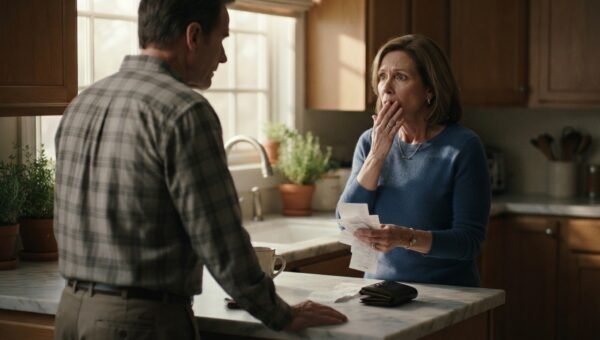
“I’m not here about the engine, ma’am,” Gary said, holding up a weathered manila envelope. “And I’m not looking for my money back.
But your brother didn’t look through the whole hull before he sold it. I found a hidden compartment underneath the captain’s seat. It’s got a false fiberglass panel that pops out if you know where to push.”
I froze with a bag of groceries in each arm, the plastic handles cutting into my fingers. “A hidden compartment? What are you talking about? My dad kept old spark plugs and spare rope in the bilge, that’s all.”
“No,” Gary said quietly, stepping back off the porch. “It wasn’t tools. It was this.”
He held out the manila envelope. My heart gave a heavy, sinking thud against my ribs. I set my groceries down on the porch bench and took the envelope with shaking hands, feeling the rigid, square shapes packed inside.
PART 2
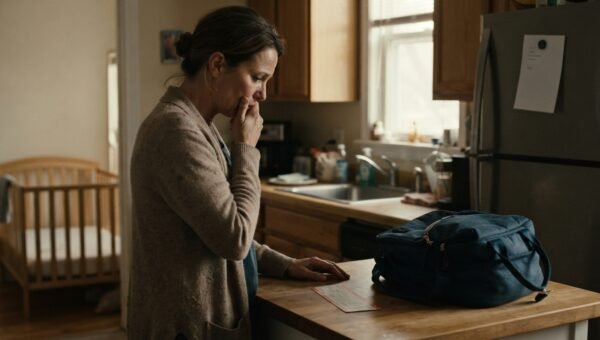
I carried the envelope inside the kitchen, sitting down at the Formica table where Dad had eaten his morning toast for decades.
Gary stayed on the porch, waiting patiently, giving me space. I pulled the flap open and slid the contents out onto the table.
It wasn’t money. It wasn’t land deeds or hidden savings bonds. It was a neat stack of old Polaroids, the borders yellowed and curling with age.
I picked up the first one. The date stamp in the corner read July 1979. It showed a sunlit dock somewhere I didn’t recognize, and standing right beside my father was a little girl with bright blonde pigtails, maybe six or seven years old, holding an ice cream cone. Dad was smiling down at her with a gentle, unguarded expression I had rarely seen him direct at Sarah, Leo, or me when we were growing up.
My hands began to tremble as I flipped through the rest of the stack. Photo after photo, summer after summer, spanning from 1979 all the way to 1986. The little girl grew taller in each picture, trading pigtails for a ponytail, then a shoulder-length bob by the mid-eighties. In some photos, they were sitting on the bow of that very same old boat. In others, they were eating picnic lunches at a state park thirty miles inland.
I searched my memory frantically. Where was I during those summers? Where was Leo? Where was our mother? In 1982, I would have been twelve years old, busy with middle school and summer camp. Did Dad take another child fishing every single weekend while pretending he was working late shifts at the lumber yard or running errands for the hardware store?
My chest tightened until it was hard to draw a full breath. The deception felt massive, heavy, and entirely out of character for the quiet, stern man I thought I knew. Dad was a man of few words, a creature of strict routine and Sunday church. He wasn’t a man with grand secrets.
Yet here they were, frozen in chemical ink on instant film, hidden away in a secret compartment beneath the floorboards of a rotting boat that he must have believed would stay in the family forever.
I turned the final photograph over. It was dated August 1986. The girl looked to be about fourteen now, smiling shyly at the camera. On the back, written in my father’s familiar, cramped, left-handed script, was a woman’s name I had never heard before, followed by a ten-digit local phone number.
Below the name, he had written a single sentence: *If anything ever happens to me, make sure they know the truth.*
PART 3
I sat at that kitchen table for an hour, staring at the phone number until the numbers blurred together. Gary had already left, tipping his cap and telling me he figured I deserved to have them. He didn’t want payment; he just looked unsettled by what he had found, like he was passing a cursed object across a fence and wanted it out of his hands.
Sarah didn’t answer her phone when I called, and when I called Leo, he laughed it off.
“Dad was always helping out local kids from the church or the neighborhood,” Leo said dismissively over the line, the sound of a television blaring in the background. “Probably some kid whose parents couldn’t afford summer camp. Why are you making a big deal out of it? It’s just old trash from the boat.”
“She wasn’t a camper, Leo,” I snapped back, my voice shaking. “She was with him every summer for eight years. And he hid her pictures under the floorboards.”
There was a brief silence on the other end, followed by Leo telling me he was busy and hanging up. He didn’t want to think about it. He had his twenty-five hundred dollars, and the past was supposed to stay buried.
But I couldn’t bury it. The weight of that sentence on the back of the last photo pressed down on my shoulders. *If anything ever happens to me, make sure they know the truth.* Was he talking to us? Was he talking to the girl?
My hands were ice-cold as I picked up my landline receiver. I dialed the ten-digit number from the back of the photograph, pressing the buttons slowly, listening to the monotonous electronic clicks echo in the quiet kitchen.
It rang once. Twice. Three times.
Just as I was about to lower the phone, assuming it was disconnected or belonged to someone who had moved away decades ago, the line clicked.
A woman’s voice answered, calm, steady, and entirely unhurried, as if she had been sitting beside the telephone waiting for this exact ring for forty years.
“Hello?” she said.
I opened my mouth, but my throat was entirely dry. I couldn’t find my voice.
There was a brief pause on the line, and then the woman spoke again, her tone carrying a quiet, knowing weight that stopped my breath entirely.
“I wondered,” she said softly, “which one of his children would call first.”
ENDING
The words hung in the air between us, heavy and absolute, tearing down every assumption I had ever held about the man who raised me.
“You knew about us,” I managed to whisper, my fingers tightening around the receiver until my knuckles turned white.
“I knew he had a family across town,” the woman replied, her voice remaining remarkably gentle, devoid of anger or bitterness. “Just like he knew about us. He lived two lives, carrying the weight of both until the day he died. I take it you found the boat?”
“A buyer found the compartment,” I said, looking down at the stack of Polaroids spread across the Formica table. “My brother sold the hull.”
“Figures,” she sighed softly. “Nothing of his was ever meant to stay hidden forever, least of all the things he was most afraid of losing.”
We talked for nearly an hour. She wasn’t a neighbor’s kid from the church, and she wasn’t a charity case. She was my half-sister, born just eighteen months after me, hidden in plain sight across the county line while Dad maintained a double routine of hardware stores, lumber yards, and secret weekend dock visits. She knew our birthdays, she knew our mother’s name, and she had spent her entire life waiting for the other shoe to drop, waiting for the day our father’s carefully constructed world would finally collide with ours.
When we finally hung up, the kitchen was dark, the sun having dipped completely below the tree line outside the window. The house felt smaller, colder, and entirely unfamiliar. The twenty-five hundred dollar boat sale that Leo thought was a harmless cash grab had blown the roof off our family’s history. Dad’s secrets were out in the open now, resting right here on my kitchen table, and nothing we ever did from this day forward could put them back in the dark.