PART 1
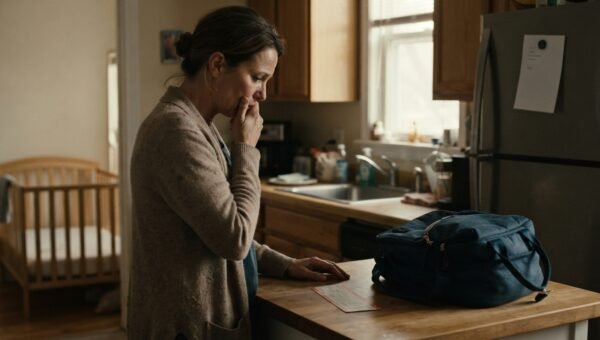
When the pharmacy phone rang at CVS, I was halfway through counting out ninety capsules of blood pressure medication. The register beeped, the automatic doors hissed open, and the fluorescent bulbs overhead hummed their dull, steady buzz. It was 1:15 on a Tuesday afternoon.
“Shirley, line two,” the lead tech called out without looking up from her station. “It is the elementary school.”
My stomach dropped into my shoes. A call from the school usually means a scraped knee or a sudden fever.
But when I picked up the receiver, it was not the school nurse. It was Mrs. Albright, my five-year-old daughter Mia’s kindergarten teacher. Her voice sounded tight, brittle, like she was holding back tears.
“Claire,” Mrs. Albright said, barely above a whisper. “You need to come down here right away. Do not call anyone. Just come straight to the front office.”
“Is she hurt? Did Mia fall on the playground?”
“She is not physically injured right now, but she said something during our quiet circle time. She told me, ‘My stepdad counts my bones at bedtime.’ Claire, I have to report this, and the counselor is with her now.”
I stopped breathing. The plastic pharmacy counter seemed to tilt beneath my hands. Four years of marriage to Greg flashed behind my eyes. Greg, who brought Mia strawberry milk on Saturdays. Greg, who fixed the loose railing on the porch. Greg, who put her to bed whenever I worked the closing shift.
“I am on my way,” I whispered.
I hung up, stripped off my blue smock, and dropped it right onto the breakroom counter. My supervisor yelled something about covering the register, reminding me that walking out would cost me my shift. At $14.50 an hour, every hour meant groceries or the electric bill. I did not care. I walked straight out the double doors into the bright midday sun.
The drive to Oak Grove Elementary took twelve minutes. I ran three yellow lights, gripping the steering wheel so hard my knuckles turned gray. My mind raced in frantic circles, trying to convince myself it was a harmless game, an innocent misunderstanding of a tickle fight. Kids say strange things all the time. That was what I kept repeating out loud in the car. It is just a misunderstanding.
The school receptionist did not ask for my ID. She took one look at my face, pushed the security button, and pointed me down the hall toward the guidance counselor’s office.
Mia was sitting on a low vinyl sofa, clutching a worn brown teddy bear with one missing ear. When she saw me, her small face brightened for a second, then tightened with guilt. She tucked her chin into her chest, pulling her knees up to her overalls.
The guidance counselor, Mrs. Vance, stepped out into the doorway and gently pulled me into the hallway, leaving the door cracked just an inch.
“Mrs. Albright took notes on exactly what Mia shared,” Mrs. Vance said quietly. Her face was grim, pale, completely devoid of the usual welcoming school cheer. “Mia described it as a bedtime game. She said that once you leave for your evening shift, Greg turns off all the bedroom lights. He sits on her bed and presses hard on her ribs, her collarbones, and her hips. She told her teacher that it hurts, but he whispers to her that good girls don’t cry and that it is their secret game.”
The linoleum floor seemed to give way beneath me. My knees buckled. I could not stand. I slid down the cinderblock wall of the hallway and sat flat on the floor, burying my face in my hands. The cold wax of the school hallway seeped through my jeans.
My husband. Four years. I had trusted him with the only precious thing I had in this world. Every single time I picked up an extra night shift to help pay off his credit card debt, I had left my baby alone in that house with him.
I pulled my phone from my pocket with trembling fingers and dialed 911.
“What is your emergency?” the dispatcher asked.
“My husband,” I choked out, my voice cracking into jagged pieces. “My daughter just told her teacher what he does to her in her room. Please send an officer to Oak Grove Elementary.”
Within seven minutes, a patrol car pulled into the bus loop. Officer Miller, a veteran deputy with graying hair and tired eyes, walked down the hall. He spoke with the counselor first, reading her written notes. Then he stepped into the office, knelt down to Mia’s level, and asked her two gentle questions.
“Mia, does your stepdad do this when your mommy is home, or only when she is at work?”
“Only when Mommy is at CVS,” Mia whispered, twisting the bear’s loose ear around her finger.
“And where does he touch you when he counts those bones?”
Mia reached her tiny hands down, pointing to her ribs, then slipping her fingers beneath the waistband of her pants.
Officer Miller stood up immediately. His expression changed from calm professionalism to hard, cold steel. He stepped into the hallway, reached for the radio on his shoulder mic, and keyed it.
“Unit forty-two to dispatch,” he said in a level, urgent tone. “I need an on-call child services investigator and a second unit dispatched to the Oak Grove administration office immediately. We have a felony physical and sexual abuse disclosure on scene.”
He clicked the radio off, looked down at me on the floor, and crouched so we were eye to eye.
“Ma’am, based on what your daughter just described, your husband has been systematically abusing her under the guise of this game,” Officer Miller said. “He knows your schedule. Does he expect you to be home right now?”
“No,” I whispered, tears burning my cheeks. “My shift ends at nine tonight.”
“Good,” Officer Miller said. “We need to keep it that way for the next two hours.”
PART 2
The next two hours felt like moving through thick black water.
A female investigator from Child Protective Services named Brenda arrive alongside a detective from the county sheriff’s department. They took us to a specialized family advocacy center across town, a quiet brick building that did not look like a police station. They gave Mia apple juice and crayons while a certified forensic interviewer took her into a room with two small microphones in the ceiling.
I sat in the observation room behind the two-way glass, my hands shaking so violently I could not hold the paper cup of water Brenda offered me.
Through the speakers, I heard my little girl’s voice describe the last eight months of our lives. She explained that it started the previous winter, right around the time Greg lost his logistics job and began staying home more while I picked up double shifts. He had told her that the human body had secret bones, and that if she ever told me, the police would come and take Mommy away to jail because Mommy was too poor to pay for their house.
He had weaponized my poverty and my long hours to keep a five-year-old child terrified and silent.
“We need a medical examination right now,” Detective Ross told me as the interview concluded. “The children’s hospital has a specialized unit. It will be gentle, Claire, but it is necessary for physical evidence.”
“Does Greg know?” I asked, my voice hollow.
“Not yet,” Detective Ross said. “His truck was still parked outside your house twenty minutes ago. Our patrol cars are staging two streets away. But we want the physical evidence secured first, because if he suspects anything, he might destroy clothing, bedding, or devices.”
At the hospital, Mia cried when the nurse asked her to change into a gown. I held her tiny hands, kissing her forehead over and over, whispering that she was safe, that Mommy was here, that nobody was ever going to hurt her again.
When the physician finished the examination, she pulled Detective Ross and me into a private consultation room. Her voice was steady, but her eyes were furious.
“She has deep tissue bruising along the lower ribs and inner hip crests,” the doctor reported. “This is not normal pressure. It represents extreme physical force, used to intimidate and inflict pain. There are also early physical signs of molestation consistent with the timeline of the past several months. I am documenting everything for the prosecutor’s office right now.”
Hearing those words spoken aloud by a doctor shattered whatever numb denial had remained in my chest. Rage, hot and nauseating, surged up through my throat. I wanted to drive home and tear Greg apart with my bare hands.
Just then, my phone buzzed in my purse.
It was a text from Greg.
*Hey babe, picking up some takeout for dinner. You still coming home at 9:30 or can you sneak out early? Love you.*
Detective Ross stood directly behind me, reading the screen.
“Do not reply with anger,” Ross instructed firmly. “Do not let him know we are here. Just text back: *Working late. See you around ten.* Keep him right where he is.”
I typed the words with cold, rigid fingers. My thumb hovered over the send button for three seconds before I pressed it.
“Now,” Detective Ross said, pulling his badge and keys from his belt. “We go serve the arrest warrant and execute a search of your home.”
PART 3
Detective Ross allowed me to wait at the end of our street in an unmarked squad car with Brenda while four patrol units surrounded our small three-bedroom ranch.
The sun was sinking behind the pine trees, casting long, bloody-orange shadows across the gravel driveway. Greg’s silver pickup truck sat parked by the mailbox.
I watched through the tinted windshield as four deputies, guns drawn at their sides, moved up the front walk. Detective Ross knocked hard on the front door, announcing the sheriff’s office.
For two minutes, nothing happened. My pulse thundered in my ears.
Then the front door jerked open. Greg stepped out on the porch wearing his gray sweatpants and an old college t-shirt. He had his hands up, looking bewildered, his face contorting into an expression of theatrical shock.
“What is this about? What is going on?” I could hear his muffled shouts from across the street. “Officers, there must be a mistake! My wife is at work!”
“Gregory Allen Turner, you are under arrest for aggravated child abuse and lewd conduct with a minor,” Detective Ross barked, pushing him against the vinyl siding of the porch and wrenching his arms behind his back.
The handcuffs clicked shut with a sharp, metallic snap that carried clearly across the evening air.
Greg thrashed against the deputy’s grip, twisting his neck to look around wildly. When his eyes caught the unmarked cruiser parked by the cul-de-sac, his expression shifted instantly. The fake confusion dropped from his face like a mask, replaced by a cold, snarling fury. He knew I was inside that car.
“You let her lie to you!” he screamed toward the street, spitting as he struggled against the two officers holding him. “She is crazy! You listen to a five-year-old over me? Claire, you stupid b***h, you will lose everything! You can’t even afford this house without my name on the lease!”
The officers forced him down into the back of a patrol car and slammed the heavy door, cutting off his screams.
Brenda kept her hand gently on my shoulder. “Take a breath, Claire. He will never set foot in that house again.”
The deputies spent the next three hours searching the house under a signed search warrant. What they found turned my blood completely to ice.
Behind the baseboard in the laundry room closet, Greg had hidden a digital camera and a black hard drive. In Mia’s bedroom, tucked between the mattress and the box spring, officers recovered a spiral notebook. In it, Greg had written dates, times, and notes detailing her reactions to his “games,” documenting how long he could make her endure the pain before she whimpered.
The detective brought the sealed evidence bags out to his trunk. He did not let me look inside, but his face told me everything I needed to know.
“This was premeditated, documented, and escalating,” Detective Ross told me quietly on the porch. “He is not getting bail. The evidence we recovered tonight guarantees he will stay behind bars until trial.”
Around midnight, a locksmith arrived to change every single lock on our doors. My mother drove three hours from Ohio through the night, arriving at four in the morning to hold Mia while I finally collapsed on the living room floor and wept until my ribs ached.
ENDING
The legal battle over the next eleven months was brutal, but the evidence left no room for doubt.
Greg’s court-appointed defense attorney tried to file motions to suppress the hard drive, arguing the search exceeded the warrant. The judge threw the motions out within ten minutes. Confronted with the digital files, the handwritten notebook, and the hospital’s medical forensic report, Greg took a plea deal to avoid the certainty of life without parole at trial.
On a rainy Thursday morning in November, I sat in the front row of the county courthouse. Greg sat thirty feet away in an orange jumpsuit, his head shaved and his ankles shackled. He refused to look at me.
The judge sentenced Gregory Allen Turner to thirty-two years in state prison with no possibility of parole for the first twenty-five. He was classified as a high-risk predatory offender, meaning his name and photograph will remain on public registries for the rest of his natural life if he ever walks free.
The house we lived in had too many shadows, too many bad memories attached to the walls. With help from my mother and a local victim advocacy grant, I broke the lease, packed up our clothes, and moved sixty miles north to a small two-bedroom apartment near my sister.
I left CVS and took a position as an inventory clerk at a regional medical warehouse. The pay was slightly better, but more importantly, the shift ran from seven in the morning until three in the afternoon. I was there every single day when Mia walked out the school doors.
Mia is seven now. She has been in weekly trauma therapy for nearly two years. Healing is not a straight line. There are still nights when she wakes up gasping from bad dreams, and she still refuses to sleep in total darkness. Her bedroom has two soft glowing nightlights that stay on until the morning sun comes through the curtains.
Every night before she goes to sleep, I sit on the edge of her bed. We do not play games in the dark. Instead, we sit together in the warm amber light, and I hold both of her small hands in mine.
“Who do these bones belong to?” I ask her softly.
“They belong to me,” Mia answers, her voice clear and strong.
“And who protects you?”
“Mommy protects me.”
She pulls her covers up to her chin, smiles, and closes her eyes without fear. I turn off the hallway light, leaving her door wide open, knowing that as long as I draw breath, no one will ever touch her again.