PART 1
For twenty-eight years of marriage, I only knew one version of Arthur Miller.
According to my mother-in-law, Evelyn, Arthur was a coward who walked out on her in the spring of 1984, leaving her with twelve-year-old Mark and nine-year-old Brenda. Evelyn loved to recount the story at Thanksgiving, right before carving the turkey. She would pat Mark on the arm and say, “Your father packed two suitcases while you were at baseball practice and never sent a single cent. Not a nickel. Everything we had, we scraped together ourselves.”
Mark grew up carrying that wound like a physical scar. It made him rigid about security. He became an accountant, checked the locks three times every night, and worked sixty-hour weeks so our own children would never know what it felt like to be abandoned. When our daughter, Chloe, got engaged last fall, Mark sat at our kitchen table with a legal pad, calculating catering costs down to the olive.
Then, three months before the wedding, Mark told me he wanted to invite Arthur.
I almost dropped the coffee pot. “Mark, you haven’t seen that man in forty years. Evelyn will have a stroke if he walks in the door.”
“I just need closure,” Mark said. His voice was quiet, the way it always got when his childhood came up. “Chloe is our only daughter. If my dad is still alive, I don’t want him to die without seeing that I turned out decent. I want him to look at what I built.”
I hated the idea. I told him no three times that week. But watching my husband stare out the dark kitchen window, shoulders hunched with decades of unspent anger, broke me down. I gave in on one condition: Evelyn was not to know unless Arthur actually RSVP’d yes.
Mark tracked down an address through a public records search. Arthur was seventy-six years old, living alone in a small duplex outside Fort Wayne, Indiana. Mark mailed the formal invitation with a short handwritten note that read: “If you want to see your granddaughter get married, June 14th, four o’clock. Mark.”
No reply came. The RSVP deadline passed in May. Evelyn arrived in town three days before the ceremony, holding court at our rehearsal dinner, reminding everyone how Mark was the man of the house from age twelve. Mark smiled tightly and said nothing.
The wedding itself was gorgeous. Sunlight filtered through the stained glass of the chapel, and Chloe looked breathtaking. At five-thirty, we moved into the reception hall for cocktails. Evelyn was seated at table two, wearing blush lace, surrounded by her bridge friends and her daughter Brenda.
At five-forty-five, a man walked through the brass double doors of the reception hall.
He wore an off-the-rack navy blazer that hung a little loose on his frame, dark dress slacks, and polished black loafers. His silver hair was neatly combed, but his hands trembled slightly as he held a plain white letter-sized envelope. He did not go to the gift table. He stood by the entrance, searching the crowd with pale blue eyes.
Mark froze. He set his wine glass on a passing waiter’s tray so hard the stem clinked against the rim.
“Is that him?” I whispered, my heart slamming against my ribs.
“Yeah,” Mark said.
Mark walked across the parquet floor. I stayed three steps behind him, terrified of what might happen. If Evelyn looked toward the lobby, the entire room would implode.
Arthur saw Mark coming. The older man swallowed hard, his Adam’s apple bobbing. Up close, the resemblance between them was eerie. They had the same square jaw, the same heavy brow, the same slight turn in the left collarbone.
“Mark,” Arthur said. His voice was raspy, thin from age.
“You came,” Mark said. There was no warmth in it, just sheer disbelief.
“I didn’t want to cause a scene,” Arthur said softly, glancing past us toward the bustling tables. “I know your mother is here. I won’t stay. I just… I needed to lay eyes on you.”
“Why now?” Mark asked, his voice tight. “Forty years, Arthur. Why show up today?”
Arthur looked at Mark for a long, agonizing moment. His eyes filled with tears, but he blinked them back. “Because you asked me to. That’s the only reason.”
He extended the white envelope. Mark didn’t take it at first. Arthur reached out, pressed the paper against Mark’s fingers, and closed his hands around Mark’s wrist. Then, before Mark could pull away, Arthur leaned in and pulled his son into a brief, awkward hug.
“I’m proud of you, son,” Arthur whispered. “You look just like you were supposed to.”
Arthur let go, turned on his heel, and walked out the glass doors toward the parking lot. He had been in the building for less than ten minutes.
Mark stood motionless, gripping the envelope. His face was dead pale. I took his elbow and steered him out of the hallway before Evelyn or Brenda could spot us. We spent the next four hours smiling for photographers, cutting cake, and making toasts. Mark functioned on pure autopilot.
We didn’t get back to our hotel room until nearly midnight.
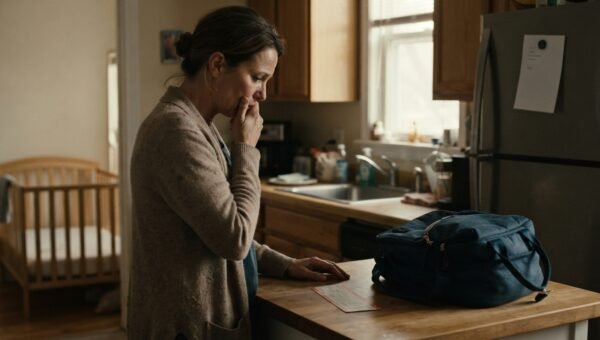
Chloe and her new husband were already on their way to the airport, and the quiet of the room felt suffocating. Mark took off his tuxedo jacket, threw it over a chair, and sat on the edge of the king-sized bed. He pulled the white envelope from his inner pocket.
“Are you going to open it?” I asked, sitting beside him.
His hands shook as he tore the seal. Inside was no wedding card, no check, and no sentimental letter.
It was a stack of yellowed, carbon-copy legal receipts.
PART 2
The papers were stapled along the top edge, the corners dog-eared and smelling of cedar and old attic dust.
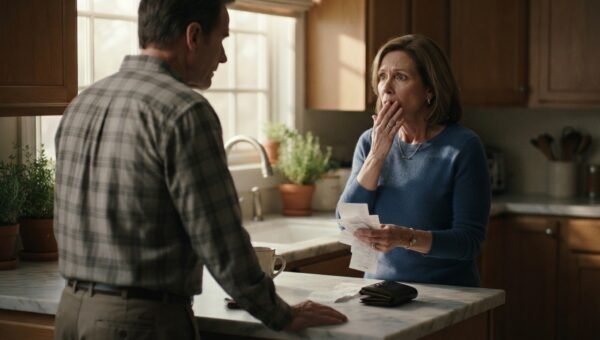
Mark flipped the first page. It was an official child-support ledger issued by the Allen County Friend of the Court, dated September 1984. Typed across the top was the case number: *Miller v. Miller*.
Underneath were columns of dates, amounts, and signatures. Every single line showed a payment of $325, stamped with a purple rubber ink mark: “RECEIVED — CLERK OF COURTS.”
Mark flipped the page. October 1984: $325. November 1984: $325. December 1984: $325.
Page after page. Year after year.
“What is this?” Mark whispered, his voice cracking. “This can’t be right.”
He kept turning. As the years progressed into the late eighties and early nineties, the court ledger shifted to certified bank carbon slips. The amount went up to $450 a month following a 1989 court adjustment. For fourteen solid years, without missing a single month, every payment had cleared.
Fourteen years of support payments, totaling over sixty-eight thousand dollars between 1984 and 1998, when Brenda finally turned eighteen.
Attached to the final page was a bank deposit slip from First Federal Union, dated July 15, 1998. It bore a red official bank stamp: *DISBURSED TO DESIGNATED ESCROW*.
Beneath the stamp was a short, shaky note written in blue ballpoint ink:
*”Mark, I never stopped paying for you and Brenda. Your mother told the court she would hold my visitation in contempt if I tried to reach you directly, so I paid through the clerk every month until you were grown. The money was deposited to account ending 4412, as requested by Evelyn’s attorney. I hope it helped you finish school. Love, Dad.”*
Mark stared at the numbers at the bottom of the slip. His breathing turned shallow, coming in short, rattling gasps.
“Mark?” I touched his shoulder. “What does 4412 mean?”
He looked up at me, his face completely drained of color. His eyes were wide with a kind of horror I had never seen in him.
“That wasn’t a family expense account,” Mark said, his voice barely audible. “That was Mom’s personal college trust for Brenda.”
The room went dead silent.
“What do you mean?” I asked, though a cold dread was already curling in my stomach.
“In 1990, when I turned eighteen, I asked Mom if Dad had left anything for my tuition at Indiana University,” Mark said. He was staring at the wall, remembering things from thirty years ago with terrifying precision. “She sat on the sofa with a box of tissues and told me there was nothing. She told me Arthur had abandoned us financially, that every penny she earned at the registrar’s office went to our groceries, and that if I wanted college, I had to earn it myself.”
Mark had worked thirty-five hours a week at a lumber yard while carrying eighteen credits. He took out private student loans that took us twelve years into our marriage to finally pay off. We delayed buying our first house until 1999 because Mark was still sending four hundred dollars a month to the student loan servicer.
“When Brenda graduated high school three years later,” Mark continued, his voice trembling with a terrifying blend of rage and grief, “Mom gave her a full four-year ride. She told me she had been saving Brenda’s college money out of her own blood and sweat because Brenda was a girl and needed the security. Brenda went to private school in Ohio. Zero loans. That account number… ending in 4412… Brenda’s tuition checks came from that exact bank account. Mom kept the checkbook in the top desk drawer in the den.”
Mark dropped the papers onto the bedspread. He stood up, walked to the window, and pressed his forehead against the cold glass.
“My father didn’t abandon me,” Mark said. “He was paying for my life every month. And my mother took it, buried him as a deadbeat, put all the money in Brenda’s name, and watched me break my back to pay for school.”
PART 3
Mark didn’t sleep that night. He sat at the hotel desk with the documents spread out in chronological order. He cross-referenced the dates, the clerk stamps, and the account numbers on his laptop, searching old digital public records from Allen County. Everything matched. The court orders were real. The payment logs were official county records.
Arthur hadn’t walked away for free. He had paid every cent the state of Indiana demanded, right up until the day Brenda graduated high school.
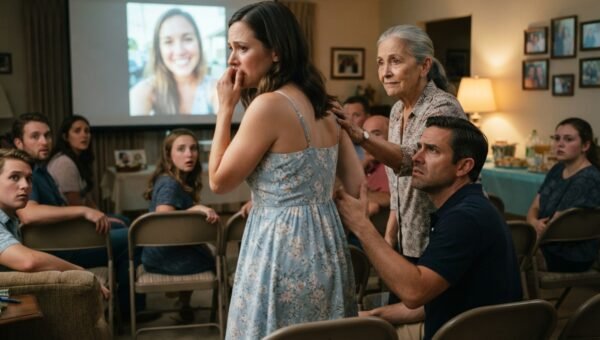
At eight the next morning, Evelyn hosted the family post-wedding breakfast in the hotel’s private dining room. Brenda and her husband were there, laughing over scrambled eggs, pointing at wedding photos on Brenda’s phone.
Evelyn was seated at the head of the table, holding court as usual. She wore a lavender cardigan, her silver hair perfectly set, beaming as the matriarch who had carried her family through the wilderness.
“Mark, darling!” Evelyn called out when we walked into the room. “Come sit by me. Chloe looked like an angel yesterday. You must be so proud of how everything turned out.”
Mark didn’t take a seat. He walked straight up to the head of the table, pulled out the manila envelope he had bought at the hotel gift shop, and dropped the thick stack of yellow legal receipts directly in front of her plate.
The heavy thud made the coffee cups rattle. Brenda stopped talking. Her husband looked up from his plate.
“What is this, Mark?” Evelyn asked, laughing dismissively as she adjusted her glasses. “Is this the bill for the florist?”
“Open it, Mom,” Mark said. His tone wasn’t loud, but it was like iron striking stone.
Evelyn frowned, pulled the documents from the envelope, and looked at the top page.
I watched her face. The polite, grandmotherly smile vanished instantly. Her skin turned an ash-gray color, starting at her throat and creeping up to her temples. Her hand began to shake so violently that the papers rustled against the china.
“Where did you get this?” she whispered.
“Arthur came yesterday,” Mark said. “He gave it to me.”
Brenda sat up straight. “Dad was here? Why would you let that monster come to Chloe’s wedding?”
“Look at the papers, Brenda,” Mark said, without taking his eyes off his mother. “Read the account number at the bottom of the 1998 disbursement.”
Brenda leaned over, her brow furrowed. She pulled the bottom slip toward her. “First Federal… 4412. What about it?”
“That was your college fund,” Mark said. “Every semester, Mom wrote tuition checks from account 4412 to Denison University. You always bragged about how Mom paid your entire tuition while I had to take out thirty thousand in loans.”
Brenda looked from the paper to her mother. “Mom? What is he talking about?”
Evelyn shoved the papers away from her plate, her voice suddenly shrill and defensive. “Your father ruined this family! He walked out on us! What was I supposed to do? Let him pretend to be a father just because he mailed a few court-ordered checks? He wasn’t there for your games! He wasn’t there for your proms!”
“He sent sixty-eight thousand dollars, Mom,” Mark said, his voice dropping into a deadly, controlled calm. “You told me for thirty years that he never gave us a dime. You told me he was dead to us because he refused to support his children.”
“He didn’t support us emotionally!” Evelyn cried, looking around the room for support, but Brenda had let go of the papers, her eyes wide with shock. “I did all the work! I raised you! The money was mine to manage as I saw fit! You were a boy, Mark. You were capable of working. You needed to learn how to be a man. Brenda was delicate. She needed the safety net!”
“You made me hate a man who paid for my childhood,” Mark said. “You watched me work the night shift at the lumber yard, throwing boards until my hands bled, sleeping three hours before morning classes. You watched my wife and me postpone buying our first home because of my debt. And all along, you took my share of his money and gave it to Brenda.”
“Mark, please,” Evelyn said, her voice finally breaking into panic. She reached across the white tablecloth to touch his sleeve. “I did what I thought was best for this family. A mother has to make hard choices.”
Mark pulled his arm back so sharply that his chair scraped across the hardwood floor.
“Don’t touch me,” he said.
He looked at his sister, who was staring at the table in stunned, guilty silence. Then he looked down at his mother, whose tears were no longer convincing anyone in the room.
“You took forty years of my relationship with my father,” Mark said. “You don’t get another day of mine.”
ENDING
Mark walked out of the breakfast room. I followed him immediately, leaving Evelyn sitting alone with her cold eggs and forty years of documented lies. Brenda didn’t follow us. When I glanced back through the glass partition, she was standing over her mother, pointing at the ledger, demanding an explanation.
We checked out of the hotel by nine-thirty.
Mark didn’t say a word as we loaded the suitcases into the trunk. He got behind the steering wheel, pulled onto the highway, and didn’t head south toward our home in Indianapolis. Instead, he took the northbound ramp toward Fort Wayne.
It took us two hours to find the address. It was a modest brick duplex with a small, neatly mown front lawn and a single iron chair on the porch.
Mark parked at the curb and sat with the engine running for a long time.
“You don’t have to fix everything today,” I said gently, reaching over and covering his right hand with mine. “Just say hello.”
Mark nodded. He turned off the ignition, took a deep breath, and stepped out of the car.
Arthur opened the screen door before Mark even reached the porch steps. He was wearing an old flannel shirt and jeans, looking frail in the harsh morning light. When he saw Mark standing on his walkway, his face registered pure, terrified shock. He gripped the doorframe with both hands, as if preparing himself for a blow.
“Mark,” the old man said, his voice trembling. “Did… did I ruin your daughter’s day? If I caused trouble with Evelyn, I’m sorry. I swear I just wanted you to have the records.”
Mark stopped at the base of the steps. He looked up at his father, taking in the lined face, the stooped shoulders, and the forty years of stolen time that they would never, ever get back.
“No, Dad,” Mark said, his voice thick with tears. “You didn’t ruin anything.”
Arthur froze at the word *Dad*. His chin quivered, and he buried his face in one work-worn hand, his shoulders shaking with silent sobs.
Mark stepped up the porch, put both arms around the old man, and held him tight against his chest.
We stayed in Fort Wayne for four hours. We sat in Arthur’s small, tidy kitchen, drinking instant coffee out of mismatched mugs. Arthur showed Mark photos he had kept over the years: blurry newspaper clippings of Mark’s high school baseball games that Arthur had watched from the distant outfield fence, sitting in his truck with binoculars so Evelyn wouldn’t see him and call the police.
Mark has not spoken to his mother since that morning at the hotel. Brenda called twice to apologize, saying she had no idea the money had come from Arthur, but Mark told her he needed space to figure out what family actually meant to him. Evelyn tried sending cards, but Mark returned them to sender unopened.
Healing isn’t quick, and it isn’t neat. Sixty-eight thousand dollars can’t buy back thirty lost years, and an apology can’t erase the nights Mark spent wondering why his father hadn’t loved him enough to help.
Last Sunday was Father’s Day. For the first time in his life, Mark didn’t spend the day feeling like an orphan. He sat on our back deck, fired up the grill, and handed a cold beer to Arthur, who was sitting in the lawn chair, teaching our daughter Chloe how to carve an apple with a pocketknife.
It wasn’t a fairy tale. But for the first time in forty years, my husband was finally at peace.