PART 1
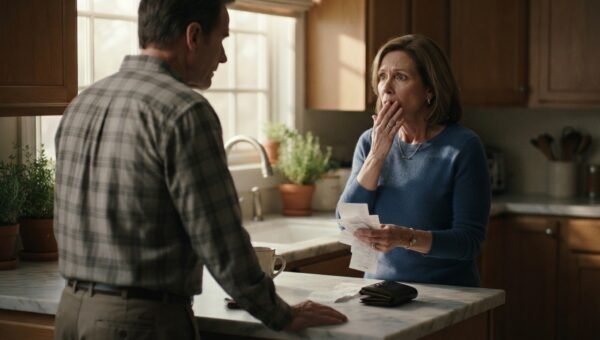
Thirty-one years of marriage is a quiet kind of milestone. By the time you reach fifty-eight, you stop celebrating with big dinners or expensive gifts. You settle into a rhythm of shared glances across the kitchen island, morning coffee brewed just the way the other likes it, and a comfortable predictability that makes you feel safe from the unpredictable storms of the world. Or at least, that is what I believed until Tuesday morning.
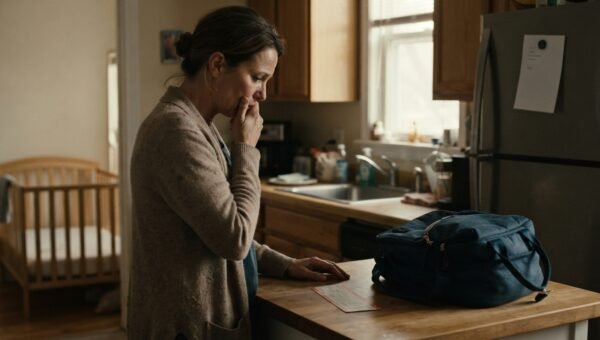
Tuesday was our thirty-first wedding anniversary. I woke up at six, expecting to hear the familiar clatter of the ceramic kettle in the kitchen. Instead, the house was entirely silent, wrapped in a heavy, unnatural stillness. I rolled over and reached across the mattress, but the sheets on my wife Helen’s side were cold. Not lukewarm from a quick trip to the bathroom, but completely cold, as if she had not slept there at all.
I sat up, a strange tightness gripping my chest. I walked down the carpeted hallway, calling her name. No answer. The downstairs was empty. When I pushed open the bathroom door, my stomach dropped straight to the floor. Resting squarely in the center of the white porcelain sink was her wedding band. Next to it sat a single piece of heavy cream stationery folded in half.
My hands shook as I picked it up. Her handwriting was neat, slightly slanted, the same handwriting she had used for grocery lists and birthday cards for over three decades.
Please don’t follow me.
That was all it said. No explanation. No mention of where she was going, no sign of distress, no clue as to whether she was coming back. Just six words that completely dismantled thirty-one years of history.
For the first forty-eight hours, my mind went to the darkest, most predictable places. I paced the hardwood floors until my feet ached, staring at the phone, waiting for a call that never came. I told myself she must have found someone else. It was the only narrative that made a twisted kind of sense. Why else would a woman pack a single suitcase—I checked the master closet and her favorite rolling duffel was gone, along with a week of clothes—and walk out on her own anniversary without a word? I cursed her name into the empty rooms. I blamed myself. I replayed every argument, every silence, every missed anniversary dinner from our past, searching for the crack where another life had slipped in.
I didn’t call the police. An adult has every legal right to walk out the front door, and the local sheriff would have laughed me out of the office for filing a missing persons report on a woman who left her wedding ring behind intentionally. So I sat in the silence, drowning in my own bitter assumptions, nursing a profound and suffocating heartbreak that turned into raw, sputtering anger by the third morning.
Then, at nine-thirty on Thursday morning, my landline rang. It was an abrupt, shrill sound that made me jump out of my chair. I snatched the receiver, hoping against hope that it was Helen, ready to offer some insane excuse that I would gladly accept just to have her back home.
“Hello?” I barked.
“Arthur?”
It wasn’t Helen. It was my younger sister, Clara, calling from Ohio. Clara and I had never been particularly close, keeping up mostly through hurried holiday texts and brief phone calls twice a year.
Hearing her voice felt surreal against the backdrop of my domestic catastrophe.
“Clara,” I said, rubbing my temples. “I’m not in a great place right now, can I call you back?”
“Arthur, stop,” Clara interrupted, her voice tight, vibrating with an odd mix of anxiety and exhaustion. “I need you to answer a question, and I need you to be honest with me. Why is Helen here?”
I froze. The kitchen walls seemed to tilt slightly. “What are you talking about?”
“Helen,” Clara said, her voice dropping an octave. “She’s sitting right across from me in the waiting room at the Cleveland Clinic Cancer Center. She drove all the way from Pennsylvania. She looks exhausted, Arthur. What is going on between you two?”
My breath caught in my throat. The Cleveland Clinic. Cancer center. The words crashed against one another in my brain, making zero sense.
“Clara, you’re losing your mind,” I managed to say, my voice sounding thin and hollow. “Helen is… she left me. On Tuesday. She packed a bag and left our anniversary note. Why would she be at a cancer center in Ohio?”
There was a long, heavy pause on the line. When Clara spoke again, her voice was barely a whisper, carrying a weight that immediately made my knees weak.
“Arthur… didn’t you know? Helen is the one who’s been managing my medical appointments for the last six months. She drove me to my biopsy. She’s the one who sat with me when the doctor gave me the diagnosis. I thought… I assumed you knew everything.”
PART 2
The world didn’t stop spinning, but the floor beneath my feet felt like it had turned to wet sand. My mind raced backward, tearing through the last six months of our marriage, looking for the phantom clues I had been too blind, too self-absorbed, or too trusting to notice.
Clara had called me back in the spring, mentioning casually that she was having some routine tests done for a persistent cough and fatigue. A month later, when I asked how she was holding up, she brushed it off with characteristic bravado. “All clear, Artie,” she had laughed over the phone. “False alarm. Doctor says I’m good for another fifty years.”
I had believed her. Why wouldn’t I? Clara had always been stubborn, the kind of person who viewed illness as an inconvenience rather than a reality. But now, standing in my quiet kitchen with the phone pressed to my ear, the horrifying truth began to dawn with terrifying clarity. Clara hadn’t beaten the odds. She had lied to me to protect me. And Helen—my loyal, steadfast wife of thirty-one years—had been pulled into the center of the storm, sworn to absolute secrecy.
“Clara,” I choked out, tears suddenly burning the backs of my eyes. “What are you talking about? Your scans… you told me they were clear.”
“They weren’t, Arthur,” Clara said softly, the line crackling with static. “Stage three lung cancer. It spread to the lymph nodes before they even caught it. I begged the doctors not to tell our older relatives, and I made Helen promise on everything holy that she wouldn’t breathe a word to you. I couldn’t bear the thought of you driving out here, hovering over me, looking at me like I was already dead. I needed normal. And Helen… God, Helen has been carrying the weight of my impending death and your ignorance all by herself.”
The pieces clicked together with the brutal force of a freight train. That was why Helen had been spending hours on her phone in the guest room with the door closed. That was why she had broken down crying at the kitchen table back in May, claiming she was just stressed about her aging mother’s health in Delaware. That was why she had looked so hollow, so profoundly exhausted every morning before I poured my coffee. She hadn’t been pulling away from me because she fell out of love, or because she had found someone else. She was breaking her heart in half, trying to honor my sister’s dying wish for privacy while watching her best friend slowly waste away in a hospital two hundred miles away.
And on our anniversary—the day I sat in our house feeling sorry for myself, building a monument to my own wounded pride—Helen had reached her breaking point. She couldn’t keep lying to me under the same roof. She couldn’t look me in the eye while pretending everything was fine. So she packed her bag, left her ring to mark the end of the life she could no longer maintain under false pretenses, and drove straight to Ohio to hold my sister’s hand through another brutal round of chemotherapy.
“I’m getting in the car,” I told Clara, my voice cracking entirely. “Tell her not to move. Tell her I’m coming.”
PART 3
The drive from our home in Pennsylvania to Cleveland took three hours and forty-two minutes. I broke every speed limit on the turnpike, my knuckles white against the steering wheel, my eyes burning from a mixture of lack of sleep and unrelenting tears. Every mile marker felt like an accusation. How could I have been so blind? I lived under the same roof with Helen for three decades, yet when real tragedy struck our family, she had to bear it entirely alone because she knew I would make it about me, or because Clara had forbidden her to trust me.
By the time I pulled my sedan into the sprawling, sterile parking garage of the Cleveland Clinic, my chest felt tight, constricted by a band of pure panic. I didn’t care about the parking fee or finding the right elevator. I sprinted through the sliding glass doors, past the security desks, following the overhead signs toward the oncology waiting pavilion on the third floor.
The air inside the clinic smelled of industrial sanitizer, stale coffee, and quiet despair. Patients sat in clusters of padded vinyl chairs, some reading magazines, others staring blankly at the beige walls with hollow eyes.
I scanned the room, my heart hammering against my ribs. And then I saw her.
Helen was sitting near the corner by a tall, sunlit window. She wore the navy blue cardigan she had packed in her duffel, her hair pulled back in a simple clip. Her shoulders were slightly slumped, her posture carrying the unmistakable exhaustion of someone who had run out of tears days ago.
As I walked across the linoleum floor, my footsteps echoing softly, she turned her head. Her eyes met mine. There was no surprise in them, only a profound, heavy fatigue.
I stopped a few feet away, unable to speak, the apology choking in my throat. Before I could find my voice, she stood up slowly, walked over, and took my hand. Her fingers were cold.
“She made me promise not to tell you yet, Arthur,” Helen said softly, her voice steady but laced with a deep, sorrowful ache. “Clara was terrified of how you’d react. She didn’t want your pity. She wanted your memories of her to be strong.”
I looked past Helen toward the private consultation alcove. Through the glass partition, I could see Clara sitting in a reclining chair, an IV pole beside her, looking frail and impossibly small. The sight of her knocked the remaining wind out of me.
“I’m so sorry,” I whispered, the words feeling utterly inadequate for the magnitude of the mess we had all created.
Helen didn’t yell. She didn’t lecture me about my selfishness or my inability to handle hard truths. She just squeezed my hand tighter, letting out a long, shuddering breath.
Before either of us could say another word, the heavy glass door of the alcove clicked open. Clara stepped out, holding a thick, manila envelope tied with a piece of twine. Her face was pale, her cheeks hollowed out, but her eyes held that familiar, stubborn spark I had known since we were kids.
She walked straight up to me, her breathing slightly shallow, and held out the envelope.
“I’m glad you came, Artie,” Clara said, managing a weak, wry smile. “Because I wasn’t the only one keeping something from you.”
ENDING
I took the envelope from her hands, feeling the dense weight of the papers inside. My fingers trembled as I untied the twine and slid the top document out.
It wasn’t a medical bill or a legal waiver. It was a certified property deed, dated four months ago, transferring ownership of our family cabin in the Poconos—the one our parents had built with their own hands, the one I assumed would be mine to pass down to our children—directly into Clara’s name, with Helen listed as the primary executor. Behind it were bank statements, showing three large withdrawals from our joint savings account, authorized by Helen under power of attorney during my business trip to Chicago last winter.
I looked up from the papers, staring back and forth between my wife and my sister, the floor dropping away beneath me for the second time in three days. The noble lie about cancer was only part of the architecture.
“What is this?” I whispered, the room starting to tilt.
Clara leaned back against the nurse’s station counter, crossing her arms with a grimace. “Dad’s will left the cabin to both of us equally, Artie. But two years ago, when your business nearly went under, you forged my signature on the equity loan documents to keep your shop afloat. You thought I never noticed because I lived out of state.”
She pointed a thin, trembling finger at the papers in my hand.
“I didn’t call the police or sue you because you’re my brother. But when the cancer diagnosis came down, and I realized I didn’t have much time left, I demanded what was mine. Helen agreed with me. She helped me execute the transfer while you were too busy working seventy-hour weeks to notice the mortgage paperwork changing hands.”
I turned my gaze slowly toward Helen. She was standing beside me, her expression entirely unreadable—no longer the guilty runaway, but a woman who had finally stepped out from under the shadow of my demands, my blindness, and my control.
“She didn’t just leave me because of the cancer, did she?” I asked, my voice barely audible over the hum of the hospital ventilation system.
Helen looked down at her bare ring finger, then back up into my eyes. “I didn’t leave you because I stopped loving you, Arthur,” she said quietly, her voice ringing with absolute finality. “I left because I spent thirty-one years cleaning up the wreckage of your secrets, and I refused to spend my final healthy years helping you hide from your own family anymore.”
She turned away, walking back toward Clara’s room to help her pack her things for the drive back. I stood alone in the sterile hospital corridor, holding the proof of my own undoing, realizing that even if I drove home tonight, the house I was returning to was already gone.