PART 1
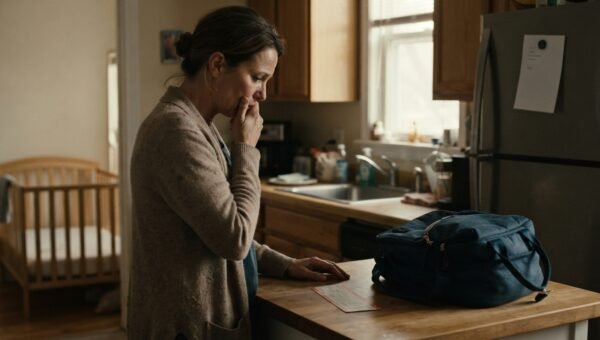
My sister refused to let me see Mom’s medical records after Mom died. She sat at Mom’s kitchen table two days after the funeral, with three cardboard boxes stacked beside her chair, and told me there was nothing to gain from reopening painful things.
“She went peacefully, Nora,” Denise said, sliding a cup of black coffee across the table. “You weren’t here for the hard part. Looking through lab work and nurse notes will only make you second-guess yourself.”
I lived three states away in Ohio. Denise lived four miles from Mom’s brick ranch in western Pennsylvania. When Mom was diagnosed with congestive heart failure and mild vascular dementia sixteen months earlier, Denise took over the medical power of attorney and the household accounts. Every phone call followed the same pattern. I offered to take family medical leave to stay for a month, and Denise insisted she had a firm grip on everything. She said extra people around the house only agitated Mom. I sent six hundred dollars every month to help cover utilities and groceries, trusting that my older sister was carrying the heavier daily burden.
Mom passed away in early November. I helped sort through clothes, gave away Mom’s winter coats, and signed off on the basic estate paperwork that Denise’s lawyer mailed me. I took Denise’s word for how Mom spent her final months: resting in the sunroom, watching old game shows, fading slowly until her heart simply gave out one Tuesday morning.
Then, in late January, a thick envelope arrived at my house in Columbus.
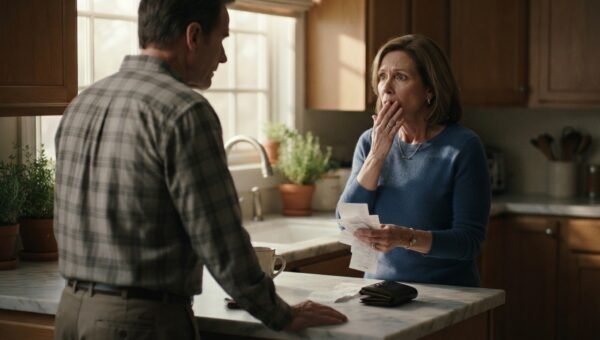
It was an Explanation of Benefits from Mom’s Medicare supplement provider. My name had been listed as the secondary contact on that policy years ago when Dad died, and somehow the claims department routed the year-end summary to my address instead of Mom’s old box.
I opened it at my kitchen counter, expecting to see routine cardiology visits and pharmacy co-pays. Instead, the itemized ledger listed sixty-four separate claims from a local agency called Valley Care Partners. Weekly home-health nursing visits, wound care management, and physical therapy sessions, billed continuously through August, September, and October. The total billed amount exceeded eighteen thousand dollars.
Mom never had home-health care.
During every Sunday call I made during those three months, Mom complained about how quiet the days were. She talked about watching the birds at the feeder and eating soup Denise brought over in Tupperware.
She never mentioned a nurse checking her vitals. When I asked Denise in September if we should hire visiting nurse help, Denise snapped at me, saying strangers made Mom anxious and that she was doing all the care herself.
I pulled out Mom’s old insurance card from my wallet and called Valley Care Partners the next morning.
The woman who answered transferred me to their billing and intake supervisor, an older woman named Marsha. I explained that I was the daughter of the policyholder and that our year-end statement showed regular visits during the autumn.
“Let me pull the patient chart,” Marsha said. The sound of keyboard clicking came through the receiver. “Yes, Evelyn Vance. We provided skilled nursing twice a week and physical therapy once a week through the end of October. The service location on file was 412 Ridgecrest Avenue, Apartment 3B.”
Ridgecrest Avenue was across town, a fifteen-minute drive from Mom’s neighborhood. Mom had lived at 840 Maple Drive for forty-two years. She had never lived on Ridgecrest Avenue.
“That’s not my mother’s address,” I said. “My mother lived on Maple Drive. She was bedridden for her final six weeks.”
Marsha went silent for a moment. “Ma’am, these claims were authorized under Evelyn Vance’s Medicare ID and her supplemental plan number. The copays were paid on an auto-draft card. The patient admitted under that chart was an Evelyn Vance.”
“It has to be fraud,” I said, my voice rising. “Someone stole my mother’s insurance number and set up care across town.”
“I take billing irregularities very seriously,” Marsha said, her tone cautious. “The primary nurse on that case was Sarah. She’s in the office today charting before her afternoon route. If you want to come in, we can look at the intake paperwork.”
I didn’t wait. I called off work for two days, packed an overnight bag, and drove four hours east through light snow.
By two o’clock, I sat in a small administrative office at Valley Care Partners. A nurse in blue scrubs named Sarah came in, carrying a clipboard. She was around forty, with tired eyes and a calm voice.
“Mrs. Miller?” Sarah asked. “Marsha told me you have questions about Mrs. Vance.”
“I think someone used my mother’s identity,” I told her, setting Mom’s death certificate and insurance card on the desk. “My mother died on November eighth. She was seventy-six years old. She lived on Maple Drive. She never lived on Ridgecrest.”
Sarah frowned, looking down at the paperwork. “The patient I treated on Ridgecrest was seventy-six. She had congestive heart failure and restricted mobility.”
“Lots of elderly women have heart failure,” I said. “Can you describe her?”
Sarah leaned back slightly, thinking. “She was small, maybe five feet two. Silver hair kept very short. And she had a distinct, crescent-shaped surgical scar on the front of her right shoulder from an old joint repair.”
My hands turned cold. Mom had broken her right shoulder falling down the cellar stairs in 1994, requiring two steel pins and leaving a curved, jagged scar that never fully faded.
“I need to show you something,” I said.
My hands shook as I unlocked my phone and scrolled back to an album from Mom’s seventy-fifth birthday dinner. I held the screen out across the desk.
Sarah leaned in, squinted, and nodded immediately. “That’s her. That is Evelyn. She had that exact floral blouse. But the daughter who set up the intake and met us at every assessment wasn’t you.”
“Her name was Denise, wasn’t it?” I asked.
Sarah looked surprised. “Yes. Denise. She handled all the consent forms.”
PART 2
Sarah looked between me and the photo on my phone. The room felt uncomfortably warm.
“Denise was there for the initial intake on Ridgecrest in late July,” Sarah said slowly. “She signed the home-safety agreement and the consent for treatment. She told us her mother had just moved into the apartment to be closer to her own house.”
“Mom never moved,” I said. “I stayed in Mom’s house on Maple Drive during the funeral. Her clothes were in the closet. Her dishes were in the sink. Her bed was made.”
“Mrs. Miller, I saw this woman at the Ridgecrest apartment twice a week for three months,” Sarah insisted. “The apartment was sparse, but it was furnished. A hospital bed in the living room, a dresser, a recliner. The patient was confused at times, but she recognized Denise, and she responded to the name Evelyn.”
“Who owns 412 Ridgecrest?” I asked.
“It’s a rental complex. Hillside Manor,” Sarah said. “We don’t manage the lease. We only contract for skilled nursing. Denise paid the twenty-dollar agency copay every visit using a preloaded debit card.”
I thanked Sarah, walked out to my car, and sat in the parking lot with the engine running. My mind refused to line up the facts. If Mom had been living in an apartment on Ridgecrest Avenue, why did Denise keep Mom’s house on Maple Drive fully staged? Every time I called the landline on Maple Drive, Denise answered, or she claimed Mom was sleeping in the back bedroom and couldn’t come to the phone. When Mom did speak to me, her voice was weak, but she sounded like herself. She had talked about looking out the window at the familiar oak tree in her backyard.
I put the car in gear and drove straight to 412 Ridgecrest Avenue.
Hillside Manor was a squat, two-story brick apartment building behind a strip mall. I walked through the main security door, which wasn’t fully latched, and found Apartment 3B on the first floor. A small piece of white tape was stuck above the buzzer with the name *Vance* written in blue ballpoint ink.
I knocked. Nobody answered.
I walked down the hall to the manager’s office near the laundry room. A man in his sixties with a ring of keys clipped to his belt looked up from behind a metal desk.
“Can I help you?”
“I’m looking for information about Apartment 3B,” I said. “My name is Nora Miller. My mother, Evelyn Vance, was listed as living there.”
The manager took off his glasses. “The lease on 3B was terminated at the end of November. Her daughter Denise turned in the keys the week before Thanksgiving.”
“Who paid the rent?”
“Denise did. Cashier’s check every month from a local credit union. Twelve hundred a month.” The manager pulled open a file cabinet and flipped through a green hanging folder. “She signed a six-month short-term lease starting July fifteenth. Said her mother needed a quiet ground-floor unit while family renovations were being done on the family house.”
The ground dropped out beneath me. July fifteenth was three days before Denise had told me that Mom was deteriorating and needed complete bed rest.
“Was there anyone else living with her?” I asked.
“Just the old lady and the nurses,” the manager said. “Denise came by every evening around five with takeout bags. She paid on time, took the furniture out when the lady died, and got her deposit back. That’s all I know.”
Denise had moved Mom out of her home of forty years, placed her in an unfamiliar rental apartment across town, and hid it from me. But why? What reason could possibly justify hiding Mom’s physical location while using her real insurance to pay for licensed home-health visits?
I left the building and drove past Mom’s house on Maple Drive.
The driveway was empty. A small commercial dumpster sat near the garage, filled with old carpet scraps, broken drywall, and stacked insulation. A white contractor van was parked on the curb with a logo on the door: *Pinnacle Home Remodeling & Staging*.
I stepped out of my car and walked up the front path. The front door was unlocked. Inside, the living room where Mom used to sit had been stripped down to bare floorboards. The pale yellow floral wallpaper Mom loved had been scraped away, replaced by smooth gray primer. Two men in work boots were measuring the kitchen doorways.
“Can I help you, ma’am?” one of them asked, lowering a tape measure.
“Who hired you to do this work?” I asked.
“The owner,” he said. “Denise Vance. We’ve been working on this place since August. Kitchen gut, new master bath, leveling the subfloors. We had to pause for a couple of weeks in November, but we’re finishing the drywall this week so the listing agent can take photos.”
“The listing agent,” I repeated.
“Yeah. Denise is putting the house on the market next month. Said her mother’s estate is settled and she’s ready to sell.”
Mom’s will, which our parents drafted in 2004, stated clearly that the house on Maple Drive was to be divided equally between Denise and me upon Mom’s death. When Mom died, Denise told me that probate would take at least eight to ten months because of county backlog, and that we shouldn’t touch the property until the court issued final letters of administration. She told me she was keeping the heat on and checking the pipes once a week.
She hadn’t been checking the pipes. She had been gutting the house for resale while Mom was still breathing.
PART 3
I drove across town to Denise’s house. Her gray sedan was parked in the driveway.
I didn’t call ahead. I walked up the porch steps, pushed the doorbell, and stood there with the folded Explanation of Benefits in my winter coat pocket.
Denise opened the door wearing an oversized cardigan, holding a coffee mug. When she saw my face, her expression hardened before she could stop it.
“Nora? What are you doing here? You didn’t say you were driving in.”
“I went to Valley Care Partners this morning,” I said, my voice dead level. “And then I went to 412 Ridgecrest Avenue. And then I went to Maple Drive.”
Denise didn’t move. Her fingers tightened around the ceramic mug. She didn’t offer to let me in, but she stepped back enough that I pushed the storm door open and walked into her front hallway.
“You have no right to come here and interrogate me,” Denise said, her voice dropping into the defensive snap she always used when cornered. “You don’t know what those last six months were like. You were sitting three hundred miles away in Ohio while I had to manage Mom’s decline every single day.”
“You put Mom in an apartment behind a strip mall,” I said. “You told me she was resting in her bedroom on Maple Drive. You let me talk to her on the phone while you hid where she was sleeping.”
“Because you would have made a scene!” Denise said, turning into her kitchen and setting the mug down hard on the counter. “You would have insisted on coming down, interfering with the contractors, telling me how to handle her care. The house on Maple Drive was falling apart, Nora. The plumbing under the kitchen had a black mold leak, the roof over the back porch was sagging, and the property was deteriorating. If Mom died with that house in that condition, it would have appraised for seventy thousand dollars less than market value.”
“So you moved a seventy-six-year-old woman with heart failure and dementia into a rented box so you could remodel her house?”
“I moved her to a clean, quiet apartment on the ground floor where she wouldn’t trip on the cellar stairs,” Denise shot back. “I hired licensed nurses to change her dressings and check her oxygen. She had three hot meals a day. I visited her every single evening after work. She didn’t even know the difference half the time, Nora. Her memory was gone.”
“Her memory wasn’t gone,” I said. The memory of Mom asking me on the phone about the oak tree hit me like a physical blow. “She asked me about the backyard tree in September. You told her she was still at home, didn’t you? You kept her in that room and let her believe she was going back.”
Denise looked away toward the window. Her jaw worked, but she didn’t deny it.
“And what about the will, Denise?” I asked. “You told me probate was stalled. But the contractor told me you’re listing Maple Drive next month under your name.”
That was the line that cracked her composure. Denise crossed her arms, her shoulders hunching.
“Mom signed a transfer-on-death deed in August,” Denise whispered.
“She what?”
“She signed it. Her lawyer drafted it. It was completely legal.”
“Mom had dementia, Denise! She was under nursing care for cognitive decline in that very apartment in August!”
“I took care of her!” Denise yelled, her face flushing red. “For two straight years, I drove her to dialysis, I bought her groceries, I dealt with her moods, while you sent six hundred dollars a month and thought you were fulfilling your duty as a daughter. I gave up my weekends. I sacrificed my own marriage. Mark left me in June because all my time went to Mom. That house belongs to me. I earned it by keeping her alive.”
“You didn’t keep her alive to help her,” I said, pulling the insurance paper from my pocket and slapping it onto the granite counter between us. “You kept her alive long enough to finish the renovations and get her signature on a deed before her heart gave out.”
Denise stared at the paper. The clinical breakdown of weekly visits, dates, and medical codes sat there in black and white.
“I was named secondary on that policy,” I told her. “The insurance company didn’t send this to Maple Drive. They sent it to me. And tomorrow morning, I am taking this statement, along with the nurse’s intake assessment documenting Mom’s dementia diagnosis in July, to the county probate clerk and an elder law attorney.”
“Nora, please,” Denise said. The defiance leaked out of her voice, replaced by the thin, urgent panic of someone realizing their barricade had collapsed. “If you file an injunction, the house will get tied up in court for years. I took out a fifty-thousand-dollar home equity loan in my own name to pay for those contractors. If the house doesn’t sell this spring, I’ll lose my own house.”
I looked at my sister. The sister who had comforted me when Dad died, who had shared a bedroom with me when we were girls, who had stood beside me at Mom’s grave two months earlier and hugged me while telling me Mom had slipped away peacefully in familiar surroundings.
“You should have thought about that before you put our mother in an apartment and lied to her about where she was,” I said.
ENDING
I hired an estate litigation attorney in Pittsburgh the following afternoon.
We filed an emergency petition to freeze the title on the Maple Drive property, attaching Sarah’s initial nursing assessment from Valley Care Partners dated July 22. In that intake document, Sarah had noted that Evelyn Vance was disoriented to time and place, scoring twelve out of thirty on a standard cognitive evaluation. The transfer-on-death deed Denise had Mom sign was dated August 14.
Under Pennsylvania law, a deed executed by an individual previously documented as lacking testamentary capacity cannot stand. Denise’s lawyer knew it. By late March, rather than facing a public civil trial for fraud and breach of fiduciary duty, Denise signed a stipulated agreement.
The transfer-on-death deed was revoked. The house on Maple Drive was placed back into Mom’s estate, to be administered under the original 2004 will.
The contractors finished their work because the contracts were already signed, and the house went on the market in early summer. It sold in July for two hundred and eighty-five thousand dollars. From the closing proceeds, the estate repaid the legitimate construction liens, settled Mom’s remaining medical balances, and split the remaining funds equally between Denise and me. Denise had to use her entire share of the inheritance to cover the personal bank loan she had taken out to fund the renovations in the first place. She ended up with less than six thousand dollars in cash and a mountain of legal debt.
We haven’t spoken since the closing documents were signed at the title company. We sat on opposite sides of a mahogany conference table, signed our names forty times each on blue lines, and walked out to separate parking lots.
Before the new buyers took possession of Maple Drive, I drove over one last time on a warm Sunday afternoon.
The house was empty. The staging furniture was gone, leaving the pale gray rooms smelling of fresh paint and polyurethane. It didn’t look like Mom’s house anymore. The worn carpet where Dad used to drop his boots was gone, and the kitchen cupboards Mom had wiped down for four decades had been replaced with sleek white shaker cabinets.
I walked through the back door into the yard. The big oak tree was still there, shading the corner of the fence.
I stood under the branches and thought about Mom sitting in that small, rented living room on Ridgecrest Avenue, looking out at a parking lot while Denise told her the painters were almost done and she’d be back home soon. I pulled Mom’s silver locket from my pocket, the one Denise had handed me after the funeral with a practiced tear in her eye.
The truth had cost me my sister and stripped away the comfort of how I thought Mom died. But standing in that quiet yard, I was glad I opened the envelope. Mom didn’t get to finish her life in her own home, but she wasn’t going to be used as a signature on a stolen deed, either.
I put the locket back in my pocket, walked down the driveway, and didn’t look back.