PART 1
My mother Gloria Henson taught first grade for thirty-four years at Oak Ridge Elementary, and she checked every single child’s boots before recess, even when the principal told her it was not in the lesson plan. Mr. Vance told her that twice in the teachers’ lounge back in the fall of 1985. He stood by the Mr. Coffee maker with his clipboard and said, “Gloria, you have twenty-six children and fifteen minutes of recess duty. You cannot lace up the whole county.”
Mama just set her plastic mug down, wiped the ring of water off the Formica with a paper napkin, and said, “A child with wet feet does not learn long division, Arthur. They just sit there waiting for the bell.”
She did not teach long division; she taught reading, printing, and how to sit in a circle without kicking your neighbor. But Arthur Vance never had an answer for her when she used that voice.
In January 1986, the county had three weeks of freezing rain that turned into hard, packed gray ice along Route 9. Our furnace in the basement was clanking every twenty minutes, and my father had been laid off from the freight yard four months earlier. We were eating navy bean soup with cornmeal mush three nights a week to stretch things until his union check arrived on the tenth.
On a Thursday morning that month, a six-year-old boy named Benny Walters walked into Mama’s classroom with bread bags wrapped around his socks inside a pair of rotted canvas sneakers. The plastic had split at the heel. His toes were the color of raw turnip.
Mama did not send him to the nurse’s office because she knew the nurse’s office only had two spare coats and a bottle of calamine lotion. Instead, she kept Benny by the radiator during morning phonics, dried his socks on the iron grillwork, and walked him down to Miller’s Hardware during her forty-minute lunch break.
She spent $27.43 from the envelope in her vinyl handbag. That envelope had “IGA Meat & Dairy” written on the front in blue ballpoint pen, with seven five-dollar bills folded flat inside. The boots were dark brown rubber with yellow nylon pull-loops and two brass buckles across the bridge.
When they got back to the cloakroom, Benny sat on an upturned milk crate and looked up at her with his nose running. He whispered, “Don’t tell Mama my socks froze.”
Mama knelt down on that cold linoleum, tucked his pant legs into the rubber tops, and clicked the buckles shut. She looked him right in the eyes and said, “Benny, that is between you, me, and the hardware store.”
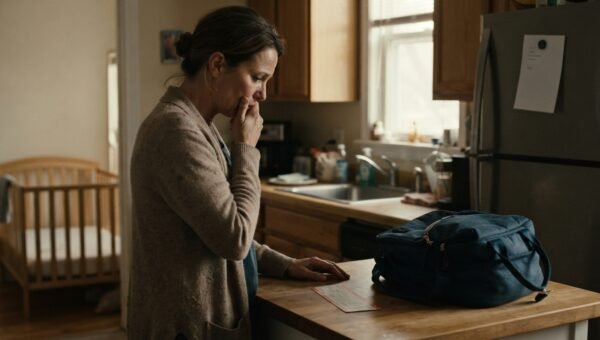
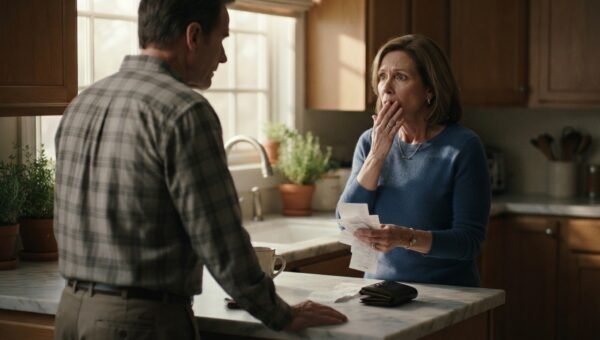
That evening, Daddy looked at the grocery receipt on our kitchen counter and asked why we only had two pounds of neck bones and a sack of yellow onions in the crisper. Mama never raised her voice. She just put the kettle on and said the butcher had been short on hamburger, so we would make do until Saturday.
I was twelve years old, doing my spelling workbook at the drop-leaf table, and I watched her hands. Her knuckles were red and cracked from the chalk dust and the winter air, but she did not flinch once. She took the twenty-seven dollars out of our pantry and put it directly into that boy’s feet, and nobody in town ever spoke of it again.
Until last Friday morning, when a city car pulled up in front of our porch.
PART 2
The man who stepped out of the back seat was wearing a charcoal wool coat and carrying a folder under his arm.
Mama is eighty-two now. Her hands shake a little when she tries to thread a needle, but her mind is still sharp as a briar. She still keeps her pencils in coffee cans by color on the sideboard in the dining room. Red pencils go in the red Folgers can. Yellow number twos go in the Maxwell House tin. The short, broken ones that most people would throw out go into an old glass jelly jar, because as she always says, “A stub still writes just as true if your hand is steady.”
She was sitting in her rocker by the front window, peeling a Winesap apple with her small paring knife, when the car door shut.
“Ellen,” she said to me without looking up from the apple skin, “Arthur Vance’s nephew must be running for county commissioner again. Go tell him I already gave my five dollars to the library.”
I went out onto the porch. The cold wind came right off the asphalt. The man in the charcoal coat was tall, maybe fifty, with gray hair cut close and lines around his eyes that looked like he worked outside more than he worked in an office. He looked at the house, then at me, and he took off his leather gloves.
“Is Mrs. Gloria Henson home?” he asked.
“She is,” I said, staying on the top step. “She’s eighty-two, and she doesn’t buy anything from door-to-door folks.”
“I am not selling anything, ma’am,” he said. His voice was quiet and deep, the kind of voice that takes its time. “My name is Benjamin Walters. I own Walters Heavy Paving down in Clarksville. The county supervisor asked me to bring her down to the corner of Route 9 and Elm at eleven o’clock, if she’s able to ride.”
The name did not hit me immediately. Forty years is a long time, and a six-year-old child in wet socks does not look like a contractor in a tailored overcoat.
Then I looked at his boots. He was wearing heavy, polished work boots with thick vibram soles, clean around the welt.
“Benny?” I asked.
He looked down at his gloves, then back at me, and his mouth twitched into a small, tight smile. “She told me not to tell my mama,” he said. “She never said I couldn’t tell the county.”
I went back inside and helped Mama into her navy wool coat. Her knees were stiff from the damp, and she grumbled the whole time I zipped her boots, saying she had two loads of wash to fold and didn’t have time to be riding around in state vehicles. But when she walked down the porch steps and saw him standing by the car door, holding it open with his bare hand on the cold steel, she stopped dead on the bottom gravel.
She looked at his face for five seconds.
“Benjamin,” she said. Not Mr. Walters. Not young man. Just Benjamin.
“Yes, ma’am,” he said, taking her elbow just enough to steady her on the slush, but not enough to hurt her pride. “We have something to show you.”
PART 3
We drove three miles down to the junction of Route 9, where the old textile mill used to sit before it burned in ninety-two. The wind out there sweeps across the open corn stubble like an open freezer door. For forty years, the elementary kids who lived out past the county line had to stand right there on the gravel shoulder, waiting for the 7:15 yellow bus in the dark.
When we pulled up, there were three county trucks parked on the berm with their amber lights flashing, two sheriff’s cruisers, and about twenty people standing in the ditch with their collars turned up.
Right where the dirt shoulder met the drainage ditch, there was a brand-new concrete pad. On top of that pad sat a three-sided shelter built out of thick structural steel, tinted safety glass, and cedar rafters under a dark green metal roof. Inside, mounted beneath the tongue-and-groove cedar ceiling, were two long infrared radiant heating units glowing dull orange against the gray morning.
A green township sign hung right above the open doorway. It didn’t say Clarksville Transit. It didn’t have the county commissioner’s name in big letters.
It said: THE GLORIA HENSON SHELTER.
Beneath the name, cast in a small bronze plaque bolted into the concrete pillar, were the words:
“Keep their feet dry. Oak Ridge Elementary, 1958-1992.”
The county supervisor, an older man named Higgins whose own boys had gone through third grade with me, stepped forward with a small set of brass shears, but Benny put his hand up.
“We don’t need a ribbon,” Benny told the crowd. He turned back toward the car, took Mama’s arm, and walked her across the gravel.
Mama didn’t say anything as she walked inside that shelter. She stood on the concrete. The radiant heat hit the top of her knit hat, soft and steady. The wind was blowing forty miles an hour out on the highway, whipping the dry grass against the steel posts, but inside the glass, the air was completely still and sixty degrees.
Benny stood beside her with his hands in his coat pockets.
“My mother worked three shifts at the yarn mill back then, Mrs. Henson,” he said. “My father left us when I was four. When those bread bags tore, the water stayed inside them all day. By ten o’clock, I couldn’t feel my heels. I used to cry during the pledge of allegiance so the other kids would think I was just scared of the flag.”
Mama reached out and touched the bronze plaque with her bare thumb.
“Twenty-seven dollars and forty-three cents,” she murmured.
Benny reached inside his breast pocket and took out a folded piece of paper. It wasn’t a check. It was an old yellowed carbon slip from Miller’s Hardware, dated January 16, 1986. Item: 1 pr. Boy’s Arctic Pull-On, Size 1. Tax: $1.43. Total: $27.43.
“Mr. Miller kept the ledger when he sold the building to my paving company six years ago,” Benny said. “He gave me the box of old sales slips. I found this one stuck behind the cash drawer.”
He looked down at the concrete. “The county didn’t pay for this shelter, Mrs. Henson. My crew poured the pad on Saturday, and we wired the heaters on Tuesday. The county just gave us the right-of-way because I told them if they didn’t, I’d pave the commissioner’s driveway with gravel instead of asphalt.”
Two of the county workers laughed, but Mama didn’t laugh.
ENDING
She stood in the middle of that warm shelter for a long minute while the wind rattled the signs out on Route 9.
“Arthur Vance told me I was wasting grocery money,” she said, her voice dry and quiet.
“Arthur Vance didn’t know what he was talking about,” Benny replied.
She looked up at the cedar roof, then at the heating element glowing like a stove eye overhead. She reached out and patted the sleeve of his charcoal coat twice, firm and brisk, the exact way she used to pat a boy on the shoulder when he finally finished reciting his eight-times tables without making a mistake.
“Well,” Mama said, turning toward the car. “The roof has a good pitch on it. The snow won’t sit on the tin.”
That was all she said about the building. She didn’t cry, and she didn’t give a speech to the sheriff or the supervisor. When you teach first grade for thirty-four years, you learn that when work is done properly, you don’t need to make a fuss about it; you just inspect the seams and move on to the next chore.
Benny drove us back to the house in silence. When he helped her up the porch steps, he leaned down and kissed her paper-thin cheek.
“Thank you, Mrs. Henson,” he said.
“You wear your wool socks when you’re out on those pavers, Benjamin,” she said from the screen door. “A grown man catches a chill just as fast as a child.”
That afternoon, after the car drove off and the house got quiet again, Mama went into the dining room. She sat down at the sideboard, picked up an eight-inch yellow pencil that had snapped in half, and carried it over to the small hand-crank sharpener screwed into the doorframe by the cellar stairs.
She turned the handle three times until the point was sharp, then walked back to the sideboard and dropped it into the Maxwell House can.
Then she pulled the jelly jar closer to the light. There were four tiny stubs left in the bottom, barely an inch long, their painted wood scarred by little teeth from children who had grown up and moved away decades ago. She took the paring knife from her apron, shaved the wood back from the black lead on the smallest one, and laid it neatly on the cedar tray beside her ledger.
“A stub still writes,” she told the empty room, and she went back to her apple.