PART 1
The call came on a Tuesday afternoon while I was standing in line at the post office with a box of secondhand mystery novels balanced under my arm. It was my brother, Greg. His voice carried that tight, rehearsed calm he always used whenever he was about to deliver bad news he did not want to discuss.
He told me Mom was settled. He told me the three-bedroom split-level in Oak Ridge was gone.
“What do you mean, gone?” I asked, stepping out of the line so quickly my heel caught the edge of the rubber floor mat. “Greg, I was just there three weeks ago. We planted marigolds by the back porch.”
“She couldn’t stay there anymore, Claire,” he said. He sounded tired, almost annoyed that I had forced him to say the words out loud. “Her knees gave out twice last month. She fell against the radiator in the hallway. Dr. Miller said she needed round-the-clock observation, and I had to make the call. The house is sold. She agreed to it. Every nickel went straight toward her care reserve.”
My throat went dry. I was fifty-four, Greg was fifty-six, and our mother, Evelyn, had lived in that house since 1978. Every doorframe had our pencil heights notched into the white paint. The wallpaper in the breakfast nook still bore the faint ring near the window where Dad had set his wet coffee mug every morning before his heart attack took him fifteen years ago.
“You sold it without letting me come help pack?” I asked, my voice shaking so hard the woman behind me glanced up from her phone. “Where are her things? Where are Dad’s tools? Where is she?”
“She’s at Shady Pines Manor over off Route 9,” Greg said flatly. “And I didn’t call you to pack because you would have turned it into a two-month circus of crying over old recipe cards. I have power of attorney, Claire. Dad gave it to me, Mom renewed it, and I handled the business. Don’t make this harder than it already is.”
He hung up before I could ask what she had gotten for the house, or why he had never once mentioned a nursing facility when we spoke on Sunday.
I did not go back inside the post office. I got in my car and drove the forty-five minutes out to Route 9.
Shady Pines Manor was a brick facility tucked behind an auto salvage yard and an empty strip mall. The flowerbeds out front were full of dry mulch and crabgrass. When I walked inside, the receptionist told me visitors were restricted until five o’clock because of shift handover, but that my mother was in Room 114B.
I waited in the parking lot for two hours, watching the delivery vans come and go, trying to tell myself Greg had simply panicked under the pressure. Greg had always been the practical one. He managed a commercial plumbing supply warehouse out in Canton. He had handled Mom’s taxes after Dad died. If he acted fast, I thought, maybe it was because Mom’s health had plummeted faster than he wanted to admit.
When the clock turned to five, I hurried inside.
Room 114B was at the far end of the north wing. The linoleum floor was scarred from wheelchair wheels, and the air smelled heavily of industrial bleach and boiled cabbage.
There were two beds in the room separated by a faded blue privacy curtain. In the bed near the window sat my mother.
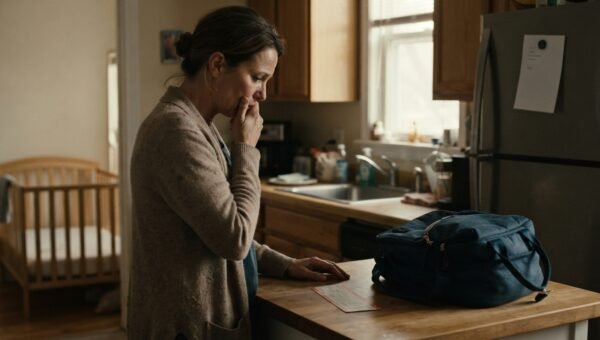
She looked tiny. Evelyn had always been a stout, cheerful woman who wore bright floral cardigans and kept her silver hair set every Friday morning. The woman in the bed had unbrushed hair, no earrings, and was wearing a faded brown acrylic cardigan that was at least two sizes too large. The cuffs were frayed and stained with tea. Across the right breast, written in permanent marker on a strip of white athletic tape, was the name “B. Kowalski.”
“Mom?” I whispered, stepping around the foot of the bed.
She turned her head slowly. Her pale blue eyes took a second to focus, and then her chin began to tremble.
“Claire,” she said, her voice raspy and thin. “Did you bring my slippers? My feet are so cold on this floor.”
I sat on the edge of the mattress and pulled her into my arms. Her shoulder blades felt like two thin pieces of balsa wood beneath the stranger’s sweater.
“Mom, why are you wearing this?” I asked, tugging gently at the sleeve. “Where are your clothes? Where are the blue sweaters I bought you for Christmas?”
“They said they got lost in the laundry,” she murmured against my collar. She looked toward the door nervously, as if someone might walk in and scold her. “Greg brought three boxes. He took my jewelry box, Claire. He said he had to put the gold into a safe deposit box so the Medicaid people wouldn’t take it.”
I smoothed her hair down, my heart pounding against my ribs like a trapped bird. “He told me you agreed to sell the house, Mom. Did you? Did you want to come here?”
Mom pulled back slightly, her lower lip tucked under her teeth the way she always did when she was holding back tears.
“He told me the foundation was cracked,” she whispered, leaning so close her dry breath brushed my ear. “He said the roof had black mold behind the shingles and the county was going to condemn it if we didn’t let an investor take it off our hands. He said ninety thousand was the best anyone would pay for a teardown. He told me ninety thousand would pay for my room here for two whole years.”
I stared at her. Ninety thousand dollars.
Oak Ridge was not an elite zip code, but it was an established neighborhood with mature oaks, decent school ratings, and lots that averaged a third of an acre. Even with thirty-year-old carpets and peeling gutter paint, houses on Mom’s street were selling to young families for well over two hundred and fifty thousand.
“Ninety thousand?” I repeated.
“He told me I was lucky to get that much,” Mom said, her eyes watering. “He said if we waited, the roof would cave in and I would end up on county charity. Claire, I didn’t want to leave my roses. But he said there wasn’t any money left.”
I stayed with her until eight that night. I washed her face with a warm washcloth, rubbed lotion into her paper-thin hands, and promised her I would be back on Thursday with her own clothes, her sheepskin slippers, and some real tea.
On the drive home, my stomach churned. A house does not drop to ninety thousand dollars in Oak Ridge unless it has burned to the ground. And our childhood home had not burned.
I got home, poured a cup of black coffee, and opened my laptop. It took me twenty minutes to navigate the county assessor’s public records portal. I entered the parcel number for 412 Maple Crest Lane.
The property transfer had closed eight weeks ago, on July 14.
The buyer was an LLC registered in Columbus called Buckeye Ridge Properties.
The recorded sale price was not ninety thousand dollars.
The deed transfer tax stamp clearly stated the gross consideration paid for the property: $312,000.
PART 2
I stared at the glowing numbers on the screen until my eyes burned. Three hundred and twelve thousand dollars.
If Buckeye Ridge Properties paid $312,000, why had Greg looked our mother in the eye and told her the place was an unsellable teardown worth ninety? And where was the remaining $222,000?
The next morning at eight sharp, I called Greg’s cell phone. It went straight to voicemail. I tried his work extension at the plumbing warehouse, and the receptionist told me he was out on site visits until Thursday.
I printed out the deed transfer document, put on my coat, and drove directly to the title company listed in the county clerk’s filing: Heritage Valley Title & Escrow on Broad Street.
The office was quiet, smelling of expensive carpet and fresh printer toner. A woman named Brenda sat behind a wide mahogany desk. When I explained that I was Evelyn Vance’s daughter and showed her my driver’s license alongside the county deed, Brenda frowned politely.
“Mrs. Vance was the seller, yes,” Brenda said, tapping her acrylic nails against her keyboard. “But the transaction was executed by Gregory Vance under a durable general power of attorney. We verified the instrument with your mother’s bank before closing. As an outside party, Ms. Vance, I cannot release confidential escrow files to you without authorization.”
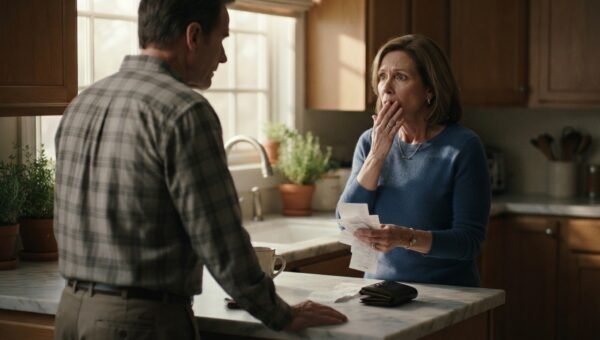
“My mother is eighty-one years old, sitting in a shared Medicaid ward wearing another woman’s clothes,” I said, keeping my voice low and steady so it would not break. “Yesterday, the billing director at Shady Pines called me because her private-pay account is sixty days delinquent. They are threatening to move her to a county intake facility next Monday. Greg told her the house sold for ninety thousand dollars. The county record says three hundred and twelve. I don’t want to file a sheriff’s report against my own brother, Brenda, but if you don’t show me the settlement statement, I am walking directly from this office to the county prosecutor.”
Brenda looked at me for several seconds. She saw my trembling hands, my rumpled coat, and the dead certainty in my eyes. She didn’t say a word. She swiveled her monitor, clicked through three folders, and hit print on a heavy laser printer behind her chair.
She slid the warm four-page document across the desk face down.
“This is the final HUD-1 closing disclosure,” Brenda whispered, looking toward her manager’s closed door. “I am not allowed to interpret it for you. But look at lines 1101 through 1108 on page three.”
I picked up the papers.
The math was brutal and precise.
Gross sale price: $312,000.
After routine closing fees, transfer taxes, and the buyer’s title insurance, the net proceeds available to the seller were $294,450.
Beneath the seller net line were three separate outgoing wire authorizations, signed by Gregory Vance as attorney-in-fact:
Wire 1: $90,000 to Shady Pines Senior Living Escrow Account.
Wire 2: $104,450 to Gregory Vance Personal Checking Account, marked as “Reimbursement of Prior Care Expenses.”
Wire 3: $100,000 to an account at First State Bank in Akron under the name “Audrey Vance.”
My breath hitched in my chest.
Audrey Vance.
Our father’s name was Arthur Vance. Our mother was Evelyn. Greg and I were their only children. There was no aunt, no cousin, and no sister named Audrey Vance in our family tree. Dad had been dead for fifteen years. Who on earth was Audrey Vance, and why had my brother wired her one hundred thousand dollars of our mother’s money?
PART 3
I walked out to my car with the papers clutched against my ribs.
I called Shady Pines Manor first. I asked for the billing supervisor, a brisk woman named Mrs. Henderson.
“Mrs. Henderson, I have the title company’s closing statement right in front of me,” I said. “Line 1104 shows a wire transfer of ninety thousand dollars directly to Shady Pines on July 14. Why did you tell me my mother’s room was sixty days delinquent?”
There was a long silence on the line, followed by the sound of rapid keyboard clicks.
“Ms. Vance, that ninety thousand dollar deposit was received on July 15,” Mrs. Henderson said, her tone suddenly changing from defensive to cautious. “However, on August 2, your brother Gregory submitted an amended financial directive along with a signed POA affidavit. He requested an eighty thousand dollar refund, claiming the initial deposit was an accidental overpayment from his personal investment account rather than the patient’s trust.”
“And you gave it back to him?” I screamed.
“He had full legal power of attorney, ma’am! The document gave him absolute authority over her financial affairs. We retained ten thousand dollars, which covered her entrance fee and her first month. The remaining balance has not been paid since. That is why she is in a shared ward, and that is why her account is past due.”
He had stolen the house. He had stolen the ninety thousand he pretended to spend on her care. And he had sent one hundred thousand dollars to someone named Audrey.
I knew I couldn’t confront Greg yet. If I called him, he would move the money, hide behind his lawyer, or freeze me out completely. I had to know who Audrey was.
I sat in my car in the parking lot and pulled up the Ohio Secretary of State business registry. Nothing came up for Audrey Vance. I searched the Akron telephone directory. Nothing.
Then I remembered my father’s old metal filing cabinet. When Dad died in 2011, Mom had kept his personal tax returns from the 1990s in the bottom drawer of the hall closet. Greg had cleared out the house, but when he told me he had taken her things, he had dumped six cardboard boxes of “junk paper” in my garage two weeks before the closing, claiming he didn’t have room in his truck.
I raced home.
The garage was cold and smelled of damp cardboard. I tore open the three taped boxes marked “Dad Old Bills.” Inside were yellowed electric stubs, old insurance policies from the 1980s, and cancelled checks from a bank that had ceased to exist twenty years ago.
In the fourth box, tucked inside a faded blue leatherette folder Dad had kept in his desk drawer, I found an envelope dated August 1994.
Inside was a handwritten letter on lined notepad paper, written in my father’s distinct, blocky handwriting. Attached to it was a certified copy of a birth certificate from Summit County.
The child’s name was Audrey Vance. Mother: Cheryl Lynn Miller. Father: Arthur Vance.
The letter was addressed to Greg.
*Greg,* Dad had written two years before he had his first bypass surgery. *If you are reading this, I am gone and your mother is alone. You know about Cheryl. You know about the girl. I made mistakes that I cannot undo, but I made a promise that she would be helped when she turned thirty. Don’t tell your mother. She could never bear the shame of it. When the time comes, do what is right from what is left of mine.*
Dad had lived a double life.
Audrey was our half-sister. She would have turned thirty-two this year.
My hands went completely numb. Greg had known about this since he was in his twenties. He had carried our father’s secret like a loaded gun. And when Mom became frail and helpless, instead of paying for Audrey out of his own pocket or telling the truth, he used Mom’s roof to pay off his father’s thirty-year-old debt of silence.
He gave Audrey one hundred thousand dollars to keep her quiet, pocketed one hundred and eighty-four thousand for himself, and shoved our eighty-one-year-old mother into a Medicaid bed with someone else’s name taped across her chest.
ENDING
I did not call Greg. I drove straight to the Canton police precinct, then to the Stark County Adult Protective Services office.
By two o’clock that afternoon, I was sitting across from a caseworker named Marcus and an investigator from the county prosecutor’s elder fraud division. I laid out the four documents on the table in chronological order:
First, Dad’s 1994 letter and the birth certificate.
Second, the county deed showing the $312,000 true sale price.
Third, the Heritage Valley closing statement with the three wire transfers.
Fourth, the Shady Pines ledger proving Greg had clawed back eighty thousand dollars of Mom’s care reserve.
The investigator, a gray-haired man named Detective Miller, picked up the settlement statement. He looked at the wire to Audrey Vance, then at the wire to Greg’s checking account.
“A power of attorney is not a license to pillage,” Miller said quietly. “An agent has a strict fiduciary duty under state law to use the principal’s assets solely for the principal’s benefit. Paying off a deceased father’s informal family obligations with the mother’s primary asset is self-dealing and grand theft. And pulling eighty thousand dollars back out of the facility while leaving her in a delinquent status constitutes criminal elder neglect.”
At five o’clock on Friday, Greg was arrested at his office in Canton.
He tried to call me from the county lockup that night. I answered on the second ring.
“Claire, are you insane?” he hissed, his voice cracked with fury. “Do you have any idea what you’ve done? I was protecting this family! If Mom ever found out about Audrey, it would have killed her! Dad begged me to protect her honor! I settled Dad’s account like he asked me to!”
“You didn’t settle Dad’s account, Greg,” I said, my voice ice cold. “You stole Mom’s home. You took a hundred and eighty-four thousand dollars for yourself and bought a new boat for your driveway in Canton. I saw it parked on your trailer when I drove past your house yesterday.”
“I took care of her for three years!” he shouted. “I managed her bills! I deserved compensation for my time!”
“You left her with cold feet and a dead woman’s sweater,” I replied, and hung up.
The legal process moved with a grim, grinding speed. Within two weeks, a probate judge revoked Greg’s power of attorney and appointed me as Mom’s sole legal guardian. The prosecutor froze Greg’s bank accounts, placed a lien on his house, and seized the new boat.
The county investigator tracked down Audrey in Akron. She was thirty-two, working as a dental hygienist, and had genuinely believed the money was a long-delayed inheritance left to her in Dad’s will. She had no idea the funds were stolen from an eighty-one-year-old woman in a nursing home. When Detective Miller showed her the paperwork, Audrey broke down in tears and immediately signed an agreement to return the remaining seventy-eight thousand dollars she hadn’t spent on her student loans.
Greg pleaded guilty to third-degree felony theft from an elderly person and misapplication of fiduciary funds. The court ordered full restitution of $264,000 and sentenced him to thirty-six months at the Mansfield Correctional Institution.
I used the recovered funds to move Mom out of Shady Pines immediately.
Today, she lives in a bright, sun-drenched private suite at St. Anne’s Green in North Canton. Her room has a private bathroom, a small kitchenette, and large French windows that look out over an enclosed rose courtyard.
All her furniture is there. I managed to track down the buyer from Buckeye Ridge Properties, and when I told the young couple who bought the house what had happened, they generously sold back Mom’s oak dresser, her brass floor lamp, and Dad’s worn leather recliner.
Mom never learned the full truth about the wire to Audrey. I couldn’t bring myself to destroy whatever peace she had left about her fifty-year marriage to my father. She knows only that Greg made terrible financial decisions, that the state intervened, and that her house money was safely recovered to take care of her for the rest of her life.
Every Sunday, I bring her fresh lilacs and a loaf of warm sourdough bread.
Yesterday, as we sat together by the window watching the finches at the feeder, she reached over and squeezed my fingers. Her skin was warm, and she was wearing her favorite lavender cardigan, clean and soft against her wrists.
“You fixed it, Claire,” she whispered softly, resting her cheek against my shoulder. “I don’t know how you did it, but you brought me home.”
I kissed the top of her silver head and held her hand tight. Greg thought power of attorney gave him the right to rewrite our family’s debts. But he forgot that a mother’s dignity isn’t something you can sell off at closing.