PART 1
The dark blue Ford F-150 had sat in my father’s gravel driveway for nearly two years before my younger brother took it. Dad bought that truck brand new the summer he retired from the county water board. He washed it every Saturday morning with an old yellow sponge and parked it straight under the carport so the pine sap wouldn’t ruin the clear coat. But by the time Dad turned seventy-four, the vascular dementia had crept in deep enough that Dr. Miller told us it was time to take his keys.
I took them. I am fifty-six, the older sister, and the one Dad named as his durable power of attorney and executor when Mom was still alive to help make those decisions. I keep Dad’s checkbook in my kitchen drawer, pay his property taxes, and drive twenty minutes every single morning to make sure he takes his blood pressure pills and doesn’t leave the gas burners on.
My brother Jason is nine years younger than me. He has always lived his life in a perpetual hurry, usually running from one bad financial decision to another. Last spring, his Honda Civic threw a rod on Interstate 85. He showed up at Dad’s house in an Uber, smelling like sweat and cheap tobacco, carrying a duffel bag and a tale about how the transmission shop wanted three thousand dollars he didn’t have.
“Just let me use Dad’s truck for two or three weeks,” Jason begged me on the back porch while Dad sat in the living room watching old game shows on low volume. “Just until I get my next few paychecks together and get the Honda back.
The truck is just sitting there rotting, Brenda. The battery’s gonna die anyway.”
I hesitated. I didn’t like the idea. But Dad looked out the window and smiled vaguely at Jason, not really tracking the conversation, and I felt that familiar, heavy pressure in my chest. Family guilt makes fools of women my age. I handed Jason the keys. I told him he had to pay for the gas, he couldn’t smoke inside the cab, and he needed to bring it back the moment his car was running.
Three weeks turned into two months. Two months turned into eight.
Every time I brought it up, Jason had an excuse. The mechanic found metal shavings in the oil pan. His hours got cut at the warehouse. He was working double shifts out near Greenville and needed reliable wheels. Eventually, Dad stopped asking about the truck altogether. Some days Dad remembered he used to own one, but most days he thought we were living back in the house on Oak Street where he and Mom started out fifty years ago.
I stopped nagging Jason because I was exhausted. Caring for a parent who is slowly fading away takes every ounce of energy you have, and fighting with a thirty-something brother over a ten-year-old pickup felt like a luxury I couldn’t afford.
Then, on a rainy Tuesday in early November, the mail brought a white certified envelope addressed to Dad.
It was a municipal parking violation from Saint Jude Regional Medical Center, along with a collection notice for ninety-five dollars. The hospital was located in Asheville, North Carolina, nearly ninety miles north of Dad’s house across the state line through the mountain pass. The violation stated that on October 14 at 10:42 AM, the blue Ford had parked in an unauthorized physician stall near the oncology wing without displaying a staff permit.
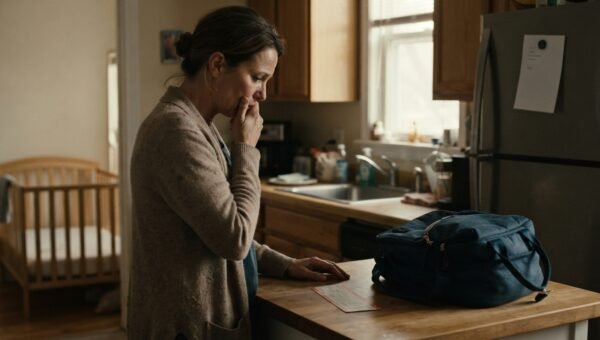
I stared at the paper at my kitchen counter. Dad hadn’t driven in two years, and Jason claimed he was working warehouse shifts down in Anderson, South Carolina.
Why on earth was Dad’s truck parked at a major regional hospital three counties away on a Monday morning?
I called Jason immediately. His phone rang five times before he picked up. The background noise sounded loud, like he was standing near highway traffic.
“Jason, why were you at Saint Jude Regional in Asheville last month?” I asked, cutting right to it.
There was a long silence on the line. “What are you talking about?”
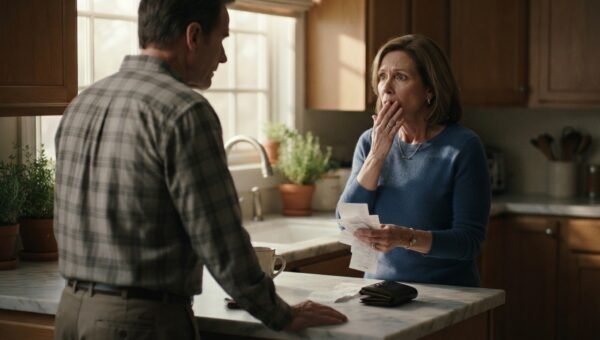
“I just got a ninety-five-dollar parking citation in Dad’s name,” I said, holding the paper tightly. “From the hospital in Asheville. Dated October fourteenth. You have Dad’s truck. So why were you there?”
“I wasn’t in Asheville, Brenda,” he said quickly, his voice climbing an octave. “I ain’t never been to that hospital in my life. Someone must have run Dad’s plates wrong. You know how those automated cameras are. They screw up numbers all the time.”
“It has Dad’s exact plate number right here on the municipal citation, Jason.”
“Well, then it’s a clone plate or a typo,” he snapped, sounding defensive and angry. “I was pulling overtime in Anderson that whole week. I’ve got timecards to prove it. Don’t pay it. Just contest it.”
He hung up on me.
I sat there looking at that piece of paper. Jason had lied to me plenty of times over the years about money and jobs, but something in his voice wasn’t just defensive. It was scared.
Because I hold Dad’s legal power of attorney, I had the legal right to challenge the citation. That afternoon, I logged onto the hospital parking authority’s dispute portal. I scanned Dad’s medical guardianship papers, his state ID, and a physician letter confirming he was homebound with severe dementia. I submitted a formal request for evidentiary review and asked for the full timestamp surveillance photograph attached to the citation.
Five days later, the hospital parking administration sent a secure PDF file to my email.
I opened it at my desk, expecting to see a blurry bumper or maybe a different vehicle entirely, just like Jason had claimed.
It wasn’t a different truck. It was Dad’s blue Ford, clear as day, pulled crookedly into the doctor’s reserved spot under the concrete parking deck. The driver’s side door was pushed open. A woman was stepping down from the running board, her face turned halfway toward the hospital entrance.
My breath stopped in my throat.
The woman was wearing a distinctive, knee-length boiled wool winter coat with deep emerald-green plaid and heavy horn buttons.
That coat had belonged to my mother, Helen.
Mom had bought it in Maine on their fortieth wedding anniversary trip twelve years ago. She wore it every single winter until the day she got sick with pancreatic cancer. When she passed away two years ago, I personally packed her clothes into plastic totes in Dad’s attic. I distinctly remembered wrapping that exact coat in a cedar-lined garment bag because I couldn’t bear to donate it yet.
The woman climbing out of Dad’s truck had Mom’s exact build, Mom’s round shoulders, and Mom’s ash-blonde hair cut in the short, feathered style Mom had worn since the 1990s.
I sat there in the quiet room, staring at my computer screen, my hands shaking so hard the mouse rattled against the wooden desk. I genuinely thought I was having some kind of stress-induced breakdown. My mother had been dead and buried in the cemetery behind Grace Baptist Church for twenty-six months.
I printed the picture on high-gloss paper. I drove straight over to Dad’s house.
Dad was sitting in his recliner by the window, a fleece blanket pulled up over his lap, watching the wind blow dead leaves across the lawn. His mind was foggy that day; when I walked into the room, he looked up and called me Helen before correcting himself.
I pulled up a dining chair next to him. I tried to keep my voice calm, but my heart was hammering in my ears.
“Dad,” I whispered, holding the printed photograph out so the daylight hit it. “I need you to look at something for me. Do you recognize this truck?”
Dad blinked, reaching into his cardigan pocket for his reading glasses. He pushed them onto the bridge of his nose and held the paper with his thin, spotty hands. He looked at the truck first, his thumb gently brushing over the blue tailgate.
“That’s my Ford,” he murmured softly.
“Look at the woman, Dad,” I said, pointing to the figure in the green plaid coat. “Look at who’s getting out.”
I expected him to get confused. I expected him to cry and say it looked like Mom, or to ask why Helen was out in the cold.
Instead, Dad’s face went completely still. The vague, watery look that usually clouded his eyes vanished, replaced by an expression of cold, terrifying clarity. He stared at the woman’s face, his jaw tightening the way it used to when he had to deliver bad news to someone at work.
He looked up at me, his voice steady, low, and unmistakable.
“That’s not your mother,” Dad said. “That’s her sister.”
The air left the room.
“Dad,” I whispered, my voice trembling. “Mom was an only child. Her parents died when she was in her twenties. Mom never had a sister.”
Dad shook his head slowly, looking back down at the grainy photograph with tired, sorrowful eyes.
“She had one,” he said quietly. “Her name is Evelyn. And Helen spent forty years paying to keep her hidden.”
PART 2
I stood frozen beside my father’s recliner while the grandfather clock in the hallway ticked against the dead silence of the house.
“Dad,” I said, dropping to my knees so I was at eye level with him. “What do you mean, Mom spent forty years keeping her hidden? Mom’s parents were Harold and Martha Vance. We grew up visiting their graves every Memorial Day. There was nobody else.”
Dad took off his reading glasses and folded them into his lap. For the first time in eighteen months, the fog of his dementia seemed to pull back, like a curtain blown open by a cold draft.
“Harold wasn’t her father,” Dad said, his voice raspy. “Not Evelyn’s. Helen’s mother had a baby girl when she was seventeen, out in western North Carolina, before she ever met Harold Vance. Back in those days, a girl in a small mountain town couldn’t keep a child born out of wedlock without ruining the whole family name. Her folks sent her off to a church home in Marion. When the baby was born, they gave her to a cousin across the county line to raise. That child was Evelyn.”
I listened, unable to move. My mother had been the quietest, most upright woman in our church community. She sang in the choir, coordinated the vacation Bible school, and kept our family history neatly documented in an embossed leather Bible.
“Mom knew about this?” I asked.
“She didn’t find out until she was thirty,” Dad said, staring down at his hands. “Her mother confessed it on her deathbed. Handed Helen an old birth ledger and an address. Helen was terrified. She thought if people in town found out, if the church found out, it would change how everyone saw our family. Your mother cared too much about what people thought, Brenda. You know how she was.”
“So what did she do?”
“She drove up to Haywood County and found her,” Dad whispered. “Evelyn was struggling. Never had much luck, never married well, had health problems her whole life. Helen promised her that if she stayed up in the mountains, kept quiet, and never showed up on our doorstep, Helen would make sure she never went without. Every month, Helen sent cash in a plain envelope. When Evelyn got sick with the diabetes, Helen paid her pharmacy bills through a third-party account. Helen carried that secret like a bag of wet cement on her back for forty years.”
I sat on the carpet, feeling the foundation of my entire childhood shift beneath me. “And you knew? All this time?”
“I found out about ten years in,” Dad admitted, his eyes welling with tears. “I saw the withdrawals from our savings account. We had a terrible fight about it. But Helen cried and begged me, Brenda. She said, ‘Arthur, she has our mother’s blood. I can’t let her starve, but I can’t let my children know their grandmother had a secret child.’ So I let it go. God forgive me, I just let her handle it.”
“Dad,” I said, holding up the photograph from the hospital. “Mom has been gone for over two years. Who is paying for Evelyn now? And why is she driving your truck?”
Dad looked at the picture again, then slowly shook his head. “I don’t know. When Helen got sick, she told me she had set up a final arrangement. But after Helen died… my head started getting bad, Brenda. I forgot things. I forgot to ask.”
The room spun. If Mom had died twenty-six months ago, someone had taken over this arrangement. And Jason had Dad’s truck.
I left Dad with his caregiver and drove thirty miles north to Jason’s rental house on the outskirts of Anderson. His Honda Civic was sitting in the gravel driveway—fully assembled, with current tags and no signs of mechanical distress. Parked right beside it was Dad’s blue Ford F-150.
I didn’t knock. I pushed the front door open.
Jason was sitting at his kitchen table with a mug of coffee and a laptop open. When he saw me storm through the doorway holding the printed photo, his face drained of all color.
“You lied to me,” I said, slamming the paper onto the table right over his keyboard. “Your car works fine. You’ve been driving Dad’s truck up into the mountains. And you know exactly who that woman in Mom’s coat is.”
Jason didn’t yell. He didn’t offer another excuse about automated cameras or cloned license plates. He just slumped back in his chair, looking small and exhausted.
“How much did Dad tell you?” he asked quietly.
“Enough,” I said, my voice shaking with rage. “He told me about Evelyn. He told me she’s Mom’s half-sister. Now you tell me what you’ve been doing with Dad’s truck and why that woman is wearing our dead mother’s clothes.”
Jason rubbed his face with both hands. “Sit down, Brenda.”
“I am not sitting down. Talk to me, Jason.”
“Mom didn’t leave Evelyn an arrangement through an attorney,” Jason said, looking up at me with bloodshot eyes. “She couldn’t bring herself to put it in a legal will because she knew you’d see it when you went to probate. You were the executor. You would have looked at every line item, every beneficiary, every check.”
He swallowed hard. “Two weeks before Mom died, when you were at work and I was sitting with her in hospice, Mom pulled me down by the shirt. She was barely conscious, Brenda. She gave me a small metal key to a lockbox she kept hidden under the floorboards in her sewing room. She told me there was fifteen thousand dollars in cash inside, along with a notebook of names, pharmacy accounts, and Evelyn’s phone number in Waynesville.”
I stared at him, horrified. “Mom gave you cash to keep this going?”
“She made me swear on her life,” Jason said, his voice cracking. “She said, ‘Your sister will judge me. Brenda is so rigid, she’ll cut Evelyn off, or she’ll tell the whole church, and my memory will be ruined. You have to promise me you’ll take care of Evelyn until the money runs out.'”
“I wouldn’t have cut an old woman off from medical care, Jason! How could you think that?”
“Because Mom believed it!” he shouted back, standing up from the table. “Mom was terrified of you finding out! She spent her whole life keeping up appearances, and she drilled that fear into me. So I took the key. When Mom died, I got the box. For two years, I drove up to Waynesville once a month. I paid Evelyn’s rent. I paid for her insulin. I took her groceries.”
“And the coat?” I asked, tears burning my eyes. “The truck?”
“Evelyn’s heater died last winter,” Jason whispered. “She was freezing in that drafty old trailer. I didn’t have money to buy her a new heavy coat, so I went into Dad’s attic while you were running errands and took Mom’s green coat from the tote. I figured nobody was wearing it. And then, three months ago, the cash ran out. Every single penny Mom left was gone.”
“So why do you still have Dad’s truck?”
Jason looked at the floor, his hands trembling. “Because in August, Evelyn collapsed. It wasn’t just diabetes anymore, Brenda. She has Stage IV lung cancer. She doesn’t have insurance that covers the specialty treatments at Saint Jude in Asheville. Her car broke down completely, and she had no way to get to radiation. I couldn’t afford to fix her car and pay my own rent. So I took Dad’s truck so I could drive her to chemotherapy twice a week.”
He looked up at me, tears streaming down his cheeks. “The day of that parking ticket, she was throwing up so hard in the cab that I panicked and pulled into the doctor’s spot right by the door so she wouldn’t collapse in the parking garage. I didn’t care about the ticket. I was just trying to keep her alive.”
PART 3
The anger that had been driving me for the last three days suddenly evaporated, leaving behind a cold, hollow ache.
I looked at my little brother. For eight months, I had thought he was taking advantage of our sick father to avoid paying for his own car repairs. I had thought he was being lazy, selfish, and deceitful. Instead, he had been quietly carrying the terrifying, crushing weight of our mother’s dying secret all by himself, driving hundreds of miles every week while watching an elderly aunt he barely knew waste away from cancer.
“Why didn’t you come to me when the money ran out?” I asked, my voice barely a whisper. “Why didn’t you just tell me?”
“Because I promised Mom,” Jason said, wiping his cheeks with his sleeve. “And because I was ashamed. I couldn’t handle it, Brenda. The medical bills are piling up. The hospital social worker is calling me every day about payment plans. Evelyn’s landlord is threatening to evict her at the end of the month because her disability check doesn’t even cover the rent anymore. I’m drowning. I’ve been drowning for six months, and every time I looked at you, I thought you’d hate me for touching Mom’s things.”
I walked over to the table and closed his laptop.
“Get your jacket,” I said.
“What?”
“Get your jacket, Jason. We’re going to Waynesville.”
We drove up in Dad’s truck. The ride took nearly two hours, winding off the interstate and climbing into the narrow, winding hollows outside Waynesville. The trees were bare, their gray branches scratching against the overcast mountain sky.
Jason pulled the truck off onto a gravel turnout in front of a weathered, single-wide mobile home sitting on cinder blocks. The front porch steps were made of warped plywood, and an old plastic chair sat near the screen door.
Jason knocked softly and called out, “Aunt Evelyn? It’s Jason.”
A moment later, the inside door creaked open.
A woman stood behind the mesh screen, leaning heavily on a four-pronged metal cane. Seeing her in person, outside of a grainy black-and-white security camera, took the breath right out of my lungs.
She had our mother’s pale blue eyes. She had our mother’s high cheekbones and the very same small, crooked gap between her two front teeth. But where Mom had always been well-dressed, manicured, and comfortable, Evelyn looked worn down to the bone by seventy years of hard Appalachian living. She was wearing a faded cotton housecoat, and over her shoulders hung Mom’s green plaid wool coat, the horn buttons fastened securely against the draft.
Her eyes flickered from Jason to me, and I saw a flash of pure panic cross her face.
“Jason,” she rasped, her hand tightening on the cane. “Who is this?”
“It’s Brenda, Aunt Evelyn,” Jason said gently, opening the screen door so she didn’t have to push it. “Helen’s daughter. She knows.”
Evelyn’s mouth trembled. She looked down at the floor, backing away into the small, dim living room as if she expected me to strike her or start screaming.
“I didn’t ask him for the truck, honey,” she whispered, her voice rough and reedy from radiation treatments. “I told him not to bring me that coat. I told him Helen wouldn’t want you to see it. Please don’t be mad at Jason. He’s been good to me. He’s the only one who came.”
The sadness in that room was so thick it made my eyes water. This woman had spent her entire life living in the shadows of our family, treated like a shameful mistake that had to be bought off with cash in plain envelopes, terrified of the very people who shared her blood.
I stepped across the threshold, walked over to where she was standing, and took her cold, swollen hands in mine.
“I’m not mad at Jason, Aunt Evelyn,” I said, my voice thick. “And I’m not mad at you. I’m sorry it took me fifty-six years to meet you.”
She looked at me for a long moment, searching my face. Then her shoulders shook, and she began to cry. I put my arms around her, burying my face in the scratchy green wool of my mother’s coat, and let her weep against my shoulder.
We stayed in that trailer for four hours.
Evelyn showed us an old cardboard shoe box she kept under her bed. Inside were three black-and-white photographs of our grandmother Martha as a young girl, holding a baby on a porch in 1952. There was a stack of handwritten letters from my mother, spanning forty years.
I sat on the worn sofa and read my mother’s neat, familiar cursive.
*Dear Evelyn,* one letter read from 1988, the year I graduated from high school. *Enclosed is three hundred dollars for the winter fuel oil. Brenda is going off to college in the fall. She is so smart and proud. Sometimes I look at her and feel terrible that she doesn’t know her own kin, but you know how people talk in our town. Arthur says we are doing what’s best. Please keep this between us.*
Every letter was a mix of practical charity and suffocating shame. My mother had cared for her sister, but she had cared about her social reputation more. She had locked this woman out of our lives because she was terrified of what the ladies in the church auxiliary might whisper in the grocery store aisles.
“Your mother was good to me in her own way,” Evelyn said quietly, sipping a cup of hot tea Jason had made her. “She made sure I had a roof. But she never once let me come to your house. She never once introduced me to you children. When she died, I thought that was the end of it. I thought I would just die up here alone. Then Jason showed up with that lockbox.”
She looked at Jason with profound gratitude. “That boy saved my life this summer, Brenda. Even if the cancer takes me, he made sure I wasn’t alone in that hospital.”
I looked at the prescription bottles lined up on the counter, the past-due notices from the hospital collection agency, and the damp water stain spreading across the ceiling above her stove.
“You’re not going to be alone anymore,” I told her. “Neither of you are.”
ENDING
The next morning, I took control of the situation the way I should have been able to from the very beginning.
I paid the ninety-five-dollar hospital parking violation online using Dad’s checking account. Then I contacted Saint Jude Regional’s financial assistance office. Armed with Dad’s power of attorney and Evelyn’s medical records, I sat down with their patient advocacy department. Because Evelyn’s income consisted entirely of an eight-hundred-dollar monthly Social Security disability payment, she qualified for the hospital’s charity care program. Within three weeks, we were able to have over forty thousand dollars in outstanding radiation and oncology debt completely forgiven under North Carolina’s non-profit hospital regulations.
I didn’t stop there. I contacted the local area agency on aging in Haywood County. We got Evelyn enrolled in Medicaid to cover her prescription insulin and transportation services, which meant Jason no longer had to drive ninety miles twice a week just to get her to doctor appointments.
Then came the hardest part: the truth.
The Sunday after Thanksgiving, I drove Dad up to Waynesville in his blue truck.
Dad was having a good day. His mind was clear enough to know where we were going. When we walked into Evelyn’s trailer, he stood in the doorway for a long time, looking at the woman who carried his late wife’s face.
Evelyn looked up from her chair. “Hello, Arthur.”
Dad took off his cap, his eyes filling with tears. “Hello, Evelyn. I’m sorry it took me so long to come visit.”
They sat together on that faded sofa for three hours, holding hands, talking about Martha, talking about Helen, and filling in the gaps of a family history that had been broken apart by pride and small-town shame. Watching my father smile and listen to his sister-in-law was worth every difficult conversation we had endured to get there.
Two months later, in late January, Evelyn passed away peacefully in her sleep at the hospice house in Asheville. She wasn’t alone in an empty trailer. Jason and I were both sitting in the room with her, holding her hands when she took her last breath.
We held a small graveside service at the cemetery behind Grace Baptist Church, right in our home town.
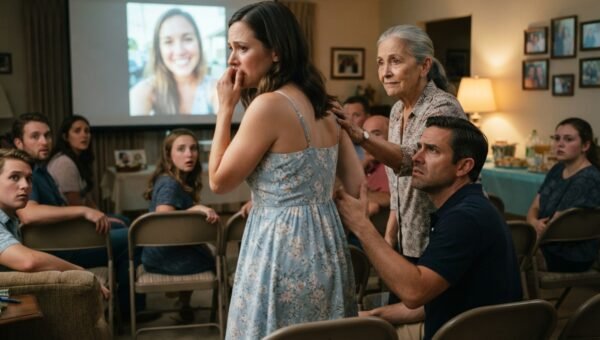
Some of the older church ladies came, whispering among themselves, wondering who the woman in the modest wooden casket was. When the pastor asked if anyone wanted to say a few words, I stood up in front of the congregation.
I told them Evelyn Vance was my mother’s sister. I told them she was a beloved member of our family who had lived quietly in the mountains, and that she was finally resting where she belonged, in the family plot right beside our mother.
If anyone whispered or judged, I didn’t hear it. And for the first time in my life, I didn’t care.
After the funeral, I signed the title of Dad’s blue Ford F-150 over to Jason. He didn’t borrow it anymore; it was his. He had earned that truck with every mile he drove through the dark to keep an old woman from suffering alone.
Dad’s dementia has worsened since that winter. Most days now, he doesn’t remember who I am when I walk through the front door with his morning pills. But hanging on the wall right beside his favorite recliner is a framed photograph from that afternoon in Waynesville: Dad, Jason, and Evelyn sitting together on the porch steps, smiling into the autumn sun.
Sometimes Dad looks up at that picture, taps the glass over Evelyn’s face, and looks at me with a gentle, peaceful smile.
“That’s Helen’s sister,” he tells me softly.
“I know, Dad,” I always say, squeezing his hand. “She’s family.”