PART 1
My sister Karen announced the trip at Sunday dinner like she was presenting an award to herself. She had booked two tickets to Rome and Florence for our mother, who was seventy-four and had never left the United States. Karen called it their dream trip, paid for out of her own pocket, though she made sure everyone at the table knew how much overtime she had put in at the clinic to afford it.
I took care of Mom’s weekly groceries, her doctor appointments, and her prescription refills three towns over in Ohio, so I felt a quiet relief that Karen was finally stepping up to give Mom something special.
For the first four days, Karen flooded her social media with photos. There was Mom holding a cup of espresso outside the Colosseum, Mom smiling in front of a fountain, and Mom leaning against Karen on a cobblestone bridge. I liked every single picture from my kitchen counter after work. But on the fifth morning, Karen posted a photo outside a stone building in Florence. Mom was sitting in a lightweight folding transport wheelchair. Her hands were gripped tight around the armrests, her coat was buttoned crooked, and she was staring down at the pavement instead of the camera.
Mom walked three miles every morning around her neighborhood. She did her own gardening and carried her own bags of mulch.
She had never used or needed a wheelchair in her entire life.
I called Karen’s cell right away. International ringing took forever, and when Karen finally picked up, street noise roared behind her.
“Karen, is Mom hurt?” I asked. “Why is she in a wheelchair?”
Karen sighed, sounding annoyed that I was bothering her. “She’s fine, Nora. She was just tired from all the walking on the uneven stones. It was easier to push her so we could stay on schedule. Don’t make a production out of it.”
Before I could ask anything else, Karen said the roaming charges were ridiculous and hung up.
When they returned home ten days later, I drove out to the airport to pick them up. Mom walked through the sliding glass doors under her own power, but she looked smaller. She didn’t hug me with her usual squeeze. When we got to her house and I started carrying her luggage up the porch steps, she barely answered my questions.
She didn’t want to talk about the pasta, the Vatican, or the museums. Whenever I asked what her favorite part was, she just rubbed her knuckles and murmured that it was all very big and very loud.
A month went by. Mom stopped walking her usual morning loop. She started keeping her blinds drawn, and whenever Karen came over, Mom seemed jumpy, watching Karen move from room to room like she was waiting for a plate to drop. Karen acted like everything was completely normal, dropping off little bottles of olive oil and talking loudly about their vacation to anyone who would listen.
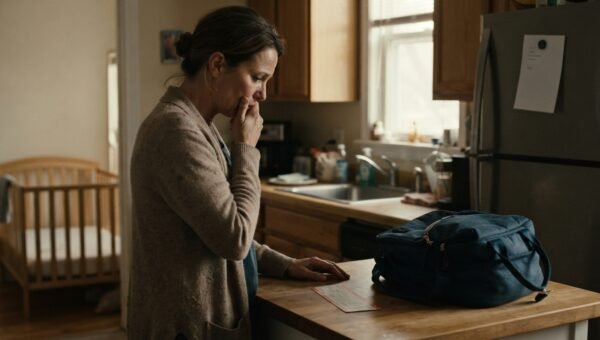
Then the mail arrived on a Tuesday afternoon. I had stopped by Mom’s house to help her sort through her utility bills, and sitting among the circulars was a crisp white envelope with blue European airmail markings. The sender was a private banking house in Florence, Italy, and the letter was addressed directly to our mother, Evelyn Vance.
I opened it at the kitchen table while Mom was in the pantry getting tea bags. The letter was entirely in Italian, printed on heavy cream paper with an embossed crest at the top. I took out my phone, opened a translation app, and held the camera over the paragraphs.
The translated text was formal and stiff. It was a formal notification confirming that a safe-deposit box had been accessed in person on May 14, during their trip, and that the remaining annual fee had been cleared.
Karen walked in through the back door without knocking right as the text finished rendering on my screen. She tossed her keys onto the counter, saw the envelope in my hands, and stopped cold.
“What is that?” Karen asked, her voice sharp.
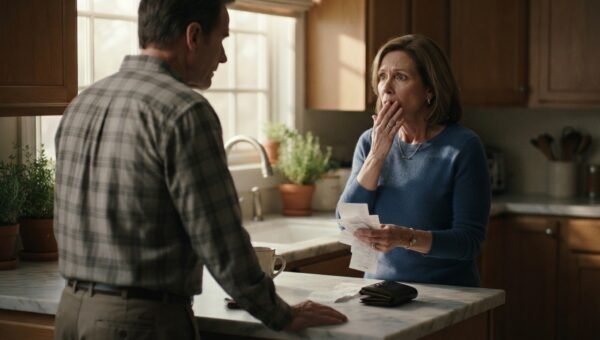
“It’s a letter from an Italian bank for Mom,” I said, looking up at her. “It says someone opened a safe-deposit box over there while you two were visiting.”
Karen’s face tightened, and she reached across the table to snatch the paper. “Give me that. It’s just international junk mail, Nora. Tourist scams. They pull names off hotel registries all the time. Throw it in the trash.”
Behind us, the pantry door creaked open. Mom was standing in the doorway holding a box of chamomile tea. Her chin was trembling, and two heavy tears were already spilling down her cheeks.
“It wasn’t junk, Karen,” Mom whispered. She looked at me, her voice cracking so low I had to strain to hear it. “Your sister told me it belonged to your father.”
My chest went completely hollow. Our father had died of lung cancer twelve years ago. He was a retired machinist who had spent his entire life in Stark County, Ohio. Dad had never owned a passport, never taken an international flight, and had never been to Italy.
PART 2
The kitchen went dead quiet except for the hum of the refrigerator. Karen crumpled the letter in her fist, her knuckles turning white.
“Mom, stop it,” Karen snapped. “You’re confused again. You don’t know what you’re saying.”
“Don’t tell me what I know,” Mom said. Her voice wasn’t loud, but the tremor in it had vanished, replaced by a sudden, shaking grief. She walked slowly to the table, pulled her vinyl handbag onto her lap, and unzipped the front pocket. Her fingers fumbled inside for a moment before she pulled out a worn paper cocktail napkin with a faded hotel logo printed on the corner.
She laid it flat on the table and pushed it toward me.
Written in blue ballpoint ink was a man’s name, Marco Rossi, followed by an Italian country code and an eight-digit phone number. Under the digits, in careful, angular handwriting, was an address in a district just outside the historic center of Florence.
“What is this, Mom?” I asked.
Mom wiped her cheek with the back of her wrist, avoiding Karen’s glare. “The wheelchair wasn’t because I was tired, Nora. Karen told the bank I had severe mobility issues so they would let her roll me right down into the private basement vault. She said they needed me there in person with my marriage certificate and your father’s death certificate to release what was inside.”
“Mom, shut your mouth,” Karen said, stepping closer. “You agreed to this.”
“I agreed because you told me Arthur kept secrets from me!” Mom cried, her voice finally breaking open. “You told me he had an account over there, that he hid money from us while he was sick! You made me feel like my whole forty-year marriage was a lie!”
“He did have a secret,” Karen said, crossing her arms defensively. She didn’t look ashamed; she looked cornered and furious. “Dad wasn’t the saint you two pretend he was. But that napkin has nothing to do with it. Throw it away.”
“Who gave you this napkin, Mom?” I asked, keeping my hand pressed firmly over the paper so Karen couldn’t grab it.
Mom looked straight into my eyes. “A man met us outside the bank when Karen wheeled me out to the taxi. He was tall, maybe fifty years old. He had your father’s eyes, Nora. Exactly your father’s eyes. He looked at me like he was terrified, and he handed me that napkin through the cab window before Karen could roll up the glass. He told me his name. And then he said he was your brother.”
My mind spun trying to connect the pieces. Dad had served in the Army in West Germany in the late 1960s before he met Mom, but he never talked about Europe. He never took vacations beyond Lake Erie. He worked double shifts at the ball-bearing plant and spent his weekends fixing lawnmowers in our driveway.
“Karen,” I said, standing up from the chair. “What was in that safe-deposit box?”
“Nothing that concerns you,” Karen said.
“It concerns Mom,” I said. “You dragged a seventy-four-year-old woman across the ocean under false pretenses, told her our dead father betrayed her, and forced her into a vault. What did you take out of that box?”
Karen let out a harsh, bitter laugh. “I took what was owed to me. Dad promised me help before he died. He knew I was drowning after my divorce, and he told me there would be something set aside. Then he passed away, and what did he leave? An eight-thousand-dollar life insurance policy that barely paid for his burial, while you got his truck and Mom got a mortgaged house. You think you’re the only one who sacrificed for this family, Nora? I found Dad’s old military journal in the attic three years ago. There was an Italian address and a deposit box registration folded into the back binding. I figured out what it was. I handled it.”
“Handled what?” I demanded.
“An envelope,” Karen said, her chin lifting. “Thirty-six thousand dollars in old bank drafts and savings bonds. I cashed them through an international transfer agent in Milan. It’s done. It’s paid off my credit cards and my car note. It was Dad’s money, and he meant for me to have it.”
Mom let out a terrible, choked sob and covered her face with her hands.
“Dad didn’t put that money there for you, Karen,” Mom whispered into her palms. “He couldn’t have. Arthur didn’t have thirty-six thousand dollars to his name in his whole life.”
“Well, he did,” Karen said coldly. “And now it’s gone.”
Karen grabbed her purse, walked out the back door, and slammed it behind her. The sound echoed through the small house, leaving Mom and me sitting in the suffocating quiet.
I looked down at the napkin. The ink was slightly smeared where Mom’s thumb had rested on it for weeks. If Dad had thirty-six thousand dollars in an overseas box, and a fifty-year-old man with Dad’s eyes was waiting outside that bank, Karen hadn’t collected an inheritance.
She had stolen something meant for someone else.
PART 3
I stayed with Mom that night. We sat on her sofa until two in the morning, going through Dad’s old metal lockbox that had sat untouched in the top of her bedroom closet since his funeral. There were deed papers, our birth certificates, and his honorable discharge paperwork from 1971.
His service record confirmed what I already knew: Sergeant Arthur Vance had been stationed in Mannheim, Germany, from 1968 to 1970. But clipped to the back of his discharge folder was a series of leave passes. Three separate two-week furloughs granted for travel to northern Italy.
The next morning, while Mom was resting, I sat at her kitchen table with my phone. I dialed the country code for Italy and entered the number written on the napkin.
The call connected on the fourth ring. A man answered, his voice deep and slightly accented, speaking in rapid Italian.
“Hello?” I said, my voice shaking. “Is this Marco Rossi? My name is Nora Vance. I’m calling from Ohio.”
The line went completely silent for several seconds. When the man spoke again, his English was deliberate and careful.
“Nora,” he said softly. “Arthur’s daughter.”
We talked for nearly two hours. Marco was fifty-four years old, born in late 1969 in a small town outside Vicenza. His mother, Giuliana, had met my father while Dad was stationed in Europe. When Dad’s tour ended and he was ordered back to the States, Giuliana chose to stay with her family in Italy rather than move to an unfamiliar country. They never married, and Dad returned to Ohio, eventually meeting and marrying my mother two years later.
“Arthur did not abandon me,” Marco explained quietly. “He could not be my everyday father, but he sent money through an uncle every quarter until I finished university. In 1998, when he came to visit me for the only time in my adult life, he set up that box in Florence. He told me it contained his portion of a family land sale from his own grandfather, converted into international bonds. He said it was an emergency safety net for my daughter, his granddaughter, who was born with a severe heart defect.”
My throat tightened so hard I could barely swallow. “A safety net.”
“Yes,” Marco said. “He told me the box was registered in his name and required his original documents or his surviving legal widow’s signature to transfer if something happened to him before he could put it in my name. When he became sick with cancer, he wrote to me that he would fix the paperwork. Then he died. The box remained locked for twelve years.”
“Marco,” I said, the shame burning hot behind my eyes. “My sister Karen found those papers in our attic. She brought our mother over there under false pretenses. Mom didn’t know what she was signing. Karen took the thirty-six thousand dollars.”
Marco exhaled slowly over the line. “I know. The bank manager knows my family; he called me as soon as an American woman arrived with the widow and presented the original death certificate and marriage license. I rushed to the bank, but I was too late. I only saw your mother being wheeled to the taxi. I saw the look on the older woman’s face. She looked terrified, Nora. Not like a thief. Like a hostage. That is why I slipped the napkin to her.”
He paused, then added gently, “The money would have helped my daughter’s upcoming surgery in Milan this autumn, yes. But more than the money, it hurt to think Arthur’s family would come here only to erase the one thing he left behind for us.”
“We didn’t know,” I told him, tears blurring my vision. “Mom didn’t know. But I am going to fix this.”
That evening, I drove over to Karen’s split-level house on the north side of town. Her husband, Greg, answered the door, looking uncomfortable, and stepped aside. Karen was in the kitchen, packing leftovers into plastic containers.
I didn’t yell. I didn’t raise my voice. I set my phone down on her granite island and opened the bank ledger printouts I had spent the afternoon gathering, along with copies of Dad’s old leave records and the notes from my conversation with Marco.
“You are going to give that money back, Karen,” I said.
Karen rolled her eyes and snapped a plastic lid into place. “I already told you, Nora, the money is spent. I paid off my debts. Dad owed me that.”
“Dad didn’t set that money aside for you,” I said evenly. “He set it aside in 1998 for his granddaughter’s heart surgery. A child born with a defect. And you committed international fraud using our mother as a prop.”
“You can’t prove that,” Karen sneered. “Mom signed the papers. She’s the legal widow.”
“Mom will sign an affidavit stating she was misled and coerced under emotional duress,” I told her, looking her directly in the face. “I spoke to an attorney this afternoon. Because you transported those funds across borders using false representations, this isn’t just a family squabble. If Mom files a formal report with the consulate and the bank’s fraud division, you won’t just lose your clinic job. You will be facing federal wire fraud charges.”
Greg, standing in the doorway, turned completely pale. “Karen, what did you do?”
“Shut up, Greg!” Karen hissed.
“You have two choices,” I said. “You take out a home equity loan against this house, or you sell your new car. You have thirty days to wire thirty-six thousand dollars to Marco Rossi’s bank in Florence. If that wire isn’t confirmed by the end of the month, Mom and I walk into the county prosecutor’s office, and we bring every piece of paper we have.”
Karen stared at me, her mouth slightly open. For the first time in her life, she realized I wasn’t going to keep the peace just to save her from herself.
ENDING
It took twenty-six days for Karen to secure the loan against her house. She didn’t speak a single word to me during the process. Everything went through Greg and a local notary. On the twenty-seventh day, Marco sent me a photo of the wire receipt confirming that the full thirty-six thousand dollars had landed safely in his account in Italy.
The money arrived in time. Marco’s daughter, a bright-eyed twelve-year-old girl named Sofia, had her surgery in Milan three weeks later. Marco called us from the hospital waiting room to tell us the repair had gone smoothly and she was recovering without complications.
Mom sat beside me on the sofa during that call, holding the phone between both of our ears. When Marco thanked her for righting the wrong, Mom started to cry again, but this time her shoulders were relaxed. She told Marco that Arthur was a flawed man who had made mistakes, but he had loved his children, all of them, and she was glad his granddaughter would grow up healthy.
Karen cut herself off from the family entirely after the loan closed. She didn’t come to Thanksgiving, and she blocked my number. Greg still drops by Mom’s house once a month to drop off a small check toward the attorney fees we incurred, but Karen hasn’t stepped foot on Mom’s porch since that Tuesday afternoon in the kitchen.
Mom’s life slowly returned to its quiet rhythm. She started walking her three-mile loop around the neighborhood again, greeting the mail carrier and tending to her tomato plants in the backyard.
Yesterday morning, an envelope with Italian postage arrived in the mail. Inside was a small framed photograph of Sofia standing outside the hospital, smiling under the bright Italian sun, holding a handmade sign that said “Grazie, Nonna Evelyn.”
Mom set the frame on her mantle right beside the old black-and-white picture of our father in his machinist uniform. She looked at both of them for a long moment, wiped a speck of dust from the glass with her thumb, and then went into the kitchen to put the kettle on for tea.