PART 1
I drive a 2003 Ford F-150 with rust around the wheel wells and a heater that takes ten minutes to kick on. If a pipe leaks under the kitchen sink, I fix it myself with a ten-dollar slip nut and some thread tape. If the dryer stops tumbling, I unplug it, take the back panel off, and replace the thermal fuse instead of calling a repairman. That is just how I was raised.
I grew up in a drafty house where money was tight, and you took care of what you had because nobody was coming to hand you a replacement.
My wife Sarah has always understood that about me, or at least I thought she did. But her younger sister, Brenda, made my frugal habits her favorite punchline for twenty years.
Every single family gathering came with some version of the same joke. If I brought up patching my own boots, Brenda would roll her eyes across the dinner table. If I suggested picking up takeout instead of sitting down at an expensive steakhouse, Brenda would sigh and say, “Careful, everyone, Tom’s wallet might develop frostbite.” I never fought her on it. I am not the kind of man who makes a scene over small talk, so I usually just shrugged, sipped my coffee, and let the moment blow over.
This past Christmas, though, it felt different.
Sarah and I were hosting dinner at our house. My brother-in-law was there, my twenty-two-year-old niece Chloe was sitting on the sofa, and Brenda was standing right by the dessert spread.
Chloe had just graduated from college in the spring, and Sarah was talking about how Brenda and her husband had helped Chloe get settled into her first apartment.
I mentioned that I had tucked two hundred dollars into Chloe’s card to help with her first utility deposit. I said it plainly, just glad I could help my niece a little.
Brenda laughed out loud from across the kitchen island. It was sharp, loud, and intentional.
“Two hundred whole dollars, Tom? Don’t break the bank,” Brenda said, looking right at the rest of the room to make sure they were listening. “I swear, you have had that same truck since Sarah and I had brown hair. You squeeze a nickel so hard Thomas Jefferson begs for air. You can’t take it with you, Tom. When are you finally going to start living?”
Chloe looked down at her lap, clearly uncomfortable. But Sarah gave a light, nervous laugh and said, “You know Tom, Brenda. He likes his routines.”
That soft chuckle from Sarah stung worse than anything Brenda said. Hearing my own wife join in, even just to smooth things over, sat heavy in my chest. Still, I swallowed it down. I smiled, took another bite of pie, and told Brenda that the old truck still ran just fine. The party went on, the gifts were cleared away, and by ten that night, the house was quiet again.
The next morning, December twenty-sixth, Sarah went out early to hit the post-holiday sales with her cousin. I was out in the garage around ten o’clock, cleaning up my workbench, when my phone vibrated in my jacket pocket.
It was Chloe.
I wiped grease off my hands with a shop rag and answered. “Morning, kiddo. Everything okay with your car?”
“Uncle Tom,” Chloe said. Her voice was quiet, almost a whisper, like she was hiding in another room. “Are you home?”
“Yeah. Just out in the garage. What’s going on?”
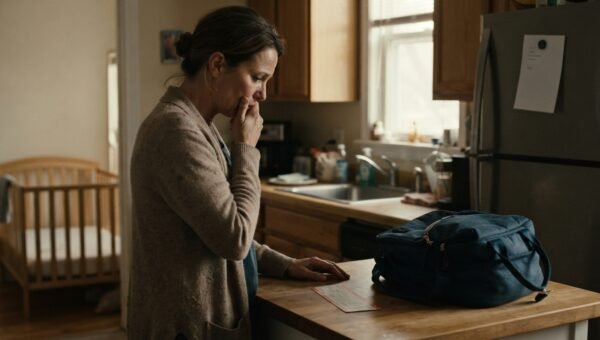
“Something weird is happening over here,” she said. “My mom has been locked in her bedroom for the last hour. She got the mail from yesterday that we forgot to bring in last night. There was a big envelope from St. Jude Children’s Research Hospital. Uncle Tom, she opened it at the counter, turned completely white, and started sobbing. She won’t let my dad in, but she dropped the papers on the dining table when she ran upstairs.”
“A letter from St. Jude?” I asked, my brow furrowing. “Did somebody in the family get sick?”
“No,” Chloe whispered. “I took a picture of it because I didn’t understand what I was reading. It’s not a donation request. It’s an official statement from their billing and patient assistance foundation. And… Uncle Tom, your name is on it. But the patient name on the file isn’t a stranger. It’s Mom.”
PART 2
Before I could even process what Chloe had said, my phone buzzed against my ear with an incoming text.
“I just sent it to you,” Chloe said, her voice shaking. “Look at it. Please tell me what this is.”
I pulled the phone away, tapped the screen, and opened the photo she had just sent. It was a crisp, clear image of heavy white letterhead from the hospital’s patient accounts division, stamped with a final settlement seal.
My eyes scanned the lines. It was addressed to Brenda Vance. Right in the center, printed in bold administrative type, was an account number followed by two names: *Guarantor / Anonymous Contributor: Thomas R. Miller.* And right below it: *Patient Name: Brenda M. Miller (Maiden).*
Underneath the names, the summary read:
*Account Status: Paid in Full.*
*Final Balance: $0.00.*
*Cumulative Obligation Retired: $94,800.00.*
*Term of Payments: December 2004 – December 2024.*
My hand started trembling. I leaned back against the edge of my workbench, staring at the numbers on my small phone screen.
Chloe was still breathing on the other end of the line. “Uncle Tom? Are you there? Mom was twenty-two in 2004, right? Why were you paying a children’s hospital for her for twenty years?”
“Chloe,” I said, my voice thick. “Don’t touch those papers. Don’t say anything to your dad yet. I’m getting in my truck right now.”
I hung up, grabbed my keys off the pegboard, and didn’t even bother taking off my work jacket. As I backed the old Ford out of the driveway, my mind raced backward twenty years to the winter of 2004.
Back then, Sarah and I had only been married for three years. We were scraping by on my modest salary as a county water technician and Sarah’s pay as a preschool aide. That was the year Brenda collapsed at work. The doctors found an aggressive bone infection coupled with an advanced soft-tissue complication in her hip that standard clinics in our area couldn’t manage. Because she had just aged out of regular pediatric care but her original diagnosis stemmed from an adolescent condition, a specialist helped transfer her case to a specialized research wing that handled transitional youth cases.
The treatment saved her leg and likely saved her life. But when the dust settled, the outstanding balances that insurance refused to touch were astronomical. Her parents took out a second mortgage on their house, but they were already in their late fifties and drowning.
One night in November of 2004, my late father-in-law, Arthur, called me out to his tool shed behind their house. Arthur was a proud, quiet man who never asked anyone for a dime. That night, he broke down completely. He showed me the remaining debt that the hospital’s charity arm had structured into an extended hardship repayment plan to keep Brenda out of bankruptcy and protect her future credit. It came out to roughly four hundred dollars a month.
“I can’t make the payments, Tom,” Arthur had whispered to me, tears streaming into his gray beard. “If Brenda finds out how much this costs, she’ll stop going to her follow-ups. She’s already talking about moving out and refusing treatment. And if my wife finds out the bank is looking at our house, it’ll kill her. Sarah can’t know either. You know how Sarah worries. She won’t sleep at night.”
Arthur didn’t ask me for money. He was just a terrified father breaking down in front of his son-in-law.
I looked at that paper, then I looked at Arthur. I made a promise right there in that shed. I told him I would take care of it. Every December, I would scrape together my annual bonus from the county, skip buying new clothes or upgrading our cars, and make the yearly payment block to the account. When Arthur passed away three years later in 2007, he took the secret with him. He died believing his daughter’s slate would eventually be clean.
I never told Sarah because Arthur made me swear on his life that his daughters would never carry the shame of the family’s near-financial ruin. Over twenty years, I never missed a single December payment. I gave up newer trucks, weekend trips, and dinners out so that Brenda could build a life, buy a house with her husband, and raise Chloe without a massive medical judgment hanging over her head.
And for twenty of those years, Brenda called me cheap.
PART 3
When I pulled up to Brenda’s house, her husband’s sedan was gone. Chloe was waiting by the front door, her face pale. She opened it before I even knocked.
“Dad went to the hardware store,” Chloe whispered, pointing toward the hallway. “Mom is downstairs now. She’s in the dining room. She hasn’t stopped crying.”
I walked through the foyer and stepped into the dining room.
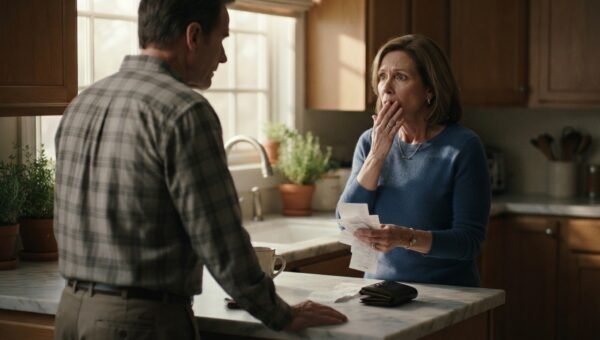
The white papers were spread across the dark wood table. Brenda was sitting in the corner chair, her elbows on the table and her face buried in both hands. Her shoulders were shaking. When she heard my heavy boots on the floorboards, she looked up.
Her eyes were bloodshot, her face swollen and blotchy. She looked at me, then down at the papers, and then back at me. For the first time in twenty years, there was no smirk, no clever jab, and no superiority in her expression. She looked completely shattered.
“Tom,” she choked out. The word barely left her throat. “What is this?”
I pulled out the chair across from her and sat down. I didn’t raise my voice. I didn’t scowl. I just looked at her across the table.
“Your father asked me for help in November of 2004,” I said quietly. “The hospital worked out a long-term hardship agreement, but the balances left after the grants were still too high for him to handle without losing the house. He was terrified you would refuse your physical therapy if you knew the numbers. He was terrified Sarah would carry the stress. So he asked me to keep it between us.”
Brenda stared at me, her mouth trembling. “Every year? That was you?”
“Every December,” I said. “Three hundred and ninety-five dollars a month, paid in an annual lump sum every Christmas season when my county longevity check came through. For twenty years.”
She reached out with a trembling hand and touched the paper where my name was printed next to hers.
“Ninety-four thousand dollars,” she whispered, her voice cracking into a sob. “Tom… you drove that broken-down truck to my wedding. You wore the same two suits to every anniversary dinner. Last night… last night I told the whole family you were cheap. In front of my daughter. In front of your wife.”
“You did,” I said evenly.
“Why didn’t you say anything?” she cried, tears spilling freely over her cheeks. “Why didn’t you scream at me? Why did you let me sit there year after year calling you names when you were the one keeping the roof over our heads?”
“Because your father made me promise,” I replied, feeling twenty years of exhaustion settle into my bones. “He wanted you to start your life without looking backward. He didn’t want you feeling like you owed your big sister’s husband your entire future. He loved you, Brenda. And even when you were running your mouth at my dinner table, I remembered who I made that promise to.”
At that moment, the front door clicked open.
Sarah walked in carrying a shopping bag from the mall, laughing as she called out to Chloe. But the laugh died the second she stepped into the dining room and saw Brenda weeping uncontrollably and me sitting across from her.
“What is going on here?” Sarah asked, setting the bag on the floor, her eyes darting between us. “Did somebody get hurt?”
ENDING
Brenda didn’t answer with words. She just picked up the top two pages of the hospital packet, stood up on shaking legs, and handed them to her sister.
Sarah took the papers, her brow furrowed with confusion. I sat perfectly still while she read.
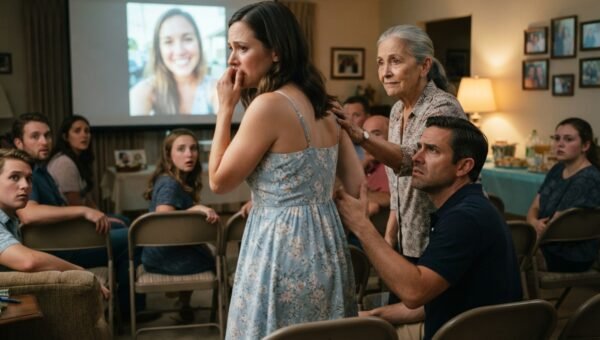
I watched Sarah’s eyes move down the page. I watched the color drain from her cheeks just like it had from Brenda’s. When she reached the line showing the total amount and the twenty-year payment history under my name, her hand flew to her mouth. She looked up at me, her eyes wide, glistening with sudden tears.
“Tom…” Sarah whispered. Her voice broke completely. “You did this? Since 2004?”
“Arthur asked me to,” I said softly. “He made me swear I would never tell you girls. He didn’t want either of you carrying that weight.”
Sarah dropped the papers onto the table and covered her face with both hands. The realization hit her all at once. She remembered every single time she had gently scolded me for patching an old pair of work boots instead of buying new ones. She remembered every time Brenda had made a cruel joke at Christmas, and she remembered laughing along just to keep the peace.
Brenda walked over to Sarah, wrapped her arms around her, and the two sisters stood by the dining table crying together in absolute silence.
Finally, Brenda pulled back, wiped her face, and turned to look at me. She walked over to my chair, sank down onto her knees on the hardwood floor, and took both of my rough, calloused hands into hers.
“I am so sorry, Tom,” Brenda sobbed, squeezing my hands until her knuckles were white. “I was cruel to you. I was arrogant, and I was so stupid. You saved my life, you saved Mom and Dad’s house, and you carried it all by yourself while I mocked you for it. I will spend the rest of my life trying to apologize to you.”
I looked down at Brenda. For twenty years, I had held onto a quiet irritation, wondering why a man had to be ridiculed just because he didn’t flaunt what little he had. But seeing her there, completely humbled and finally understanding the sacrifice that built her adult life, the bitterness simply left me.
“Get up, Brenda,” I said gently, helping her pull herself up from the floor. “Your dad loved you. That was the whole point. Just make sure you remember that.”
That afternoon, Sarah and I drove home in that old 2003 Ford. The heater groaned and rattled before blowing warm air across our knees. For the first fifteen minutes, neither of us said a word.
Sarah reached across the worn center console, took my right hand off the gear shift, and held it tightly against her lap. She didn’t let go the entire drive.
When we pulled into our driveway, Sarah looked out at our modest brick ranch. Then she turned to me, her eyes still red, and touched my cheek.
“Next Christmas,” Sarah said softly, a watery smile breaking through her tears, “you are letting Brenda cook the entire dinner. And you’re never letting anyone in this family call you cheap again.”
I smiled, turned off the engine, and let the quiet settle in. For twenty years, I carried a heavy debt on my shoulders in silence. But that morning, the bill was finally paid, and for the first time in a very long time, I felt completely at peace.