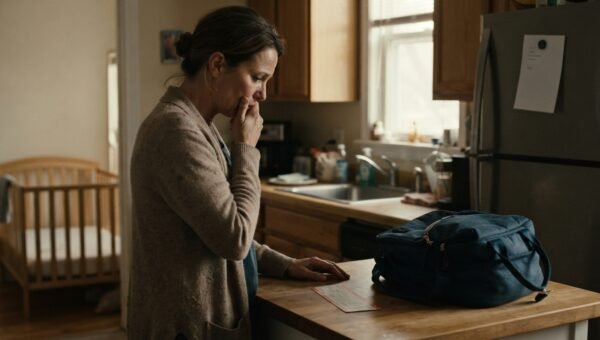
The pork chops were still warm in the cast-iron skillet when Lyle told me he was not hungry. He sat at the end of our oak dining table with his hands flat on the wood, staring at the grain like he was trying to read a map written in the knots. I remember the exact weight of the spatula in my hand that Tuesday evening because I had just scraped up the pan drippings with a little flour and butter to make the gravy the way his father used to like it back before we moved out to Wichita.
“I ate over at Mama’s,” Lyle said. His voice was too flat, the kind of flat he only used when he was hiding a bill or trying to tell me a dent in the truck bumper had happened all by itself in the gravel lot behind the hardware store.
“You didn’t say anything about going over there,” I told him, wiping my thumb across the corner of the counter where some grease had splattered. “I made enough for three. You want me to wrap these up for your lunch tomorrow?”
“Just put them in the bin,” he said, standing up before I could even set the spatula down in the sink. He didn’t look at me. He just walked straight down the hall toward the bathroom, and the door clicked shut with that quiet, heavy sound that had started happening more and more ever since Clara moved into the little brick bungalow on Elm Street three months ago.
At first, it was just the dinners. Clara had lived down in Tulsa for thirty years after the old man passed, and none of us expected her to pack up her boxes and drive a U-Haul two states north just because her hip started giving her trouble in the damp weather. Lyle had been the one to find the house on Elm. He spent three weekends painting the trim a crisp, bright white and hauling her heavy oak dressers up the narrow stairs while I stayed home canning green beans and keeping the house running. I thought it was just a good son helping his mother settle in. I really did. I baked a rhubarb pie and walked it over the second Saturday she was there, and we sat on her porch drinking weak iced tea while she told me all about the terrible draft coming through the pantry window.
“He’s just making sure she gets settled,” I told myself while I scraped the uneaten pork chops into the yellow Tupperware bowl and stuck them on the bottom shelf of the fridge behind the mustard and the leftover coleslaw.
The trouble wasn’t that Clara was there. The trouble was that Lyle stopped being in our house even when his boots were sitting right by the back door. He would come home from his shift at the lumber yard around five, but by five-fifteen his truck would be gone again. When I asked him where he was off to while the potatoes were getting cold on the stove, he wouldn’t even turn around from the mudroom mirror.
“Mama needs help with the storm cellar latch,” he’d call out over the roar of the washing machine. Or else it was the garage door tracks. Or the hot water heater pilot light going out because the pilot assemblies on those old units were always full of spiderwebs.
By the fourth week, Lyle had lost enough weight that his old denim work shirt looked like it was hanging off a fence post. His cheekbones had started pushing through his skin, and his eyes had that red-rimmed, hollowed-out look that usually meant he was sitting up half the night staring at the ceiling fan.
“You look like hell, Lyle,” I told him one morning while he was dumping three packets of sugar into his coffee mug. “You need to go see Dr. Henderson. You haven’t been sleeping. I hear you tossing around at two in the morning like you’ve got a gravel bed under your mattress.”
He didn’t look up from his coffee. He just stirred it until the spoon clicked against the ceramic like a small hammer. “It’s just the seasonal stuff. My sinuses are acting up with the cottonwood flying.”
“Sinuses don’t make you throw up your hands when I ask you what time you’re coming home for supper,” I said, leaning against the counter with my arms crossed over my apron. “And since when do you have medical appointments on Thursdays at three? You told me you were stopping by the parts store in Derby.”
“It’s nothing,” he muttered, grabbing his keys off the hook by the door so hard the little leather fob flew off and hit the linoleum. He didn’t even bend down to pick it up. I had to reach for it myself after he backed the truck out of the drive without so much as a wave through the windshield.
That was the first real crack in the glass, though I was too damn stupid at the time to see straight through it. A man who has been married to you for twenty-two years doesn’t drop his keys and leave them on the floor just because he’s running late for a gasket replacement. He leaves them because his hands are shaking, and his hands are shaking because he’s lying to your face about where he spends his Thursdays.
The next few days dragged like an old tractor through deep mud. Lyle came home later and later, smelling faintly of stale cigarette smoke even though he’d quit back when our daughter Beth was still in grade school. When I asked him about the smell, he claimed one of the yard hands at the lumber yard had been burning scrap cedar behind the shed. But the wind had been out of the north all week, blowing straight down from the flats, and nobody burns cedar in the middle of a dry September unless they’re trying to clear a fence line far away from any town.
I didn’t say anything more to him about it. I just walked around our kitchen touching things. I ran my fingers over the edge of the butcher block island that my grandfather had built out of seasoned ash back when we still lived in the valley. I touched the white enamel knobs on the stove that Lyle had installed with his own hands the year the roof leaked through into the pantry. It was our house, bought with the money my uncle left me when the timber tract was sold off after the estate settled. Lyle’s name was on the deed right beside mine because that was what you did back then, but the ground underneath it had been paid for with three generations of dirt that belonged to my people, not his.
By Thursday afternoon, the quiet in the house had gotten so heavy I could feel it pressing against my eardrums like altitude sickness. The clock on the wall over the pantry had a little stutter in its second hand, ticking three times fast and then pausing like it was catching its breath.
I looked at the counter where I’d set a quart jar of leftover navy bean soup with ham hock. It was rich and thick, the way Clara liked it before her teeth started giving her trouble, and I figured there wasn’t a earthly reason in the world why I shouldn’t walk it over to her place. If Lyle was over there helping her with some cabinet latch or other nonsense, he could have a bowl while it was hot instead of chewing on dry crackers in the dark.
I didn’t call first. If I’d called, Lyle would have found some excuse about the plumbing being torn up or Clara resting her eyes after a spell of dizziness. I just tied a gingham cloth over the top of the Mason jar with a piece of butcher’s twine, slipped my old leather loafers on without socks, and walked out the back screen door.
The air out on the street smelled like dry grass and woodsmoke from someone burning leaves early down by the creek. Elm Street is only three blocks from our place, a straight shot past the empty lot where the old grain elevator used to stand before it burned down back in ninety-four. The neighborhood hasn’t changed much since we moved in; the lawns are mostly brown around the edges from the late-summer dry spell, and the screen doors all give that same high-pitched squeak when someone lets them swing shut too fast.
When I got to Clara’s bungalow, the first thing that struck me wasn’t the noise. It was the lack of it.
There was no television mumbling through the front screen. There was no sound of the radio tuned to that afternoon farm report she always kept on so loud the neighbor’s dogs would bark along with the market prices. Her old powder-blue sedan was sitting right there in the gravel drive with the engine hood still ticking from a recent run, but the house looked like nobody had set foot in it since the movers dropped the last box in the hallway.
I walked up the concrete steps, they were clean, swept recently with a stiff-bristled broom, and knocked twice on the oak door.
Nobody came.
I waited three seconds, listening for the shuffle of her house slippers on the linoleum, but the only sound was a blue jay yelling from the top of the neighbor’s utility pole. I tried the knob just to see if she’d left it unlocked the way old folks in these parts always do when they’re expecting the mailman. It turned smooth as butter.
“Clara?” I called out, pushing the door open just enough to slide my shoulder through. “Clara, it’s just me. I brought some soup.”
The wave of air that hit me from inside the hallway was cold and smelled like nothing at all. Not coffee. Not bacon grease. Not the lavender room spray Clara used to cover up the smell of her menthol cigarettes. The kitchen was right there to the left, through the swinging door with the frosted glass window, and through that glass I could see the counters were bone dry. The dish rack was empty. There wasn’t a single pot on the stove burners, and the little yellow ceramic clock above the sink had stopped dead at twelve-fifteen with its hands pointing like broken twigs.
She hadn’t cooked a meal in that kitchen in weeks. Maybe months.
I stood there in the middle of the hallway with the jar of soup getting warm against my stomach, feeling the floorboards shift slightly under my shoes. That was when I heard the low, steady murmur coming from somewhere down beneath my feet.
It wasn’t loud. It sounded like bees behind a wall, a dull, droning sound that had a rhythm to it like someone reading names off a list.
I didn’t think. If I’d thought about it for more than half a second, I would have turned right around and walked back down Elm Street to my own kitchen and pretended I hadn’t seen the dry sink. But my feet moved toward the back of the house toward the pantry door that led down to the fruit cellar.
The door was standing open about two inches. A thin yellow wedge of light cut across the linoleum runner by the broom closet, and the air coming up out of that hole smelled stale and damp, like old cardboard boxes and wet wool.
I pushed the door open with the flat of my hand.
“Lyle?” I said.
The murmuring stopped dead. The silence that came down over that basement was heavier than the silence in my own kitchen, thick enough to reach out and touch.
I took one step down onto the top wooden tread of the stairs, and then another, my loafers making no sound at all on the dust.
When I reached the bottom landing, the light from the overhead bulb hanging by a frayed black cord blinded me for a second. Then my eyes adjusted, and I saw them.
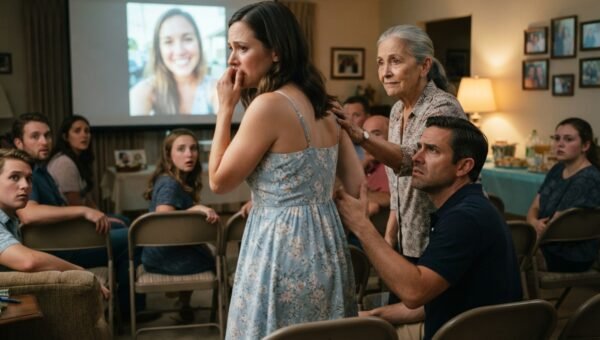
There were six folding chairs set up in a circle on the bare concrete floor around an old card table that usually lived in Clara’s back bedroom. On the table sat a half-empty box of saltine crackers, three plastic mugs of water, and a stack of yellow legal pads covered in Lyle’s sharp, cramped handwriting.
Sitting in the chairs were people I’d known for half my life.
Lyle was there, huddled over the table with his shoulders hunched up around his ears like he was trying to disappear into his own collar. To his left sat his sister Maeve, her mouth pinched into that tight little knot she always used when she was figuring out how much she could get for her neighbor’s scrap iron. Next to her was her oldest boy, Wayne, who had his thumbs hooked into his belt loops and was staring hard at the floorboards between his boots. Clara was sitting near the corner by the water heater with her hands folded over her cane, her face as expressionless as a carved turnid.
And right there in the middle of the table, held down at the corners by four cans of Campbell’s tomato soup, was a large-scale plat map of our property.
My name had been drawn through three times with a thick red grease pencil, the ink so heavy it had soaked right down through the heavy bond paper until the white fibers on the back were stained pink.
Nobody moved. For three full seconds, nobody in that basement even seemed to be breathing.
“What are you doing down here?” I heard myself say. My voice didn’t sound like mine. It sounded thin and dry, like someone talking from inside an empty water tank.
Lyle finally raised his head. His eyes looked like two wet stones pressed into his face. He didn’t look angry, and he didn’t look surprised. He just looked tired, the way a horse looks right before you put the harness on it for the last time of the season.
“Elva,” he said. That was all. Just my name, dropped down into the dirt between us like an old iron wedge.
“We were just going over some family business, dear,” Clara said from her corner. Her voice had that smooth, greasy rattle it always got when she was about to take something that didn’t belong to her. “You shouldn’t go barging into people’s cellars uninvited. It isn’t neighborly.”
I looked down at the map on the table. I could see the old creek bed marked out in blue ink from back when the county surveyed the section lines in fifty-two. I could see the square where our back porch sat, and the little pencil line Lyle had drawn leading from our well house right over to the property line he shared with the lane.
“Lyle,” I said, and my hand tightened around the jar of bean soup until the glass felt cold against my palm. “Whose name is that crossed out?”
“It’s not what you think,” Wayne muttered, shifting his boots on the concrete. “We’re just trying to get the title squared away before the tax sale next spring. Uncle Lyle’s name should’ve been sole owner back when your daddy passed the papers over. Everyone in the family knows that tract was supposed to stay in the bloodline.”
“The bloodline,” I repeated. The word tasted like copper in the back of my throat. “My daddy bought this land with the money he got from selling his mother’s Hereford herd after she died in the winter of sixty-eight. I signed my name on the courthouse records thirty years ago before you even knew how to drive a grain truck, Wayne.”
“Times have changed, Elva,” Maeve said, leaning forward so the light hit the gray roots of her hair. “A woman alone shouldn’t have to carry the burden of all those acres if things go sideways. Lyle’s the man of the house. He needs the clear title so we can secure the bank loan for the new combine without you having to sign off every time the implement dealer wants a signature.”
“A bank loan,” I said. I looked back at Lyle. He was staring at the red grease pencil line across my name like he was waiting for someone else to tell him what to do next. “Is that what your medical appointments were, Lyle? Were you down in Derby sitting with attorney Miller while he drew up a quitclaim deed behind my back?”
The basement was so quiet I could hear the tiny click of the water heater pilot light kicking on behind Clara’s chair.
Lyle didn’t answer. He just reached out one long, trembling finger and touched the edge of the yellow legal pad where the words *Quitclaim / Sole Interest / Section 14* were written in his own hand.
“We have to protect the farm, Elva,” he said softly. He finally looked me in the eye, and the look in his face made my stomach turn over harder than the soup. “Mama says if anything happens to you, if you have a stroke like your aunt Clara did back down in Muskogee, the state will take half of the north pasture for inheritance tax before the probate even clears. This is just for safety. It’s just paperwork.”
“Paperwork,” I said.
I looked around that circle of faces, people who had eaten at my table every Thanksgiving for two decades, people I had driven to the hospital when the flu hit hard back in the nineties, people I had canned peaches for until my knuckles stayed stained yellow half the summer. They weren’t looking at me with malice. They were looking at me the way people look at a fence post they’re fixing to pull up because it’s standing in the middle of a new tractor road. It wasn’t hatred. It was worse than that. It was the cold, flat certainty that I was already gone.
“You didn’t eat my cooking because you were too busy sitting down here eating crackers with your mother while she told you how to cut me out of the ground my people farmed before your daddy even came up from Oklahoma,” I said.
“Elva, don’t be dramatic,” Clara snapped, her hand tightening on the carved head of her cane. “Nobody is cutting you out. You’ll still have the house to live in as long as you’re able to keep up the garden. We’re just making sure the deed is in the proper hands so the boys have something to show for their work when the time comes.”
I didn’t yell. I didn’t throw the jar of soup at them, though God knows the glass would have sounded wonderful against that bare concrete wall.
I just set the jar down very carefully on the bottom step of the stairs, right where the light from the overhead bulb hit the gingham cloth.
“Lyle,” I said, and my voice didn’t shake once. “You can stay down here with your mother and your legal pads as long as you want. But when you come home tonight, don’t bother looking for your boots on the back porch. I’ll have them sitting out by the gate with the rest of your kit.”
“Now hold on a minute, Elva,” Lyle started, half-rising from his folding chair with his hands out palms up like he was trying to stop a calf from bolting through a gap in the wire. “You’re not thinking straight. We can talk about this upstairs over some coffee, “
“There won’t be any coffee,” I told him, turning my back on the circle of them before he could take another step. “And you tell attorney Miller on your way out of town tomorrow that if he files one line of that quitclaim paper with the county recorder without my signature, I’ll have the sheriff down here before he can get his coat on.”
I walked up those basement stairs one step at a time, keeping my eyes fixed on the gray line of the kitchen floor above. The air up top smelled warm and familiar, full of the grease from the skillet and the faint, sweet smell of the cabbage I’d shredded for slaw earlier that morning.
Behind me, nobody called out another word. The silence down in that hole stayed broken, jagged around the edges like an old piece of glass left in the dirt.
I walked through the kitchen, didn’t stop for my apron, and went straight out the front screen door into the late-afternoon sun. The gravel crunched under my loafers as I walked down the drive toward home, the sky turning that deep, bruised purple over the tree line where the pasture meets the creek.
By the time I reached our back door, the sun was almost down behind the ridge, leaving the west side of the house looking like it had been dipped in red lead.
I didn’t go into the kitchen right away. I went through the side door into the front parlor where the old mahogany desk sat under the window.
The house was so quiet I could hear the grandfather clock in the hall ticking off the seconds like a hammer hitting a wedge. I reached into the pigeonhole behind the leather blotter where the old metal box was kept, the one with the brass latch that my father had given me the day I turned twenty-one.
I flipped the latch. Inside, resting on top of the old abstracts and the tax receipts from seventy-two, was the original parchment deed with my family’s name stamped in purple ink across the bottom corner, clear and clean and untouched by any red pencil in the county.
I pulled it out, laid it flat across the walnut surface, and sat down in the wooden armchair.
Outside, down on Elm Street, a truck door slammed with a heavy, hollow thud that carried all the way across the vacant lots. Then came the sound of an engine starting up, coughing once in the cool evening air before it smoothed out and headed off down the road toward the highway.
I didn’t look up from the desk. I poured myself a cup of cold water from the pitcher on the sideboard, took one small sip, and waited for the phone on the wall to start ringing.