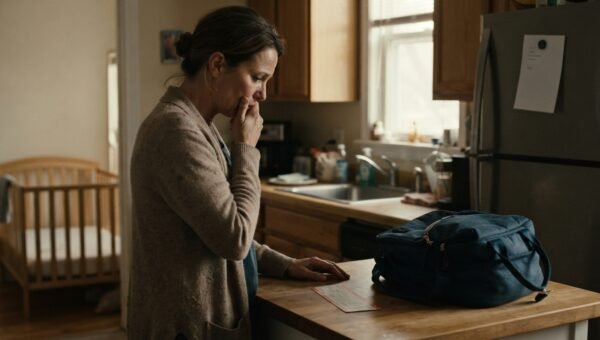
The coffee maker in our kitchen has this little rattle in the plastic housing whenever the water gets down to the last cup, and I was standing there waiting for it to finish sputtering when my phone started vibrating against the laminate counter. It was a Tuesday morning, or maybe a Wednesday, but honestly one week has a way of bleeding right into the next out here in dairy country where the fields just sit there looking gray and flat until the spring thaw finally decides to show up.
I looked down at the screen and saw my son Russell’s name flashing there. I usually don’t get phone calls from Russell before noon because he is either out working the equipment shed on the south forty or hauling feed down toward Portage, so my thumb slipped a little bit on the glass just trying to swipe it open.
Before I could even get a hello out, Russell was already talking, and his voice had that hard, sharp edge to it that he usually only gets when he has to deal with a broken tractor axle or a fence line dispute with the county. He told me he was looking at a set of screenshots on his phone, little digital captures of a bank statement that someone had texted or emailed to him out of nowhere. I could hear his breath catching in his chest like he was standing out in the cold wind too long without a jacket.
He didn’t even ask me how I was doing, which wasn’t like him, even when we had been barely speaking. He just cut right through everything without taking a breath.
“Mom, what are you playing at with these accounts?” he asked me.
I stood there by the kitchen counter with the wet dish towel still draped over my wrist, wondering what on earth he was talking about. We had gone through this whole business about birthday money only a month back when his wife, Corinne, put her foot down about the kids getting cash in their cards. Corinne had sat right at my kitchen table, folding her cloth napkin into a neat little square while she told me how damaging it was for seven-year-old Toby and five-year-old Clara to grow up thinking affection came in a greeting card with a twenty-dollar bill tucked inside. They need experiences, not money, she had told me, and she said it with that polite, church-supper smile that didn’t reach her eyes at all.
Fair enough, I had told her. If she wanted them to have memories instead of folded paper, I could take them to the county historical museum or buy them tickets for the little steam train down in North Freedom. I thought we had settled it like civil adults who just happened to see things a bit differently.
“I haven’t opened any accounts, Russell,” I told him, keeping my voice as level as I could manage while the coffee machine gave one last wheeze and went quiet. “You know I haven’t. We talked about the cash. I’ve been taking them to the museum, just like Corinne wanted.”
Russell let out a sharp breath that sounded like a laugh, but there wasn’t a single bit of humor in it. He told me the statements showed monthly deposits going back nearly a year, all coming out of a local credit union branch I hadn’t set foot in since before his father passed away.
He said the name on the account holder line was mine, and that the routing numbers matched my old checking account down to the last digit. I told him he was out of his mind and that someone must have stolen our information off an old tax form or a utility bill left in the recycling bin, but he just talked right over me. He sounded tired and angry and entirely convinced that I had been sneaking behind Corinne’s back to prove some kind of stubborn grandmother point about money.
The thing is, I have lived in this same house outside of Baraboo for thirty-eight years, and you learn pretty quickly that when something doesn’t make sense, letting it sit there in the dark only gives it room to grow roots. I didn’t wait for Russell to finish his lecture about boundaries and respect. I told him I was getting in my truck and driving down to the bank myself, and I hung up before he could tell me not to bother. The kitchen was quiet again except for the refrigerator humming in the corner, and I remember looking down at my hands and noticing how dry my knuckles looked against the dark wood of the table.
Driving down county highway P always feels a bit like driving through a photograph from twenty years ago because not a single building has changed its paint or its porch rail since the dairy cooperative went under back in ninety-nine. The sky was that pale, washed-out gray that looks like an old zinc bucket, and by the time I pulled my old Ford pickup into the gravel lot of the credit union, my hands were stiff on the steering wheel from holding on too tight. The branch manager was a young man named Eric who had gone to school with Russell, though you wouldn’t have known it to look at him now in his sharp gray suit and his little silver tie clip shaped like a fountain pen. He recognized me the second I walked through the glass doors because everybody in this township either knows my face from the garden club or remembers when I used to bring homemade cinnamon rolls down for the election workers.
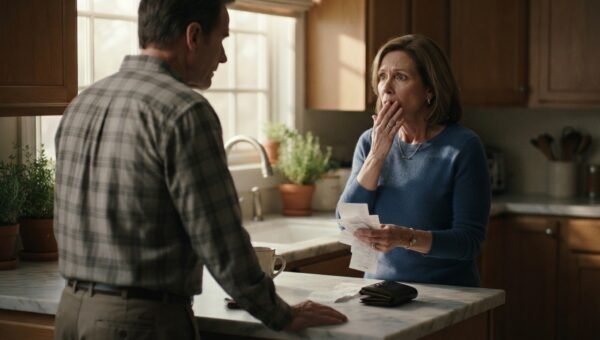
Eric looked up from his computer screen and gave me that polite, professional smile that people use when they think you’re coming in to complain about a service fee or ask a question about your retirement CD. I didn’t waste any time beating around the bush. I laid Russell’s screenshots right down on the polished laminate of his desk, face up, so he could see the account numbers and the little rows of figures showing fifty dollars transferred on the fifteenth of every single month.
“Eric, my son says these accounts belong to me,” I told him, and my voice sounded thinner than I wanted it to. “I need you to tell me right now who opened them, because I haven’t signed a bank document since my husband Arthur passed away five years ago.”
Eric adjusted his glasses and clicked his mouse a couple of times, his eyes darting back and forth across his monitor while the little loading wheel spun around and around in circles. He muttered something about privacy regulations and security protocols, but then he looked down at the paper printouts I brought and his whole expression shifted from polite boredom to something a lot more careful. He left his desk for a minute and went back into the records room behind the tellers, and when he came back out, he was carrying a thick manila folder with a yellow legal tab sticking out of the top. He sat back down very slowly and didn’t look me straight in the eye right away.
“Mrs. Miller, these accounts are active,” Eric said, and he cleared his throat like his mouth had suddenly gone dry. “They were established eighteen months ago under your name and address, utilizing your primary identification and your social security record.”
I leaned forward across the desk so my forearms were resting on the cold wood. “I didn’t open them, Eric. Look at me. Do you really think I’d spend a year sneaking money into a secret bank account for my own grandchildren and then lie to my son about it?”
Eric didn’t answer me with words right away. He just opened the manila folder and slid a single sheet of cream-colored paper across the desk toward me. It was a signature card, the kind they make you sign in front of a notary with a heavy black ballpoint pen so the ink doesn’t fade over time. My name was written right there on the bottom line, spelled correctly with the middle initial and everything, but the handwriting was tight and cramped in a way mine hasn’t been since I had that arthritis flare-up in my right wrist back when Russell was in high school. That wasn’t even the part that made the room feel like it was suddenly tilting sideways on its foundation. Right beneath my signature line, there was a second line for a joint account holder, signed in a bold, sweeping hand that I would know if I saw it written on the side of a barn in the dark of night.
It was Arthur’s signature. Arthur, who had suffered a massive heart stroke out in the hay barn five years ago this November, before either of the grandchildren had even learned how to walk without holding onto the coffee table.
I stared at the name until the black ink started blurring together into a little smudge of charcoal gray. I didn’t feel my heart stop or any of those things people write in books when they get bad news; I just felt this cold, heavy sinking in the pit of my stomach, like I had swallowed a stone.
“Eric,” I whispered, and the word came out rough and dry. “Arthur has been dead for five years. How is his signature on a bank card dated last summer?”
Eric reached out and tapped the corner of the paper with his thumbnail, his face pale and tight. “The form was processed by an outside mobile notary service over in Reedsburg, Mrs. Miller. They brought the completed paperwork to our branch with all the necessary stamps and verification seals already attached. According to our compliance files, these forms were notarized last year.”
The next few hours passed in a sort of gray blur where I drove back home, parked the truck half an inch crooked in the gravel, and sat at my kitchen table with the kitchen window open just enough to let in the smell of damp earth and rotting cornstalks from the field across the road. I didn’t call Russell back right away because I needed to think, and thinking with Russell on the other end of the line was like trying to work a jigsaw puzzle while someone stood over your shoulder shouting suggestions about where the corners went. If Arthur’s signature was on that card, and if the notary public in Reedsburg had certified it as valid last year, then someone had gone to an awful lot of trouble to resurrect a dead man just so they could open a bank account in my name.
I started pulling out the old metal filing box we kept in the back of the bedroom closet under three spare wool blankets. Inside that box were forty years of tax returns, mortgage receipts from when we bought the north forty, and the original paperwork from our old joint checking accounts back when Arthur was still hauling milk cans down to the creamery every morning at four. I laid those old papers out across the oilcloth kitchen table side by side with the photocopies Eric had given me at the bank. You didn’t even need a magnifying glass to see what had happened. Someone had taken an old deed transfer from nineteen-ninety-two bearing Arthur’s signature and my own, and they had traced them or scanned them onto a digital document before running them through a color printer to make them look like fresh ink on modern bank stock.
The realization didn’t hit me like a lightning bolt; it settled in slowly, the way water creeps up through the basement floorboards during a heavy spring rain. Who in our family had access to our old legal papers from thirty years ago? Not Russell, because Russell wouldn’t know a deed transfer from a seed catalog if it hit him in the shins. But Corinne had spent three whole weekends helping me clean out the attic crawlspace two summers ago when we were looking through my mother’s old photo albums for scanning, and she had spent hours going through the cardboard boxes where we kept the old family ledgers and tax receipts from when Arthur’s father ran the farm. She had been so helpful, too, offering to sort the papers into neat little piles while I was down in the kitchen making lunch for the boys.
The pieces didn’t fall into place all at once, but once I started looking at the pattern, I couldn’t unsee it. Corinne was the one who had made such a strict rule about birthday cash, pushing me toward public outings where receipts were easy to track and control. She was the one who had been so particular about every little detail of how the grandchildren’s lives were managed, always dropping hints about how expensive things were getting with the mortgage on their new modular home out by the interstate. And if you wanted to build a secret nest egg or frame someone for financial meddling while making yourself look like the aggrieved mother trying to protect her kids from a difficult grandmother, what better way than to create a fraudulent paper trail that made it look like I was hoarding money behind their backs?
By Thursday evening I had all the paperwork organized into a plain manila folder, along with a copy of Arthur’s death certificate from the county courthouse with the official raised seal stamped in the corner. I didn’t call ahead. I just drove my truck out to Russell’s place down the gravel stretch near Devil’s Lake, the engine ticking quietly as I pulled up behind Corinne’s silver SUV in the driveway.
The house was quiet when I walked up the wooden steps, but I could hear the television playing some cartoon program in the living room and the sound of someone running water in the kitchen sink. I didn’t bother knocking on the front door; I just pushed the screen open and stepped inside, the latch clicking behind me with a sharp little sound that made Corinne jump where she was standing by the kitchen island chopping celery for dinner.
Russell came out of the hallway from the back bedrooms, wiping his hands on a blue shop rag, and his face went dark the second he saw the folder in my hand. He looked like he was ready to start the argument right back up where we left off on the telephone.
“Mom, I told you on the phone we don’t need you coming over here to make a scene about, ” Russell started, but I held up my hand before he could get another word out. My hand didn’t even shake, which sort of surprised me.
“Shut up, Russell, and sit down at the table,” I said. It wasn’t loud, but I used the voice I used to use on him when he was twelve years old and thought he could sneak out to the machine shed after dark without finishing his chores.
Corinne dropped her paring knife onto the cutting board with a sharp clatter that made the celery stalks bounce. She didn’t sit down, but she leaned back against the counter with her arms crossed tight over her chest, her chin coming up just a fraction. “Clara, if this is about the birthday money again, I think we made our position perfectly clear. We are trying to raise our children without, “
“This isn’t about birthday money, Corinne,” I said, and I walked right over to the kitchen table and laid the folder down on the wood right where the kids usually do their coloring books. I opened it up and slid the bank’s signature card across to Russell first, followed immediately by Arthur’s death certificate. “Look at the dates on those papers. Tell me how a man who died of a heart attack five years ago managed to drive out to Reedsburg last July to notarize a joint savings account for his grandchildren.”
Russell looked down at the papers, his brow furrowing as he tried to make sense of the names and the dates printed there in black and white. He picked up the death certificate first, turning it over to look at the county seal on the back, and then he looked down at the bank signature card with Arthur’s bold handwriting scrawled right across the bottom line. I watched the color drain out of his face until his skin looked almost as gray as the paper in his hands.
“This… this is Arthur’s signature,” Russell muttered, his voice dropping down so low I had to lean in to catch the words. “How did this get opened last year? Who went to the bank?”
“Ask your wife,” I said, and I didn’t look at Russell when I said it; I kept my eyes fixed right on Corinne, watching the way her fingers dug into the fabric of her sweater sleeves. “Ask her whose handwriting is on the deposit slips, and ask her why she needed a secret account in my name using a dead man’s signature to do it.”
Corinne didn’t flinch, but her mouth tightened into a hard, thin line that made her look like she had bitten into a green persimmon. She didn’t try to deny it with any big performance or crying spells; she just stood there by the sink with her chin out, looking at Russell like she was waiting to see if he had enough backbone to stand up to her or if he was going to fold the way he always did when things got uncomfortable.
“Your mother has always meddled in everything we do, Russell,” Corinne said, her voice shaking just a little bit at the edge. “Every time she gives the kids cash, she makes us feel like we can’t provide for our own family. I just wanted something secure for them. Something that wasn’t subject to her moods.”
Russell didn’t look at his wife for a long, heavy minute. He just stared down at the papers on the table, the bank fraud report and the death certificate sitting right next to each other like two sides of a ledger that didn’t balance no matter how many times you added the figures up. I could see the exact moment something inside him shifted, the hard, defensive anger sliding away to leave behind that hollow, stunned look a man gets when he realizes the person sleeping across the hall from him is practically a stranger.
“You forged my father’s name?” Russell asked, and his voice sounded thin and broken, like dry twigs snapping underfoot in the woods. “Corinne, you used a dead man’s signature to open bank accounts behind my back and then blamed my mother for it?”
She didn’t answer him. She just grabbed her car keys off the counter by the fruit bowl, pushed past him without looking at either of us, and let the screen door slam behind her with a loud bang that rattled the windowpanes in their frames. We listened to the silver SUV start up in the driveway, the engine whining a little bit in the cold evening air before the tires crunched down the gravel and the red tail-lights disappeared out toward the highway.
Russell stayed sitting at the kitchen table long after she was gone, staring down at the empty space where the manila folder lay open between us. He didn’t say anything, and I didn’t feel any need to fill up the silence with comforting words because some things are just too big to be patched over with small talk about the weather or the price of feed. I reached out and gathered up the papers, sliding them back into the folder one by one until the metal clasp was tucked down tight.
The bank manager called me three days later to let me know the accounts had been frozen pending a full fraud investigation by the state compliance division, and that the mobile notary in Reedsburg was already being looked into by the sheriff’s department for improper document verification. Russell didn’t come around for Sunday dinner that weekend, but he sent me a short text message while I was sitting on the back porch watching the sun go down behind the neighbor’s silo. It wasn’t much of an apology, just a few plain words saying he was sorry he hadn’t listened to me at the kitchen counter, and that he was going to need some time to sort things out with the boys while they figured out what came next.
The next afternoon I took Toby and Clara down to the county park by the river because the weather had turned unseasonably warm for late October, with the sun coming down through the bare oak branches in long, golden shafts that didn’t feel like autumn at all. We didn’t go to the museum, and we didn’t stop by any stores to pick out toys or expensive treats. We just sat on the green wooden bench near the old iron footbridge, watching the dry leaves float down the current of the water while the boys took turns throwing flat stones off the bank to see who could get one to skip across the middle. I didn’t have any ledgers in my purse, and I didn’t have any secret papers for anyone to sign. There was just the sound of the river running over the stones, the cold autumn wind coming up through the grass, and the quiet, ordinary weight of the afternoon sitting right there beside us in the open air.