PART 1
My son told me he could not afford to visit for Thanksgiving. I believed him without asking a single hard question. Kevin has three kids under ten, an older split-level house that constantly needs work, and a warehouse shift supervisor job where his hours get cut back every year starting in early November.
When he called two weeks before the holiday, his voice had that familiar tired drag in it.
He said, “Mom, with the van acting up and heating oil already going through the roof, we just can’t justify the drive up north. Six hundred miles round-trip is gas, two hotel rooms if we hit bad snow, and groceries for seven people. We have to sit this one out.”
I told him what any mother in my shoes would tell her only boy. I said, “You take care of those babies, Kevin. We’ll make it up in the spring.”
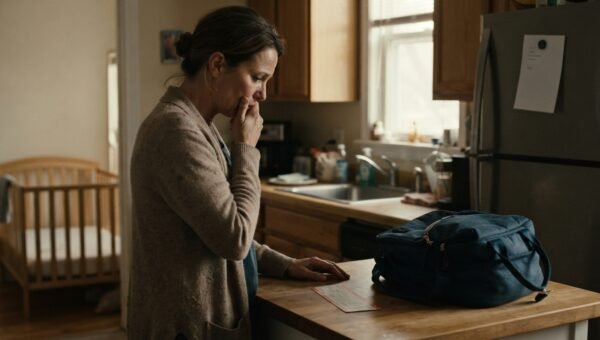
I did not want him feeling guilty. My husband passed away nine years ago, and since then, the holidays have had a quiet, hollow edge to them. But I still have my health, my modest ranch house with the paid-off mortgage, and my neighbor Martha next door. So on the Tuesday before Thanksgiving, I took a box to the post office. I packed hand-knit wool hats for the kids, three target gift cards for twenty-five dollars each so Kevin’s wife Brenda could pick up little winter treats, and a tin of spiced pecans Kevin has loved since he was in high school. The postage alone cost twenty-two dollars, but I paid it gladly.
On Thanksgiving Day, Martha came over with half a roasted turkey breast, green beans, and a dish of sweet potatoes. We sat at my small kitchen table with the radio playing low, talked about the old days on our street, and ate off my good stoneware. Kevin sent a text at 1:15 in the afternoon: “Eating mac and cheese with the kids today. Love you Mom, hope you have a peaceful day.”
I texted right back, telling him I loved them all and gave the kids a hug from Grandma.
Two days later, on Saturday afternoon, my sister Evelyn stopped by to bring me some pumpkin bread. She sat down on the stool near the counter, set her phone face-down on the laminate, and looked at me for three or four seconds before she spoke. Evelyn is sixty-two, four years younger than me, and she has never been able to hide when her stomach is in knots.
She said, “Joyce, did you talk to Kevin yesterday?”
“No,” I said. “Just Thursday. Why?”
Evelyn reached out, turned her phone over, tapped the screen, and slid it toward my teacup. “Brenda’s cousin posted an album on Facebook. Public album. She tagged Brenda, and Brenda’s settings let it show.”
I pulled my reading glasses off the top of my head and slipped them onto my nose.
It was a photograph taken on a wooden deck overlooking wide white sand and bright blue water. The sun was so strong that the wood looked bleached. In the center of the picture sat my son Kevin in a brand-new pair of sunglasses, holding a drink in a tall plastic cup. Brenda was beside him in a teal sun dress, laughing toward the camera. In front of them, my three grandchildren were sitting cross-legged on beach towels, holding ice cream bars.
Standing right behind Kevin, with his hand resting heavily on Kevin’s shoulder, was my ex-husband, Richard.
And beside Richard was Linda, the woman he moved out of our house for fourteen years ago.
The caption under the photograph read: “Nothing beats a full week in Destin with the whole family! Thank you Grandpa Rich!”
My chest felt very tight, but I did not yell. I did not drop the phone. I just took my glasses off, folded the wire stems, and handed the phone back to Evelyn.
“He told me his van was broken,” I said.
“Richard rented a four-bedroom house right on the beach,” Evelyn said, her voice dropping into a harsh, angry whisper. “He paid for their flights. He paid for everything. Kevin has been planning this since August, Joyce. Brenda’s sister commented on the post three weeks ago talking about counting down the days.”
“He told me he had to work reduced hours,” I said.
Evelyn reached across the table and touched my wrist. “Don’t just take this. You call him right now and you make him answer for it.”
“No,” I told her.
I took the bread she brought, put it in the pantry, and walked her to the front door. I told her I had laundry to fold. When she backed down the driveway, I sat in the armchair in the living room and watched the gray Pennsylvania November clouds move across the bare maples in the yard.
I did not call Kevin. I did not leave a voicemail. I did not comment on the photo or send Brenda a text. When someone lies to you with that much planning, calling them right away only buys you an excuse they rehearsed three months ago. I put the photo out of my head as best I could and spent the following week doing my normal routines: vacuuming the hall, walking down to the corner store for milk, and sorting through the mail.
Then, seven days after Thanksgiving, on the following Thursday evening around six o’clock, my iPad chimed from the side table.
It was a FaceTime call from my eight-year-old granddaughter, Chloe.
Kevin had bought Chloe a cheap tablet for her birthday over the summer so she could do reading apps and call me while Brenda made dinner. When I answered, Chloe’s round face filled the screen. She was sitting on the floor in her bedroom at their house, her brown hair still damp from an evening bath.
“Hi, Grandma,” she whispered.
“Well hello, sweetheart,” I said, keeping my voice gentle and warm. “Are you getting ready for bed?”
She looked over her shoulder toward the open bedroom door. Her eyes were big and serious. “Grandma, Daddy says we can’t tell you what Grandpa paid for. Mommy told him we’re not allowed to talk about Florida at all, or else we’ll get grounded from the tablet.”
I kept my hands completely steady against the rim of the iPad. “Did he, honey?”
“Yeah,” Chloe said. She leaned closer to the little front lens until all I could see was her forehead and her wide hazel eyes. “Daddy said you’d be mad because of the money. But Daddy didn’t just get a trip.”
She stood up with the tablet in her small hands. The screen bounced as she tiptoed across the carpet and out into the hallway. I could hear the television downstairs playing an evening game show, and the clatter of a pot lid in the kitchen where Brenda was working. Chloe reached the doorway of Kevin’s small home office at the end of the hall, pushed the door open with her toe, and turned the camera around.
On the corner of Kevin’s desk sat a heavy manila folder with the local credit union logo stamped in dark blue on the front. On top of the folder lay a printed check stub and a single sheet of paper typed with blue bank letterhead.
Chloe pointed the camera straight down at the top page. The bold black type across the center of the first paragraph was clear enough that I could read every single word:
*Payoff Confirmation and Lien Release: Second Mortgage Account #8412.*
*Principal Settlement Amount: $34,200.00.*
*Paid by Third-Party Transfer: Richard M. Miller.*
PART 2
The camera tilted as Chloe pulled the tablet back toward her face. “Grandpa paid off the house paper,” she whispered into the microphone. “Daddy was crying at the table on Sunday before we drove home. He told Grandpa he’d do whatever he wanted.”
“Chloe,” I said softly, keeping any tremor out of my voice. “Sweetheart, you walk right back to your room now. Don’t leave that door open.”
“Are you mad at me, Grandma?”
“Not one bit,” I told her. “You are my good girl. Now go get into your pajamas and let Mommy finish dinner.”
She tapped the red circle on the screen, and the call went black.
I sat at my kitchen table for an hour without turning the overhead light on. Thirty-four thousand and two hundred dollars. That was the exact remaining balance Kevin had taken out three years ago against his equity when he tried to start a small hauling business that failed within six months.
I knew that number because I had been the one Kevin came to first. Back then, he sat on my sofa, put his head in his hands, and told me the payments were drowning him. I had only my modest pension from twenty-four years of dispatching for the township road department and my survivor benefit. I did not have thirty-four thousand dollars in liquid cash to give him without touching the principal that keeps my roof over my head. But I had offered him five thousand dollars from my savings to help catch up the delinquent months, and I told him I would watch the children every single weekend so he could pick up extra road crews without paying daycare.
He had taken my five thousand dollars. He had let me keep the kids nearly every Saturday for two years straight. And then he told me the second mortgage had been “restructured” into a lower fixed interest rate.
He had lied about that, too. He had not restructured anything. He had carried that debt like a stone around his neck until his father stepped in with a checkbook.
Richard had not paid child support on time once between 2011 and 2015. When Kevin graduated from high school, Richard showed up forty minutes late, smelled of stale bourbon, gave the boy a fifty-dollar gas card, and left before the cap-toss to drive back to Maryland with Linda. When Kevin got married, Richard sent a blender from a department store registry and declined the invitation because he said Linda did not feel welcome around my side of the family.
For fourteen years, Richard had been an occasional text message on Kevin’s birthday and a Christmas card with a crisp twenty-dollar bill slipped inside for the kids.
Now, suddenly, Richard had thirty-four thousand two hundred dollars to clear Kevin’s name from a bank ledger, plus a five-thousand-dollar rental house in Destin, Florida.
A man like Richard Miller does not spend nearly forty thousand dollars out of sudden grandfatherly affection. I was married to him for twenty-one years. Every dollar Richard ever parted with came with a lease, an invisible chain, or a demand for public applause.
On Friday morning, I did not wait for Kevin to call. I drove the forty miles down to the warehouse district where his shift ended at 2:30.
The parking lot was full of salt-stained pickup trucks and muddy compact cars. A cold, wet drizzle was falling from a steel-gray sky, turning the gravel near the chain-link fence into brown slush. I parked my eight-year-old Buick near the main employee gate, turned the heat down to low, and waited.
At 2:38, Kevin walked through the double doors wearing his high-visibility vest and a knit cap pulled low over his ears. He was carrying his black lunch cooler in one hand and scrolling on his phone with the other.
I rolled my window down halfway and tapped the horn once.
He looked up, startled. When he saw my car, his shoulders visibly hitched. He stopped dead on the asphalt for two seconds, then walked slowly toward the driver’s side window. His face was gray with warehouse fatigue, but under that grayness, the Florida sun had left a faint, peeling pink sunburn across the bridge of his nose.
“Mom?” he said, leaning down. His breath smelled of bitter black coffee. “What are you doing here? Is something wrong at the house?”
“Get in for five minutes, Kevin,” I said. “It’s freezing out there.”
He hesitated, looking back toward his old red Ford pickup parked three rows over, then walked around and climbed into the passenger seat. The smell of wet wool and cardboard dust filled the small cabin.
“I tried calling you yesterday,” he lied immediately. “Reception in the building is terrible lately.”
“Your reception was fine on Thanksgiving Day,” I said evenly. “When you told me you were eating mac and cheese with the kids because you couldn’t afford the gas to drive north.”
The truck’s heater hummed between us. Kevin did not look at me. He stared straight ahead through the windshield at the chain-link fence. The sunburn on his nose looked absurd against the Pennsylvania slush.
“Brenda’s cousin posted the beach pictures, Kevin,” I said. “Evelyn showed me last Saturday.”
He let out a short, defensive breath through his teeth. “Mom, look. It wasn’t like that. Dad surprised us. He called the Monday before Thanksgiving and said he already booked the place and bought the tickets. What was I supposed to do? Tell my kids they couldn’t see the ocean because you and him still can’t stand each other after fifteen years?”
“I don’t care about the ocean, Kevin. And I don’t care about Richard.”
“Then why are you sitting in my work parking lot?” he snapped, his voice rising with that quick, guilty anger men use when they know they are cornered. “You’re punishing me for letting my kids have one nice week? We haven’t had a vacation since Chloe was three! Dad offered to cover it. He wanted to make things right with me. Am I supposed to turn my back on my own father forever just to prove something to you?”
“Did he make things right with the second mortgage, too?”
Kevin stopped. The anger dropped off his face so fast it left his mouth slightly open.
“What?” he said.
“Thirty-four thousand, two hundred dollars,” I told him, looking him dead in the eyes. “Paid off on a third-party transfer through the credit union. That wasn’t a sudden surprise on the Monday before Thanksgiving, Kevin. A lien release on a secondary property note takes weeks to process through underwriting. You’ve been talking to your father since late summer.”
Kevin’s hands gripped his lunch cooler until the plastic handle creaked. “How do you know that?”
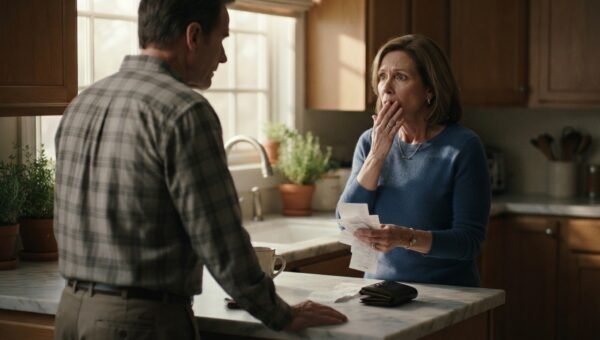
“It doesn’t matter how I know. What matters is that you stood in my kitchen two years ago and took five thousand dollars out of my emergency savings while crying about being foreclosed on, and then you told me you couldn’t afford twenty dollars in gas to eat turkey with me because you were too busy hiding Richard’s money.”
“He’s my father!” Kevin said, his voice cracking with a sudden, ugly desperation. “He had the money, Mom! Do you know what it’s like waking up every single day knowing that if the transmission drops on the van, my kids lose their bedrooms? Do you know what that pressure feels like? Dad came to me. He said he had extra cash from a commercial property sale in Baltimore. He said he wanted to wipe the slate clean before he got too old. He paid the bank directly. Why should I say no to that? Out of pride?”
“Because nothing with Richard is free,” I said. “What did you promise him, Kevin?”
Kevin pulled the door handle. “Nothing. He just wanted us down there for Thanksgiving. He wanted his family together.”
“Look at me,” I said.
He paused with the passenger door open two inches, cold air cutting across our knees. He would not turn his head.
“He asked for something,” I said. “I lived with that man for twenty-one years. Richard doesn’t pay thirty-four thousand dollars to clear another man’s debt unless he is buying a piece of property, a piece of leverage, or a piece of a person. What did you sign?”
Kevin shoved the door wide open, stepped out into the freezing slush, and looked down at me from the wet pavement.
“I didn’t sign anything, Mom. He’s changing his will. He wanted to make sure I was in it, and he wanted me to agree to be his executor when the time comes so Linda’s kids don’t take everything. That’s all it was. He’s trying to protect me. I’m sorry I lied about the holiday. I just knew you’d make it into a tragedy like you always do.”
He slammed the door shut and walked toward his truck without looking back.
PART 3
I sat in that parking lot until Kevin’s red pickup pulled out of the gate and turned south toward the highway.
His explanation sounded almost reasonable on the surface. An aging father trying to bypass a second wife’s children, using his biological son as executor, buttering him up with a paid-off mortgage and a Florida vacation. Any outsider listening to Kevin would have thought I was just a bitter ex-wife holding onto a twenty-year-old grudge.
Except for one detail that Kevin did not know, because Richard had never told him the truth about our divorce.
When Richard left me for Linda in 2012, he did not just walk out. He tried to take the house we built together on four acres of land that had belonged to my father. In the final settlement, the judge awarded the house and the four acres to me outright, but Richard retained a legal right of first refusal if the parcel was ever subdivided, along with a shared utility easement on the southern boundary line that connected to an adjacent twelve-acre commercial lot he owned behind my property.
Richard had tried to sell that twelve-acre parcel three times over the last ten years. Every single sale fell through because the township would not grant commercial zoning access without an expanded eighty-foot right-of-way easement directly through my driveway and across the front two acres of my residential land.
I had refused to sign that easement four separate times. The last time was twenty-two months ago, when a lawyer from Philadelphia sent me a certified letter offering me twenty-five thousand dollars to grant the variance. I threw the letter in the trash. Without that access road, Richard’s twelve acres were landlocked, practically worthless for commercial development, and costing him nearly six thousand dollars a year in county property taxes.
When I got home from the warehouse, I did not go into the living room. I walked straight into my spare bedroom where I keep two gray metal filing cabinets containing every tax return, deed, and legal notice from the last thirty-five years.
I pulled out the land survey from our 1998 purchase. Then I opened my desktop computer and logged into the county recorder of deeds public portal.
It took me twenty minutes to locate the recent filings for our township parcel block.
On October 14th, six weeks before Thanksgiving, an application had been submitted to the township planning commission for a preliminary subdivision review on my property.
The applicant was not Richard.
The applicant was listed as: *Kevin R. Miller, Co-Owner / Designated Successor in Interest.*
Attached to the electronic application was a signed petition for a roadway variance across my southern boundary line, linking the main road to Richard’s landlocked commercial acreage. At the bottom of the digital document was a power-of-attorney affidavit.
It had my name typed across the principal line.
Beside it was a signature. It was not my handwriting. It was a clumsy, wavering copy of my signature, notarized on October 11th by a notary public whose office was located two doors down from Brenda’s nail salon in Kevin’s town.
The blood in my neck pounded against my collar. My own son had not just traded his presence at Thanksgiving for thirty-four thousand dollars. He had taken a forged power-of-attorney form, used it to file for an easement across the land his grandfather cleared with a tractor in 1964, and handed the commercial access to his father so Richard could finalize a multi-million-dollar land sale.
The check stub on Kevin’s desk had not been a generous fatherly gift. It was an advance payment. It was Kevin’s thirty-four-thousand-dollar cut for stealing the ground right out from underneath my kitchen window.
I did not scream. I did not break anything. I went to the kitchen, poured a glass of tap water, drank it down to the bottom, and picked up the phone.
I did not call Kevin.
I called Walter Vance. Walter was seventy-one, had handled my father’s estate when he died, and had represented me during the divorce when Richard tried to claim my father’s land.
“Joyce,” Walter said when he picked up his direct office line. “It’s late on a Friday. What’s happened?”
“Walter,” I said, my voice steady as an iron bar. “I need you to file an immediate fraud notice with the county recorder of deeds and the township planning board first thing Monday morning. My son Kevin just filed an unauthorized variance on my parcel using a forged power of attorney.”
There was a long silence on the other end of the line.
“Did you say Kevin?” Walter asked quietly.
“Yes,” I said. “And Richard is behind it. They’re trying to push the access road through to the commercial block behind my woods.”
“Joyce… if we file an affidavit of forgery with the township and the district attorney’s office, Kevin won’t just lose the variance. He’s facing felony charges for falsifying a legal instrument. You understand what that means for him, don’t you?”
“I understand,” I said. “I want the revocation and the fraud notice drafted tonight. But don’t file it with the county until Monday noon. I am going to give my son one chance to fix this with his own hands.”
On Saturday morning at nine o’clock, I drove to Kevin’s house.
I did not knock politely. I walked up the three front steps, opened the storm door, and knocked hard four times on the heavy oak wood.
Brenda opened the door wearing an oversized sweatshirt, holding a coffee mug. When she saw me standing on the porch with a manila folder under my arm, the color drained entirely from her face. She stepped back without saying good morning.
“Kevin’s in the kitchen,” she said, barely above a whisper.
I walked past her into the kitchen. Kevin was sitting at the laminate table with a bowl of dry cereal, helping Chloe with an addition worksheet. When he saw me, he stood up so fast his chair screeched against the linoleum.
“Mom,” he began, putting his hands out. “If you’re here to yell about Florida again—”
“Chloe,” I said, looking at my granddaughter with a calm, warm smile. “Take your worksheet into the living room, please. Grandma needs to talk to your father about grown-up business.”
The little girl slid off her chair, gathered her papers, and hurried out the door. Brenda stayed in the hallway, leaning against the doorframe, her arms crossed tight across her chest.
I took the printout from the county recorder’s office, laid it flat in the middle of the kitchen table, and pointed my finger at the signature line.
“That is a forged signature, Kevin,” I said. “Notarized on October 11th. You signed my name to a power of attorney, and you used it to petition the township for an eighty-foot commercial easement through my front property.”
Kevin’s eyes dropped to the paper. His mouth worked, but no sound came out for several seconds.
“Dad said you wouldn’t care,” Kevin stammered, his voice dropping into a hollow, panicked pitch. “He said you were just holding onto that strip of dirt out of spite. He said he had a buyer lined up for two point four million dollars, but they had a sixty-day contingency on the access road. He told me if I helped him clear the paperwork, he’d pay off my second mortgage completely and give me another fifty thousand when the deal closed.”
“You forged my name, Kevin.”
“He told me you’d never know until the road crews showed up, and by then the check would be cleared and you wouldn’t take your own son to court!” Kevin reached out, his hands trembling as he touched the edge of the paper. “Mom, we were drowning! The bank was sending notices every two weeks! Brenda was having panic attacks in the car! Dad offered a way out! What was I supposed to do?”
“You were supposed to be an honest man,” I said.
Brenda let out a small, strangled sob from the hallway.
“Here is what is going to happen,” I said, looking Kevin dead in the eyes. “Walter Vance has an affidavit of forgery already typed on his desk. It names you, it names the notary, and it names your father. If that affidavit is filed with the county on Monday at noon, you will be arrested for fraud and forgery before the week is out. The state police will pull you right out of that warehouse.”
Kevin sank back into his chair, his hands over his face. “Mom, please. Please don’t do that. I’ll lose my job. I have three kids. Please.”
“You are going to get in your truck right now,” I told him. “You are going to drive to the township municipal building. You are going to sign a formal, written withdrawal of that subdivision and variance application. You will state on the record that the application was submitted in error without proper authorization. And then you are going to call your father and tell him the easement is dead.”
Kevin looked up, his eyes red and wet. “He’ll demand the thirty-four thousand back, Mom. He made me sign a promissory note for the payoff in case the land deal didn’t close. He’ll sue me. He’ll take our house.”
“Then you will get a second job,” I said. “You will sell your boat. You will sell that four-wheeler sitting in your shed. You will pay your father back five hundred dollars a month for the next ten years, or you will let him take you to civil court. But you will not pay your debts with my father’s land, and you will not use my name to make yourself rich off the man who abandoned us.”
ENDING
Kevin did not speak for two full minutes. The only sound in that house was the hum of the refrigerator and Brenda crying quietly in the hall.
Finally, he stood up, picked up his truck keys from the counter, and walked out the front door without putting on his coat. Ten minutes later, I heard his truck engine crank over in the driveway, rumble hard in the cold air, and pull out toward the township road.
I stayed at the table with Brenda. I did not scold her. I did not call her names. I told her to sit down, and I watched her drink a glass of water until her breathing slowed down.
“Did you know he forged my name?” I asked her.
She shook her head, tears running down her cheeks. “He told me you signed it, Joyce. I swear to God. He told me you agreed to let Richard have the road as long as Kevin got his mortgage paid off. I didn’t know he forged it until right now.”
I looked at her face, saw the absolute terror in her eyes, and I believed her. Brenda had many faults, but she was not a criminal. She was just a tired mother who wanted the collection letters to stop coming in the mailbox.
At 11:30 that morning, Kevin came back. He walked into the kitchen and laid a stamped, certified receipt from the township clerk on the table. It showed the immediate withdrawal and cancellation of Application #2024-88B. The variance was dead. The land remained intact.
I took the receipt, folded it into quarters, and slipped it into my purse.
“Now call your father,” I said.
Kevin pulled his phone from his pocket with fingers that shook so hard he dropped it once onto the table. He put the phone on speaker, dialed Richard’s number, and laid it between us.
Richard answered on the third ring, his voice booming and cheerful. “Kevin! Did you check the township portal? Did they post the review date?”
“Dad,” Kevin said, his voice flat and completely broken. “It’s over. I pulled the application.”
There was a dead pause on the line. The background noise of Florida traffic seemed to vanish.
“What the hell are you talking about?” Richard snapped, his tone turning instantly sharp and ugly. “We have a contract deadline with the commercial developer on December fifteenth! If that easement isn’t approved, they walk!”
“Mom found the filing,” Kevin said. “She knows about the power of attorney. If I don’t pull it, she’s sending the state police to my house on Monday.”
Richard let out a venomous laugh. “She’s bluffing, Kevin! She’s an old woman sitting in a kitchen forty miles away. She won’t put her own flesh and blood in jail. Don’t you dare touch that paperwork!”
I leaned down over the table, pressed my face close to the microphone, and spoke in the calmest voice I have ever used in my life.
“I am not bluffing, Richard,” I said. “The withdrawal is already stamped and filed. If you ever contact my son, my grandchildren, or step foot in this county again, Walter Vance will hand the forgery paperwork and your Maryland phone records straight to the district attorney. You can keep your thirty-four thousand dollars, or you can sue your son for it in open court where every document will be entered into public record. It’s your choice.”
Richard did not answer. He hung up the phone. The harsh click echoed in the small kitchen.
I stood up, zipped my winter coat, and walked to the front door. Kevin followed me onto the porch, standing in the cold morning air in his flannel shirt.
“Mom,” he whispered, looking down at the wooden steps. “Are we… are you ever going to talk to me again?”
I looked at him for a long moment. He looked so much like the boy who used to sit on my living room floor with his model cars, before the world and his own weakness got hold of him.
“You are my son, Kevin,” I said. “I won’t let you go to prison. But trust is not a mortgage that your father can pay off with a wire transfer. You have a long road ahead of you to pay back what you broke today.”
I drove home under a pale gray winter sky. When I got back to my house, the four acres of woods behind my fence were quiet and still, the bare oaks standing tall against the Pennsylvania cold. The ground was mine, just as it had been my father’s.
I went into the kitchen, took off my coat, and sat down at the table. Martha had left a small plate of leftover pumpkin bread wrapped in foil on my porch while I was gone. I unwrapped it, made myself a fresh cup of black tea, and ate my lunch in the quiet house.
For the first time in two weeks, the silence did not feel empty. It just felt clean.