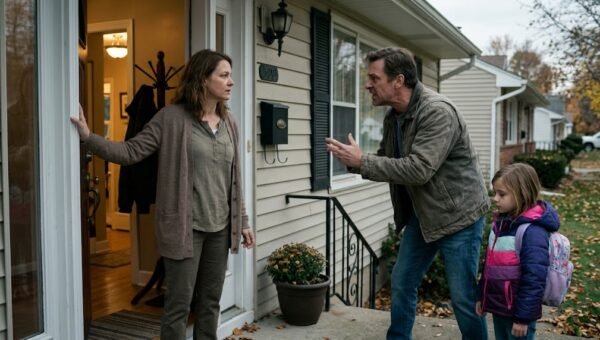
Three days after my father died, my husband quit his job because he thought my inheritance belonged to him.
At 10:30 on Wednesday morning, David was sitting at our kitchen table in gray sweatpants, drinking coffee like he had nowhere else to be. I was still wearing the black pants I’d worn to Dad’s funeral two days earlier. I had taken them off the night before, but there was a streak of white lint on one leg, so I’d put them back in the wash and taken them out again.
“I quit,” David said.
I thought he meant he’d quit a project at work. I asked him what he meant.
“My job,” he said. “I gave notice this morning.”
He said it casually. Almost cheerfully. The coffee maker clicked behind me, and I remember that sound because I didn’t know what to say after it.
David leaned back and smiled. “Why keep grinding away? Your inheritance is more than enough for us to live on.”
Then he started assigning it.
His mother needed a new house, he said. He’d found one for about $800,000. His sister needed $200,000 for a down payment. We could take a luxury vacation, somewhere warm, since we’d had such a hard year.
I listened. I said nothing.
Dad had been gone three days. David hadn’t asked how I was doing once that morning. He seemed to think the hard part was over and the money part had started.
“Have you even talked to your mother about the house?” I asked.
“I don’t need to ask her,” he said. “She’ll love it.”
He reached across the table and rubbed my hand. I pulled mine back, then felt guilty for doing it. That was how things had been with David for a while. I’d feel hurt, then I’d spend energy wondering if I was being unfair.
“We don’t have to rush,” I said.
He gave me a small laugh. “I already quit. There’s no reason to wait.”
That was the first time I understood he hadn’t just been making plans in his head. He’d already acted as if the money was his.
Two days later, Dad’s estate lawyer called.
“Emily, I need you to come to my office today,” Robert Vance said. He’d been Dad’s lawyer for years, and his voice was usually steady enough to make any problem sound manageable.
I asked what was wrong.
He paused. “Your father left instructions concerning your husband. You need to hear them before David finds out.”
I was in the laundry room with the phone pressed to my ear. The dryer had stopped, but the clothes inside were still warm. I looked at the black pants hanging over the basket and said, “I’ll come alone.”
David was watching sports television when I left. I told him I had an errand. He barely looked away from the screen.
At Vance’s office, he shut the door and sat across from me at his desk. Dad had updated his trust three months before he died. Vance laid out the papers and pointed to the sections that mattered.
“The estate is in an irrevocable discretionary trust,” he said. “The principal isn’t yours to transfer or share. The trust is separate from marital property.”
I looked at the pages. I understood some of it, but not all. I asked if David could make me give him the money.
“No,” Vance said. “And your father added a condition. If David pressures you for money, quits his job to live off the trust, or tries to mix the assets with yours, no discretionary payment can be made until you sign a postnuptial agreement or formally separate.”
I read that part twice.
Dad had not left me nothing. He had left me money I couldn’t be pushed into handing over.
Vance reached for another envelope. “He wanted you to have this privately.”
Inside was a handwritten letter. Dad’s writing slanted down a little, the way it always did when he was tired. I could tell he’d written it by hand because the ink pressed through the paper on the back.
He wrote about the last months of his life, when David began asking questions about his investments and property. At first, Dad had thought David was trying to help me prepare. Then David had asked whether the portfolio was liquid, and whether I was the sole beneficiary.
Dad wrote that David had asked these things while I was the one keeping track of his pills and sitting through long afternoons at hospice.
I remembered Dad’s room. The plastic cup of ice chips. The soft beep from the bed alarm. David had visited, but mostly he’d stood by the window checking his phone. I’d told myself he was uncomfortable around illness. I’d even made excuses for him when he left early.
Dad’s letter said that David had pulled him aside under the excuse of helping with logistics. He’d asked Dad to sign over power of attorney and asked about life insurance payouts.
I lowered the letter.
“Why didn’t he tell me?” I asked.
“Your father didn’t want to put you in the middle while he was alive,” Vance said. “He thought he could protect you without making you choose between him and David.”
I wanted to be grateful. I was grateful. But I was also angry that Dad had seen it before I did.
I drove home without turning on the radio. I kept thinking about how David had said he quit like he was telling me the grocery store was out of bread. I also thought about the times I’d defended him. That part was mine. I’d been quiet because quiet kept the day moving.
When I got home, David was in the kitchen on speakerphone with his sister.
“I’m telling you, it’s handled,” he said. “You’ll have the down payment. Two hundred thousand. I said I’d take care of it.”
I stood in the doorway. The screen on his laptop showed a row of expensive houses. One had a wide front porch and a price just over $800,000.
David saw me and ended the call.
“What are you doing?” I asked.
“Looking at houses for my mom.”
I put the trust papers on the counter, along with the receipt showing I’d canceled the vacation charges on our joint credit card. I had canceled the bookings before I came in. They weren’t cheap, and they weren’t refundable. I didn’t care.
David glanced at the receipt. “You canceled our trip?”
“You booked it without asking me.”
“I thought you’d be happy to have something to look forward to.”
“I’m not spending Dad’s money on a trip. Or a house for your mother. Or a down payment for your sister.”
He looked at the documents. Then he looked at me.
“What is this?”
I told him what the trust said. I told him the money was protected, and that no distributions could be made while he was pressuring me or trying to treat the trust like our shared account.
He read one page, then shoved it back toward me.
“So your dad made you sign something to keep me away from your money?”
“He set up the trust before he died.”
“Because he hated me?”
“No,” I said. “Because he saw what you were doing.”
David’s mouth tightened. “I quit my job for us.”
“You quit before you knew what the trust said.”
“You know what? Your dad got in your head.”
I pointed to the letter. “He wrote down what you asked him in hospice. You asked whether the money was liquid. You asked if I was the only beneficiary. You asked him for power of attorney.”
David looked at the letter but didn’t pick it up.
“I was trying to help,” he said.
“You weren’t there when I needed help.”
“That’s not fair.”
Maybe it wasn’t fair to say it that broadly. He had been there sometimes. He’d brought me dinner once, a container of soup from the grocery store. I remember because it leaked into my bag. But I had been the one there day after day, and he’d been asking my father about money.
David pushed his chair back. “You can challenge the trust. Get a loan against the future payments. You don’t have to just accept this.”
“There aren’t future payments I can borrow against.”
“There’s always a way.”
“No. There isn’t.”
He stared at me, waiting for the version of me who would find a way to calm him down. I knew that look. I’d spent years trying to give him the answer that made the room easier to live in.
This time I didn’t.
“Dad saw you clearly,” I said. “He protected me because you were already trying to get your hands on what he left.”
David stood up hard enough to knock his chair back. “You’re selfish. If you won’t share control, I’m leaving.”
I opened the front door.
“Then pack your things.”
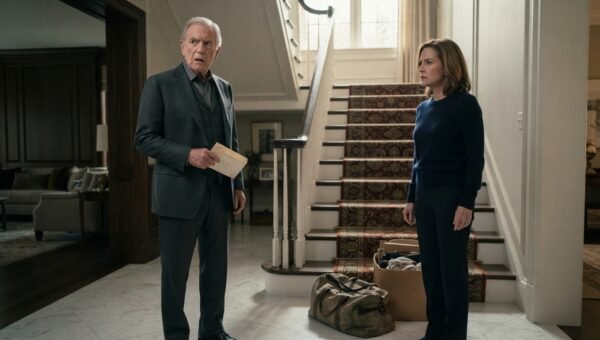
For a second, neither of us moved. Then he went to the bedroom and pulled a suitcase from the closet. I heard drawers open. A belt buckle hit the floor. He came back carrying the suitcase and said he’d stay with his mother.
The same mother he’d planned to buy a house for.
He had no job now. He had no claim on the trust. I didn’t say either thing. They were obvious enough.
At the door, he stopped. “You’re really choosing money over your marriage?”
I held the door open. “I’m choosing not to be pressured into giving it away.”
He left with the suitcase. I heard the car start, then his phone rang while he was backing out. I didn’t need to know who it was.
The next morning, I called a divorce attorney. Vance referred me to someone who could explain the separate property rules and help me keep my accounts straight. I transferred my personal money out of our shared checking account and left enough there for the bills due that month. I didn’t want to punish him. I wanted the records to be clear.
David sent messages. First he said I was overreacting. Then he said he’d been grieving too. I didn’t answer right away. Maybe he was grieving. That didn’t undo what he’d done.
I read Dad’s letter again at the kitchen table. He’d ended it with a line I’d read once already, but the words sat differently now.
“A husband who loves you carries your burden; a man who loves your money carries his own bags. Do not let him make my life’s work his retirement plan.”
The next morning, I sat alone at that same table with Dad’s favorite ceramic mug between my hands. The coffee tasted a little burnt. His letter rested beside it, and my hands were steady.