PART 1
My phone buzzed against the metal edge of my desk at two in the afternoon on a Tuesday. I worked as an intake clerk for a dental group off Route 4, filing pre-authorizations and scheduling crown replacements. Greg never called during work hours unless he couldn’t find his car keys or needed me to transfer money from our savings into checking.
“My uncle just died,” Greg said. He didn’t say hello. His voice was breathless, loud enough that Mrs. Gable in cubicle three glanced over the partition. “His attorneys just reached out.
It’s done. I inherited eight hundred million dollars. Pack your things and be out before I get home.”
The line went dead.
I held the handset against my cheek for ten seconds after the dial tone started. We had been married for nineteen years. We shared a two-bedroom rental on Elm Street with a radiator that hissed every November and a landlord named Mr. Henderson who refused to replace the cracked linoleum by the stove. Greg’s uncle, Julian Vance, was an eccentric land speculator who had made a fortune in commercial logistics parks across the Midwest during the late seventies. Greg hadn’t spoken to Julian in seven years, not since a Thanksgiving dinner where Greg drunkenly told the table that Julian was sitting on cash he was too cheap to spend.
I clocked out at five. I drove home through the rain, turning the defroster on high to keep the windshield from fogging.
Part of me assumed Greg had fallen into one of his manic spells, or that he had fallen for a sophisticated email scam. He had lost four thousand dollars three years ago on an imaginary gold mine in Idaho, and I had spent two years working extra Saturday shifts to pay off the credit card.
When I unlocked the apartment door, the smell of burnt coffee hung in the hallway. Greg was sitting at the kitchen table with an open manila folder. On top of the counter, right beside the wooden knife block, lay a thick stack of printed papers.
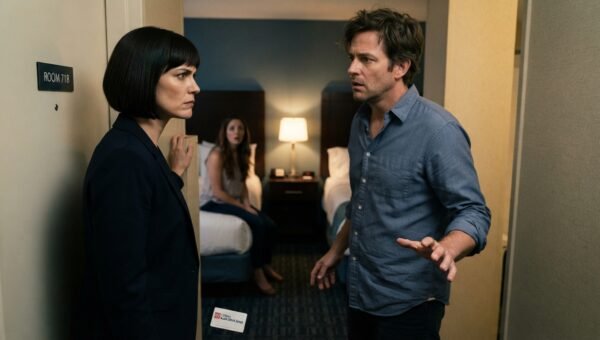
They were already stapled. They were legal-size divorce papers, prepared by a firm in downtown Newark, with red Post-it flags marking every signature line. The date typed at the bottom of the petition wasn’t today’s date. It was dated three months earlier, August 14.
He had paid a retainer to draft them over the summer. He had kept them tucked away in his car trunk or his desk drawer, waiting for the exact afternoon Julian passed away so he wouldn’t have to share a single cent of what was coming.
“Sign them,” Greg said. He didn’t look up from his phone. He was scrolling through a luxury yacht brokerage site, zooming in on pictures of blue hulls. “There’s no marital assets worth fighting over. You keep your car. You keep your four-oh-one-k. I keep my family money. Henderson said he’ll transfer the lease to my name alone by Friday. Your suitcases are in the bedroom.”
“You had these drawn up in August,” I said.
“Julian went on hospice in July,” Greg answered flatly. “I’m not stupid, Nora. I wasn’t going to let you drag me into court for half an estate my family built before you were born. Be reasonable, sign it, and walk away clean. If you fight me, I have eight hundred million dollars to keep you tied up in depositions until you’re seventy.”
I looked at the blue ink pen resting across the document.
Nineteen years of cooking his dinners, packing his lunches, covering his shortfalls, and listening to him complain about how the world had cheated him out of the luxury he deserved.
In that quiet kitchen, smelling the sour grounds in the pot, something went completely still inside my chest.
I took the pen. I flipped through the red flags. I signed my full legal name, Nora Evelyn Vance, on every single page. I didn’t shake. I didn’t ask him why he hated me so much.
I set the pen down on the laminate counter, slid the folder across the table, and looked him straight in the eyes.
“Enjoy your fortune,” I said.
He laughed right in my face. A sharp, ugly bark of pure triumph. He actually picked up the papers and waved them in the air like a winning lottery ticket.
I packed two suitcases with my clothes, my winter coat, and the silver tea set my mother had left me. By eight that night, I was checked into a roadside motel two miles away with thirty-six dollars left in my personal checking account and a rented room that smelled like old carpet.
Three days went by in absolute silence. I went to work on Wednesday and Thursday. I told my supervisor I was looking for a studio apartment closer to the clinic.
Then, on Friday morning at six-fifteen, my phone started ringing.
It wasn’t Greg. It was his older sister, Karen. Karen hadn’t called me since our nephew’s high school graduation five years ago. When I answered, she wasn’t asking how I was. She was screaming so hard her voice cracked through the receiver.
“Where is he, Nora? What did you two do? Do you have any idea what Julian actually signed?”
PART 2
“I don’t know where he is,” I told Karen. The motel room was freezing; the wall heater had clicked off around four in the morning. “Greg told me to pack my things on Tuesday. I signed the divorce papers he had waiting. We’re done.”
“You signed them?” Karen shrieked. “Nora, get to Julian’s attorneys’ office on Broad Street right now. Greg turned his phone off yesterday afternoon. The executors are calling an emergency family meeting for ten o’clock, and the firm sent couriers to every sibling. If Greg isn’t there, they’re proceeding without him.”
“It’s not my family, Karen. Greg made that very clear.”
“The firm didn’t ask for Greg,” Karen said, her voice dropping into a frantic, jagged whisper. “They asked for you. The certified notice from the probate court listed your name first.”
I sat on the edge of the unmade motel bed, holding the thin polyester bedspread in my fist.
I drove into downtown Newark at nine that morning. The law firm of Sterling, Croft & Mercer occupied the fourteenth floor of a granite building near the courthouse. When the elevator doors opened, the waiting room was already packed.
Greg’s family was there. His brother David, who ran a failing auto repair shop in Elizabeth; his sister Karen; and their mother, Beatrice, who sat in an armchair with her hands gripping a designer handbag with frayed leather corners. Beatrice hadn’t spoken to me in a decade without mentioning that her son could have married a doctor’s daughter from Short Hills.
In the corner, sitting on a leather sofa with a pair of mirrored sunglasses pushed into his thinning hair, was Greg.
He was wearing a brand-new wool coat with the tags still tucked into the interior pocket. On his wrist was a gold watch with a dark green face. He had two folders on his lap and an empty espresso cup on the side table.
When he saw me walk through the glass doors in my faded trench coat, his smile vanished. He stood up so fast his coat flapped open.
“What is she doing here?” Greg demanded, turning toward the receptionist. “She signed the dissolution papers three days ago. She has no standing in this family. Get security.”
The double doors to the main boardroom clicked open before the receptionist could touch her intercom. An older man with silver-rimmed bifocals and a charcoal suit stepped out, holding a thick legal binder.
“I am Arthur Mercer,” the man said, looking over the top of his glasses. “Mrs. Nora Vance?”
“Yes,” I said.
“Please step inside. The rest of the family may join us.”
Greg shoved past his brother to get through the door first, tossing his leather folder onto the center of the mahogany conference table. “Mr. Mercer, let’s make this quick. I already have my financial advisors waiting on a call at eleven. My wife and I are legally separated as of Tuesday. She waives all claims to the Julian Vance estate. I have her signed agreement right here.”
Mr. Mercer didn’t sit down. He set his binder on the blotter, opened it slowly, and turned a page.
“Mr. Vance,” Mr. Mercer said, his tone as dry as bone. “Your uncle Julian died on Monday evening at his home in Bedminster. His estate, after real estate holdings, logistics contracts, and municipal bonds are liquidated, is indeed valued at approximately eight hundred and ten million dollars.”
Beatrice let out a small, choked gasp. David gripped the back of his mother’s chair until his knuckles went yellow. Greg leaned back, hooked his thumbs into his belt loops, and grinned across the table directly at me.
“However,” Mr. Mercer continued, looking up from the page, “it appears you did not read the public probate filings before you began celebrating.”
Greg’s grin tightened at the corners. “What are you talking about? He named me in the 2012 draft. I’m his namesake. Gregory Julian Vance.”
“Julian updated his testament twenty-two months ago,” Mr. Mercer said. “He revoked all prior instruments. In the revised will, filed and sealed with the probate division of the Superior Court, Julian did not leave eight hundred million dollars to you.”
The room went dead silent. Even the air conditioning vent in the ceiling seemed to quiet down.
“He created an irrevocable charitable trust for the preservation of open lands in Hunterdon County,” Mercer said calmly. “Seven hundred and eighty million dollars transfers directly to that trust upon probate closure.”
Greg shot out of his chair. His face turned a mottled, dark purple. “That’s impossible! He hated environmentalists! He told me when I was twenty that the family legacy belonged to the bloodline!”
“The remaining thirty million dollars,” Mercer said, not raising his voice by an octave, “was divided into specific family bequests and debt settlements. But your uncle included a very specific codicil regarding you, Gregory.”
Mercer picked up a single sheet of paper from the front pocket of the binder and turned it toward the table.
“To my nephew Gregory, who believed my money existed to rescue him from his own laziness, I leave the primary deed and complete ownership of the Vance Industrial Distribution Terminal in Linden.”
Greg blinked. A wild, desperate relief broke across his features. “The Linden terminal? That’s sixty acres off the Turnpike. That property alone is worth twenty-five million on the commercial market!”
“The property has a market value of twenty-four million, six hundred thousand,” Mercer corrected. “However, the codicil states that you inherit the asset only if you assume full personal liability for the environmental remediation lien placed against the site by the New Jersey Department of Environmental Protection in 2021. That lien, along with outstanding contractor judgments and tax arrears, currently totals thirty-one million, two hundred thousand dollars.”
Mercer paused, letting the numbers settle onto the table like lead weights.
“If you accept the inheritance, Gregory, you immediately owe the State of New Jersey and the secured creditors six million, six hundred thousand dollars out of your own pocket. If you disclaim it, the property goes to public auction and you receive zero.”
PART 3
Greg’s hands began to shake. The tags inside his new coat rustled against his shirt.
“No,” Greg stammered, looking around at his mother and brother. “No, that’s not… he wouldn’t do that. Uncle Julian loved me. He gave me my first car! This is a mistake. He can’t stick me with a debt!”
“An heir may always disclaim a bequest,” Mercer said smoothly. “If you do not want the liability, you sign a disclaimer. But you will receive nothing from the estate. Not one dollar.”
David slumped into a chair, burying his face in his hands. Beatrice stared at the mahogany table, her mouth slightly open, completely frozen.
Greg whirled on the attorney. “What about the rest of it? Who got the liquid accounts? Who got the personal property, the house in Bedminster, the cash reserves?”
Mr. Mercer turned another page in his binder. He adjusted his glasses and looked straight at me.
“In section four, paragraph B of the final codicil, Julian wrote the following,” Mercer said. He read directly from the page:
“‘To Nora Evelyn Vance, the only person in that entire household who had the common decency to visit my sister Margaret while she was dying in the nursing home in 2018, and who sent me a handwritten Christmas card every winter without once asking me for a business loan, an investment tip, or a handout.'”
I stared at the lawyer.
In 2018, Greg’s aunt Margaret had spent seven months in a care facility five miles from my dental clinic. Greg had refused to visit because the building smelled like bleach. I used to go on my lunch breaks twice a week, bringing her lemon drops and sitting by her bed while she slept. I never thought about it. I never told Julian. I didn’t think Julian even knew.
“‘I leave to Nora,'” Mercer read, “‘the unencumbered deed to my primary residence in Bedminster, the household furnishings, and a direct cash bequest of four million, two hundred thousand dollars from my private account at Chase Manhattan, free and clear of all estate administrative debt.'”
The sound that came out of Greg’s throat was like an animal being stepped on.
“That’s marital property!” he yelled, lunging forward with both hands flat on the table. “We are married! That money is marital property acquired during the marriage! She has to split it with me! Half of that is mine!”
Mr. Mercer picked up the manila folder Greg had tossed onto the table ten minutes earlier. He opened it, looked at the papers inside, and then looked up at Greg.
“Mr. Vance, you brought this document here yourself,” Mercer said. “This is a signed, fully executed Marital Settlement Agreement and Separation Petition, dated Tuesday, November 3. On page four, paragraph nine, you drafted a clause stating: ‘Each party waives, surrenders, and forever releases any and all rights, claims, or interests in any separate, inherited, or acquired assets received by the other party from the date of separation forward, specifically including any property derived from the estates of family members.'”
Mercer slid the papers back toward Greg’s chest.
“You had her sign an absolute waiver of rights to your inheritance, but because your lawyer used broad reciprocal language to ensure she couldn’t touch your money, you also signed away any right to hers. The divorce petition was filed with the county clerk electronically yesterday morning by your own attorney. You made sure it was stamped before the funeral.”
Greg looked down at the signature page. His own bold, looping signature sat right beside mine, dated Tuesday afternoon, witnessed by a notary he had paid twenty dollars at the UPS Store.
“No,” Greg whispered. His voice was cracked, thin and hollow. “Nora. Nora, look at me.”
I didn’t move.
He came around the side of the table, his expensive coat hanging crooked on his shoulders. “Nora, you know I was joking on Tuesday. I was stressed. I was out of my mind with grief over Uncle Julian. We’ve been together nineteen years. You know how I get when I panic. We can tear those papers up right now. We’ll go to the clerk’s office and withdraw the filing. We’re a team, Nora. We’ve always been a team.”
“You told me to be out before you got home,” I said. My voice sounded remarkably steady in the quiet room. “You had those papers sitting in your drawer since August.”
“I was protecting us!” he pleaded, reaching for my arm.
I pulled my hand back, out of his reach.
“You were protecting yourself from me,” I said. “You were so terrified I would get a sliver of your luck that you couldn’t wait three hours to throw nineteen years into the garbage.”
Beatrice stood up from her chair, her eyes wide and wet. “Nora, please. Think of the family. Greg has debts. He took out personal notes last month assuming this was coming through. If he doesn’t have this, he’ll lose everything.”
“Then he should disclaim the Linden terminal,” I said, looking at Beatrice. “That will solve his problem with the state.”
“I took out eighty thousand dollars in hard-money advances on Wednesday!” Greg screamed, dropping all pretense of affection. “I bought the watch! I put a deposit on a lease in Alpine! I told everybody at work I was retiring! If you don’t give me half of that four million, I’m ruined!”
“Mr. Vance,” Mr. Mercer said, signaling two security guards who had appeared at the conference room doors. “You need to step outside. Mrs. Vance has documents to sign as the sole beneficiary of the Bedminster trust.”
ENDING
The guards escorted Greg into the hallway. I could hear his boots scuffing against the marble floor, his voice shouting insults at the firm, at Julian, and at me, until the heavy fire door slammed shut behind him.
Beatrice and David left without saying another word. David didn’t even look back. He just steered his mother toward the elevators, leaving Greg’s empty coffee cup sitting on the glass table.
I spent an hour in Mr. Mercer’s office. We went through the transfer papers for the house in Bedminster, a four-bedroom colonial on three acres of woods with an apple orchard behind the barn. The cash bequest would clear within ten business days, held in an escrow account under my name alone.
When I walked out of the building into the November afternoon, the rain had stopped. The pavement was dark and damp, reflecting the red taillights of the city traffic.
Greg was sitting on the concrete retaining wall near the garage entrance. His coat was unbuttoned, his tie pulled loose. He looked small, like an aging man who had gambled away his rent money on a horse race that ended five minutes ago.
When he saw me, he stood up, but he didn’t scream this time. He just stood there with his hands in his pockets, his shoulders hunched against the cold wind coming off the river.
“Nora,” he said quietly. “Where am I supposed to go?”
“Henderson said he’d put the Elm Street lease in your name by Friday,” I said. “You told him that yourself.”
“The rent is eighteen hundred a month,” he whispered. “I can’t afford that alone.”
“You better call your supervisor and tell him you’re not retiring,” I told him.
I walked past him toward my car. My ten-year-old sedan was parked under a streetlight that flickered every few seconds. I unlocked the door with the key, because the remote clicker had died two years ago and Greg had always refused to buy a three-dollar battery for it.
I sat in the driver’s seat for a long time before turning the ignition.
On the passenger seat lay my purse, my two suitcases in the back, and the silver tea set wrapped in an old bath towel. I had four million dollars in an account in Newark and a house with an apple orchard waiting for me forty miles west.
I reached out, clicked my seatbelt into place, and adjusted the rearview mirror. Greg was still standing on the sidewalk under the gray sky, staring down at his phone, waiting for a call that was never going to come.
I shifted the car into drive and pulled into the street, leaving him exactly where he chose to be.