PART 1
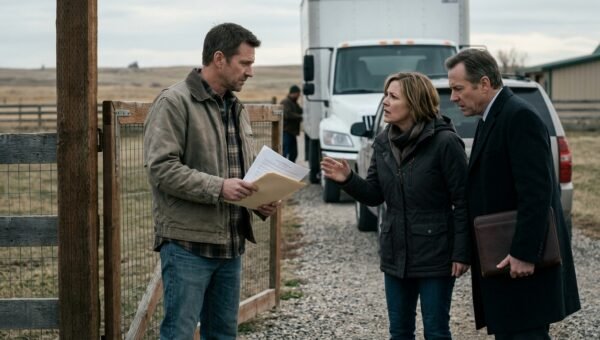
My mother set her coffee mug down on my kitchen island, looked me right in the eye, and told me to sign over the deed for four quarters.
“Jeff needs somewhere to live, Tammy,” she said. Her voice was completely steady, like she was asking me to pass the sugar. “You bought it from us for a dollar twenty years ago. It is only right that you sell it back for a dollar now.”
I was forty-six years old. My husband, Dale, was out in the barn fixing the hydraulic line on the tractor, and my hands smelled like lemon pledge because I had spent the morning wiping down the oak cabinets we had installed with our own sweat.
“A dollar, Mom?” I asked. “Are you serious?”
“He has three children,” she said, leaning forward. “His divorce cleaned him out. You and Dale have good jobs, no kids under this roof anymore, and five acres you barely touch. Family comes first, Tammy. You got your start here. Now it is Jeff’s turn.”
What she conveniently forgot was the condition this place was in when Dale and I took it over at twenty-six. In 1996, the house was basically a rotting shell. The 1912 farmhouse had been in my father’s family for two generations, but by the time Dad gave up farming, the roof was sagging into the second-story bedrooms, the knob-and-tube wiring was a fire hazard, and the original gravity-fed heating system was dead.
Dad had wanted to knock it down and sell the acreage to a developer.
He had handed me the quitclaim deed back then with a laugh, saying, “If you’re foolish enough to put money into this ditch, Tammy, pay me a dollar so it’s legal.”
Dale and I lived in a camper in the side yard for six months that first year. We poured exactly $60,340 in documented repairs into the structure just to make it livable, tracking every invoice and county inspection in an accordion folder I still kept in the hall desk. We patched joists, rewired the whole box, put on metal roofing, and spent winters huddled by a single kerosene heater while we finished the drywall ourselves.
My brother Jeff had spent those same twenty years bouncing between sales gigs, three different rental houses, and two marriages. When things got hard, Mom and Dad always wrote a check.
But Dad passed two years ago, Mom moved into an assisted-living cottage in town on a fixed pension, and suddenly she had no more checks left to write.
“Mom,” I said, keeping my temper down, “we put sixty thousand dollars into this house before we even had reliable running hot water. That was our life savings back then. You can’t just ask us to hand you the keys.”
“The dollar was a gift from your father and me,” she snapped, her jaw tightening. “You took advantage of an old man’s generosity. If you have any decency, you won’t let your brother’s children sleep on the floor of a budget motel.”
She stared at me, waiting for me to argue or cry like I usually did when she laid on the guilt.
I looked at the kitchen window, looking out toward the driveway where Jeff’s rusted pickup truck was already idling near the mailbox.
He was sitting in the cab, smoking with the window cracked, waiting for Mom to deliver the verdict. They had planned this before they even drove out here.
I turned back to my mother. I didn’t yell. I actually smiled a little, feeling a strange, quiet calm settle over my ribs.
“Family comes first,” I repeated her words back to her. “You’re right, Mom. Tell Jeff to turn off the engine and carry his bags up to the second floor.”
Her face softened with instant relief, thinking she had won the easiest surrender of her life.
The moment she walked out to the porch to wave Jeff in, I picked up my phone from the counter and called someone who had been waiting for my call since yesterday morning.
PART 2
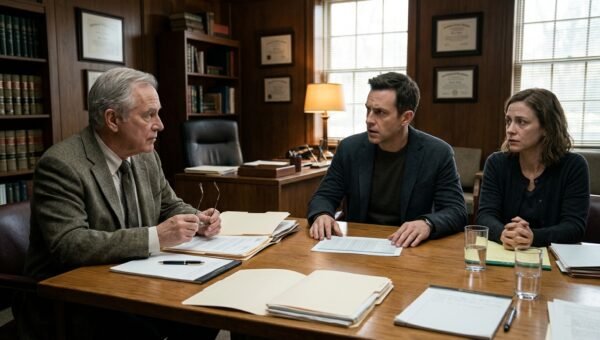
The person on the other end of the line was Carl Vance. Carl was seventy-one, retired from the county recorder’s office, and lived down the county road. More importantly, Carl was my father’s first cousin, and he had handled rural title transfers for forty years.
“Tammy?” Carl answered on the second ring.
“Carl,” I said quietly, keeping my back to the front window. “He’s here with the kids’ bags. Mom just made the demand.”
“Did she use the one-dollar line?”
“Word for word.”
Carl let out a dry, tired sigh through the receiver. “I was afraid of that. Come by my office shed after dinner tonight. I found the 1996 tax packet and the transfer affidavit your dad filed before he handed you that quitclaim. You need to see what’s actually on paper before you let them push you into a corner.”
“I’ll be there at seven,” I said, and hung up just as the screen door slammed open.
Jeff walked in hauling two massive plastic storage tubs, smelling of stale menthol and road dust. Behind him trailed his three kids: twelve-year-old Tyler, ten-year-old Chloe, and little Mason, who was seven and dragging a torn backpack along our hardwood floor. They looked exhausted, pale, and entirely sick of riding in a cramped truck cab.
“Upstairs?” Jeff asked me, not offering a greeting, an apology, or a thank you. He acted like he was checking into a hotel where the desk clerk had kept him waiting.
“Second floor, end of the hall,” I said evenly. “The two corner bedrooms. Clean sheets are in the linen closet.”
“Mom said you’re doing the paperwork tomorrow,” Jeff said, wiping his forehead with the back of his arm. “I need to get my mail forwarded here by Friday so I can register the kids for the county school district.”
“We’ll handle the paperwork when it’s time,” I replied.
Dale came in through the mudroom five minutes later, wiping grease off his knuckles with a shop rag. He took one look at the suitcases piled in the entryway, looked at me, and read my eyes immediately. We had been married twenty-eight years; he didn’t need an explanation to know we were in defensive position. He just gave me a brief nod, washed his hands at the utility sink, and went to take the kids out back to show them the barn cats and give them some peanut butter toast.
At a quarter to seven, I told Dale I had an errand in town, backed my Subaru out of the gravel drive, and headed to Carl’s place.
Carl’s workshop smelled of wood shavings and old tobacco. He had two folding chairs set up by a metal desk under a bare fluorescent bulb. On the blotter lay a yellowed file folder labeled *Harlan Vance / Farmhouse Parcel 4B*.
“Your dad wasn’t a bad man, Tammy,” Carl said as I sat down, “but he was weak when it came to your brother. He always tried to grease the squeaky wheel.”
Carl opened the folder and tapped a blue-stamped document.
“This is the property transfer from October 1996,” Carl said. “Your mother thinks she gave you an informal family gift with a symbolic dollar token. But your father came to me two months before that closing because he was terrified the bank was going to seize this property for Jeff’s failed equipment business.”
I looked at the date. It was dated August 14, 1996.
“Jeff had taken out thirty thousand dollars in commercial credit lines against Dad’s signature,” Carl explained. “Dad knew the lenders were coming. If the farmhouse stayed in Dad’s name, the bank would have attached a lien and forced a sale. That was the real reason your dad wanted rid of it. But look at line sixteen.”
I leaned over the desk.
There was a typed covenant attached to the transfer, signed by my father and witnessed by a local notary:
*Grantee assumes all outstanding municipal tax liabilities totaling $8,420 and agrees to discharge all deferred structural maintenance at Grantee’s sole expense. Grantor relinquishes all future equity, reversionary claims, and right of repurchase for himself, his spouse, and his heirs.*
Underneath that was a carbon copy of a cashier’s check from our little local credit union, dated October 3, 1996, made out to the county treasurer. The amount was $8,420. Dale and I had drained our wedding savings to clear the back taxes before Dad ever handed us the deed.
“Your father paid nothing,” Carl said quietly. “You didn’t buy a house for a dollar, Tammy. You bought an eighty-four-hundred-dollar tax debt that saved your parents from public foreclosure, and you took on a condemned structure that your dad legally barred himself and your mother from ever clawing back.”
Then Carl turned the page.
“And here is the part your mother doesn’t know you know,” Carl added, tapping a bank ledger sheet from four months ago. “Your dad’s estate account.”
PART 3
I stared at the statement. It was from the First National Bank branch on Elm Street.
When Dad died two years ago, Mom told me there was nothing left except Dad’s Social Security and enough to cover the funeral. She claimed Jeff had helped pay for the casket out of his own pocket.
On the paper Carl set before me, dated ninety days after Dad’s death, was an estate disbursement check written from the probate settlement account:
*Pay to the order of: Jeffrey Vance*
*Amount: $75,000.00*
*Memo: Farm buyout advance / living assistance*
*Signed: Martha Vance, Executor*
“She gave him seventy-five thousand dollars from your father’s life insurance policy,” Carl said. “The policy was supposed to support your mother in that assisted living facility until she turned eighty-five. Jeff blew through the entire amount in less than eighteen months trying to flip used camper trailers in Ohio. When the money ran out and his wife threw him out, your mother realized she had nothing left to save him with. Except your house.”
I sat in Carl’s cold shop, looking at my father’s signature on the 1996 deed restriction and my mother’s signature on the seventy-five-thousand-dollar transfer.
“Thank you, Carl,” I said. My voice was very quiet.
“What are you going to do?” he asked.
“I’m going to let them settle in,” I said. “For three days.”
For seventy-two hours, I played the quiet host.
I made breakfast for Tyler, Chloe, and Mason every morning. I washed their clothes, packed their school lunches, and listened to Jeff talk loudly at my kitchen table about how he was planning to convert Dale’s woodworking shed into a private guest cottage for himself once the deed was recorded in his name.
“We’ll need Dale to move his tools out by next weekend,” Jeff told me over coffee on Thursday morning. “I found a buyer for that old drill press. We can split whatever I get for it.”
“The tools stay where they are, Jeff,” I said mildly.
“Don’t get territorial, Tammy,” he smirked. “Mom’s coming by at noon with the title forms she printed from the library. We’ll sign, go down to the courthouse, and you and Dale can start looking for a nice condo in town.”
At twelve-fifteen, Mom’s white Buick pulled into the drive. She came through the front door holding a manila folder, her eyes bright with the satisfaction of a woman who believed she had managed her family’s affairs with absolute authority.
“Jeff, get your pen,” she announced, walking straight into the dining room. “Tammy, call Dale inside. We’re going to get this witnessed and filed before the clerk’s office closes at four.”
Dale walked in from the porch, followed by Jeff, who had a smug grin plastered across his face.
Mom spread three pages on the dining table. “Standard quitclaim transfer. Dale signs here, Tammy signs here. Jeff hands over the dollar. We keep it completely square, just like we did with your father.”
I didn’t reach for the pen. Instead, I pulled three manila envelopes from the sideboard and laid them flat on the table, side by side.
“What’s that?” Mom asked, frowning.
“That is the real cost of this house, Mom,” I said.
I opened the first envelope. I slid out the thick stack of yellowed receipts, county building permits, and contractor invoices from 1996 to 1999. On the very top was the master summary sheet Dale and I had maintained for two decades.
“Sixty thousand, three hundred and forty dollars,” I said, reading the total line out loud. “That’s what Dale and I paid out of pocket to keep the roof from collapsing on Dad’s head when the county declared the second floor unsafe. We replaced the wiring, the foundation posts, and the furnace.”
Jeff rolled his eyes. “That was your choice to remodel, Tammy. You can’t charge rent on history.”
“I’m not finished, Jeff,” I said.
I opened the second envelope and slid Carl’s certified copy of the 1996 deed covenant right over Mom’s quitclaim papers.
“Read paragraph four, Mom,” I said. “Dad signed it. You signed the spousal release right beneath it. You didn’t give me this house for a dollar. You sold it to me so Dale and I would pay off eighty-four hundred dollars in back taxes to keep Dad out of county tax forfeiture. And in exchange, you legally waived every single right to repurchase or claim equity for yourselves or your heirs forever.”
Mom’s mouth opened slightly. She looked down at her own cramped signature from twenty-eight years ago. Her fingers twitched against the edge of the table.
“Your father… he didn’t tell me what that said,” she stammered, her voice losing its edge. “He just said it was paperwork for the dollar transfer.”
“Dad knew exactly what it said,” I replied. “And so did you.”
Then I opened the third envelope.
I laid the Elm Street bank ledger directly in front of her.
“And this is why Jeff needs a house,” I said.
The room went completely still. Jeff’s smug look vanished. He stared at the seventy-five-thousand-dollar estate disbursement line, and his neck flushed dark red.
“Where did you get that?” Jeff yelled, stepping forward. “That’s none of your business!”
“It became my business the second Mom demanded my home to fix your stupidity,” I said, looking directly at my mother. “You took Dad’s entire life insurance policy, the money that was supposed to keep you safe in that cottage for the rest of your life, and you handed it to him in three cashier’s checks. He blew seventy-five thousand dollars in eighteen months, Mom. And instead of telling him to get a job and rent an apartment, you decided to steal my home and my husband’s work to cover up the fact that you’re broke.”
Mom looked at the bank paper, then up at Jeff. Her eyes filled with frantic, helpless panic.
“Jeff,” she whispered, her voice cracking into a high, broken pitch. “You told me you put that seventy-five thousand into a high-yield trust. You told me it was earning eight percent. You told me you were just holding it until the trailer lot turned a profit.”
“Mom, shut up,” Jeff snapped, backing toward the hallway. “Don’t talk about that in front of them.”
“You lost it?” she screamed. The sound tore out of her throat, sharp and ugly, shaking the glass in our china cabinet. “You lost your father’s insurance money? All of it?”
“You gave it to him,” I said quietly, cutting through her panic. “And neither of you is taking this house.”
ENDING
Jeff left that evening with his truck packed to the brim, his three kids sitting silently in the back seat.
He didn’t look at me when he loaded the last tub into the bed, and he didn’t say goodbye to his mother. He drove south toward his ex-wife’s sister’s house in Shelbyville, leaving a trail of gray exhaust hanging over our gravel drive.
Mom stayed at my kitchen table until nearly sunset.
The anger was entirely gone from her face, replaced by the hollow, sunken look of an elderly woman who finally realized that the son she had protected her whole life had picked her clean. She sat staring into an empty coffee cup while Dale worked outside in the yard, giving us the room.
“What am I going to do, Tammy?” she asked, her voice barely louder than a whisper. “The facility fees go up four hundred dollars next month. I don’t have enough to stay there through next winter.”
I looked at the kitchen around us. I looked at the oak trim Dale had planed by hand, the bay window where our own children had done their homework before growing up and moving away, and the solid pine floor that we had saved from dry rot with our own savings.
“You’re going to keep your cottage for as long as your monthly Social Security covers the basic room,” I told her plainly. “Dale and I will pay the four-hundred-dollar difference directly to the front office every month so you aren’t put out. We will bring you groceries on Sundays, and we will make sure your prescriptions are filled.”
She looked up at me, her eyes wet, waiting for me to say she could move into our upstairs bedrooms.
“But you will never mention this house to me again,” I said. “And Jeff will never sleep under this roof.”
She didn’t argue. She simply nodded once, looked down at her hands, and let me drive her back to her cottage in the dark.
Two weeks later, Carl Vance stopped by on his tractor to drop off the original recorded packet from the county clerk, showing our deed clean, clear, and unencumbered. I took the papers inside, walked down the hall to the desk, and slid them into the bottom of our accordion folder, right next to the receipts from 1996.
I didn’t feel triumphant or happy.
I just walked back into the kitchen, turned on the kettle for tea, and watched Dale through the window as he stacked firewood against the shed for the winter ahead.